

Skip to content
Leaning Tower of Pisa

Italy · 14 places · 18 stories

Don’t visit Pisa.
Understand it.

14 places. 18 stories. It was a port, a power, a defeat — then Galileo's city. And a tower that failed from the first floor up.

14 historical places in Pisa with free audio guide

Free · no ads · iOS and Android

Pisa in depth

Pisa didn't lose the sea. The sea pulled away from Pisa.

Ruthy shows you Pisa through 14 real places, narrated by Lucas Botta (Historia en Podcast) at the exact spot where each story happened. No group tour, no schedule, no shared headphones. Just you, the city, and a story that starts when you arrive and press play.

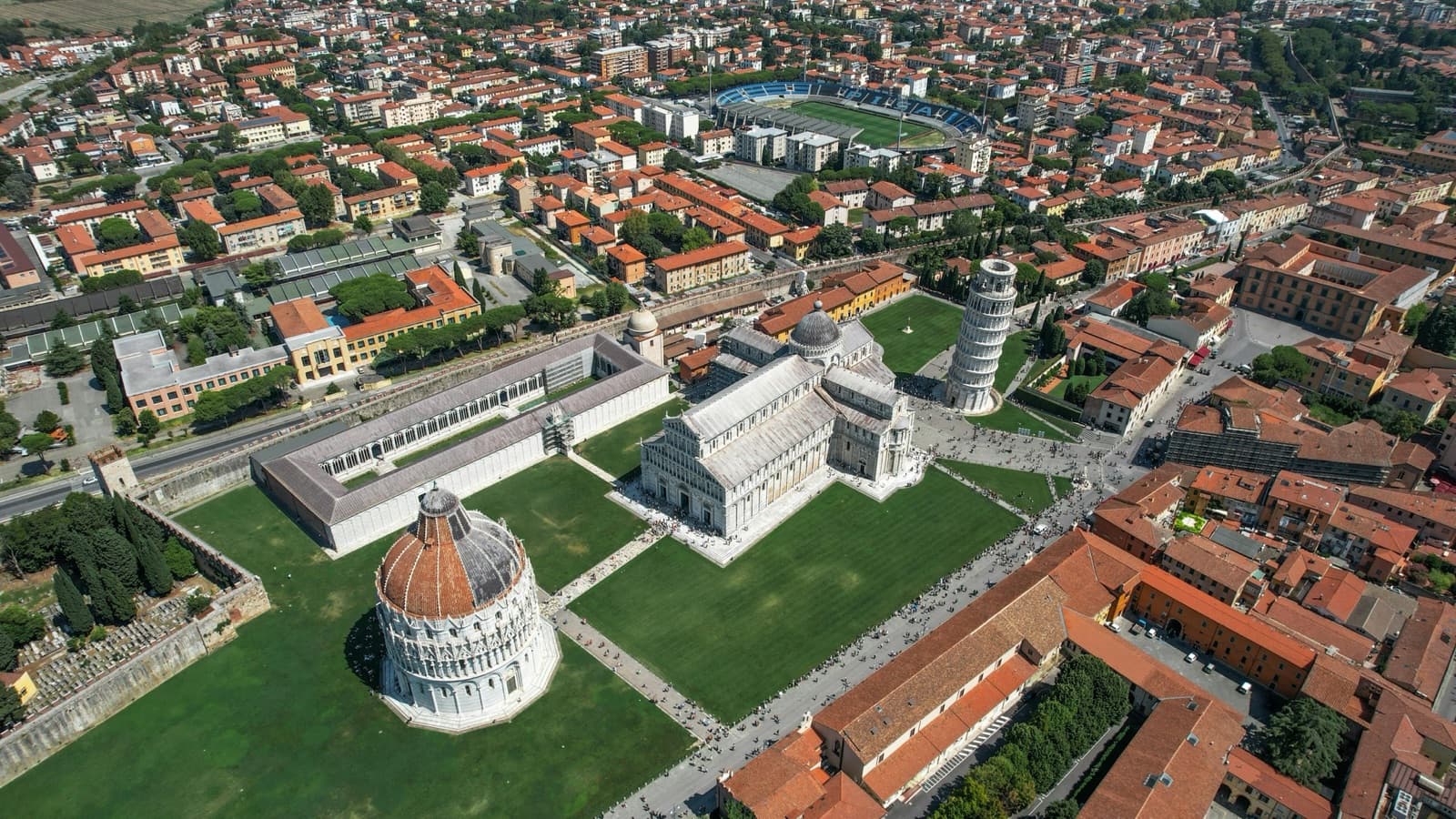
You know Pisa for its tower, but its real story is one of loss. It was born an Etruscan and Roman port, became one of the great maritime republics of the Mediterranean, and built the Campo dei Miracoli with the spoils of its naval victories. Then came defeat against Genoa and a river that slowly pushed the coastline away. Pisa was left without a sea… and reinvented itself as the city of Galileo and of knowledge. So you don't walk it like a postcard: every piece of marble speaks of when it was powerful. Ruthy tells you standing right there, in no hurry.

Deep-dive walks

Places told chapter by chapter.

We don't just tell you what it is. We tell you why it matters, how it was built, what happened inside, and how it became what it is today.

View of the Campo dei Miracoli in Pisa
5chapters

History of Pisa

It all starts in the water — even if you see no sea today. Pisa was born an Etruscan and Roman port, became a Mediterranean sea power, lost a decisive battle and watched a river steal its coastline. Then it was reborn as Galileo's city. Five chapters to understand why the Tower leans on so many centuries.

All 5 chapters

  1. Etruscan origins and Roman Pisa (4th century BC – 5th century AD)
  2. Early Middle Ages: crisis, invasions and reconstruction (5th–10th centuries)
  3. Republic of Pisa: maritime power (11th–13th centuries)
  4. Decline: defeat and loss of the sea (13th–15th centuries)
  5. Modern Pisa: from a fallen city to a cultural symbol (16th century – present)
All 14 places

Everything you'll find in Pisa.

Each place with its own story, narrated right where it happened.

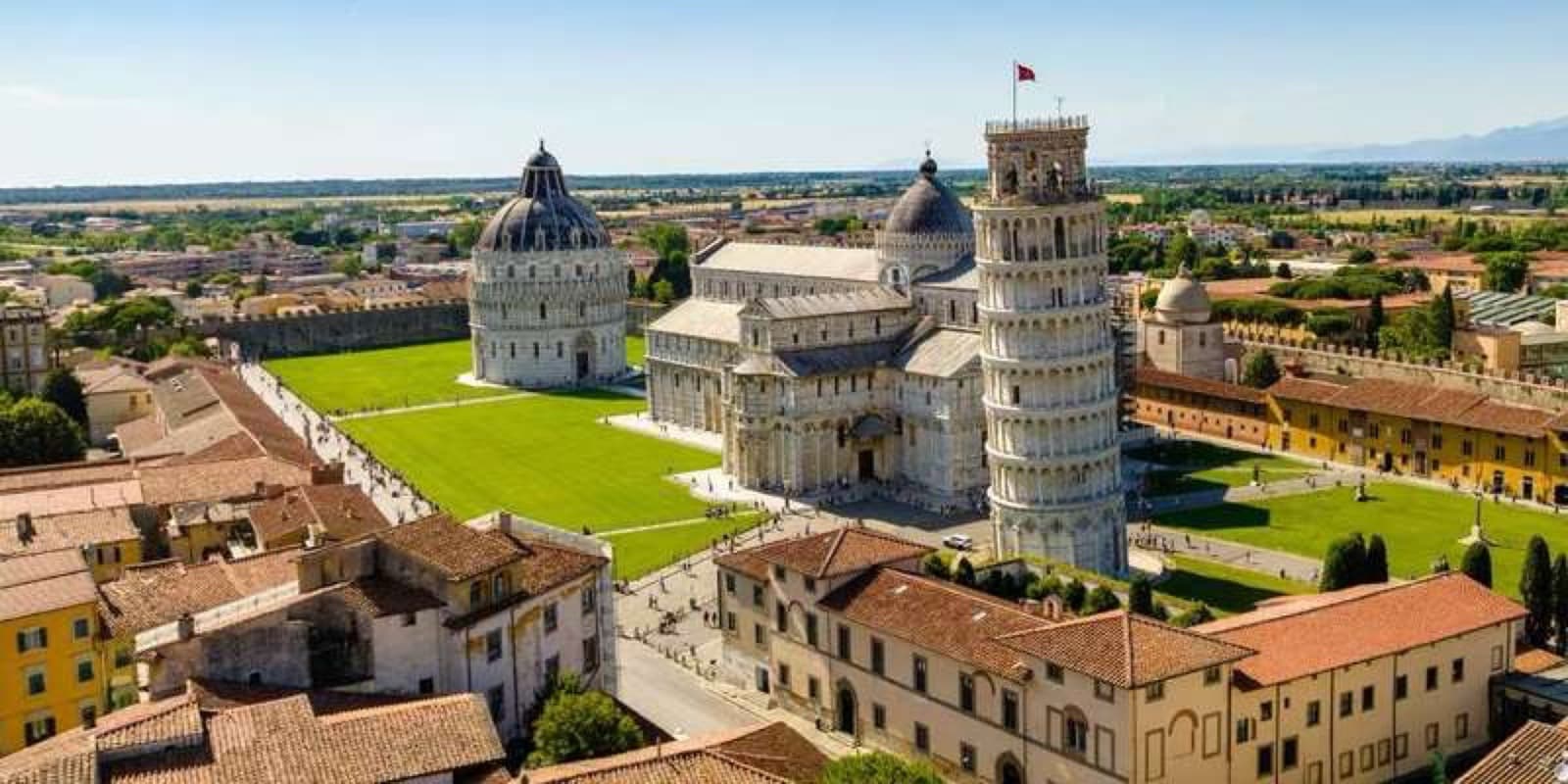
  • Campo dei Miracoli with the Tower, the Duomo and the Baptistery

    Campo dei Miracoli

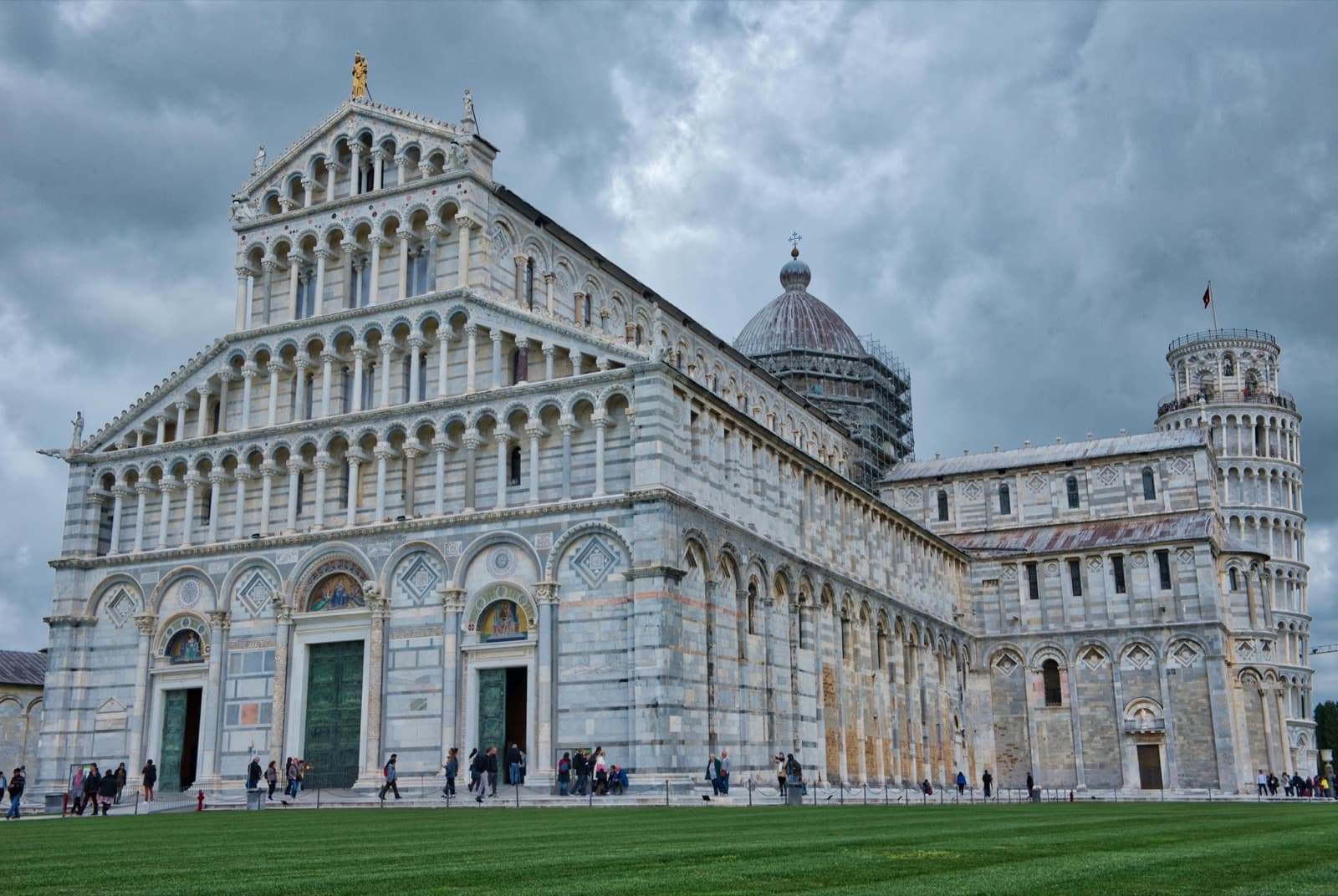
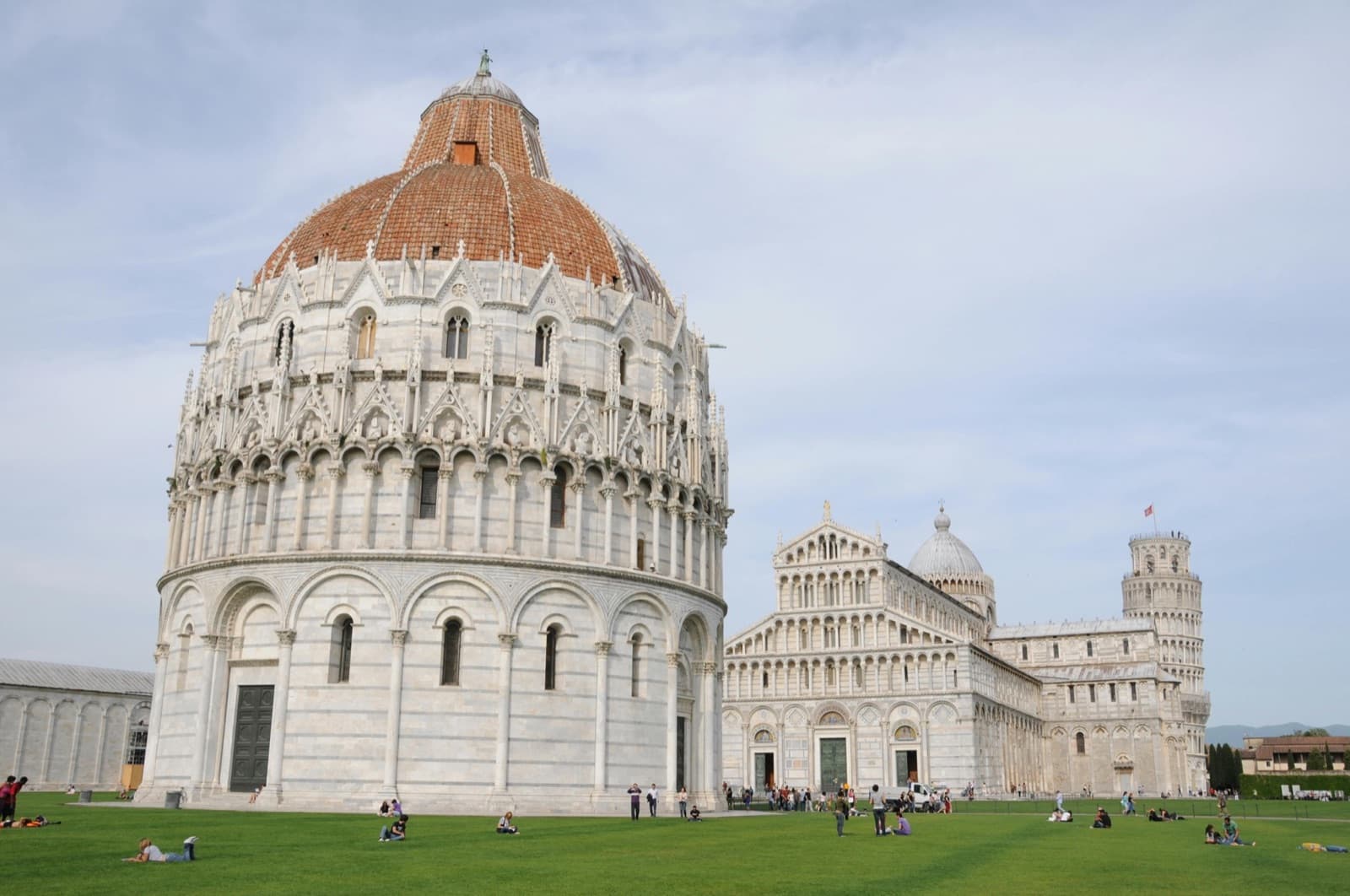
    It's not a square: it's an idea turned to stone. Cathedral, Baptistery, Tower and Camposanto on an open lawn, meant to be read together — life, faith and death on a single axis. Pisa didn't raise a temple: it raised a stage to show what it was when it ruled the sea.

  • Leaning Tower of Pisa

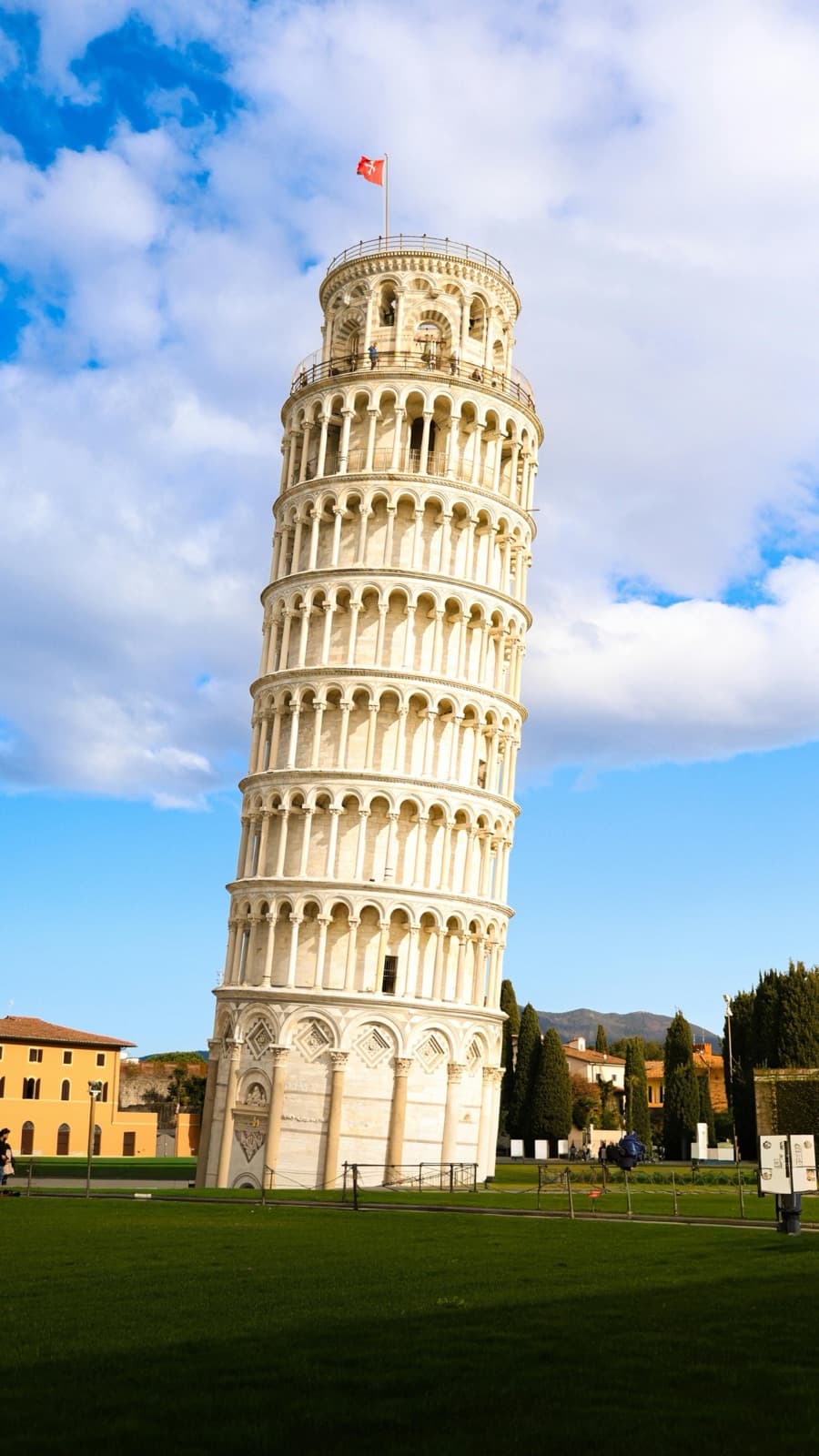
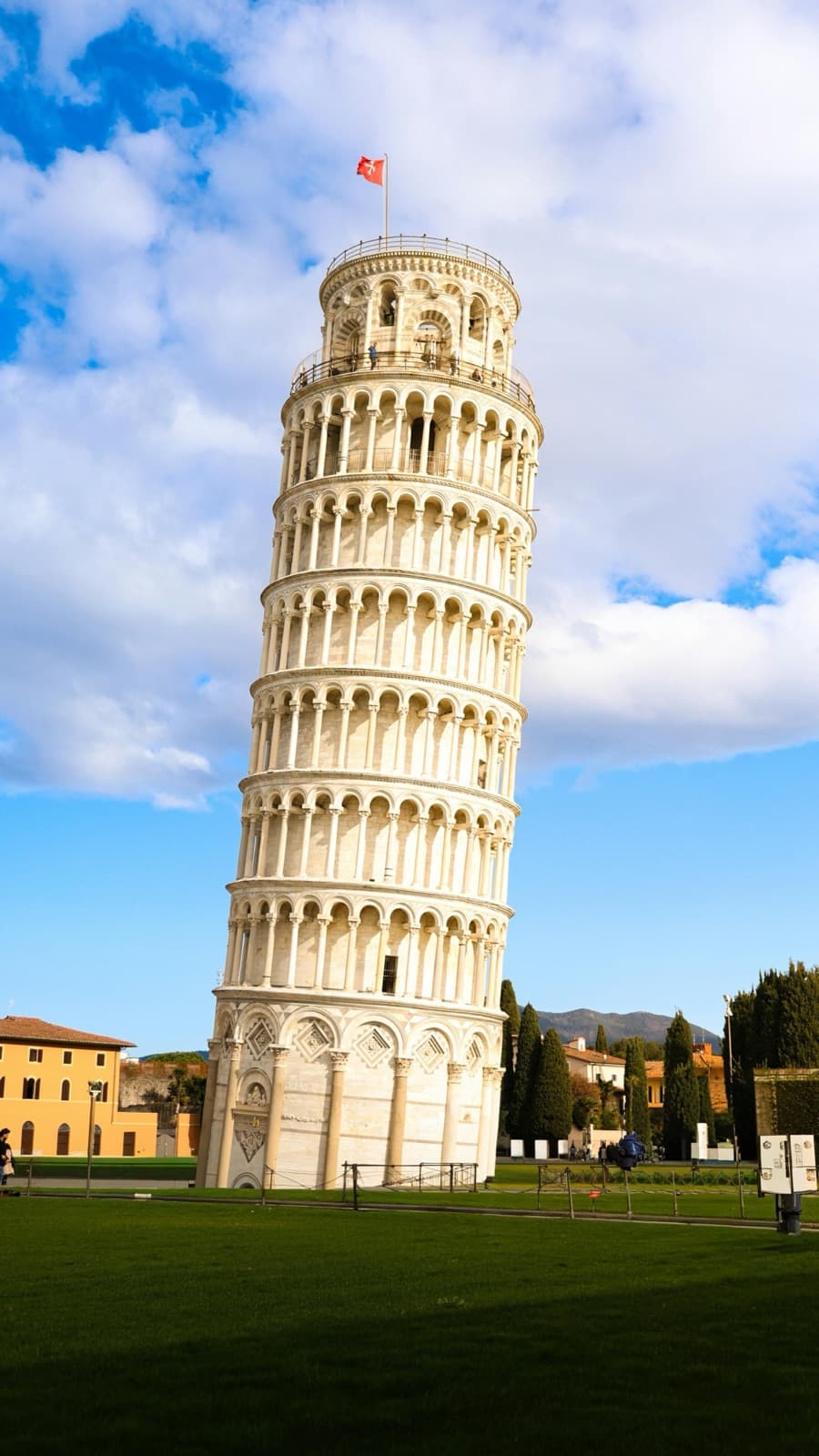
    Leaning Tower of Pisa

    Something's off: it shouldn't lean, and yet there it is. It started tilting while it was still being built — the problem wasn't the tower, it was the ground. They tried to correct it with another error, which is why it curves. What could have been a failure became one of the most recognizable images in the world.

  • Pisa Cathedral on the Campo dei Miracoli

    Cathedral of Pisa (Duomo)

    Begun in 1063 with the spoils of a naval victory: the cathedral is, literally, a product of the sea. Its façade blends Romanesque, Byzantine and Islamic, because Pisa didn't copy, it adapted. And by tradition, it was watching a lamp swing in here that Galileo sensed something about the pendulum.

  • Baptistery of San Giovanni in Pisa

    Baptistery of Pisa

    The largest baptistery in Italy, 55 meters tall. But what's most striking isn't seen: it's heard. The space was built to resonate — a single note expands and layers over itself like an instrument. Outside, the stone shifts from Romanesque to Gothic, because building it took centuries.

  • Galleries of the Camposanto Monumentale

    Camposanto Monumentale

    A marble cloister built, by tradition, on soil brought from the Holy Land during the Crusades. Its walls held vast frescoes — among them a stark "Triumph of Death" — until an incendiary bomb in 1944 tore them from the walls. What you see today also tells the story of that loss and its rescue.

  • Museo dell'Opera del Duomo in Pisa

    Museo dell'Opera del Duomo

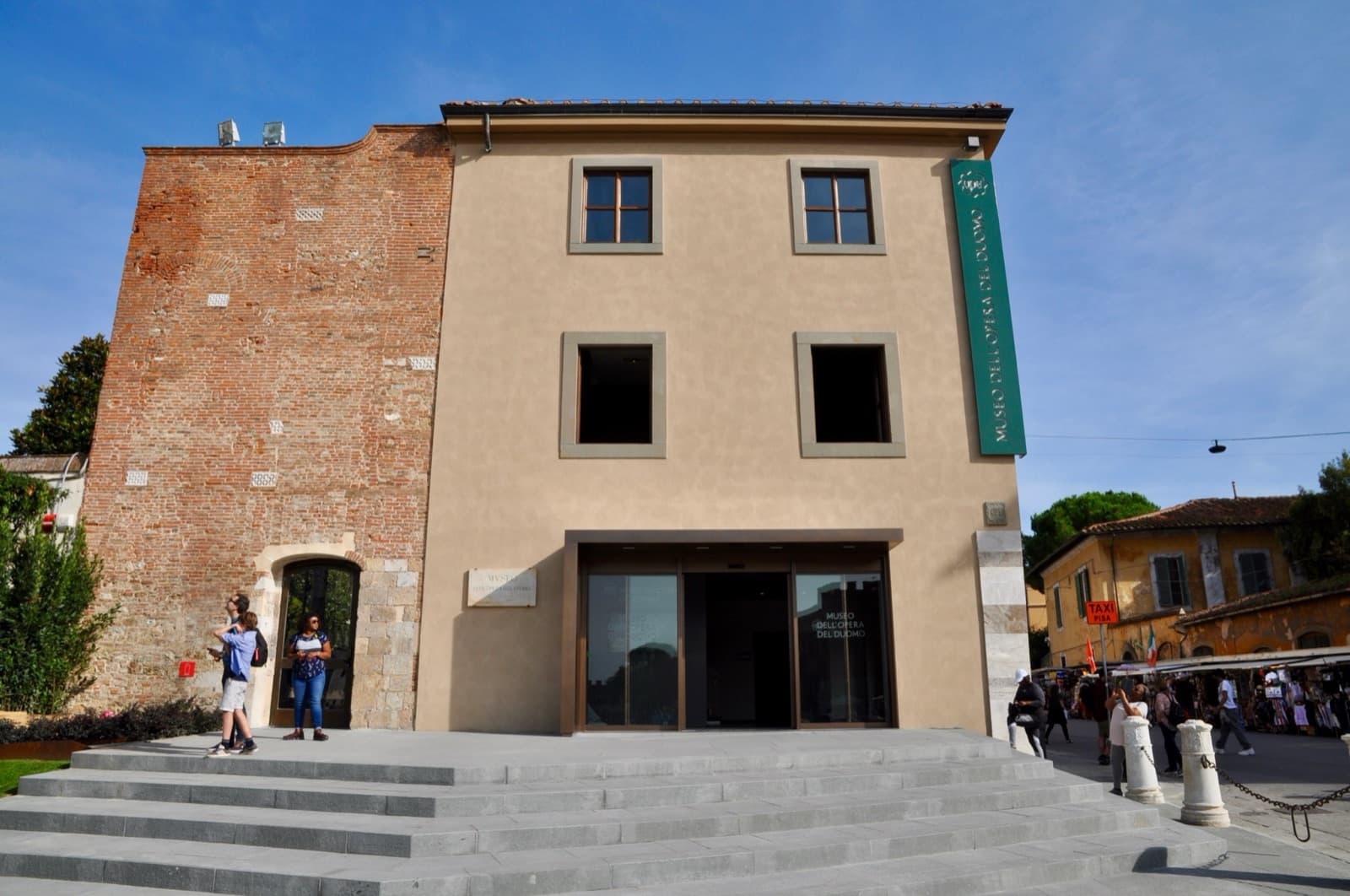
    Here is what you no longer see outside: the original sculptures of the Campo dei Miracoli, replaced by copies to protect them. Nicola and Giovanni Pisano, the moment medieval art began to look alive. It doesn't add to the story of the complex: it gives you the key to read it.

  • Piazza dei Cavalieri in Pisa

    Piazza dei Cavalieri

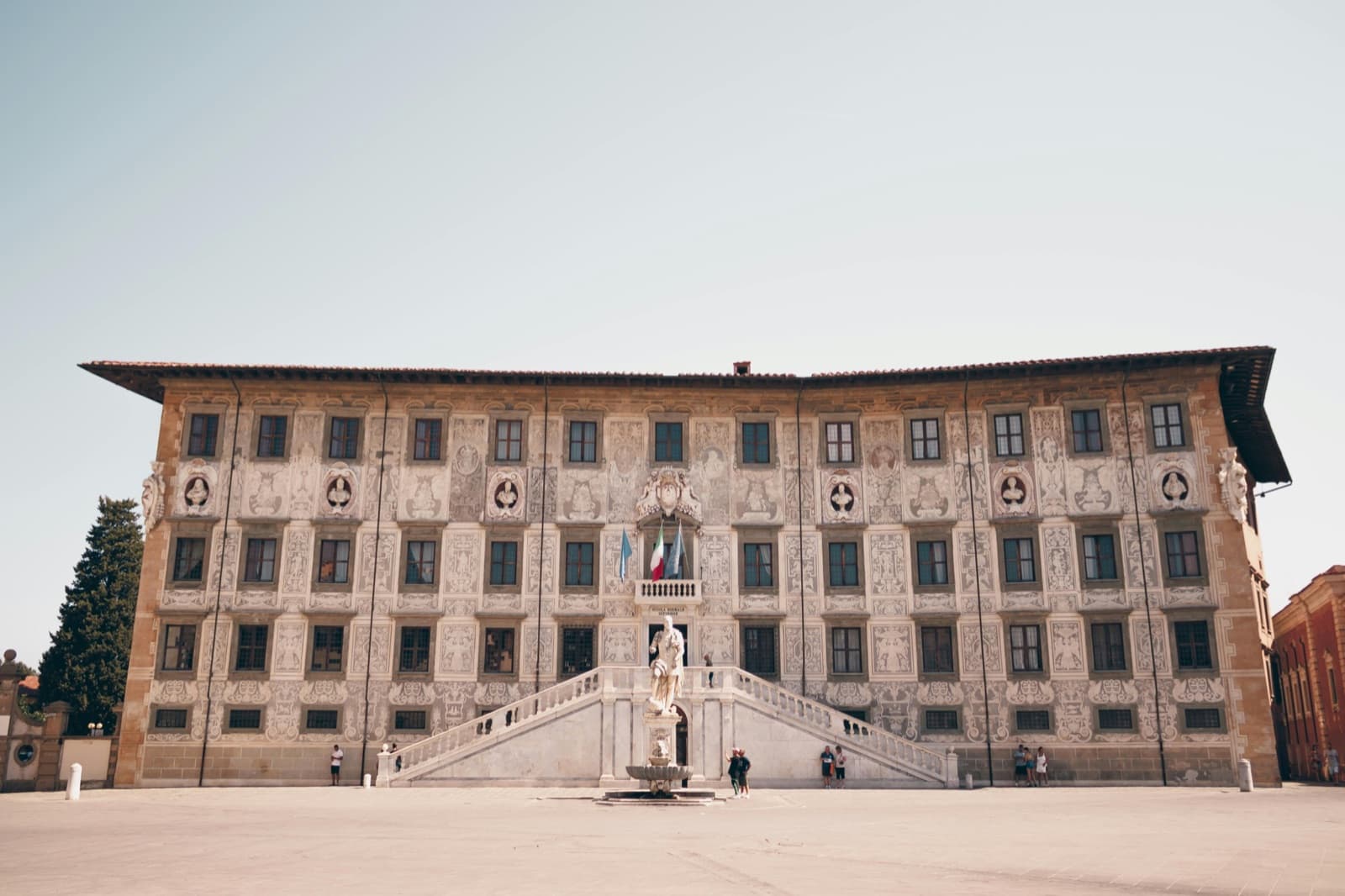
    You leave the religious marble and change worlds: here Pisa didn't pray, it decided. This was the republic's political heart. After the Florentine conquest, Cosimo I and Vasari redesigned it for an order of knights who hunted pirates. Today it houses one of Italy's most prestigious schools: power changed hands, the place keeps talking.

  • Palazzo della Carovana, home of the Scuola Normale

    Palazzo della Carovana

    A façade that seems to move: covered in sgraffito, coats of arms and figures scratched into the stone. Vasari redesigned it for Cosimo I as the seat of an order of knights — pure language of power. It went from military center to the Scuola Normale Superiore: from knights to students, but always shaping elites.

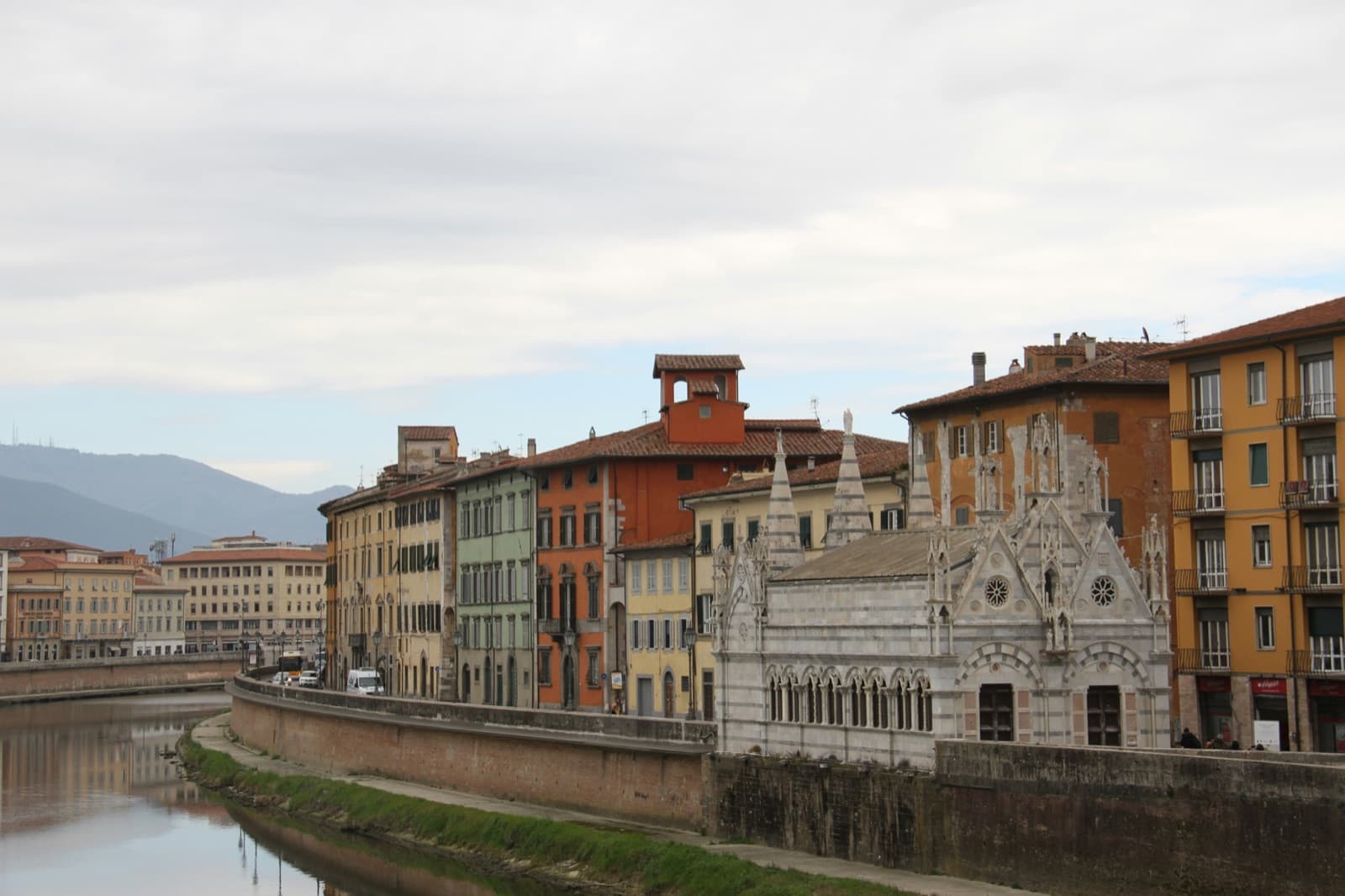
  • Church of Santa Maria della Spina beside the Arno

    Santa Maria della Spina

    It looks like a model set down at the edge of the Arno: too delicate to be real. A jewel of Pisan Gothic that once held, by tradition, a thorn from Christ's crown. And it hides a secret: in the 19th century it was taken apart stone by stone and rebuilt higher up to save it from the floods.

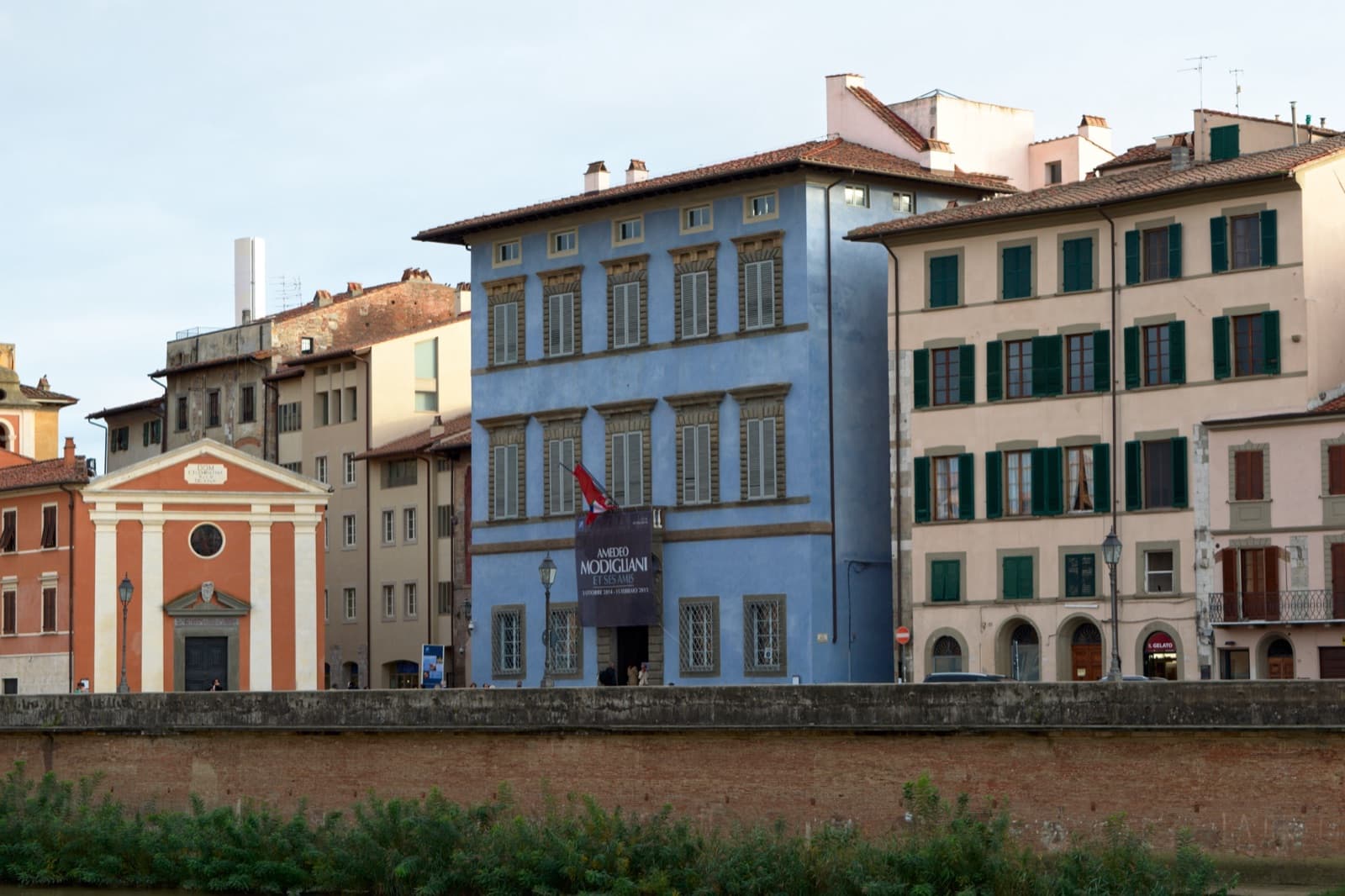
  • Blue façade of Palazzo Blu on the Arno

    Palazzo Blu

    That deep blue is no accident: it turns a 14th-century palace into a landmark within the city. It was home to wealthy families, and today it's a living cultural center with rotating exhibitions. The Pisa that doesn't freeze in the past: it displays it, interprets it and updates it beside the Arno.

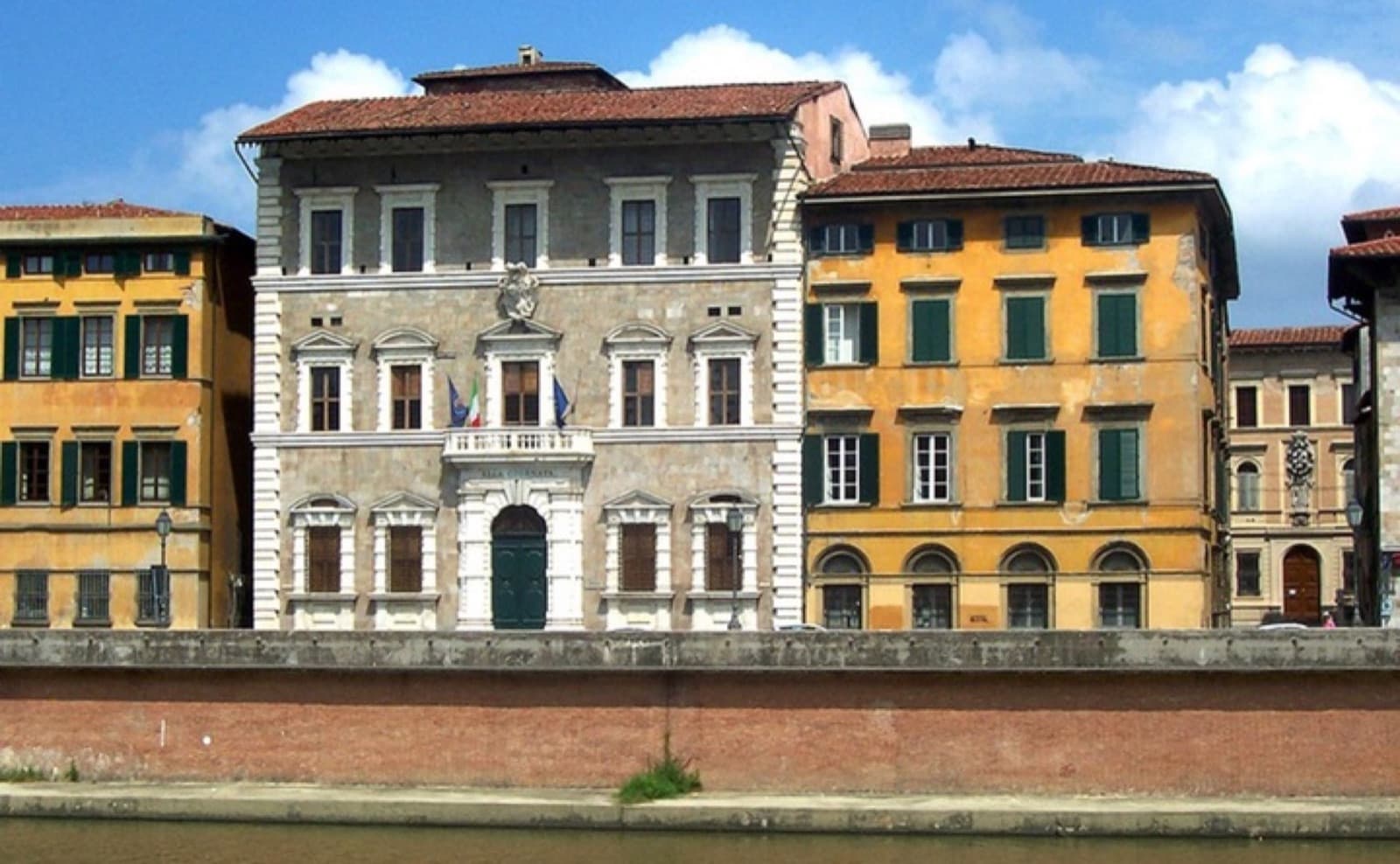
  • Historic seat of the University of Pisa

    University of Pisa

    When Pisa lost the sea, it found another axis: knowledge. Its university, from 1343, is one of the oldest in Europe — and Galileo Galilei studied and taught here. The city stopped looking at the world from the sea and began to observe it, measure it and think it. Almost seven centuries on, it remains a beacon of learning.

  • Medieval walls of Pisa

    City Walls of Pisa

    Over 7 km that were born not from fear but from growth: Pisa had become valuable, and the valuable gets protected. They ring the center and enclose the Campo dei Miracoli too. Today they no longer separate — you walk on top of them, and from there you grasp the city's scale at a glance.

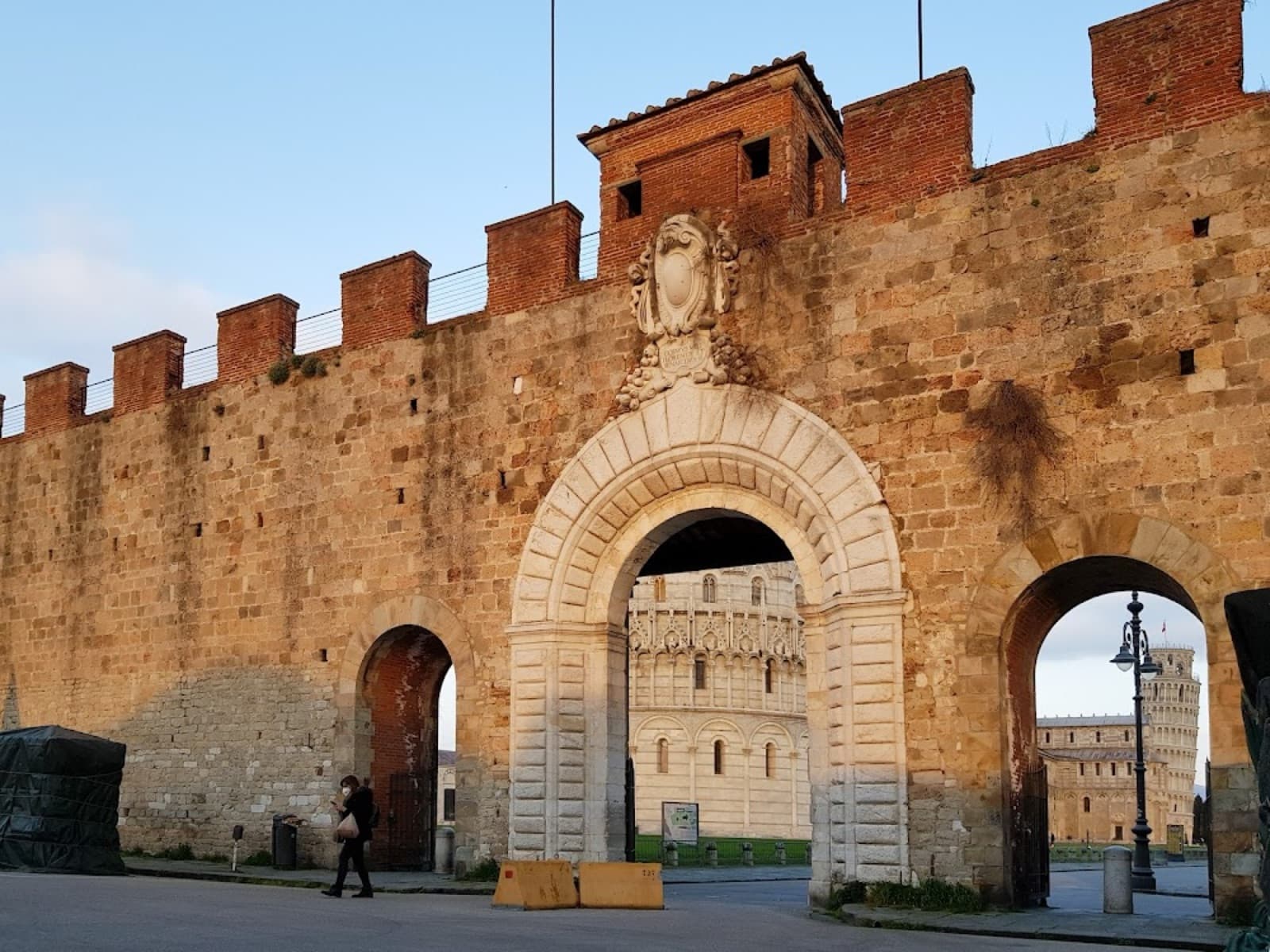
  • Porta Santa Maria in the medieval walls

    Porta Santa Maria

    You cross it almost without noticing, and everything changes. It's the threshold to the Campo dei Miracoli: first the squeeze of the narrow street, then the explosion of the lawn, the marble, the tower. Not just a medieval gate: the exact moment Pisa chose to show itself to the world.

FAQ

About Pisa on Ruthy

They're written and narrated by Lucas Botta, of Historia en Podcast. Not auto-generated text or a synthetic voice: curated content, with judgment and narrative craft. That's the difference from any generic guide.

Yes. Ruthy streams its stories, so you'll need a connection while you explore the city — Wi-Fi, mobile data or a local eSIM. The upside: the app takes up no space on your phone, and you always hear the most up-to-date version of each story.

Pisa has 14 places and 18 chapters on Ruthy. The historic centre walks comfortably in a single relaxed day: one morning for the Campo dei Miracoli (Tower, Duomo, Baptistery, Camposanto, Museo dell'Opera), and the afternoon for Piazza dei Cavalieri, the lungarni along the Arno (Santa Maria della Spina, Palazzo Blu) and the city walls.

Pisa is far more than the Tower. The Campo dei Miracoli is a unique ensemble — Cathedral, Baptistery, Tower and Camposanto designed together. Beyond the piazza you have Piazza dei Cavalieri (Vasari, the Medici), the University where Galileo studied, and the small Santa Maria della Spina on the Arno. Ruthy gives you the context photos can't.

Yes. Before heading out, listen to the 5 chapters of "History of Pisa" — they give you the frame (Etruscans, Rome, maritime republic, defeat at Meloria, arrival of the Medici). Then start at Porta Santa Maria, walk through the Campo dei Miracoli, and head into town via Piazza dei Cavalieri down to the Arno.

Ruthy is an audio guide, not a ticketing service. Climbing the Tower requires a time-slot ticket (strongly recommended online and in advance; limited capacity). The Cathedral, Baptistery, Camposanto and Museo dell'Opera del Duomo are covered by a combined ticket.

Pisa is one hour by regional train from Florence (Trenitalia, connections every 30 minutes). Most people visit it as a day trip from Florence — perfectly doable — but staying overnight gives you the Tower and Campo dei Miracoli at sunrise, queue-free and nearly empty.

Yes. Each person downloads the app on their phone and listens through their own headphones. You walk together and choose which story to play at each stop. No group tour, no fixed schedule, no guide to wait for.

Because of the ground. The subsoil under the southern side is sand and soft clay; by 1178, when builders had reached the third floor, the tower started sinking. Work stopped for nearly a century, and later floors were built compensating for the lean — which is why the silhouette is curved. Ruthy walks you through the 1990–2001 stabilisation that saved it.

Yes. Ruthy is free to download and use on iOS and Android. All 14 places and 18 Pisa chapters are available at no cost during this initial phase.

Real reviews

What Ruthy users say.

  • An original and very interesting proposal to discover cities in a different way. It's very easy to use, has a clear interface, and the stories are well narrated. I liked that it lets you explore at your own pace and choose what places to visit by proximity or interest. Without a doubt, it's an entertaining and educational option — ideal for tourists or to rediscover your own city.

    Jaz GonzálezApp Store
  • I used it on my trip and the descriptions, details, and information it provides are excellent. Highly recommended!

    Ale CarbaApp Store
  • This app is wonderful — it shows you everything you need to know about any place you visit.

    Lisandro HedinGoogle Play

Start with Pisa

You don't just see Pisa. You understand it.

Download Ruthy free and walk Pisa with all 14 stories activating in real time, right where it all happened.

Free · no ads · iOS and Android

Download Ruthy free