

Skip to content
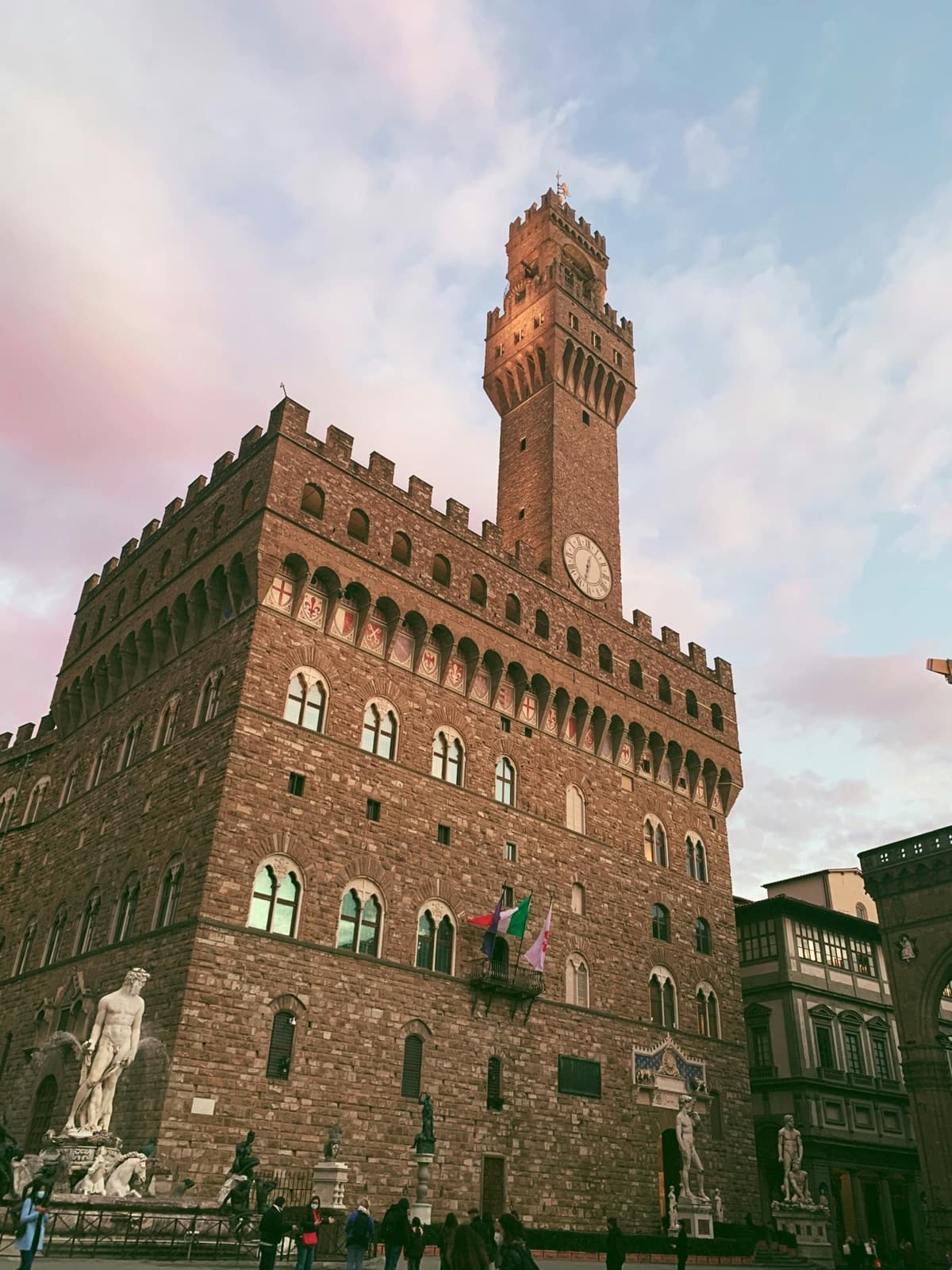
Piazza della Signoria and Palazzo Vecchio

Italy · 18 places · 23 stories

Don’t visit Florence.
Understand it.

18 places. 23 stories. Bankers, conspiracies and geniuses: every stone hides a Renaissance thriller.

18 historical places in Florence with free audio guide

Free · no ads · iOS and Android

Florence in depth

Florence changed the world without firing a shot.

Ruthy shows you Florence through 18 real places, narrated by Lucas Botta (Historia en Podcast) at the exact spot where each story happened. No group tour, no schedule, no shared headphones. Just you, the city, and a story that starts when you arrive and press play.

You walk Florence like a museum, but it beats like a thriller. A small city that invented modern banking, the florin and perspective, and turned art into a tool of power. Behind every façade there's a family —the Medici, the Pazzi—; behind every square, a conspiracy; behind every work, a political commission. Brunelleschi, Botticelli, Michelangelo: they didn't decorate, they governed with beauty. So you don't walk it to tick off museums, but to understand how a corner of Tuscany changed the course of art. Ruthy tells you standing right there, in no hurry.

Deep-dive walks

Places told chapter by chapter.

We don't just tell you what it is. We tell you why it matters, how it was built, what happened inside, and how it became what it is today.

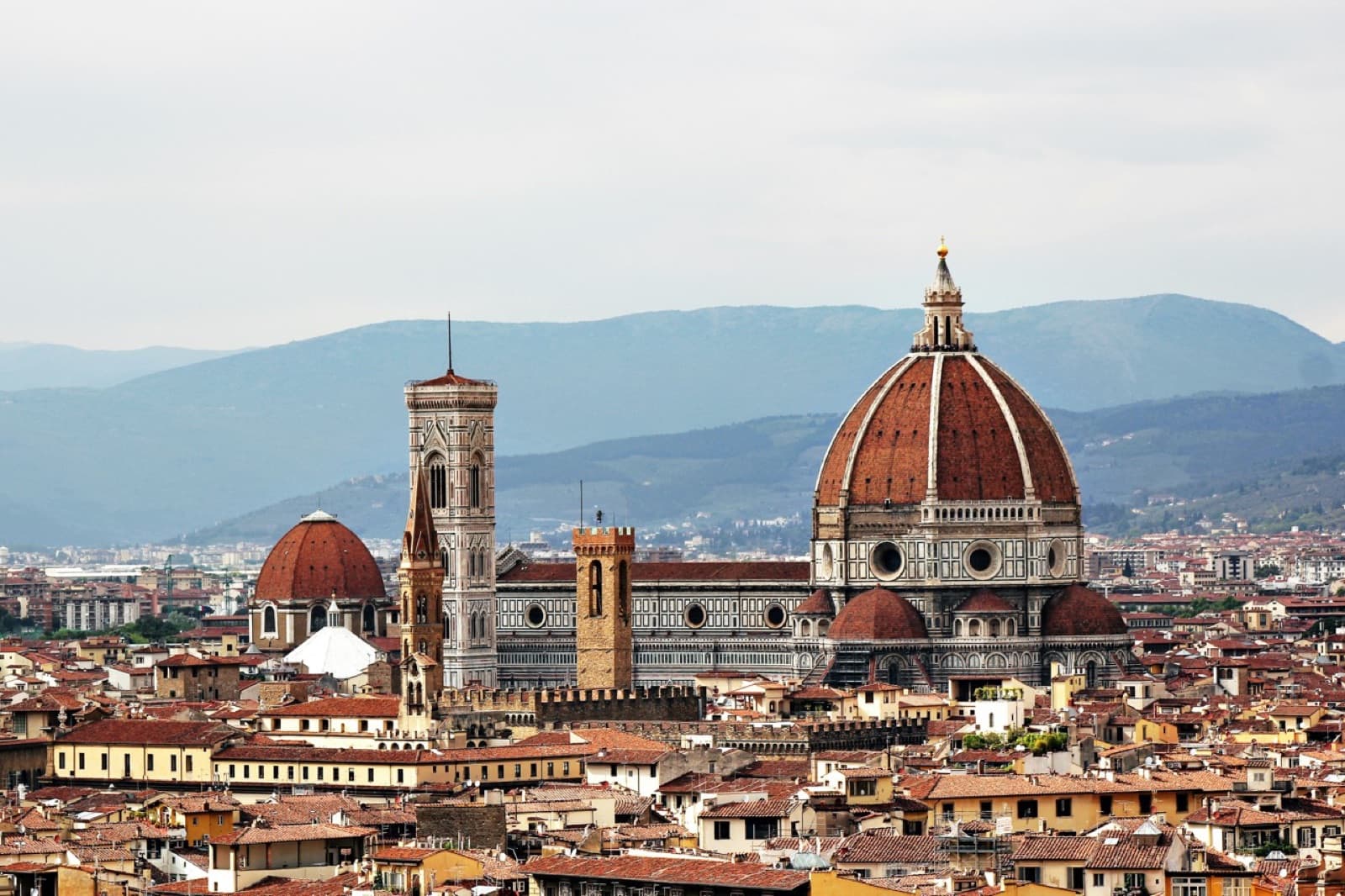
Panoramic view of Florence with the Duomo
6chapters

History of Florence

A small city that changed the world without firing a shot. It was born a Roman camp, grew rich on banking and the florin, bled in family wars and ended up inventing the Renaissance. Six chapters to understand how the Medici turned art into a form of power.

All 6 chapters

  1. Roman origins and early centuries (1st century BC – 11th century)
  2. A city at war: Guelphs vs. Ghibellines (11th–13th centuries)
  3. Economic boom: banks, trade and the florin (13th–14th centuries)
  4. The Republic and the families (14th–15th centuries)
  5. The Renaissance: art, power and propaganda (15th–16th centuries)
  6. From republic to duchy, and an eternal legacy (16th century onwards)
All 18 places

Everything you'll find in Florence.

Each place with its own story, narrated right where it happened.

  • Baptistery of San Giovanni opposite Florence's Duomo

    Baptistery of San Giovanni

    The oldest building in the center: when Dante was born, it was already here — and he was baptized inside. But what stops everyone are its gilded bronze doors. Michelangelo said they were so beautiful they deserved to be the gates of Paradise, and the name stuck. They took twenty-seven years to make.

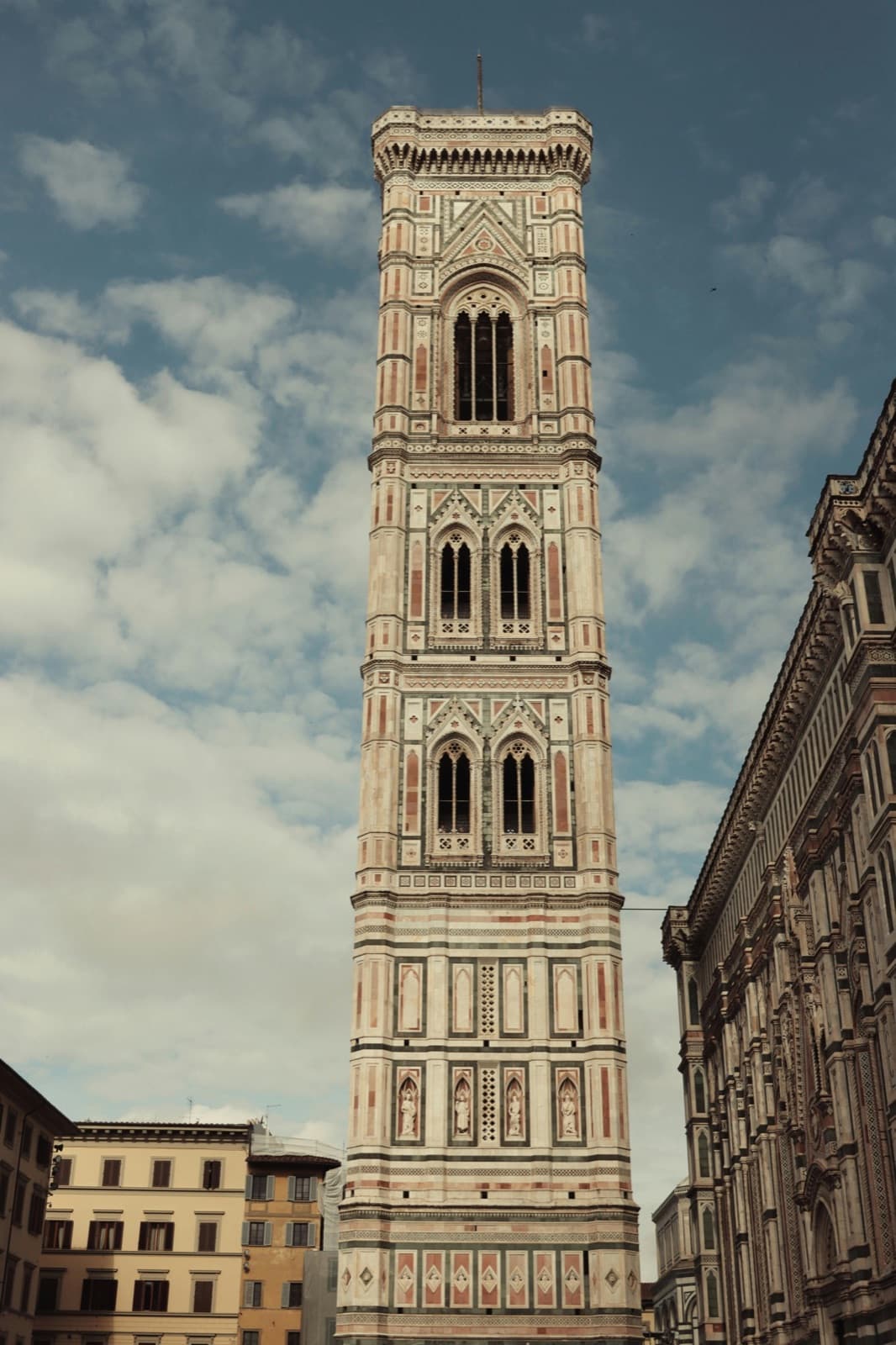
  • Giotto's Campanile next to the Duomo

    Giotto's Campanile

    Giotto, one of the fathers of painting, began it in 1334 — and died without seeing it finished. 85 meters of white, pink and green marble, with reliefs telling the arts, crafts and planets. Climb the 414 steps and you come face to face with Brunelleschi's dome.

  • Piazza della Signoria and Palazzo Vecchio

    Piazza della Signoria and Palazzo Vecchio

    Florence's political heart: here the republic governed, and then the Medici. But it's also a square marked by political violence — executions, conspiracies, a friar sent to the stake at its very center. Out in the open, copies of the David and Cellini's Perseus, like a roofless museum. Every stone hides a secret.

  • Michelangelo's profile carved on the Palazzo Vecchio

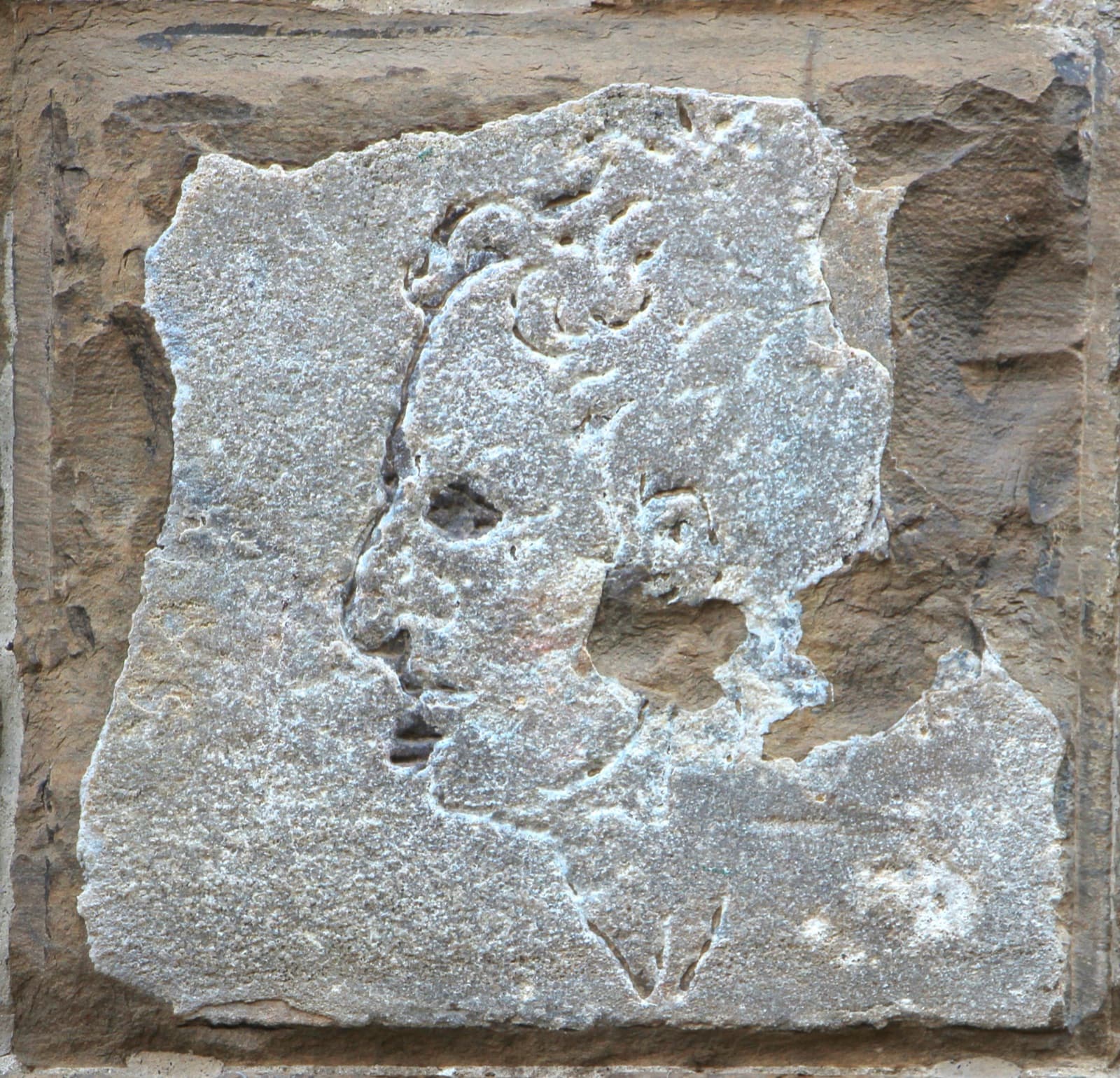
    Michelangelo's "Importuno"

    A meter and a half off the ground, on a corner of the Palazzo Vecchio, a profile is carved into the stone. Tradition says Michelangelo did it to get back at a man who pestered him in the street — supposedly behind his back, without looking. In Florence, even the stones laugh. Look for it: it's easy to miss.

  • Plaque marking the spot of Savonarola's execution

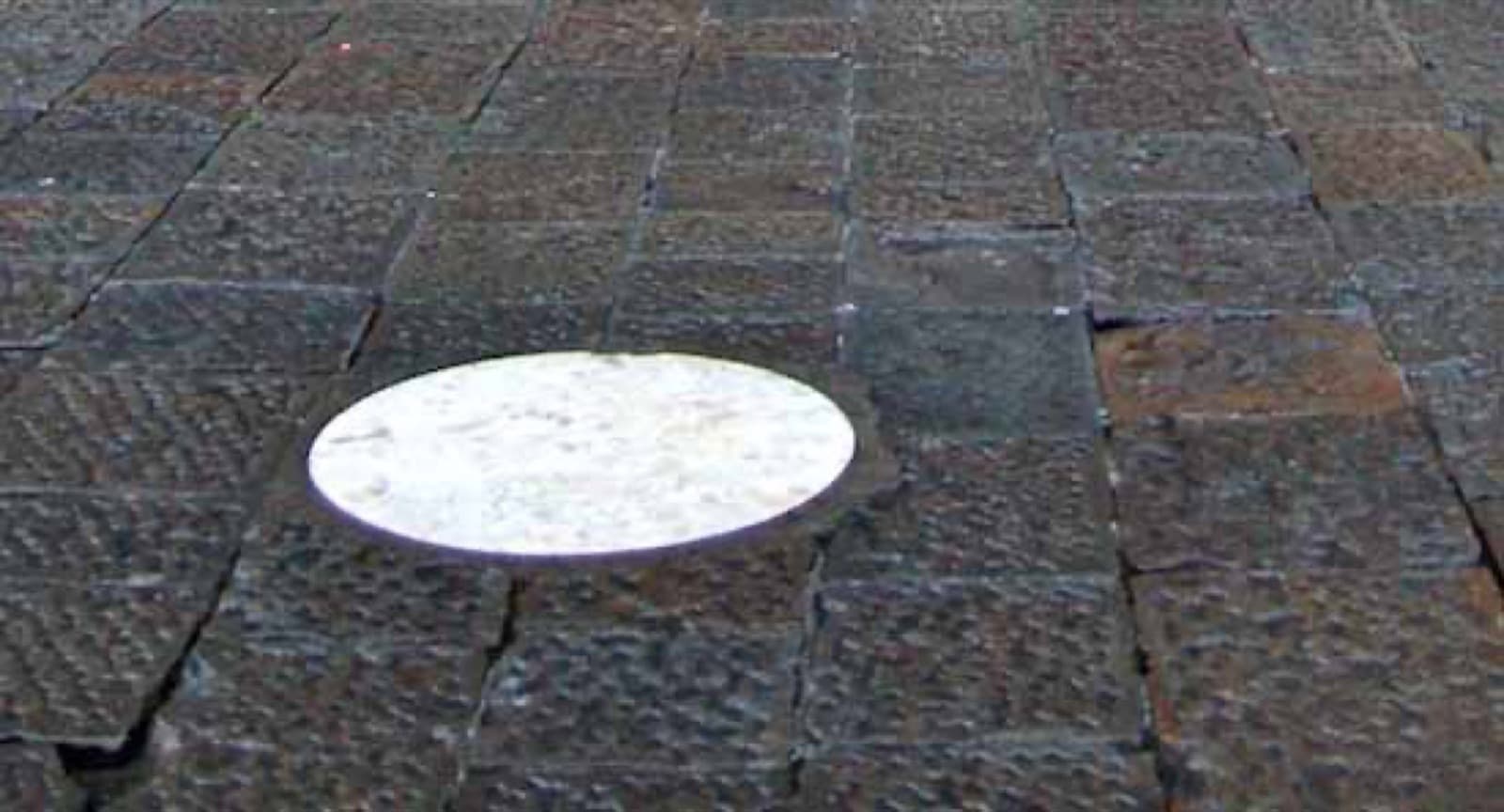
    The "ball mark"

    On the paving of Piazza della Signoria, a disc marks the exact spot where a friar was hanged and burned in 1498. The same man who had preached the "bonfire of the vanities" —where Florentines burned books and paintings— ended in the fire himself. The irony, marked in marble.

  • Uffizi Gallery in Florence

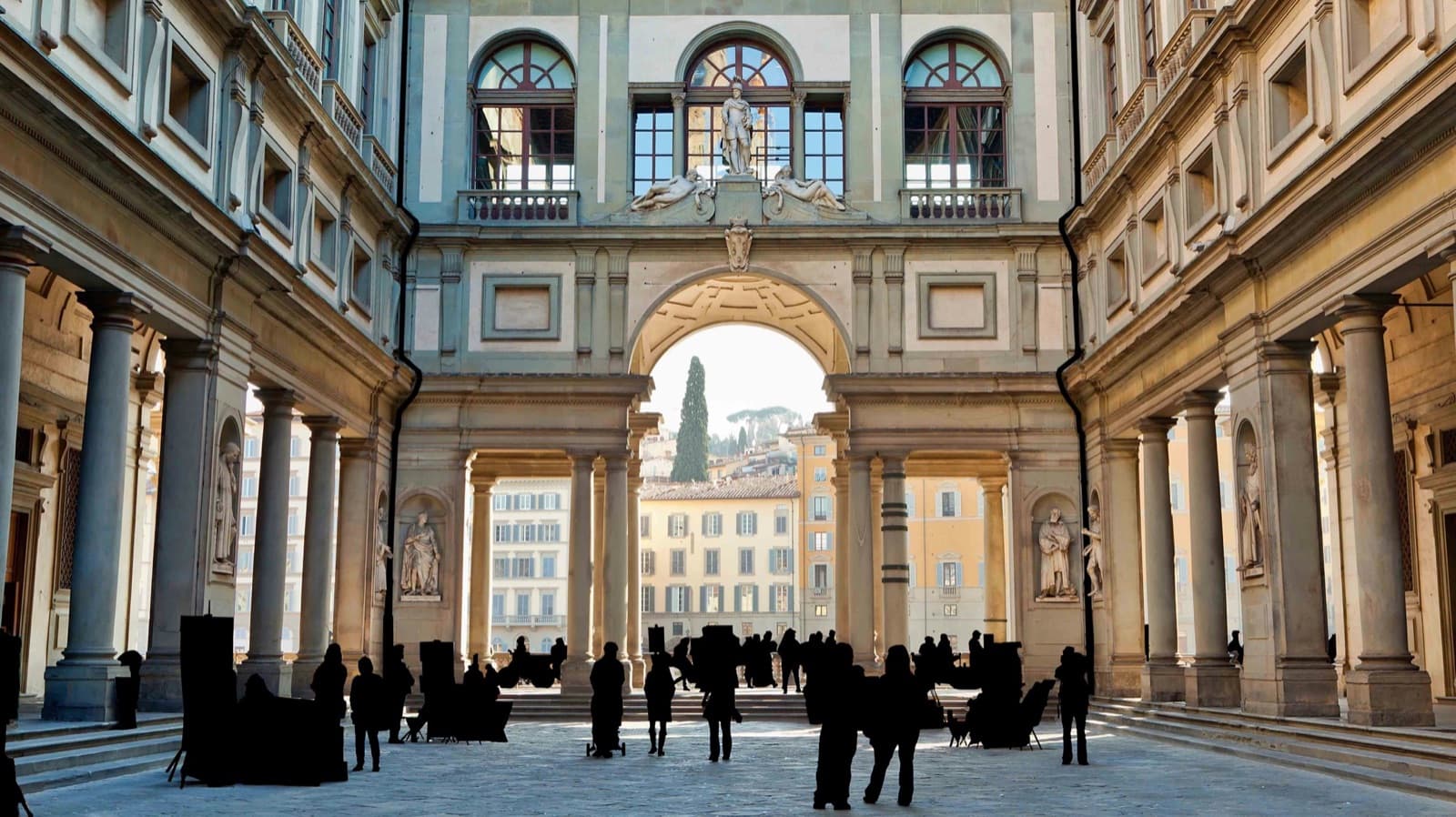
    Uffizi Gallery

    It was born as the Medici's administrative offices —hence the name, "uffizi"— and ended up one of the most visited museums in the world. Botticelli, Leonardo, Caravaggio, Michelangelo. And one woman, the last Medici, made sure the whole collection stayed in Florence forever.

  • Vasari Corridor above the Ponte Vecchio

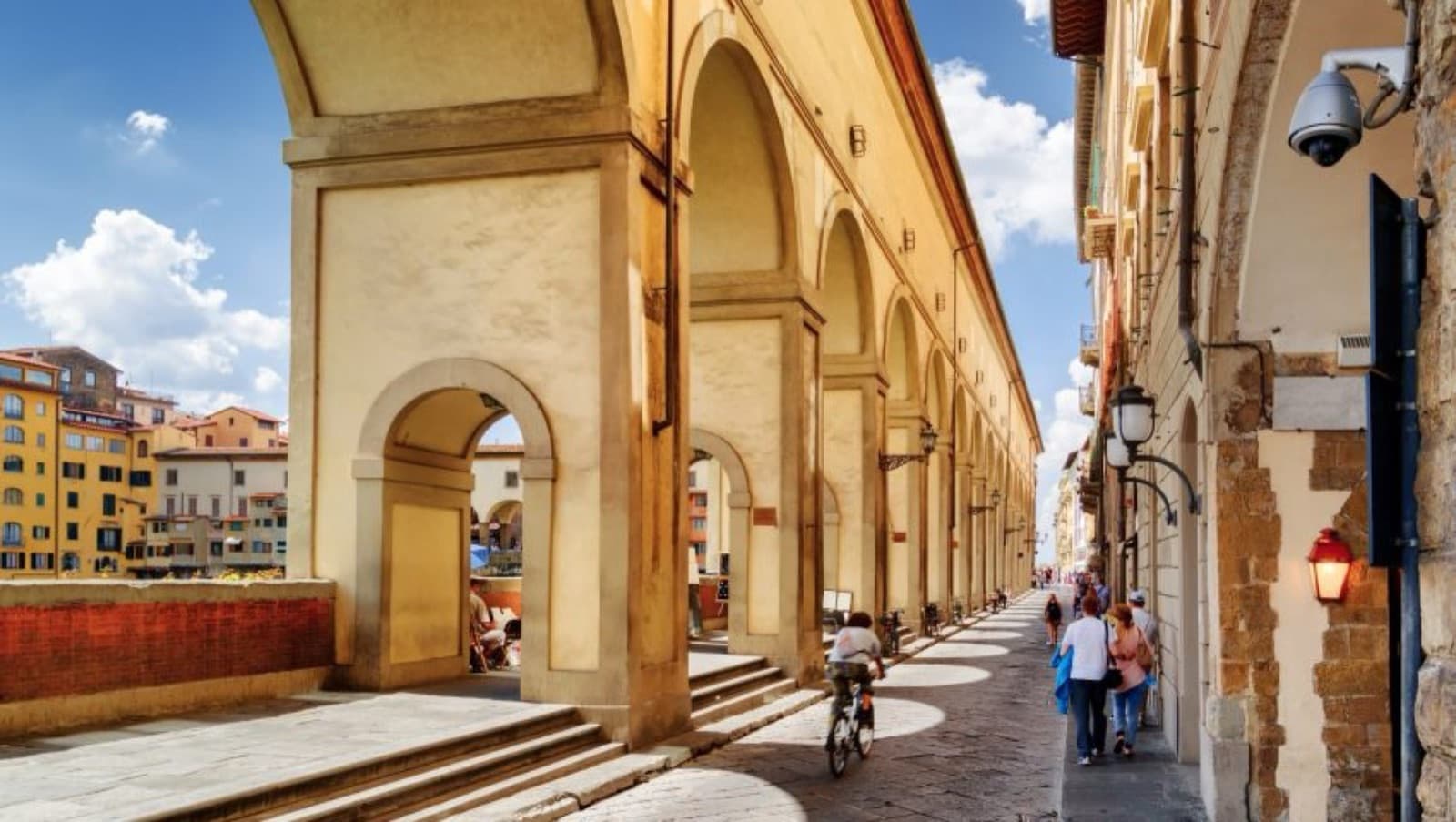
    Vasari Corridor

    A secret in plain sight: a kilometer-long elevated passage that crosses the city over people's heads. Cosimo I had it built in five months to go from one palace to another without setting foot in the street or mixing with the people — even to hear Mass unseen. Power, walking through the air.

  • Ponte Vecchio over the Arno river

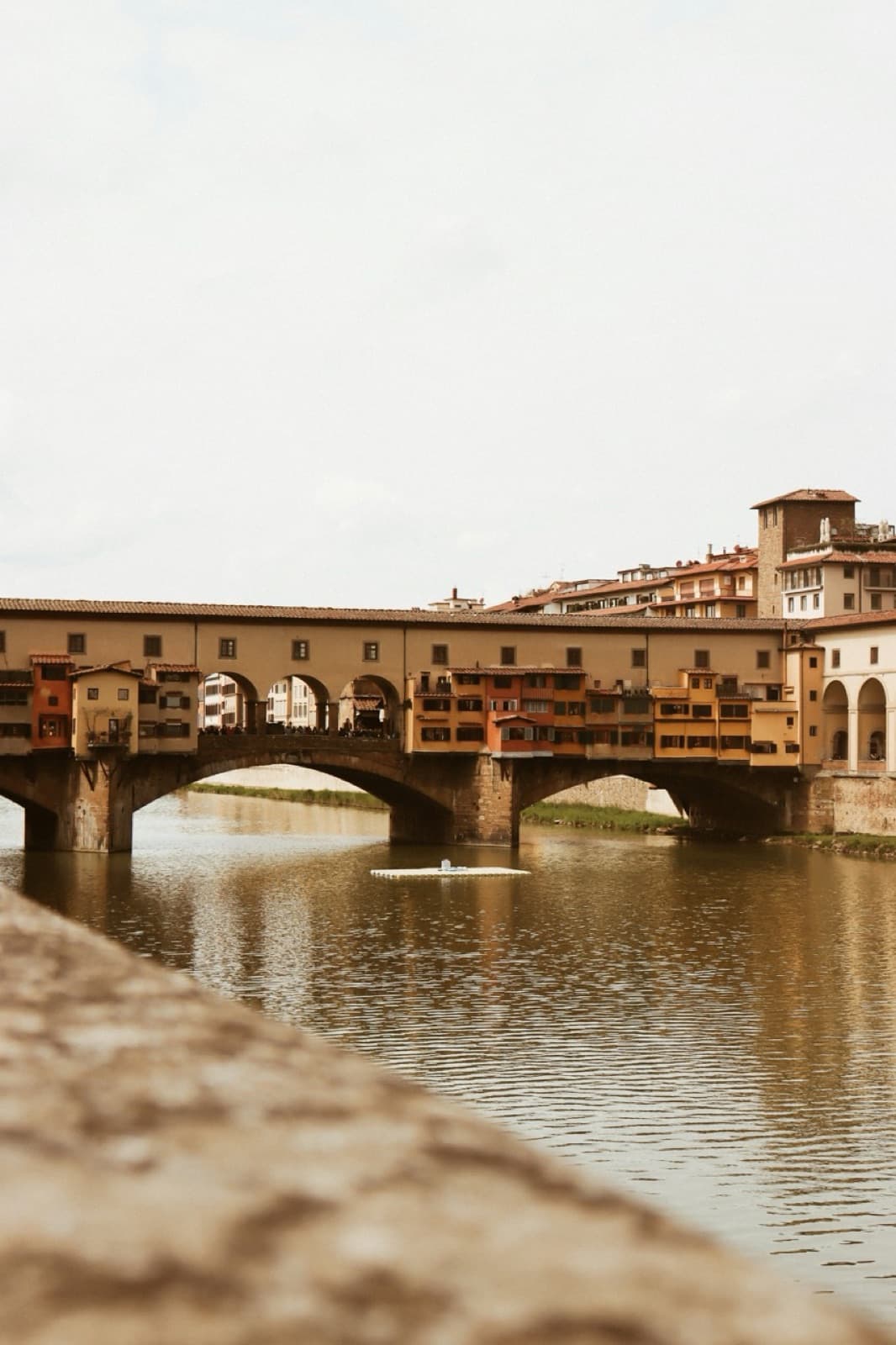
    Ponte Vecchio

    The oldest bridge in Florence, lined with shops since 1345. First butchers and tanners; in 1593 a Medici threw them out over the smell and brought in goldsmiths — who are still there. It survived floods and the Nazi retreat of 1944, when every other bridge was blown up. Why not this one? The legend has an answer.

  • View of Florence from Piazzale Michelangelo

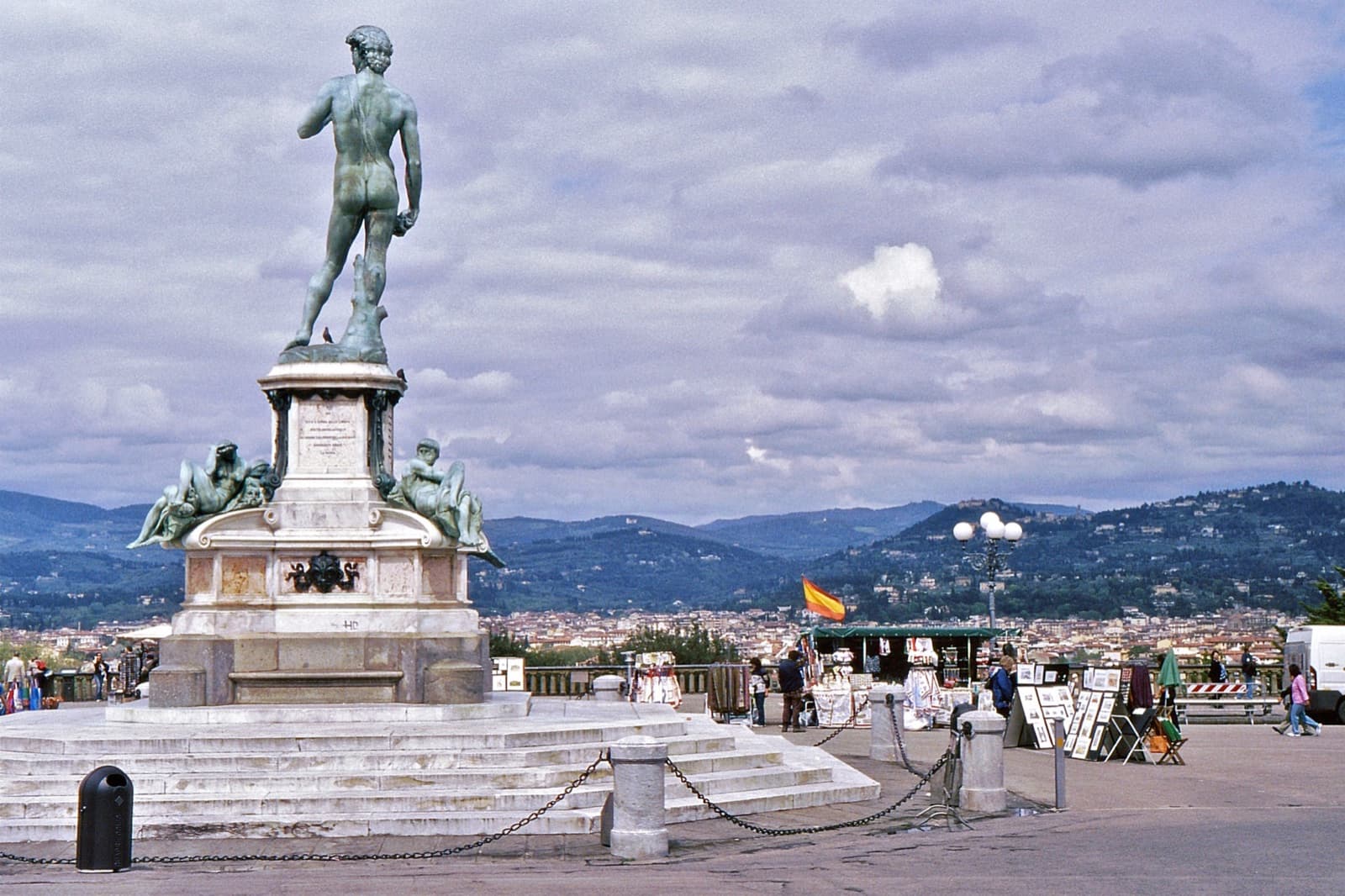
    Piazzale Michelangelo

    The balcony of Florence. Laid out in 1869, when the city was capital of Italy, it gives you the classic postcard: the Duomo, the campanile, Santa Croce and the Arno with the Ponte Vecchio, all in one glance. A bronze replica of the David watches over the terrace. The best spot to watch the sun go down.

  • Façade of the Palazzo Pitti

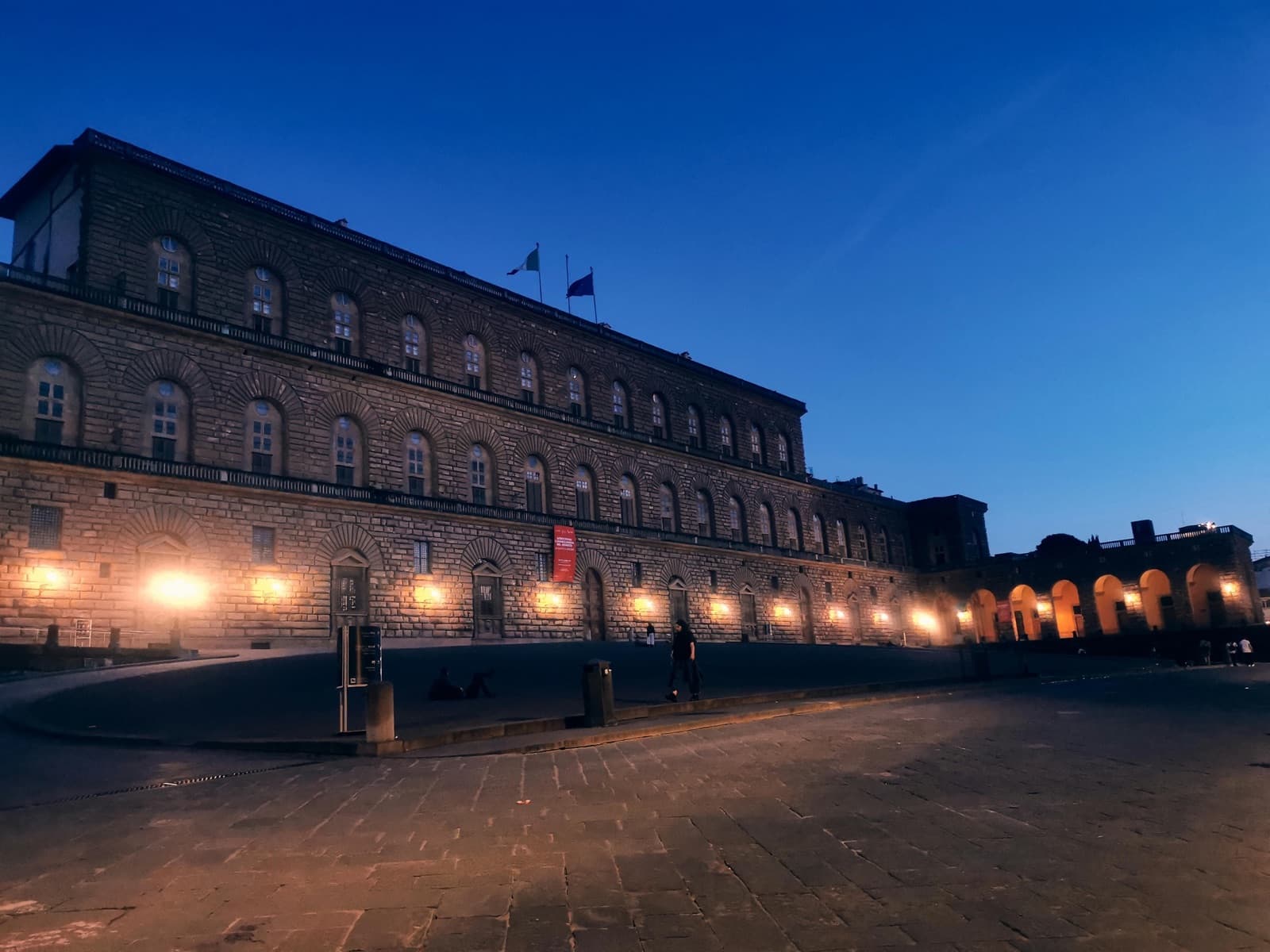
    Palazzo Pitti

    Banker Luca Pitti built it to outshine the Medici. The irony: he ended up selling it to the Medici. Later it belonged to the Lorraine, the Savoy, and even served as a royal residence when Florence was capital of Italy. A mass of stone that seems to say "we're in charge here."

  • Boboli Gardens behind the Palazzo Pitti

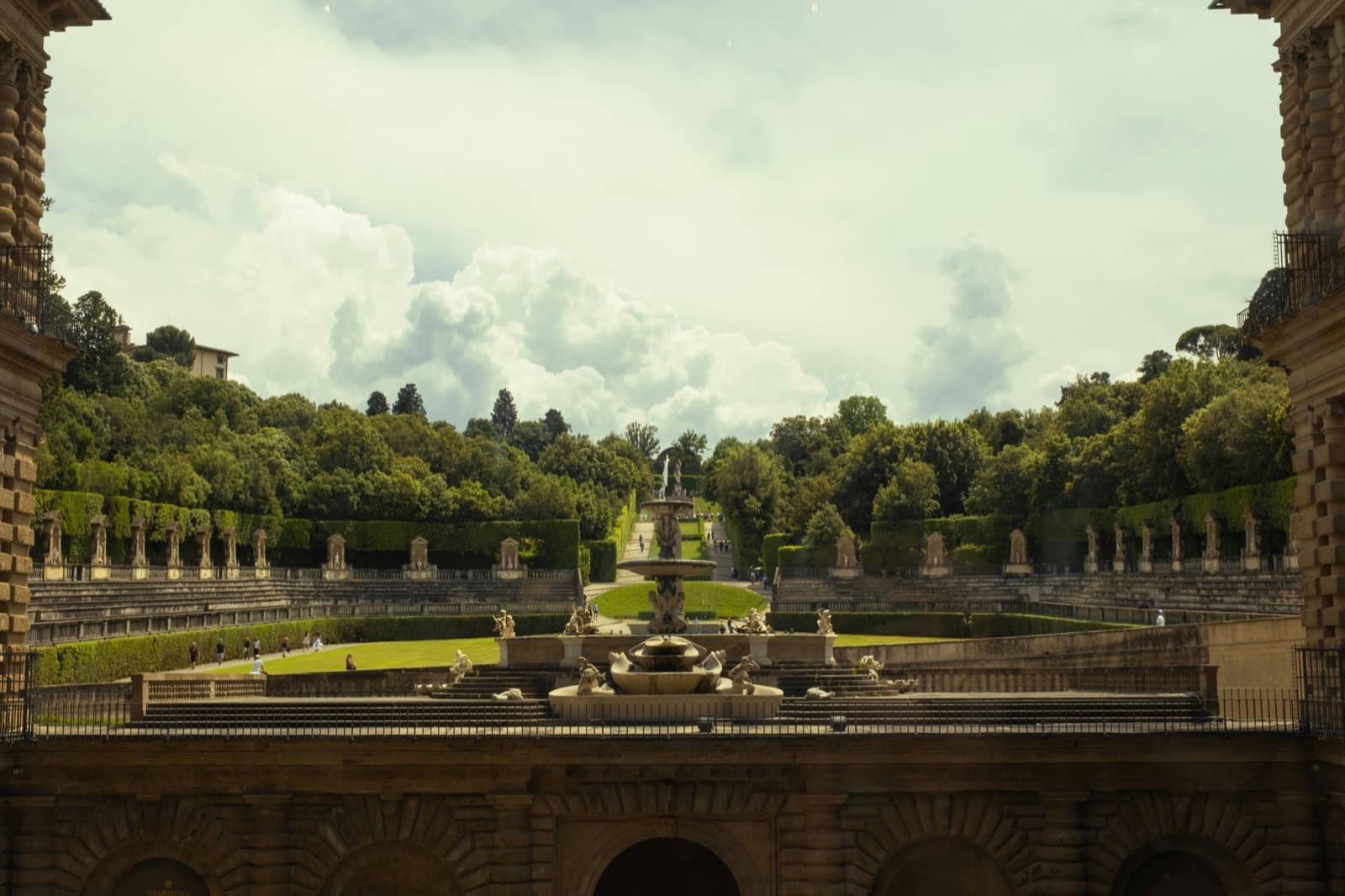
    Boboli Gardens

    Not made for resting, but for impressing: the Medici's private garden, the model for Versailles and Schönbrunn. Terraces, theatrical grottoes, a Neptune fountain, even an Egyptian obelisk. For centuries, only nobles could enter. They say Eleonora's ghost still wanders it at night.

  • Galleria dell'Accademia, home of the David

    Galleria dell'Accademia

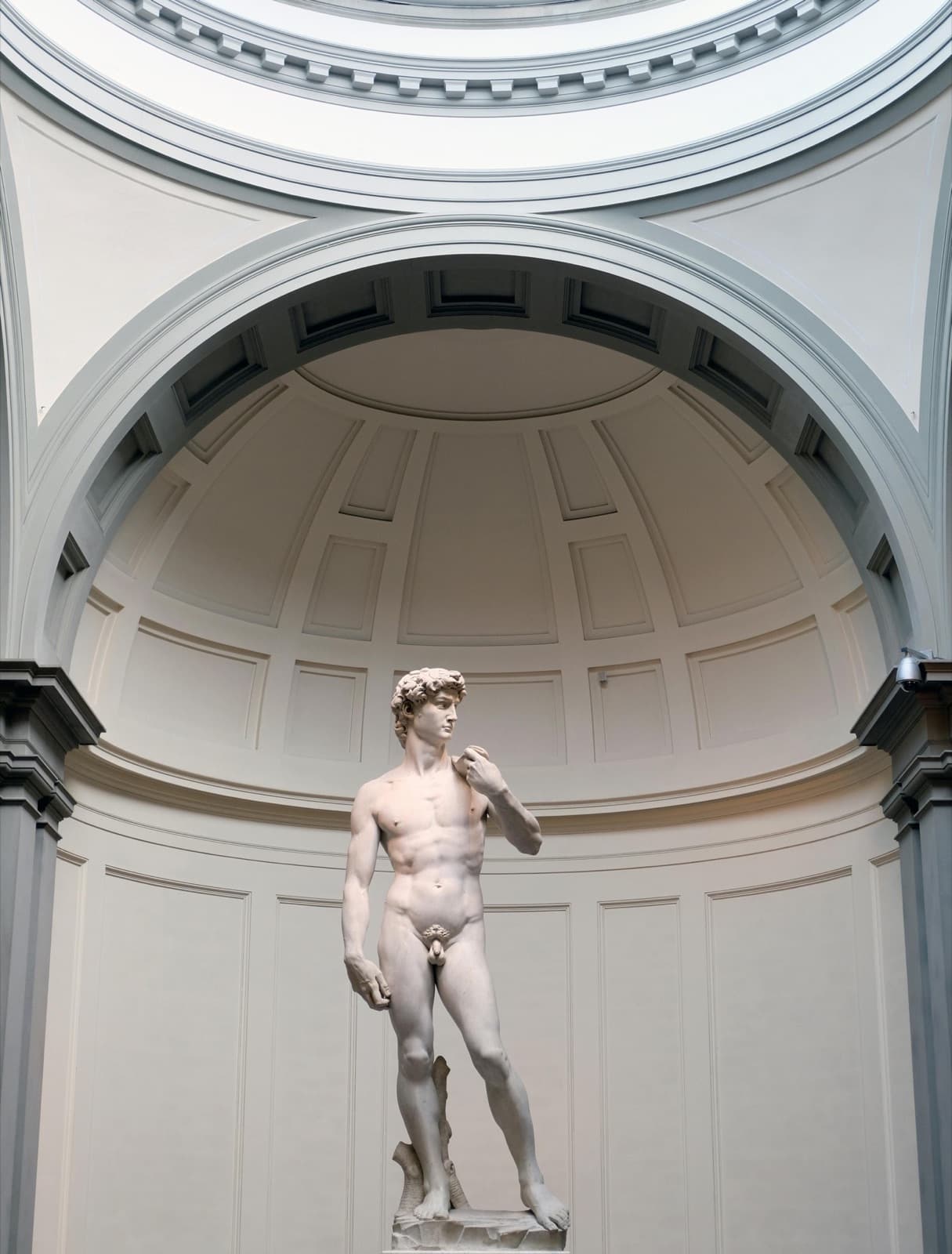
    A museum with a single star — but what a star. Michelangelo's David, five meters from one block of marble, carved in the instant of doubt before the fight, not in the triumph. On the way to it, the unfinished "Prisoners" seem to struggle out of the stone. For Michelangelo, the figure was already inside.

  • Courtyard of the Bargello Museum

    Bargello Museum

    It was a prison, police headquarters and place of executions — and today it's the temple of Renaissance sculpture. Here is Donatello's bronze David, one of the first major free-standing male nudes of the Renaissance. If the Uffizi are painting, the Bargello is stone that breathes. Underrated, and better for it.

  • Façade of Santa Maria Novella

    Santa Maria Novella

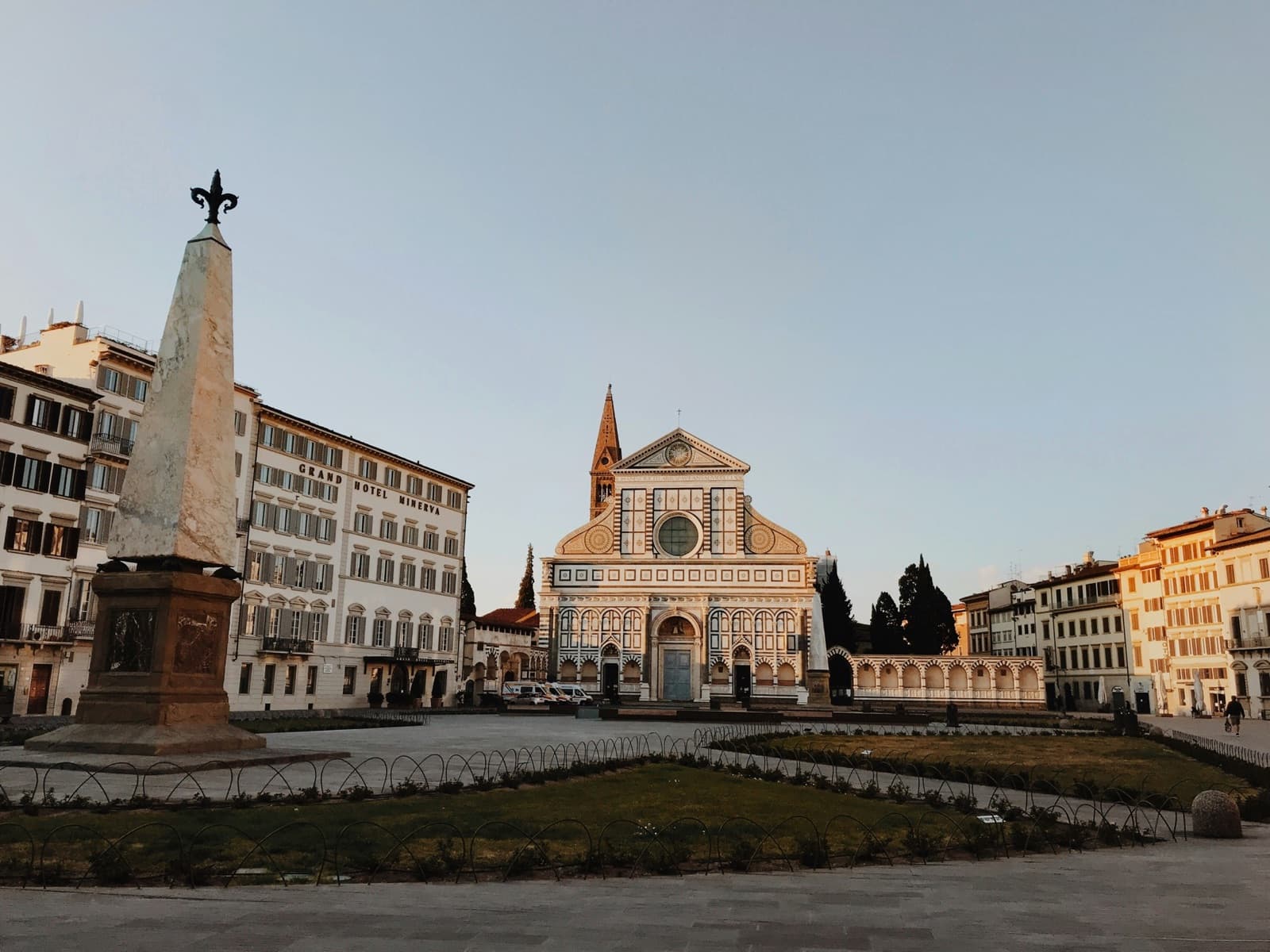
    The Dominican church with one of the most elegant façades in Italy, completed by Alberti. Inside, Masaccio's "Trinity": one of the first monumental, coherent demonstrations of linear perspective in Western painting — the exact moment a flat wall became depth. Next door, one of the oldest pharmacies in the world.

  • Basilica of Santa Croce in Florence

    Basilica of Santa Croce

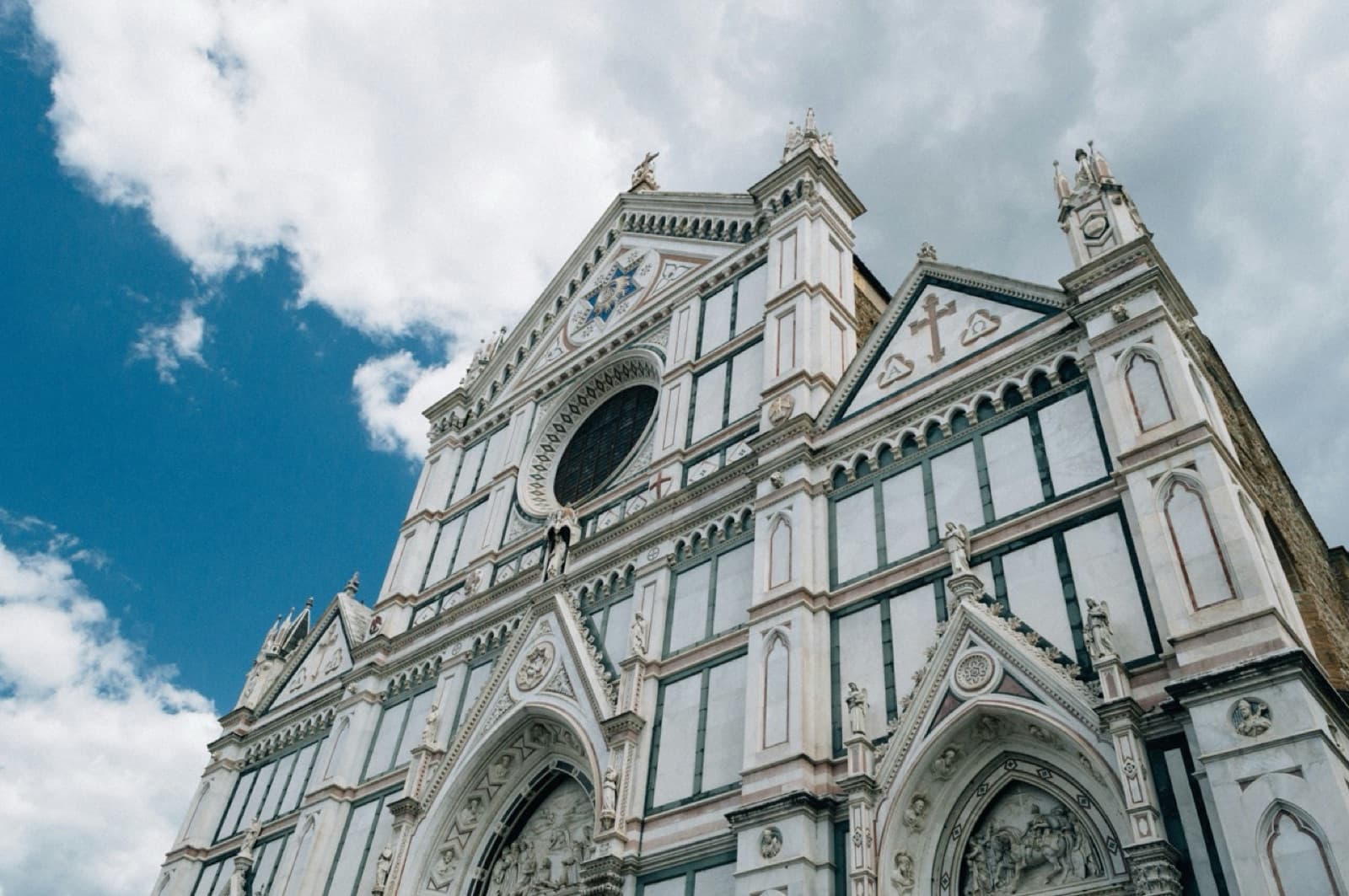
    Italy's "pantheon": within a few meters of each other rest Michelangelo, Galileo, Machiavelli and Rossini. Frescoes by Giotto, Cimabue's crucifix scarred by the 1966 flood, Brunelleschi's Pazzi Chapel. If Florence's history were written in stone, it would be in here.

  • Medici Chapel, mausoleum of the Medici

    Medici Chapel

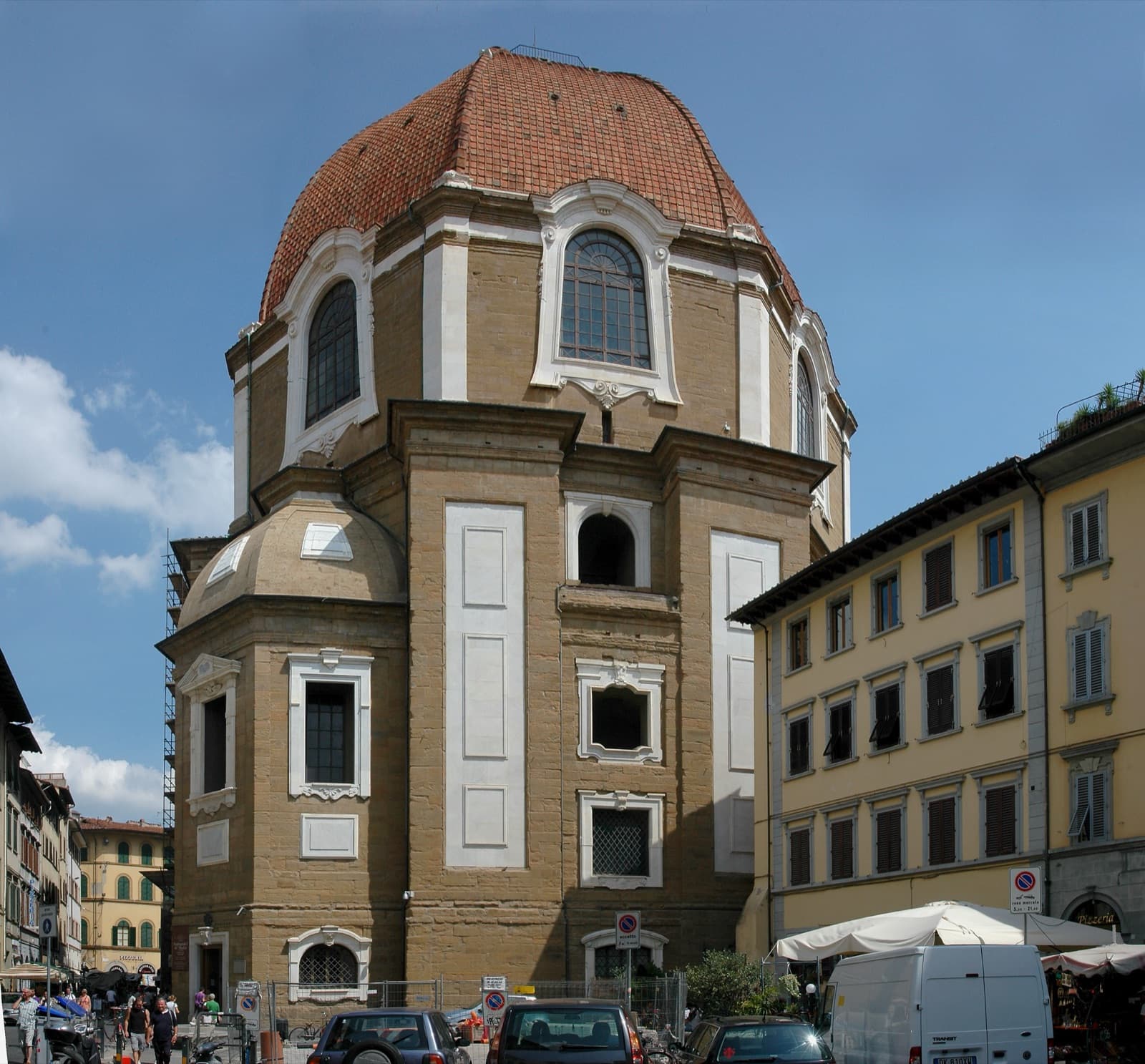
    The mausoleum of the most powerful family of the Renaissance, where every piece of marble screams power. Michelangelo designed the New Sacristy with his allegories of Day, Night, Dawn and Dusk — and left them unfinished, as if to say not even he could defeat time. The Medici were everything; today they rest here.

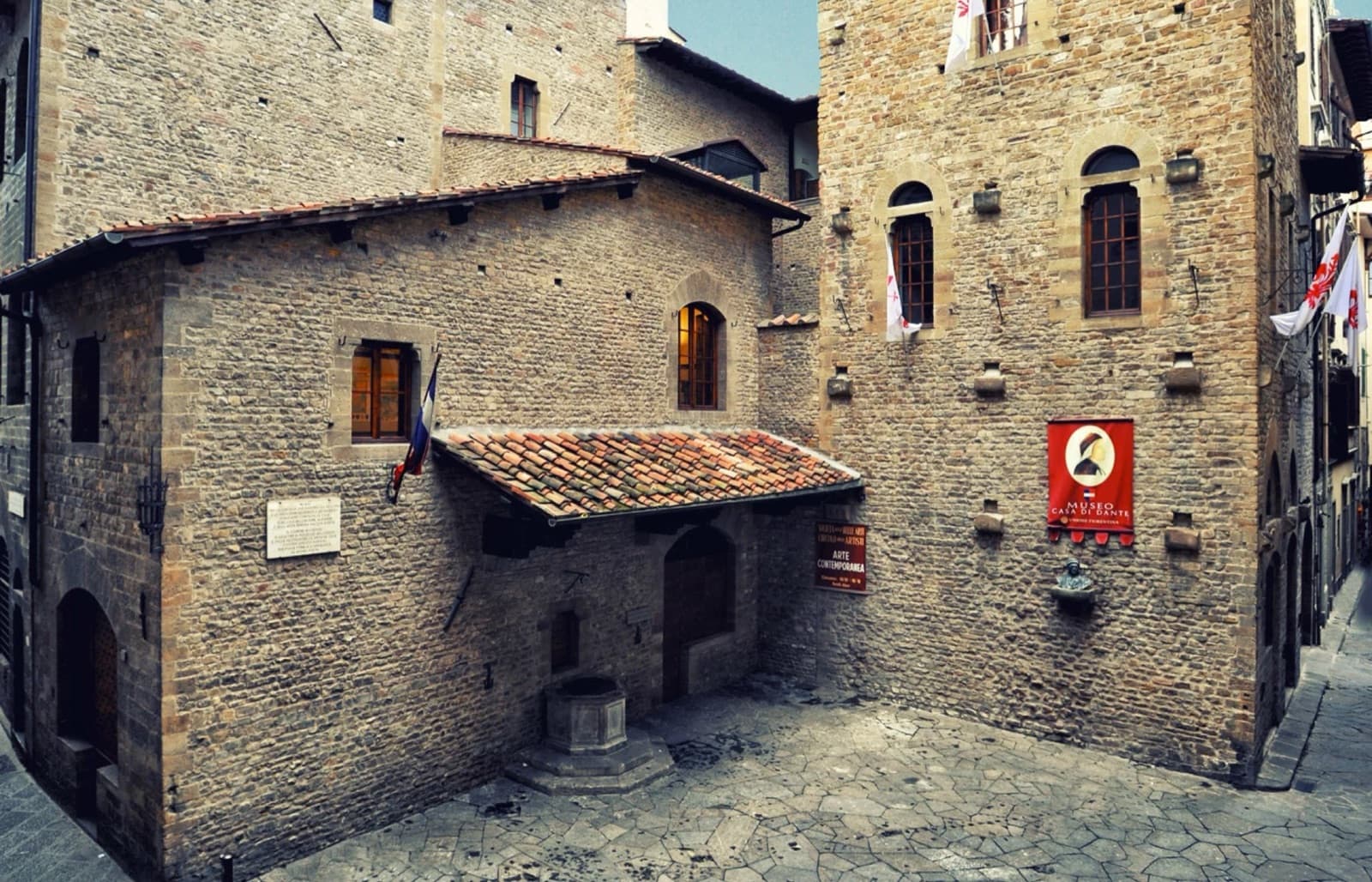
  • Dante Alighieri's house-museum

    Dante's House

    A 20th-century reconstruction in the neighborhood where the father of the Italian language was born. Dante lived through civil war, his love for Beatrice and an exile he never returned from: he wrote the Divine Comedy far from his city. A few steps away, the church where, by tradition, he first saw her.

FAQ

About Florence on Ruthy

They're written and narrated by Lucas Botta, of Historia en Podcast. Not auto-generated text or a synthetic voice: curated content, with judgment and narrative craft. That's the difference from any generic guide.

Yes. Ruthy streams its stories, so you'll need a connection while you explore the city — Wi-Fi, mobile data or a local eSIM. The upside: the app takes up no space on your phone, and you always hear the most up-to-date version of each story.

Florence has 18 places and 23 chapters on Ruthy. The historic centre walks comfortably in 2 to 3 days: one morning for the Duomo–Baptistery–Campanile axis, another for Piazza della Signoria–Uffizi–Ponte Vecchio, an afternoon for Santa Croce and Dante's quarter, and half a day for Oltrarno (Pitti, Boboli, Piazzale Michelangelo).

Yes. Before heading out, listen to the 6 chapters of "History of Florence" — they give you the frame for everything else (Medici, Guelphs vs. Ghibellines, the florin). Then start at the Baptistery and the Duomo, continue to Piazza della Signoria and the Uffizi, and end day one crossing the Ponte Vecchio into Oltrarno.

Ruthy tells you the story, context and keys to understand what you're about to see — the David, the Prisoners, the Botticellis, the birth of perspective with Masaccio. Audio activates near each site and you can listen before, in the queue and as you walk through.

Ruthy is an audio guide, not a ticketing service. For the Uffizi, Galleria dell'Accademia (David), Palazzo Vecchio, Palazzo Pitti, Boboli Gardens, Medici Chapel and the Duomo's dome you need to book separately — strongly recommended online and in advance, especially in high season.

Yes. Each person downloads the app on their phone and listens through their own headphones. You walk together and choose which story to play at each stop. No group tour, no fixed schedule, no guide to wait for.

This version covers Florence's historic centre (from Santa Maria Novella to Santa Croce, and Oltrarno up to Piazzale Michelangelo). Fiesole, Settignano and other Tuscan towns are not included yet.

Florence is one of the great centres of the Renaissance: it helped consolidate new approaches to perspective, artistic patronage, modern banking and the idea of the artist as an individual creator. Every square was a laboratory. Ruthy shows you how a city of a hundred thousand people decisively shaped the course of Western art.

Yes. Ruthy is free to download and use on iOS and Android. All 18 places and 23 Florence chapters are available at no cost during this initial phase.

Real reviews

What Ruthy users say.

  • An original and very interesting proposal to discover cities in a different way. It's very easy to use, has a clear interface, and the stories are well narrated. I liked that it lets you explore at your own pace and choose what places to visit by proximity or interest. Without a doubt, it's an entertaining and educational option — ideal for tourists or to rediscover your own city.

    Jaz GonzálezApp Store
  • I used it on my trip and the descriptions, details, and information it provides are excellent. Highly recommended!

    Ale CarbaApp Store
  • This app is wonderful — it shows you everything you need to know about any place you visit.

    Lisandro HedinGoogle Play

Start with Florence

You don't just see Florence. You understand it.

Download Ruthy free and walk Florence with all 18 stories activating in real time, right where it all happened.

Free · no ads · iOS and Android

Download Ruthy free