

Skip to content
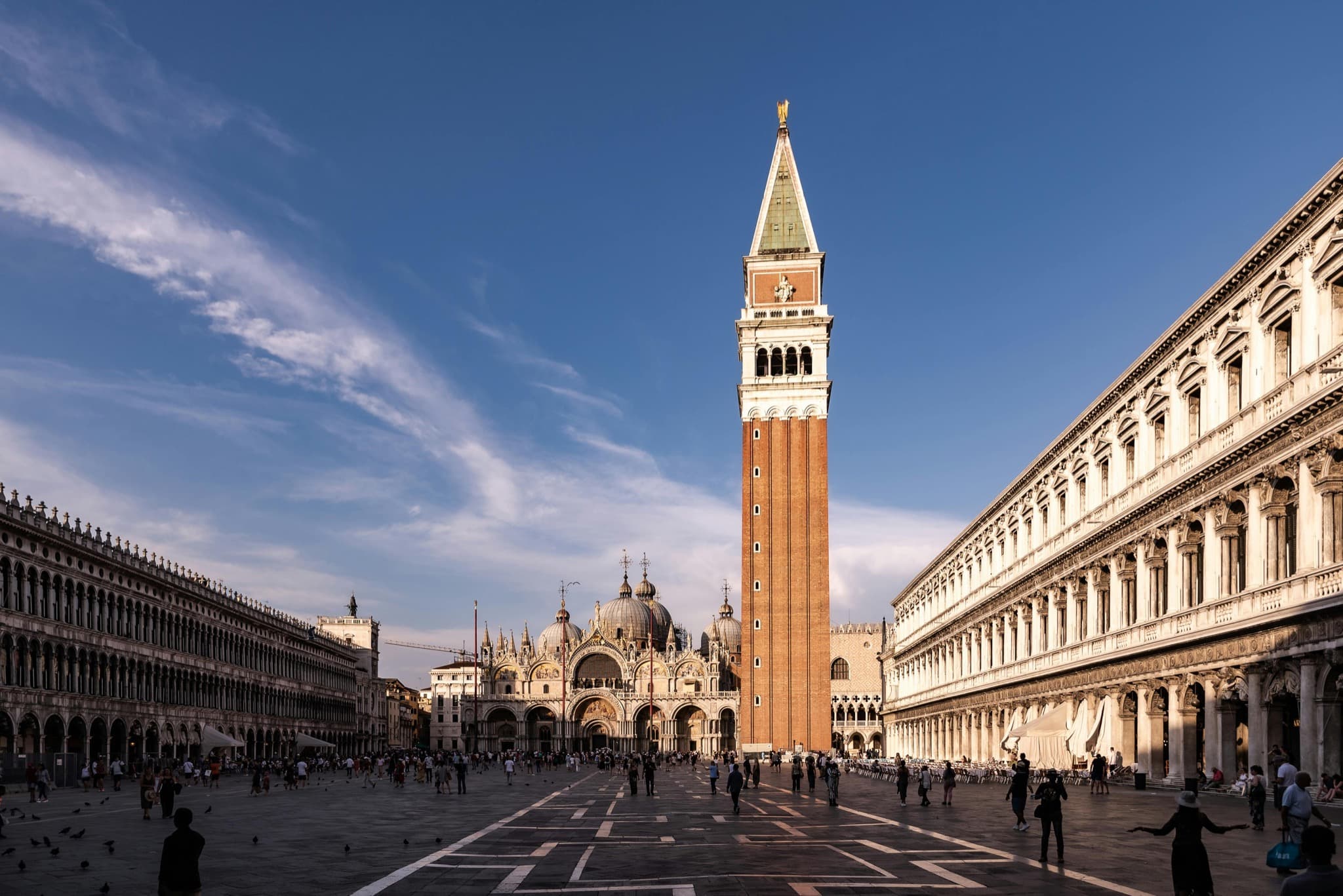
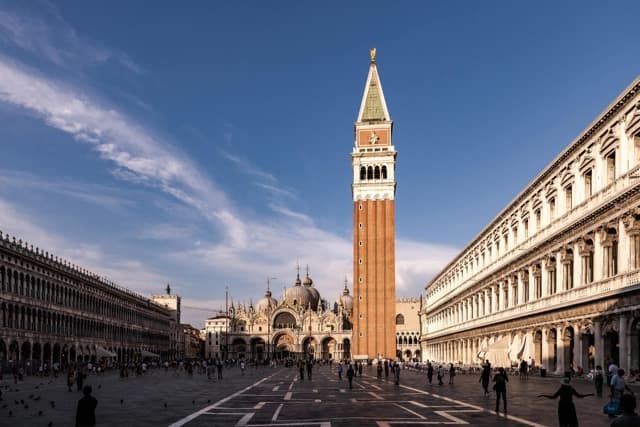
St Mark's Square, Venice

Italy · 25 places · 33 stories

Don’t visit Venice.
Understand it.

25 places. 33 stories. Refugees fleeing the fall of the Empire raised, island by island, the republic that became one of the Mediterranean's great maritime powers for centuries — until Napoleon, in 1797.

25 historical places in Venice with free audio guide

Free · no ads · iOS and Android

Venice in depth

Venice wasn't born from a myth — it was born from fear, in a lagoon nobody wanted.

Ruthy shows you Venice through 25 real places, narrated by Lucas Botta (Historia en Podcast) at the exact spot where each story happened. No group tour, no schedule, no shared headphones. Just you, the city, and a story that starts when you arrive and press play.

Venice is usually seen as a postcard: gondolas, canals, carnival. But behind the set there's a city born from fear —refugees hiding in a lagoon no one wanted to live in— that, through trade and the sea, became one of the most sophisticated powers in Europe. Here every stone has a job: to show power, to control money, to watch who comes in. With Ruthy you don't tick off monuments: you walk it leaping bridges, understanding why an improvisation on the water ended up eyeing the map of the world —and why it still argues with itself every time something changes.

Deep-dive walks

Places told chapter by chapter.

We don't just tell you what it is. We tell you why it matters, how it was built, what happened inside, and how it became what it is today.

View of Venice and its lagoon
6chapters

History of Venice

Venice wasn't born from a glorious myth — it was born from fear. Refugees fleeing the barbarians hid in a lagoon no one wanted… and a thousand years later that improvisation was La Serenissima, one of the Mediterranean's great maritime powers. Six chapters, from the origin to the fall to Napoleon.

All 6 chapters

  1. Origins in Chaos (5th–8th centuries)
  2. From Refuge to Organized Community (8th–10th centuries)
  3. The Commercial Explosion (11th–14th centuries)
  4. La Serenissima (14th–16th centuries)
  5. The Slow Decline (16th–18th centuries)
  6. End, Occupations and Reinvention (1797–20th century)
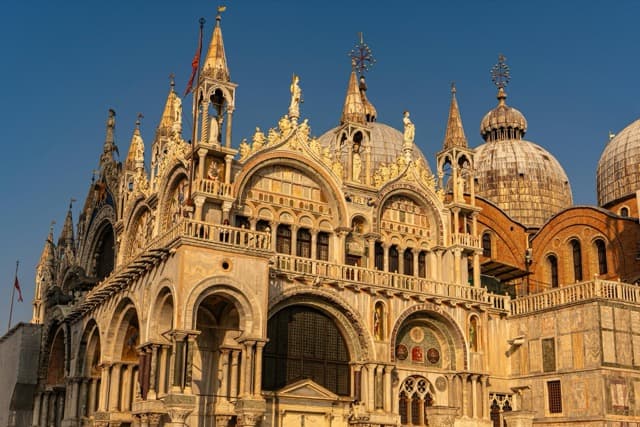
St Mark's Basilica, Venice
3chapters

St Mark's Basilica

Some buildings accompany a city; others explain it. St Mark's wasn't built just for prayer: for nearly a thousand years it was the Doge's private chapel and the temple of the State, made to show who Venice was. Gold, plunder and ambition in every mosaic.

All 3 chapters

  1. General History of St Mark's Basilica
  2. The Facade of St Mark's Basilica
  3. The Interior of St Mark's Basilica
Doge's Palace, Venice
2chapters

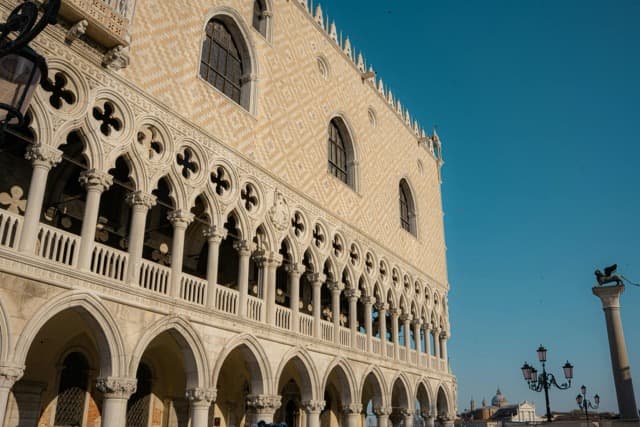
Doge's Palace

Venice's true political center, seat of one of the most sophisticated —and control-obsessed— governments in Europe. Its oddity: it doesn't intimidate by force. White marble, open arcades, lightness… a power that chose not to look like a fortress.

All 2 chapters

  1. History and Power of the Doge's Palace
  2. The Interior of the Doge's Palace

All 25 places

Everything you'll find in Venice.

Each place with its own story, narrated right where it happened.

  • St Mark's Square, Venice

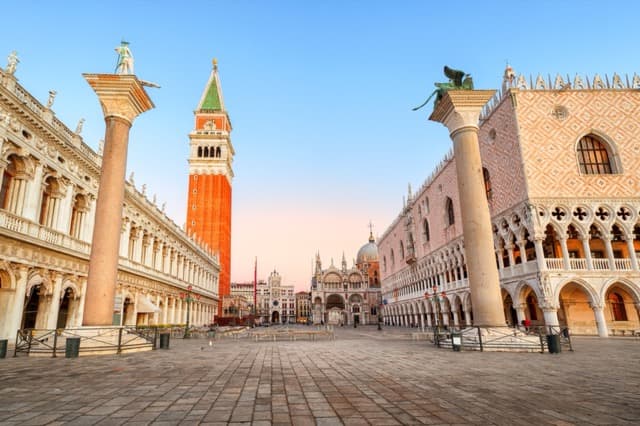
    St Mark's Square

    The stage where the Republic showed itself to the world: processions, receptions, power on display. And a detail Venetians repeat with pride — it's the only one they call a piazza; the rest are campi. Why? The audio tells you.

  • St Mark's Campanile, Venice

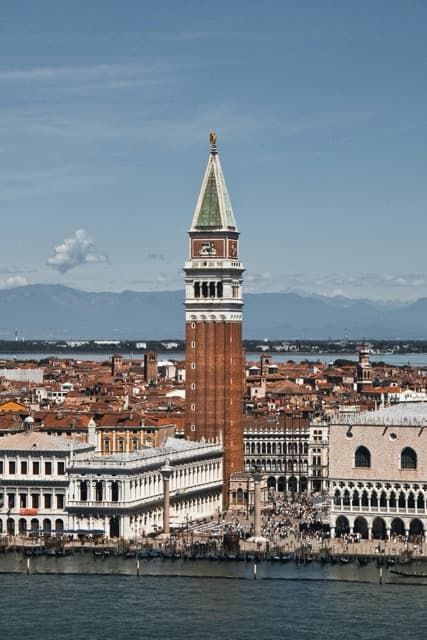
    St Mark's Campanile

    98.6 metres: the tallest structure in Venice, its lighthouse and watchtower. It wasn't born as a monumental bell tower but for something more practical — watching who arrived by sea. And one day in 1902 it collapsed entirely.

  • St Mark's Clock Tower, Venice

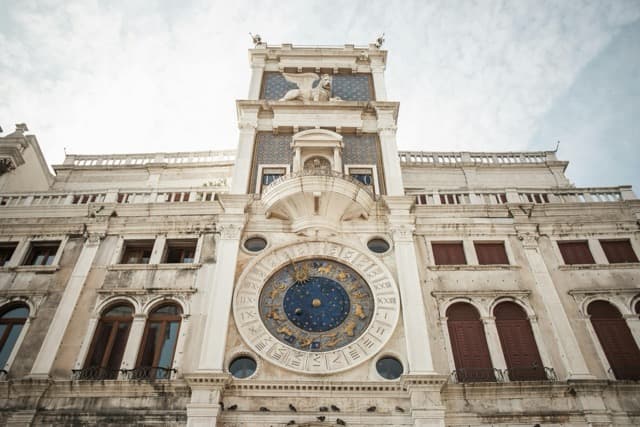
    St Mark's Clock Tower

    In Venice even time was staged. This astronomical clock marks hours, moon phases and zodiac above the shopping street: below, the city's daily flow; above, the Republic proving it controlled the rhythm too. Two bronze figures strike the hour.

  • The Procuratie, St Mark's Square

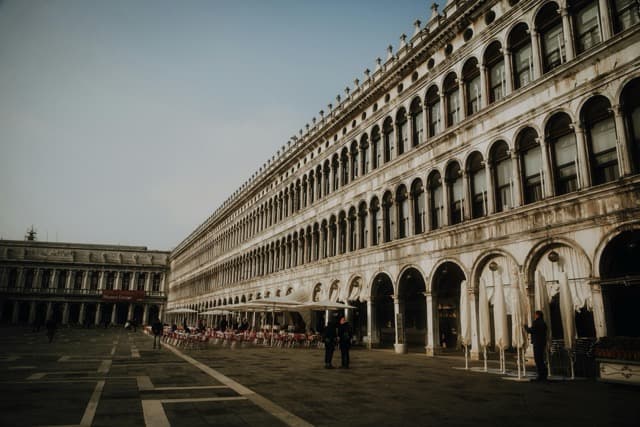
    The Procuratie

    They look like long, discreet façades. Don't be fooled: much of the machinery that kept the Republic running day to day lived here. If the Doge's Palace decided the course, this is where they kept that course from collapsing.

  • Columns of St Mark and St Theodore

    Columns of St Mark and St Theodore

    Two columns marking the entrance to the heart of Venetian power for those arriving by sea. They came from the East in the 12th century. Between them something used to happen worth knowing before you walk across — and which Venetians preferred to avoid.

  • The Tetrarchs, St Mark's Basilica

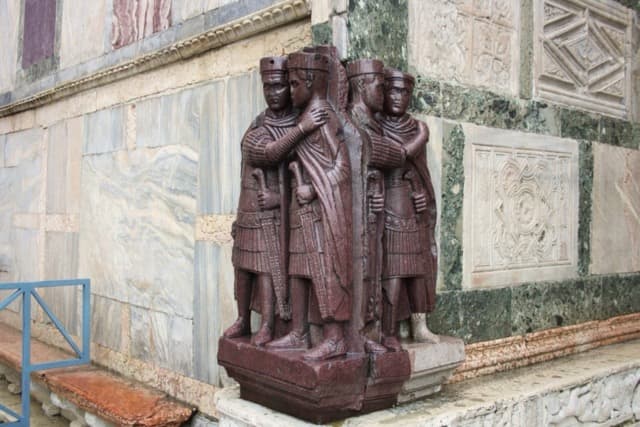
    The Tetrarchs

    A tiny piece almost everyone walks past. Four figures in dark red porphyry, embraced, rigid, severe, set into a corner of St Mark's. No gold shine, no monumental scale… yet among the most meaning-laden in Venice. They arrived as plunder.

  • Bridge of Sighs, Venice

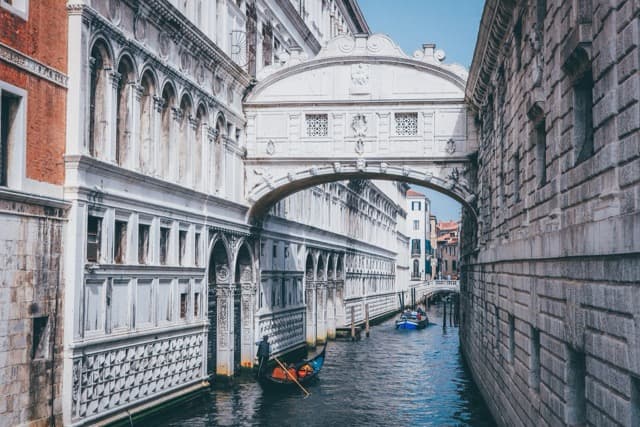
    Bridge of Sighs

    It's not a bridge to get somewhere faster. It's a bridge so no one escapes. It links the Doge's Palace with the Republic's prisons: the last covered stretch between sentence and cell. Its romantic name hides something far less romantic.

  • Venetian Arsenal

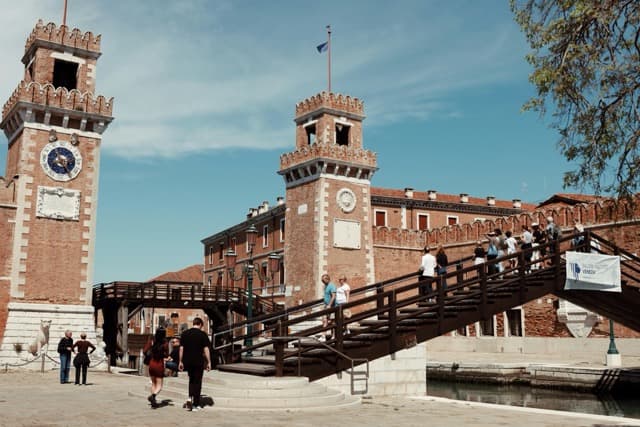
    Venetian Arsenal

    How did a city built on water become one of the Mediterranean's great maritime powers for centuries? Here. In this shipyard Venice turned wood and iron into naval power. At its peak it could assemble a ship in a single day — an assembly line centuries before Ford. The word "arsenal" comes from Arabic (dār aṣ-ṣināʿa, "house of manufacture"); it was this shipyard that helped fix the term and spread it across Europe.

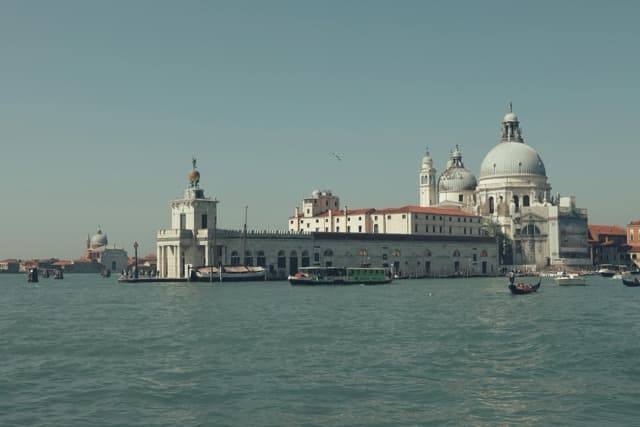
  • Punta della Dogana, Venice

    Punta della Dogana

    It looks small on the map, but it was one of the most sensitive points in Venice: right where the Grand Canal opens to the lagoon, a perfect bottleneck. Every ship coming or going fell under its watch — and paid. Dogana: customs house.

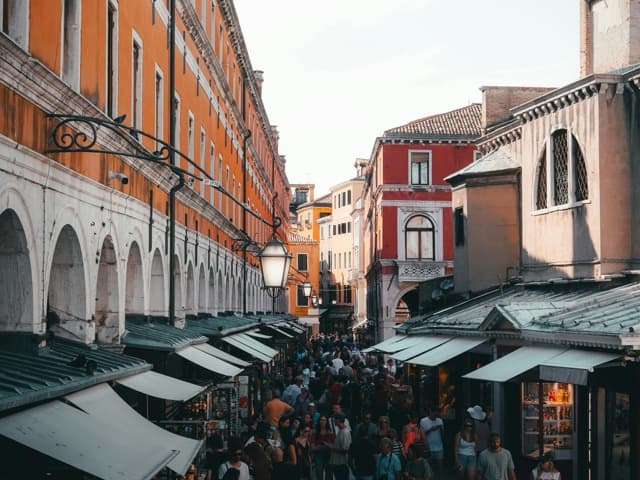
  • Rialto Market, Venice

    Rialto Market

    Want to see Venice without its costume? Come early. Before the perfect gondolas and the selfies, Rialto still works as a city. Here, since 1097, Venice grew great by knowing how to buy, sell, weigh and redistribute: the economic heart, before San Marco became the political one.

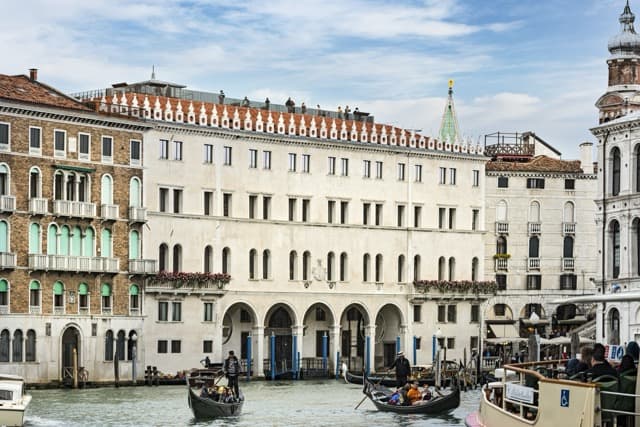
  • Fondaco dei Tedeschi, Venice

    Fondaco dei Tedeschi

    If Venice was a commercial power, this building was one of its control centers: warehouse, residence and customs house for German merchants, beside Rialto. The interesting part isn't what was sold — it's how Venice watched the foreigners who made it rich. Giorgione and Titian frescoed it.

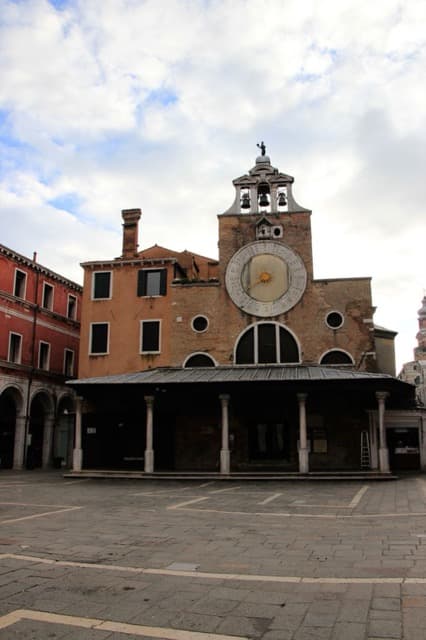
  • San Giacomo del Rialto, Venice

    San Giacomo del Rialto

    A small church easy to miss among the market stalls. But tradition marks it as the first in Venice, consecrated on 25 March 421 — the same legendary date as the city's founding. Worth separating legend from history, and the audio does just that.

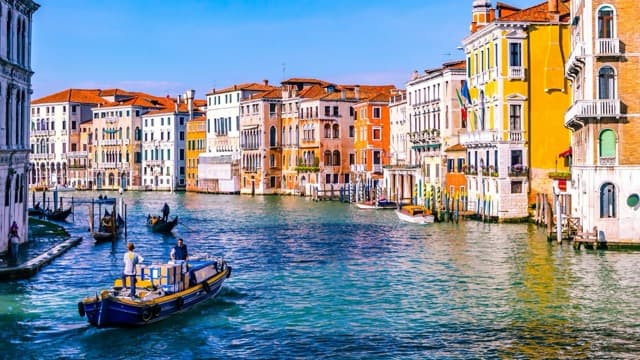
  • Grand Canal, Venice

    Grand Canal

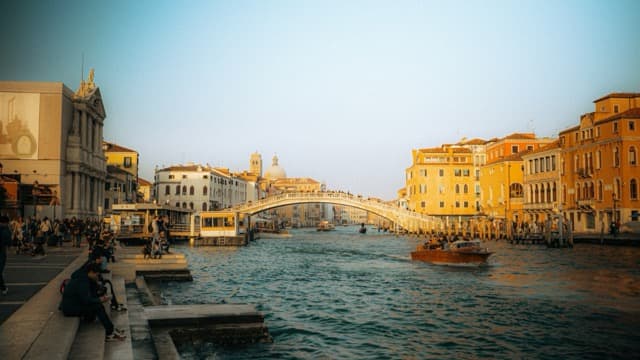
    Everything in Venice ends up here. An S-shaped water avenue, 3.8 km, lined with the palaces of the families who built their prestige facing the canal. Spices, ambassadors, news and fortunes passed through. The whole city, read from the water.

  • Canals of Venice

    Canals of Venice

    To understand Venice, don't just look at the canals: look at the bridges. The city was built leaping from island to island, and today you cross it climbing over 400 of them. No one knows the exact number. How it was done is another story.

  • Rialto Bridge, Venice

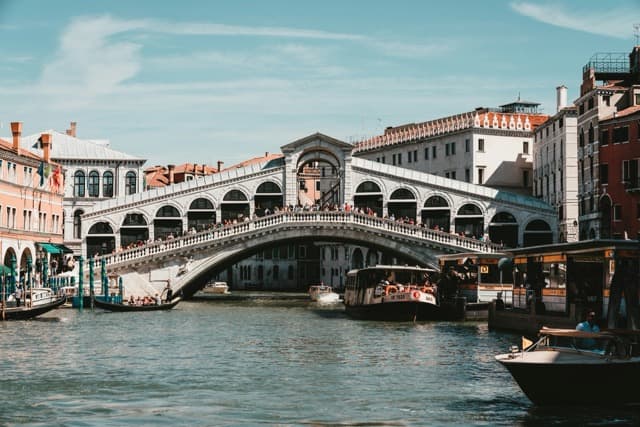
    Rialto Bridge

    Where Venice is postcard and traffic at once. For centuries the Grand Canal had very few fixed crossings: Rialto was the first. The stone one you see (1591) replaced several wooden ones — and one collapsed under the weight of a crowd.

  • Accademia Bridge, Venice

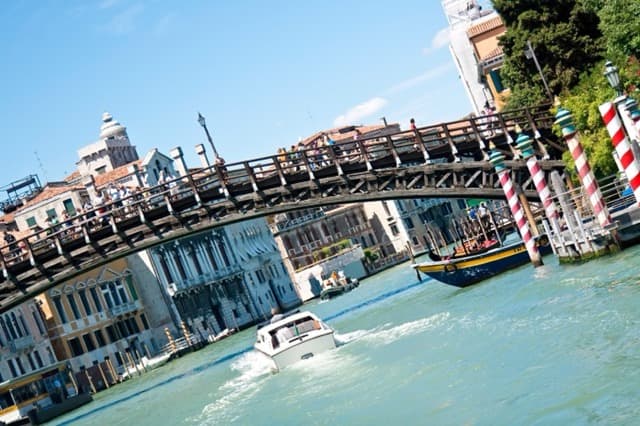
    Accademia Bridge

    If you want to see Venice open up all at once, climb here: one of the widest views of the Grand Canal. Odd for a city that changes so little — this spot spent centuries with no bridge, and the beloved wooden one was meant to be "temporary."

  • Scalzi Bridge, Venice

    Scalzi Bridge

    The first bridge many step on arriving, right opposite Santa Lucia station. It doesn't link two banks: it links two eras — the modern arrival and the historic fabric. Its name comes from an order of austerity, in the very city of luxury.

  • Constitution Bridge, Venice

    Constitution Bridge

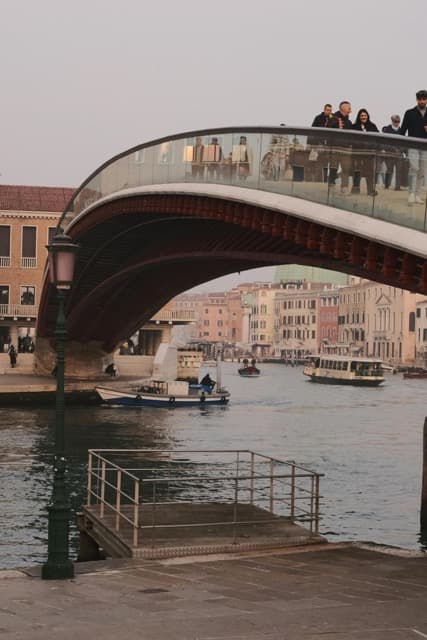
    Want to see Venice argue over its own identity? Look at this bridge. Calatrava, glass and steel, opened in 2008. It triggered something rare here: debate. Because Venice changes very little… but when it does, it shows — and not everyone forgave it.

  • Gallerie dell'Accademia, Venice

    Gallerie dell'Accademia

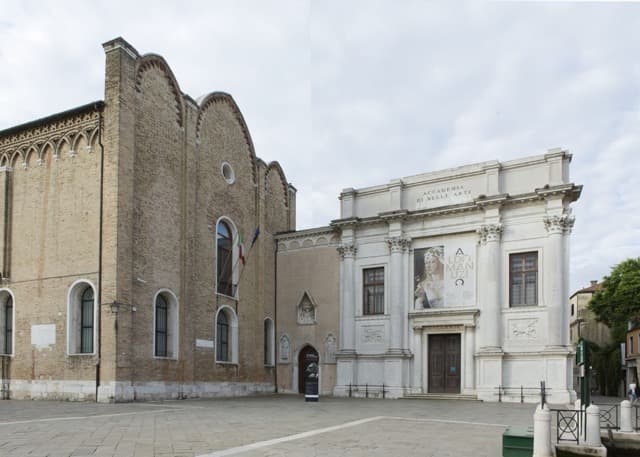
    Venice also explains itself through paintings. Here centuries of Venetian art come together — Bellini, Titian, Tintoretto, Veronese — and you see how the city kept changing how it portrayed itself. It also holds a Leonardo drawing that's almost never on show.

  • Teatro La Fenice, Venice

    Teatro La Fenice

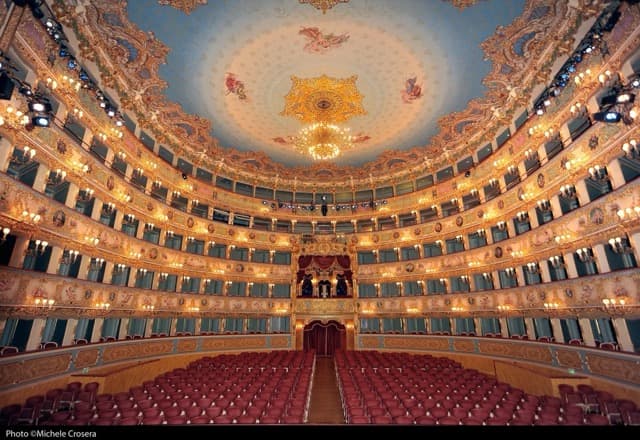
    Rarely has a name fit a place so well: La Fenice, the phoenix. Two centuries of gala premieres — and devastating fires. Each time it burned, it was reborn identical. The last was 1996, and the story of why is one of the good ones.

  • Ca' Rezzonico, Venice

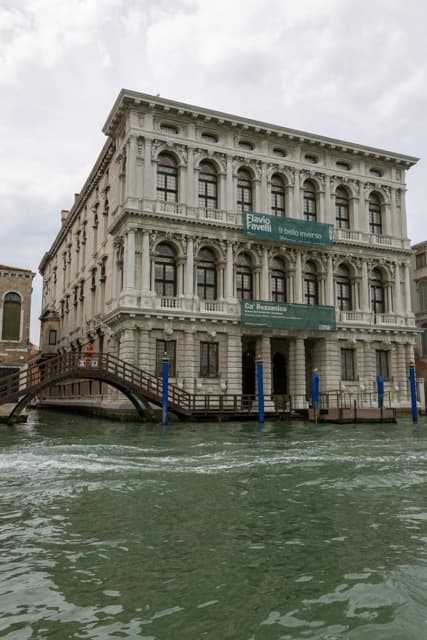
    Ca' Rezzonico

    Want to see how Venetian nobility lived — and displayed itself — at its height? Step in. A baroque palace by Longhena on the Grand Canal, today a museum of 18th-century Venice. It began with one family's ambition… and changed hands more than once.

  • Santa Maria della Salute, Venice

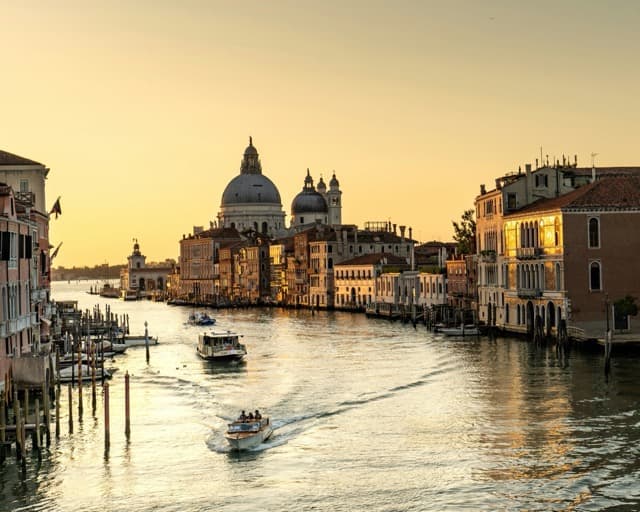
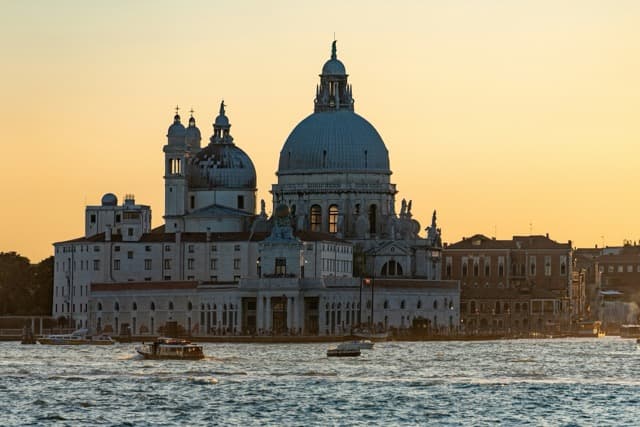
    Santa Maria della Salute

    It was born from a public vow. In 1630 the plague devastated Venice and the Senate swore: if the city were spared, it would raise a temple to the Virgin. This great white mass at the mouth of the Grand Canal is that promise kept. The city still celebrates it every year.

FAQ

About Venice on Ruthy

Lucas Botta, creator of Historia en Podcast. Researched and narrated by a person, not AI-generated.

Pick Venice, head out with headphones, and you press play when you reach each place. It's a compass, not a GPS: you wander and discover, with no one dictating a route.

Yes. In this version the stories stream, so you need a connection while you walk (data or a local eSIM). In exchange, it takes up no space on your phone.

25 spots: from St Mark's, the Doge's Palace and Rialto to the Grand Canal and corners most people walk past, plus a six-chapter general history of the city.

As much as you like. Each audio runs a few minutes: focus on St Mark's for a morning, or stretch it across several days adding Dorsoduro, Rialto and the Grand Canal bridges.

Early. Before the crowds and the perfect gondolas, Venice still works as a city — especially around the Rialto Market.

Real reviews

What Ruthy users say.

  • An original and very interesting proposal to discover cities in a different way. It's very easy to use, has a clear interface, and the stories are well narrated. I liked that it lets you explore at your own pace and choose what places to visit by proximity or interest. Without a doubt, it's an entertaining and educational option — ideal for tourists or to rediscover your own city.

    Jaz GonzálezApp Store
  • I used it on my trip and the descriptions, details, and information it provides are excellent. Highly recommended!

    Ale CarbaApp Store
  • This app is wonderful — it shows you everything you need to know about any place you visit.

    Lisandro HedinGoogle Play

Start with Venice

You don't just see Venice. You understand it.

Download Ruthy free and walk Venice with all 25 stories activating in real time, right where it all happened.

Free · no ads · iOS and Android

Download Ruthy free