

Skip to content
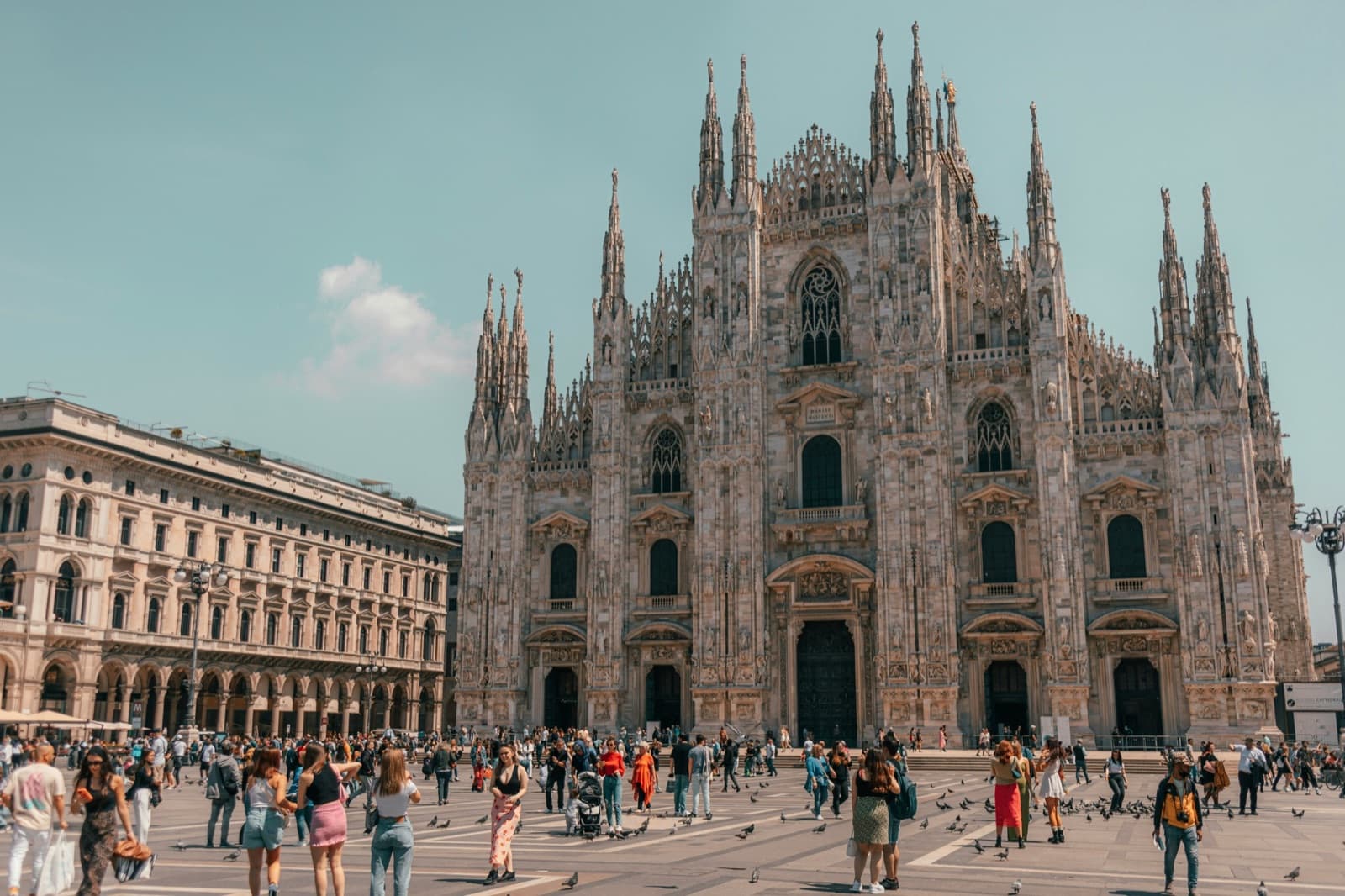
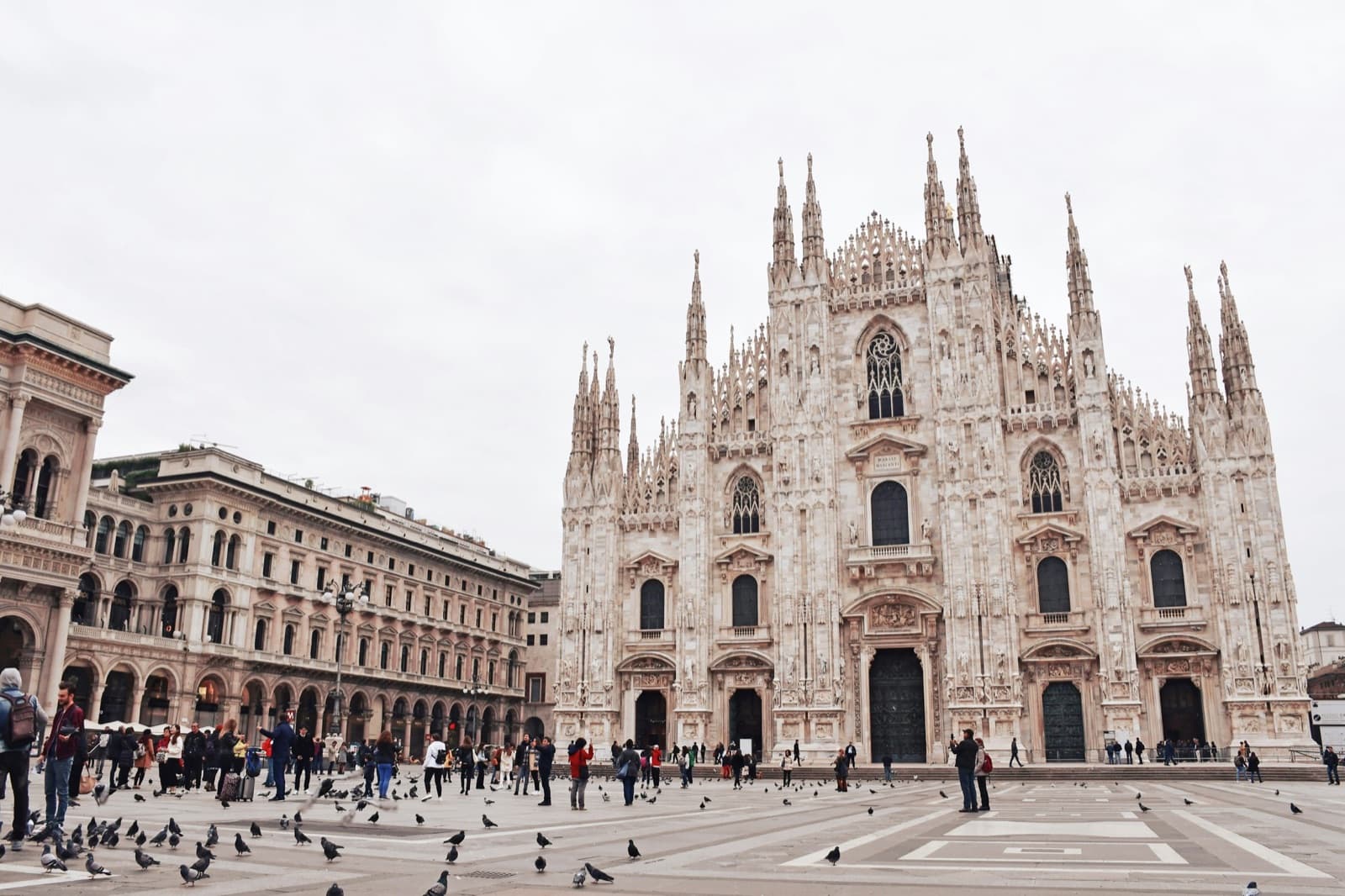
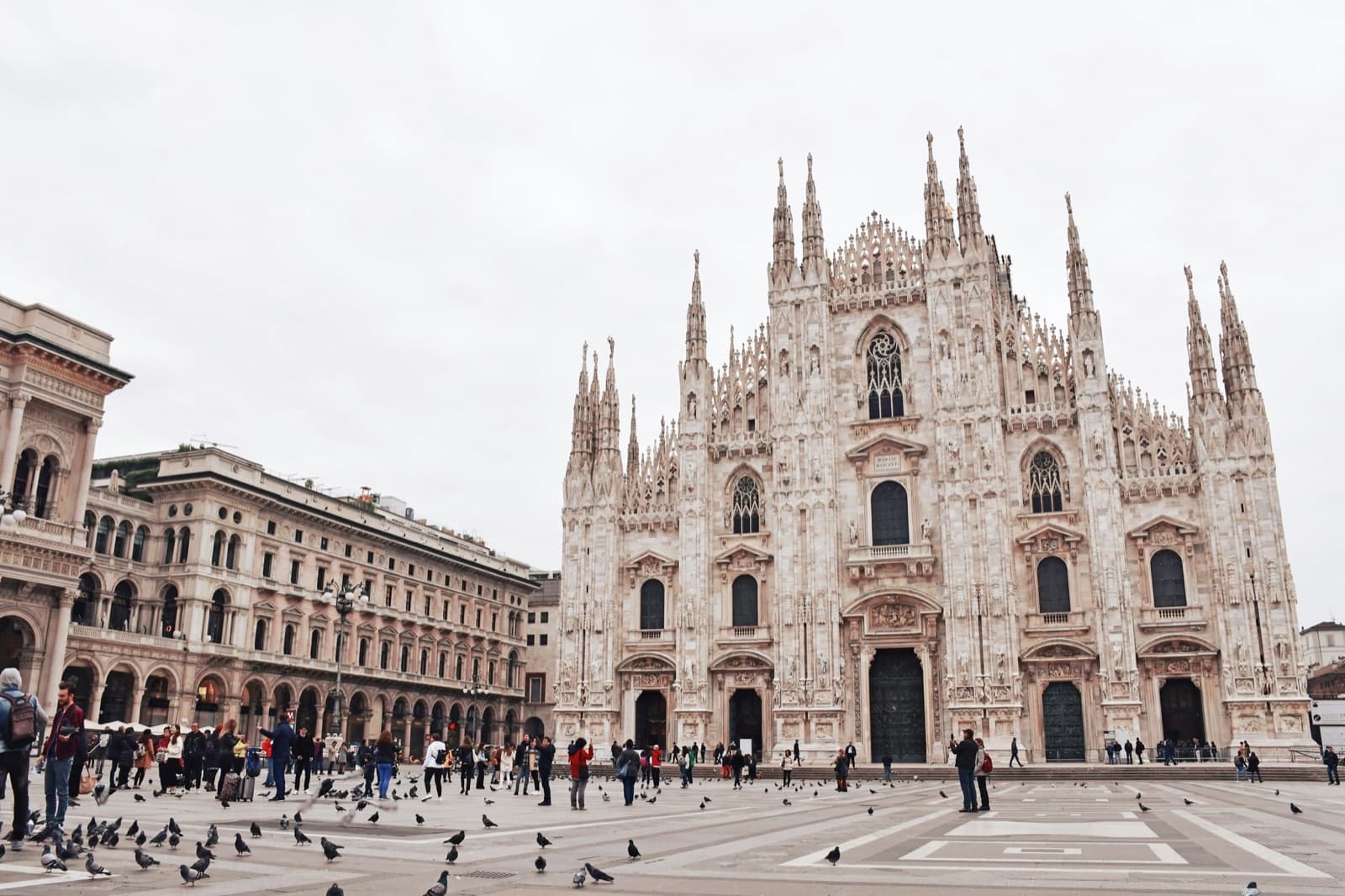
Façade of the Duomo of Milan

Italy · 20 places · 31 stories

Don’t visit Milan.
Understand it.

20 places. 31 stories. Imperial capital, Leonardo's city and birthplace of fascism: Milan builds from action, not postcards.

20 historical places in Milan with free audio guide

Free · no ads · iOS and Android

Milan in depth

Behind fashion-capital Milan is a city that once ruled the Roman Empire.

Ruthy shows you Milan through 20 real places, narrated by Lucas Botta (Historia en Podcast) at the exact spot where each story happened. No group tour, no schedule, no shared headphones. Just you, the city, and a story that starts when you arrive and press play.

Milan presents itself to the world with shop windows, design and financial rhythm, but beneath that skin is a city that became capital of the Western Roman Empire —for a moment, more important than Rome. Here the Edict that freed Christianity was agreed, Leonardo painted the Last Supper, and in a discreet square fascism was born. Milan isn't built on symbolic monumentality like Rome: it's built on what it produces. So you don't walk it looking for a postcard, but to understand layers working together: empire, faith, art and industry. Ruthy tells you standing right there, in no hurry.

Deep-dive walks

Places told chapter by chapter.

We don't just tell you what it is. We tell you why it matters, how it was built, what happened inside, and how it became what it is today.

Panoramic view of Milan's historic centre
9chapters

History of Milan

Milan presents itself with shop windows and design, but beneath that skin it was capital of the Roman Empire —for a moment, more than Rome. Here the Edict that freed Christianity was agreed, the Visconti and Sforza ruled, Leonardo painted. Nine chapters to understand the city that builds from action, not from postcards.

All 9 chapters

  1. Celtic origins and Roman Mediolanum (4th century BC – 5th century AD)
  2. Christianisation, invasions and transformation (4th–8th centuries)
  3. Empire, trade and the medieval city (8th–13th centuries)
  4. Lordships and ducal power (13th–15th centuries)
  5. Renaissance and cultural splendour (15th–16th centuries)
  6. Foreign rule and strategic city (16th–18th centuries)
  7. Revolutions, nationalism and unification (19th century)
  8. Modernity, industry and the 20th century (1900–1945)
  9. Contemporary Milan: economic and cultural capital
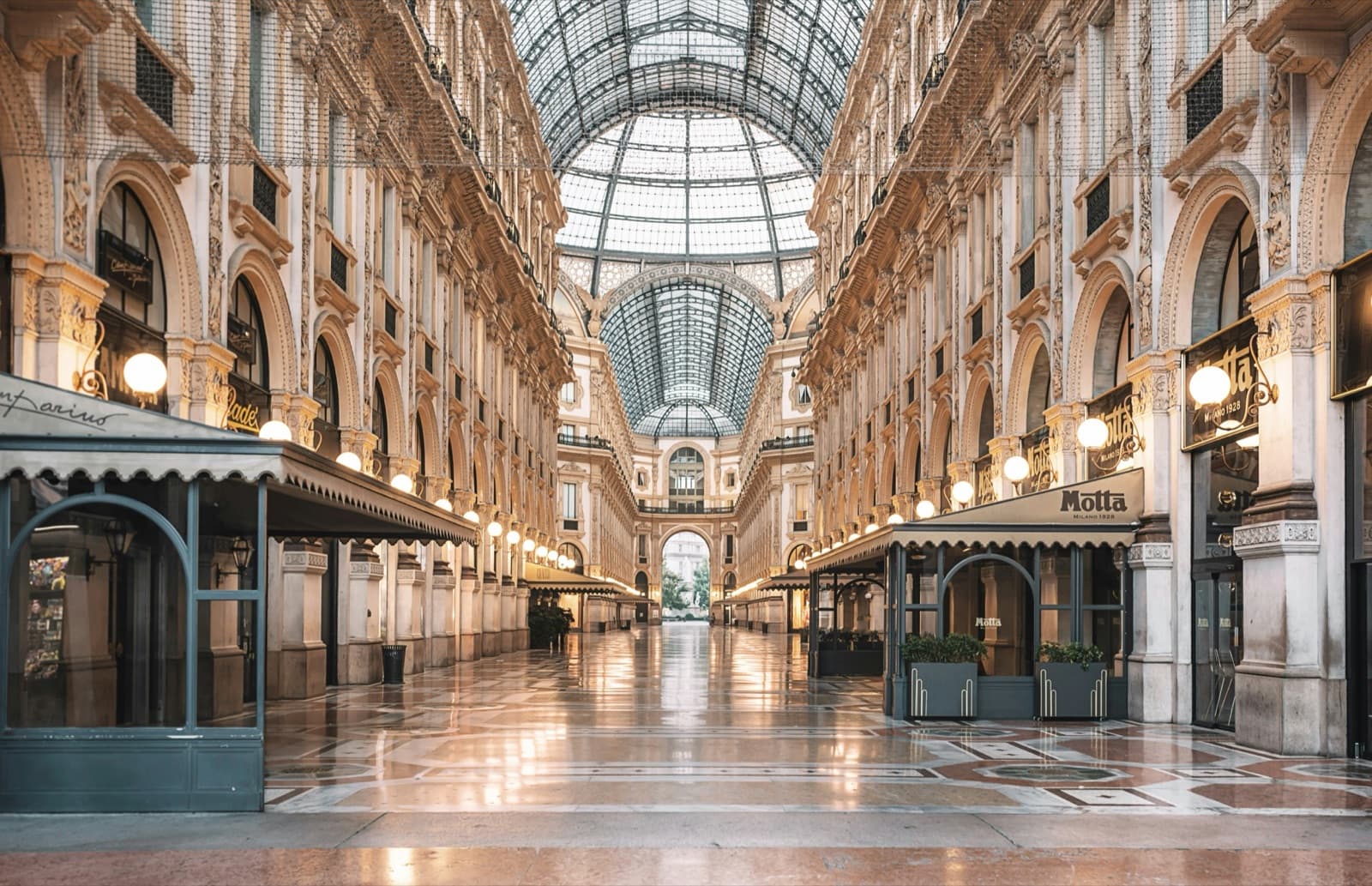
Galleria Vittorio Emanuele II in Milan
4chapters

Galleria Vittorio Emanuele II

The "drawing room of Milan": iron, glass and elegance, one of the oldest covered shopping arcades in the world. Its architect fell to his death from the works just days before the opening. Inside: the four continents painted overhead, the cafés where Campari was born, and a bull on the floor everyone steps on for luck. Four chapters.

All 4 chapters

  1. Galleria Vittorio Emanuele II
  2. Paintings of the Continents
  3. The Cafés
  4. Coats of Arms

All 20 places

Everything you'll find in Milan.

Each place with its own story, narrated right where it happened.

  • Façade of the Duomo of Milan

    Duomo di Milano

    Almost six centuries of work: begun in 1386 and declared finished in 1965. No generation saw it complete; each inherited a piece. Over 3,400 statues and a forest of pink marble that multiplies the closer you get. On top, gilded, the Madonnina: for centuries, nothing in Milan could rise above her.

  • Piazza del Duomo in Milan

    Piazza del Duomo

    All of Milan seems to start, cross or end here. It's not an ancient void: the square was opened in the 19th century, when the city wanted to look modern and national. On one side the Duomo and its six centuries of faith; on the other, the Galleria's iron and glass. In the middle, Italy's first king on horseback.

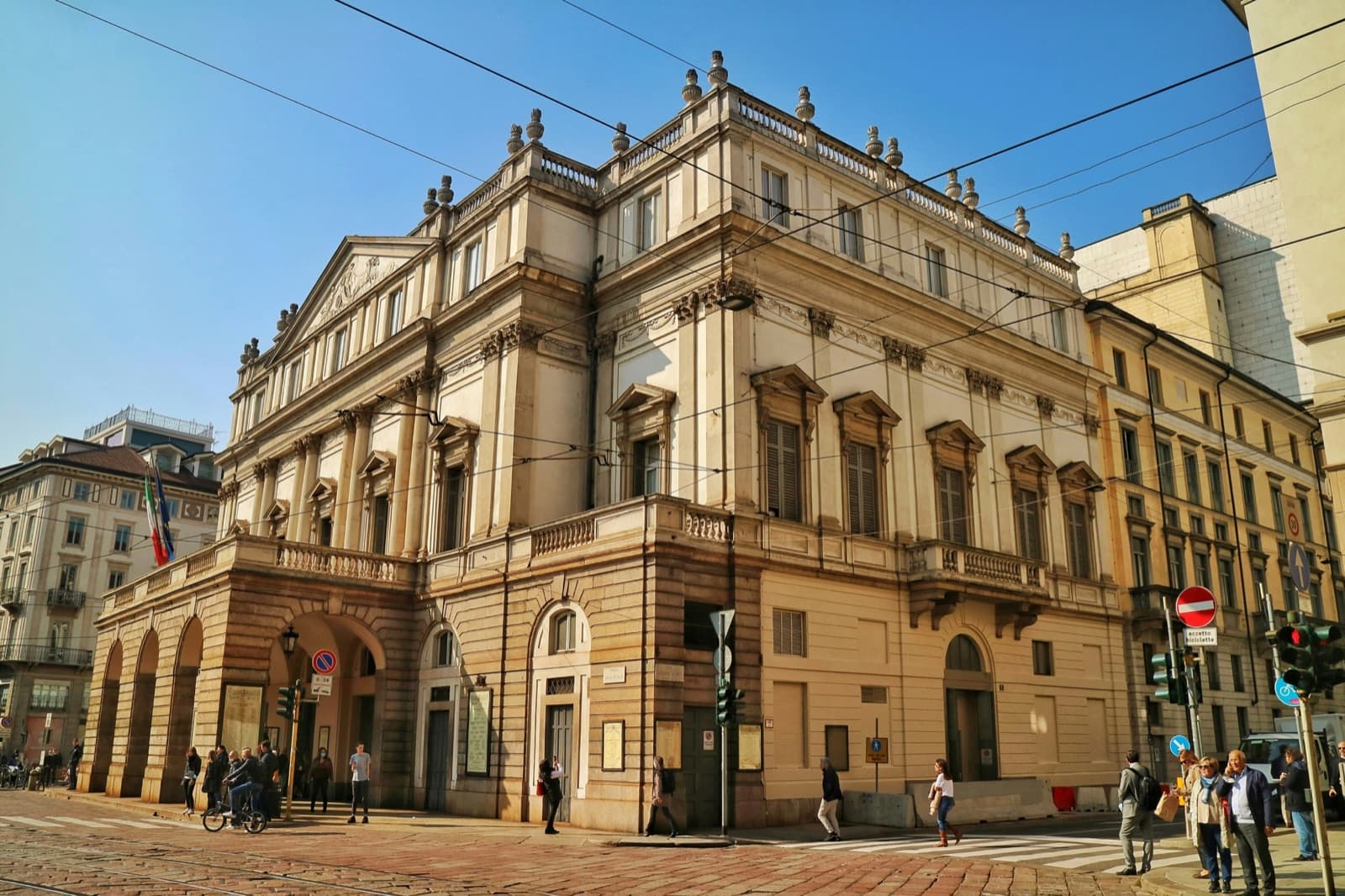
  • Façade of Teatro alla Scala

    Teatro alla Scala

    Here Milan turns music into power. La Scala sets the standards of the opera world —and its audience doesn't applaud out of courtesy: it judges. Plain on the outside, a horseshoe of legendary acoustics within. A bomb destroyed it in 1943 and it reopened in 1946: hearing music again was becoming Milan again.

  • Piazza dei Mercanti, medieval centre of Milan

    Piazza dei Mercanti

    Before the great Duomo square existed, Milan beat here. Not from thrones or altars: from trade, talk and money. The Palazzo della Ragione —"reason"— ordered the city. Try something under its arches: at certain points the sound amplifies on its own. Here Milan didn't represent itself, it worked.

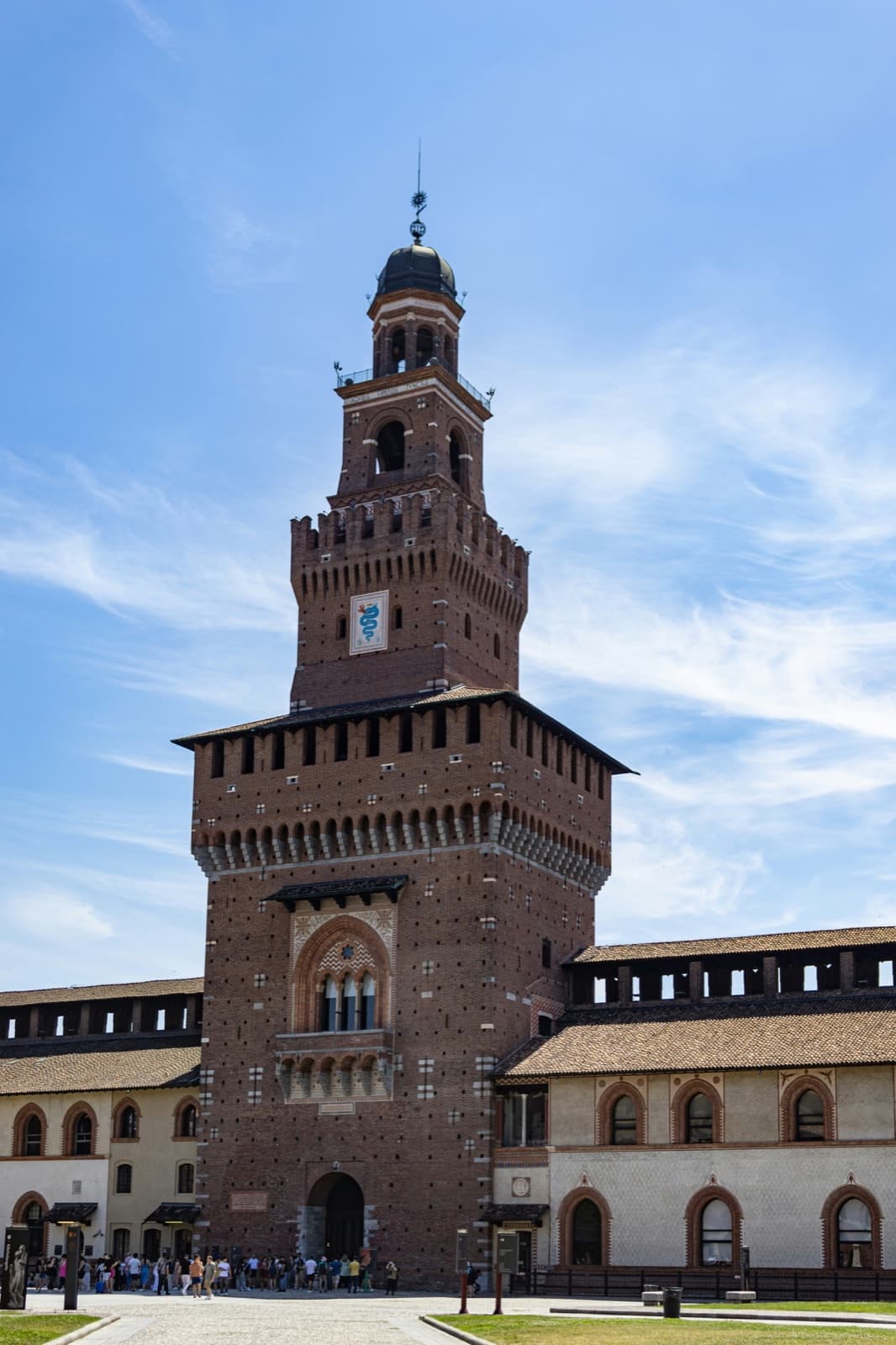
  • Castello Sforzesco in Milan

    Castello Sforzesco

    A political machine made of stone. The Visconti raised it and Sforza enlarged it after seizing Milan by force. Look at the emblem: a serpent devouring a man. Inside, Leonardo painted a ceiling of living trees in the Sala delle Asse. For centuries Milanese looked at it with admiration… and distrust.

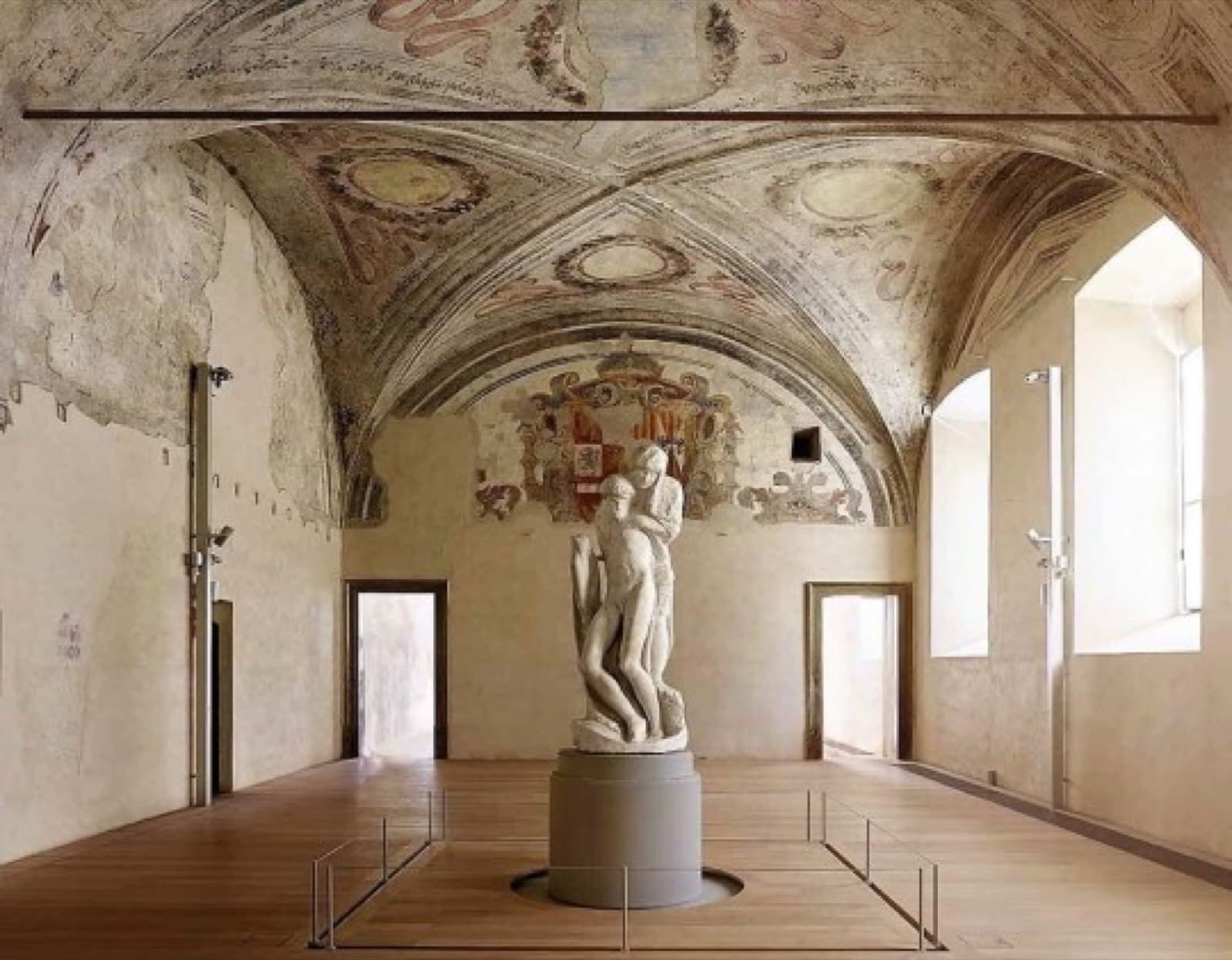
  • Michelangelo's Pietà Rondanini

    Pietà Rondanini

    Michelangelo's last sculpture, which he kept carving days before dying at 88. It doesn't seek heroic beauty: the figures stretch, merge, rise. It's unfinished —but not from neglect: it's a work in endless revision, where you watch the genius fighting the marble and time.

  • Parco Sempione behind Castello Sforzesco

    Parco Sempione

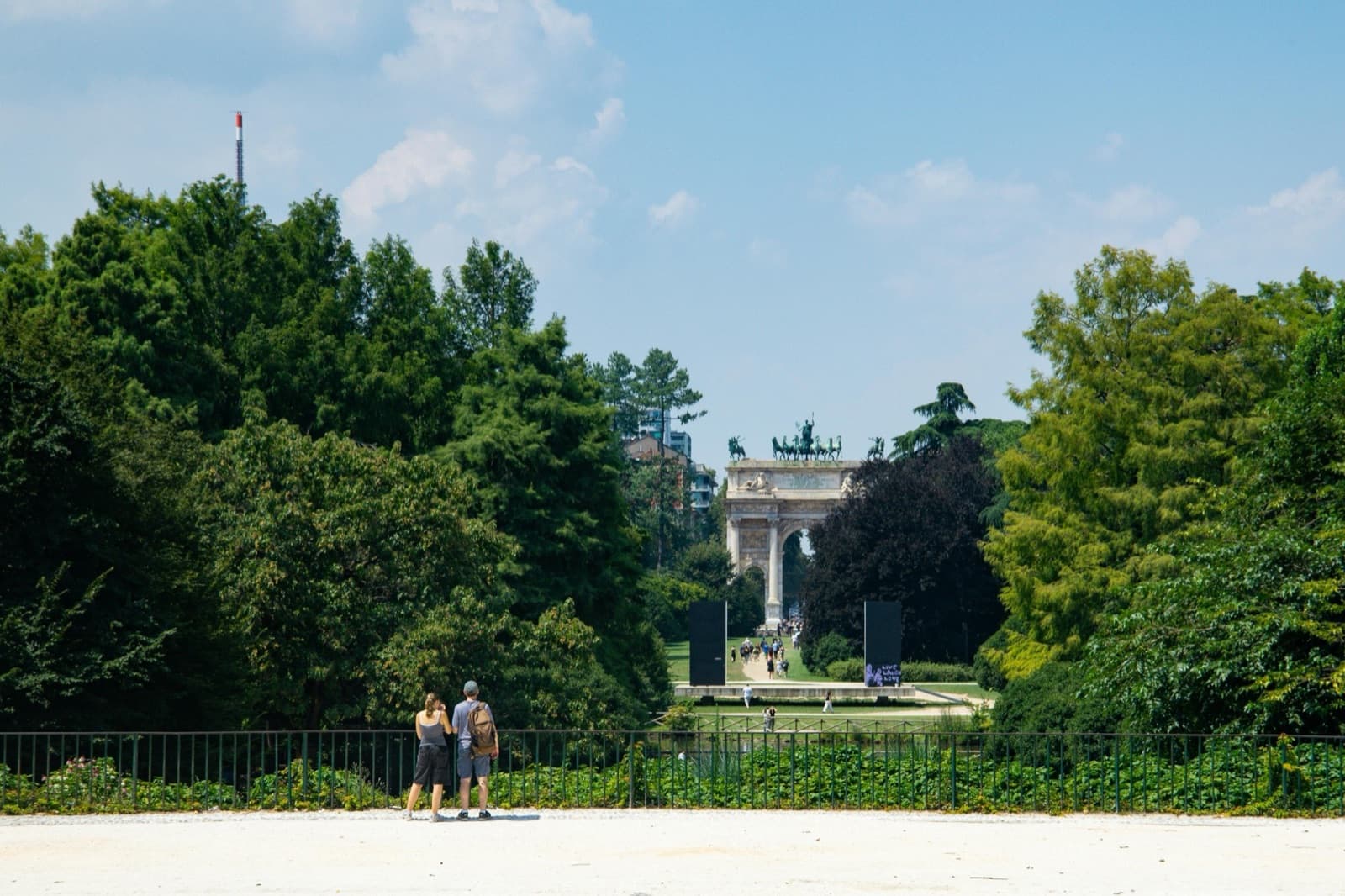
    Where for centuries there was the castle's military ground, Milan chose to open up, connect and let the city breathe. A 19th-century park that closes on a perfect axis: castle, greenery and the Arco della Pace at the far end. In a city of production and speed, this is where Milan pauses —without ceasing to be itself.

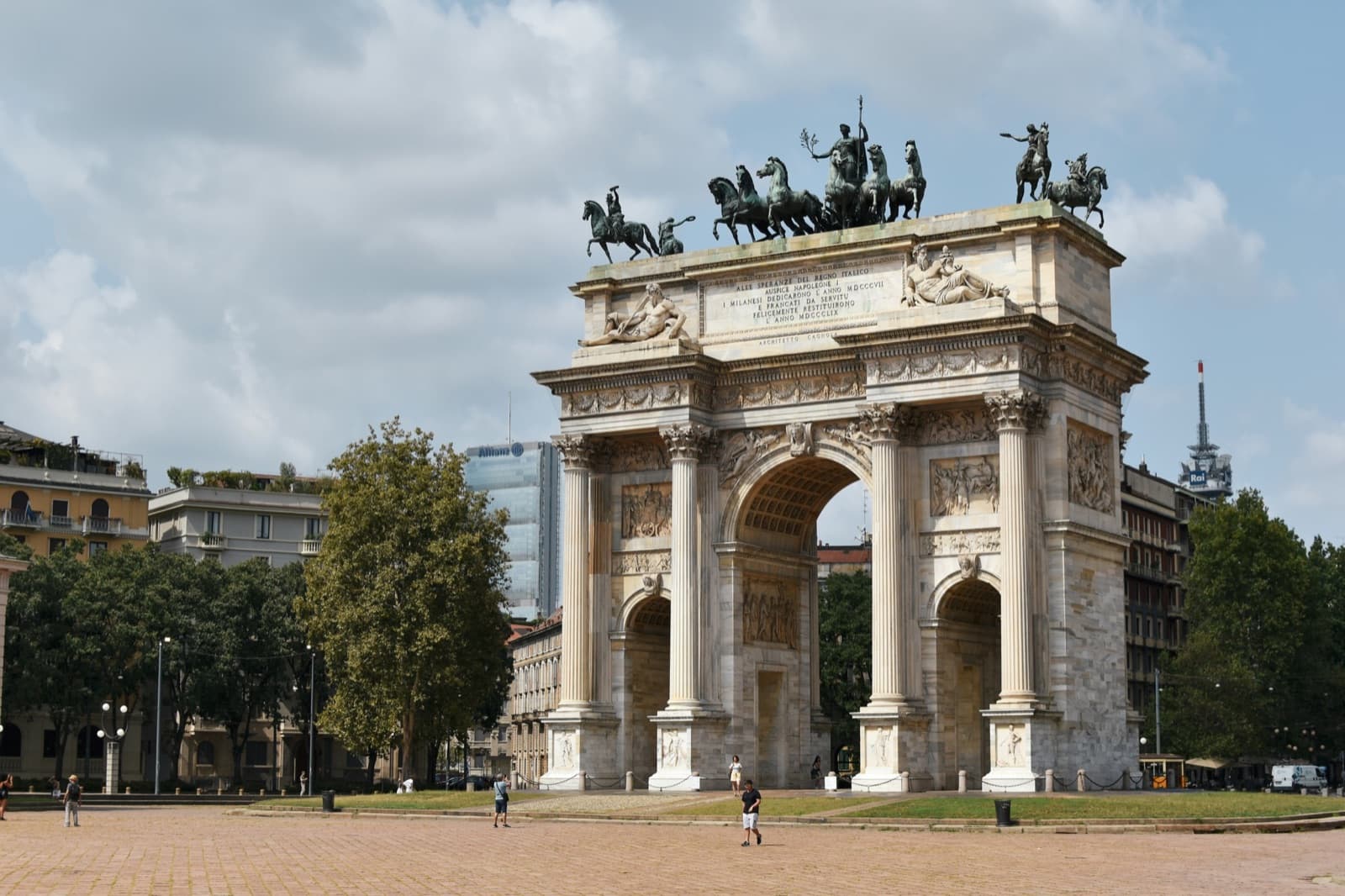
  • Arco della Pace at the end of Parco Sempione

    Arco della Pace

    It looks familiar, and for good reason: great cities raise arches to celebrate themselves. Napoleon began it in 1807 for his victories; he fell, and the Austrians finished it… dedicating it to peace. The same monument changed meaning without changing form. Notice where it faces: outward, toward the road to Europe.

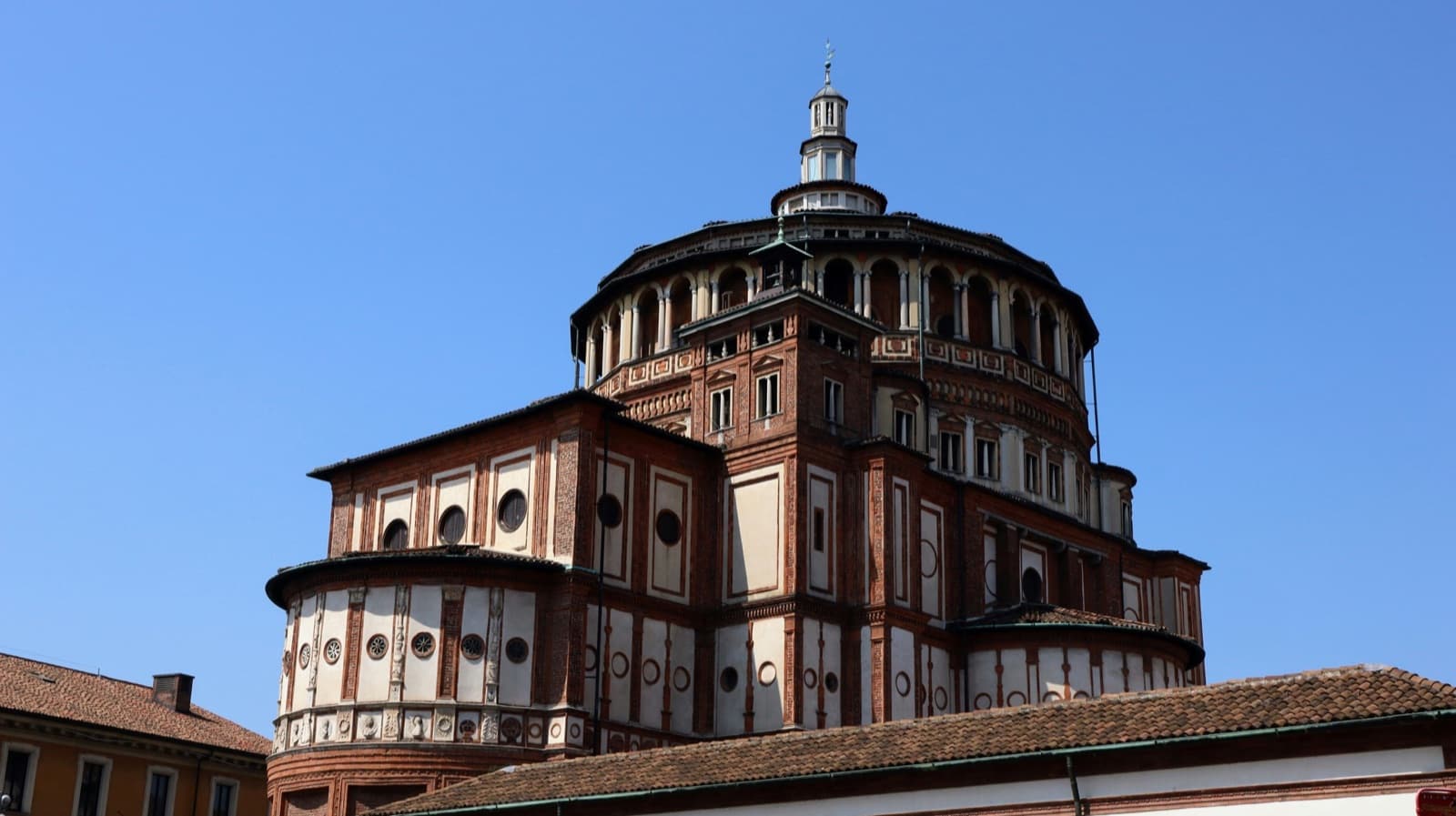
  • Church of Santa Maria delle Grazie in Milan

    Santa Maria delle Grazie

    It doesn't overwhelm like the Duomo: it convinces through density. A Dominican church and convent that Ludovico Sforza conceived as his dynasty's mausoleum, with Bramante redesigning the apse. Its refectory holds Leonardo's Last Supper. A 1943 bomb destroyed part of the convent —and the mural survived by a miracle.

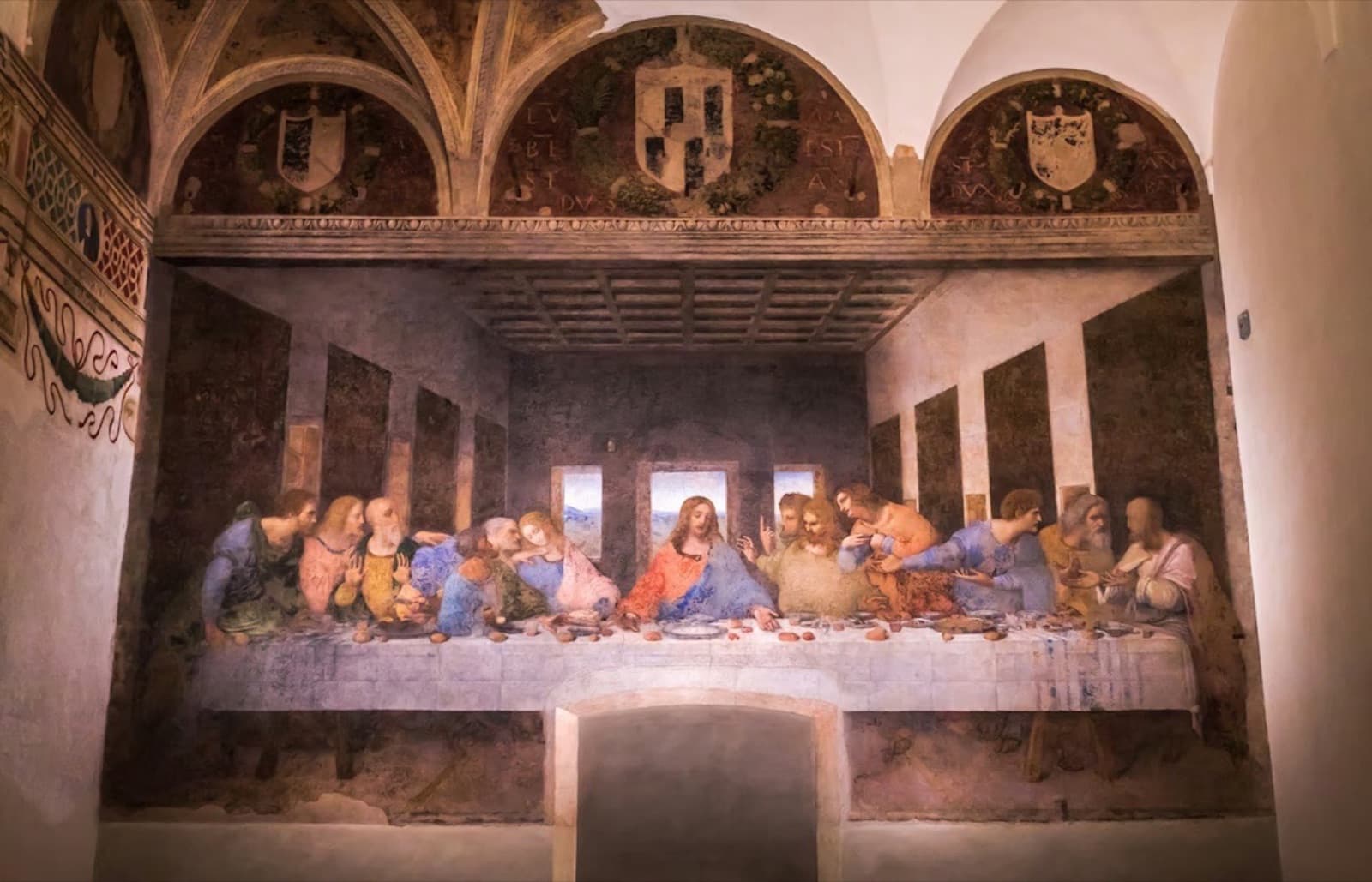
  • Leonardo da Vinci's Last Supper

    The Last Supper

    Leonardo didn't paint a calm supper: he painted the second after "one of you will betray me." A shock wave of gestures and glances. But he experimented with a technique on dry wall that decayed almost at once —and then a door was cut that erased Christ's feet. What you see is a survivor. Entry is by reservation.

  • Basilica of Sant'Ambrogio in Milan

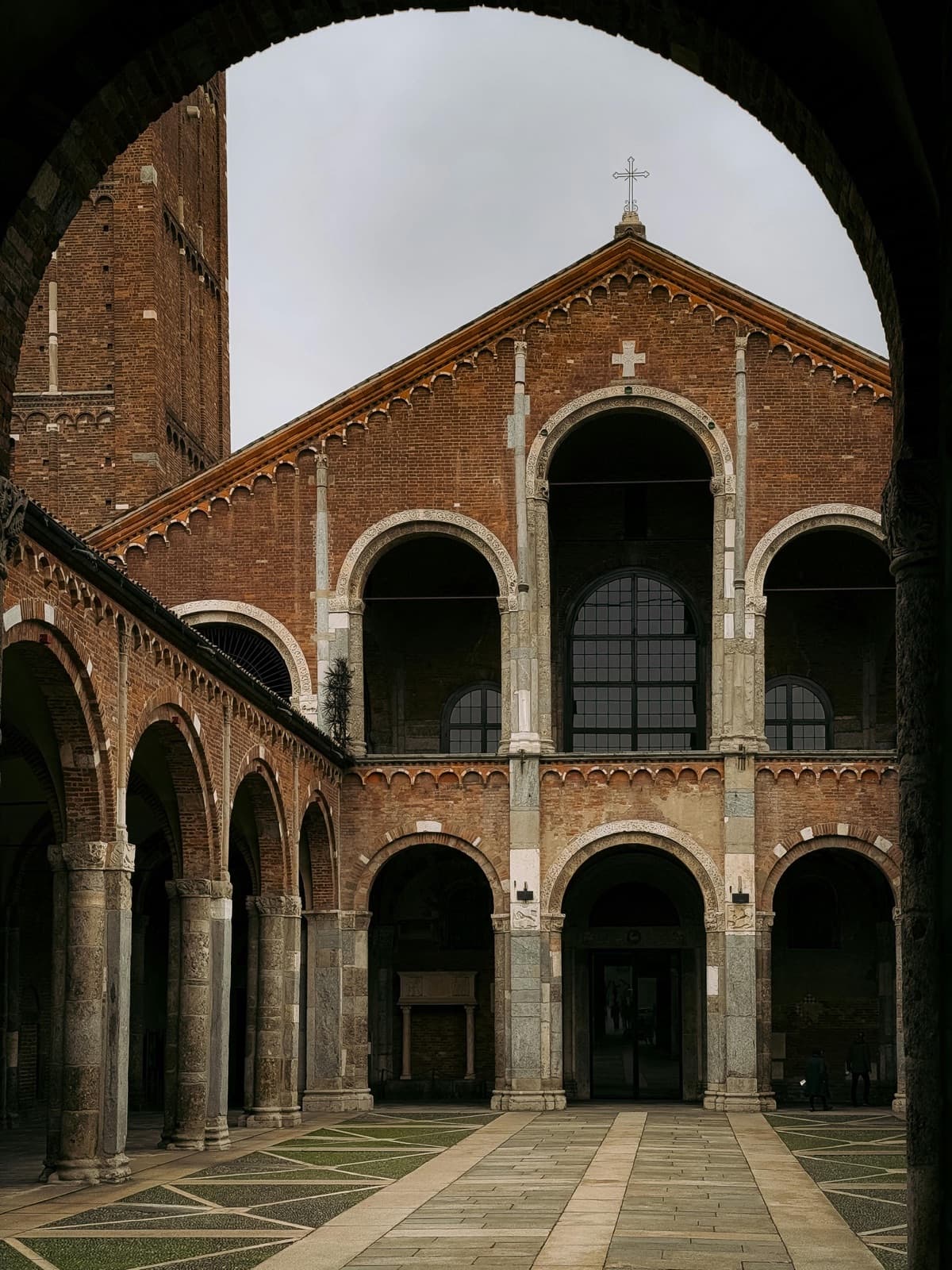
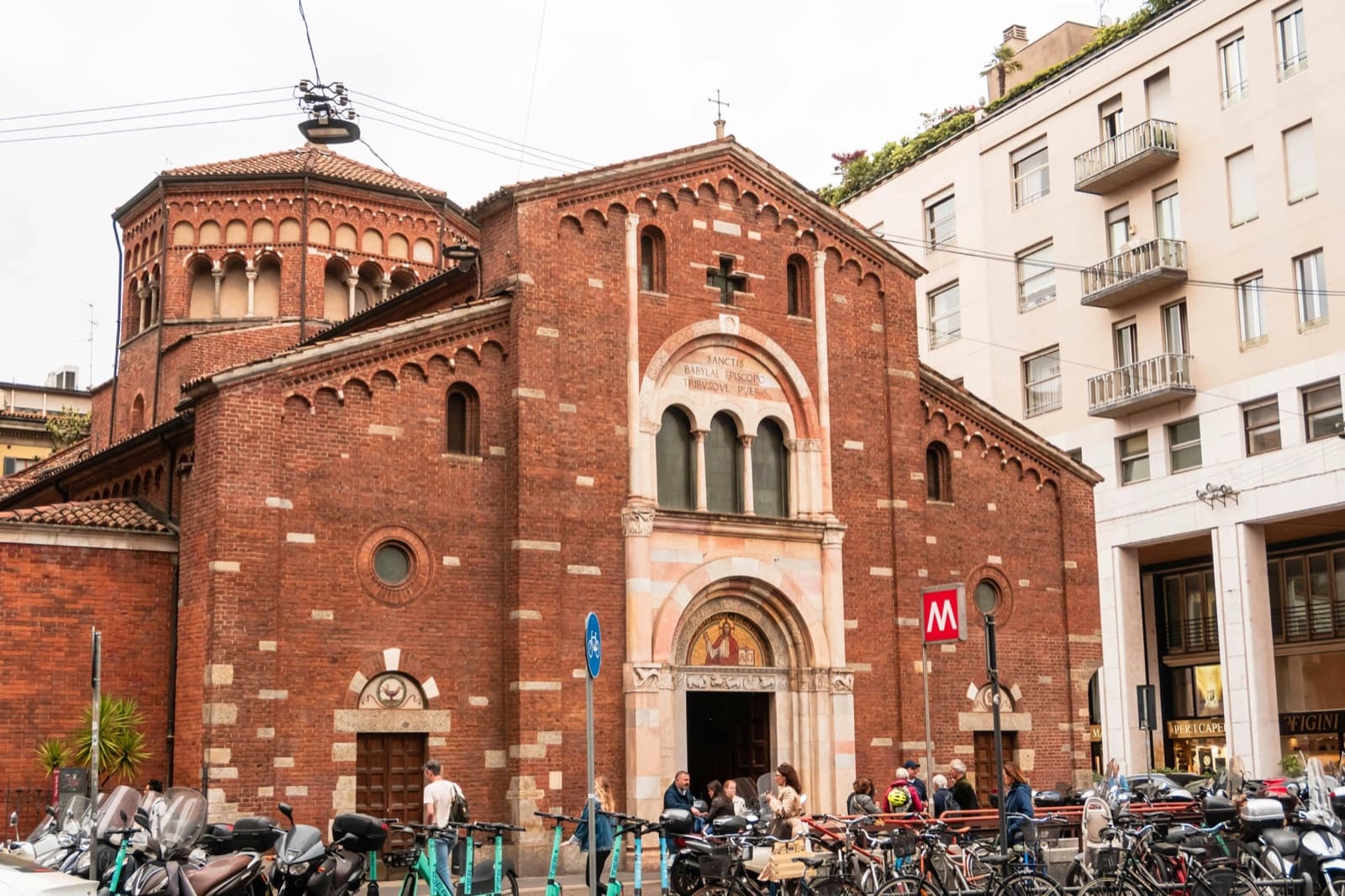
    Basilica of Sant'Ambrogio

    An authority that needs no walls. It was founded by St. Ambrose in the 4th century, the bishop who dared to stand up to emperors. Lombard Romanesque at its purest, with an atrium for those not yet allowed inside. Beneath the altar, the remains of the saint who made Milan a spiritual center of the West.

  • Colonne di San Lorenzo in front of the basilica

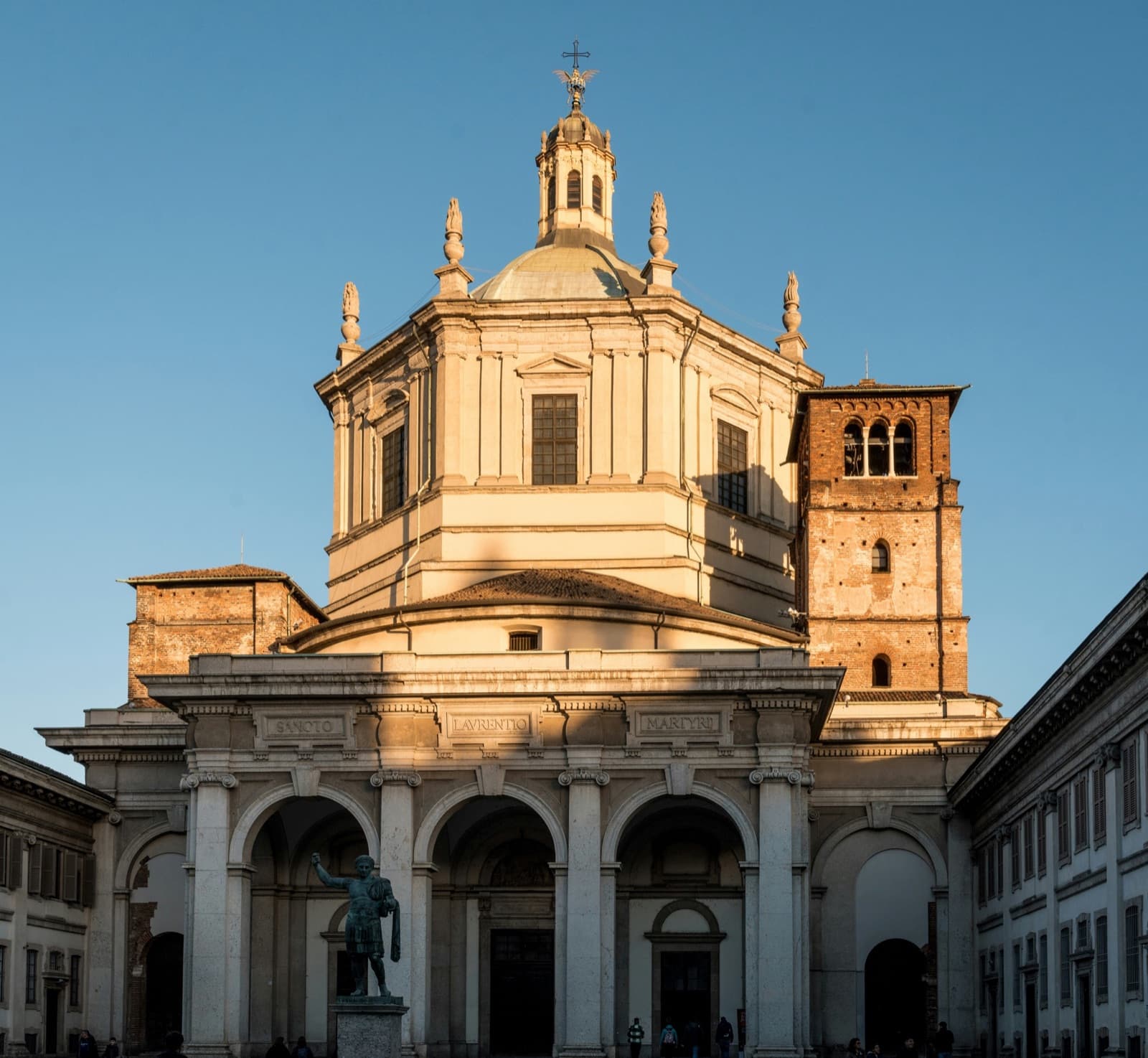
    San Lorenzo Maggiore

    One of Milan's oldest layers, out in the open. In front of the church, sixteen 2nd-century Roman columns, reused: stones of an empire end up holding up a Christian world. Its circular plan breaks with the usual. Here Milan doesn't erase its Roman past —it transforms and absorbs it.

  • Remains of the Roman Amphitheatre of Milan

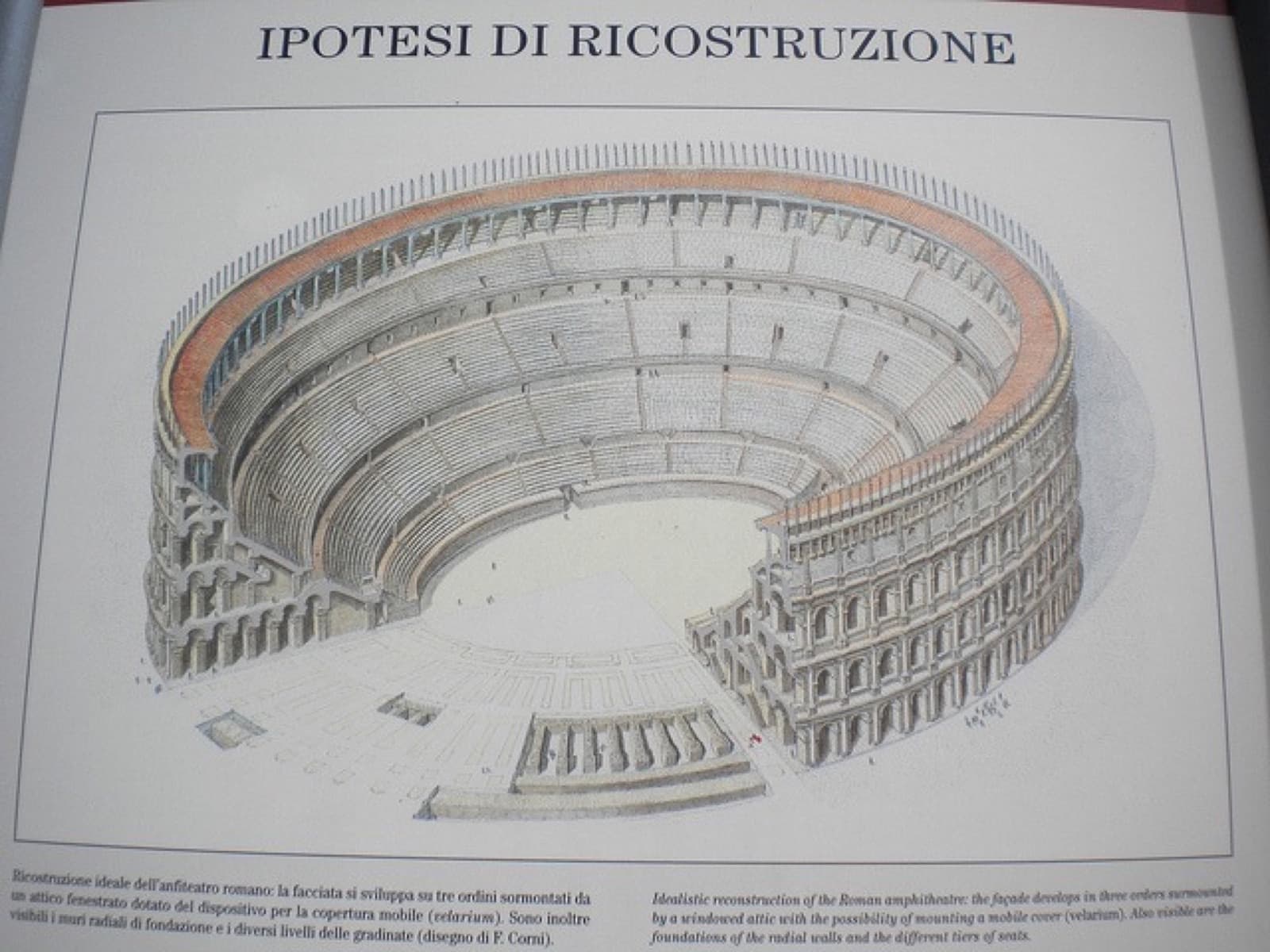
    Roman Amphitheatre of Milan

    It's not the Colosseum: it's a trace. But enough to understand that Milan was also a monumental Roman city, with an arena for some 30,000 spectators. After the Empire fell, it was dismantled stone by stone to build other things. Here you have to imagine what's no longer there.

  • Courtyard of the Palazzo Brera

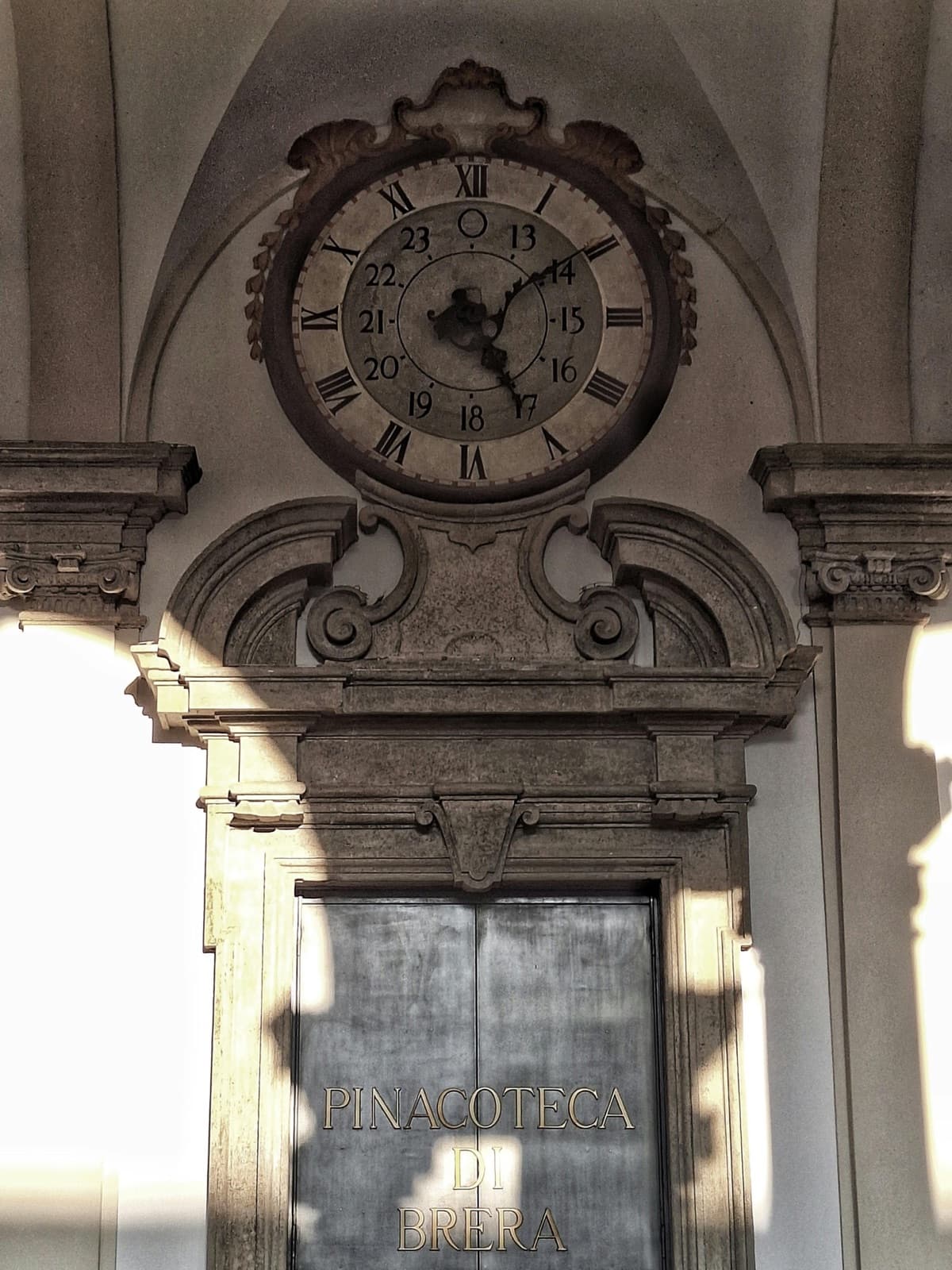
    Pinacoteca di Brera

    Milan didn't just want to own art: it wanted to study and teach it. Napoleon concentrated works from churches and convents here —because art is power too. Mantegna's "Dead Christ," with its brutal foreshortening, forces you to face death head-on. And Raphael's "Marriage of the Virgin," the High Renaissance at its purest.

  • Naviglio Grande canals in Milan

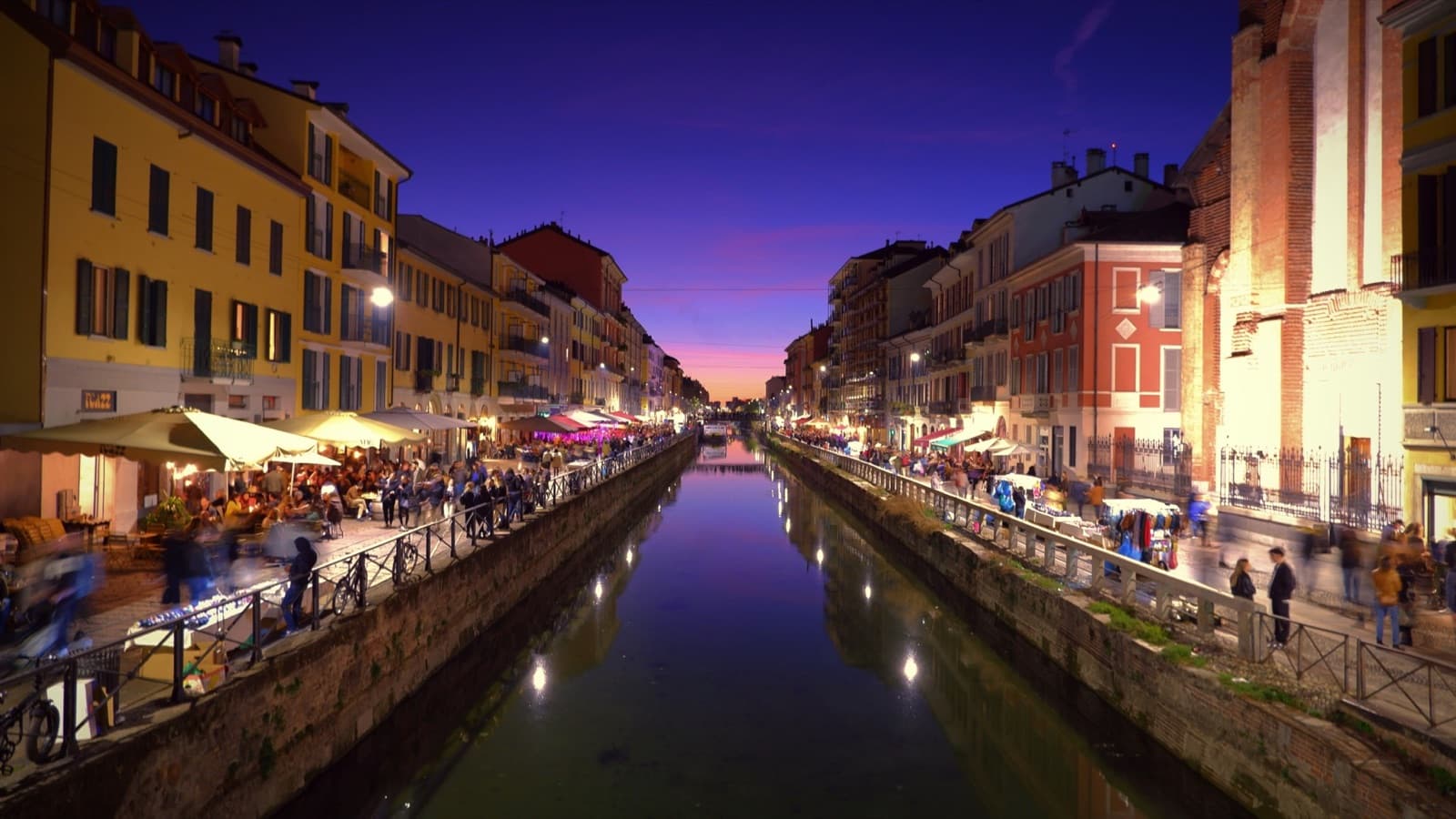
    Navigli

    Milan isn't on the sea, and yet for centuries it lived off water. A network of artificial canals moved goods —even the marble for the Duomo— and connected the city to the world. Leonardo studied its locks. In the 20th century much of it was covered over: what you see today is the remnant of a city that also thought through water.

  • Famedio of Milan's Cimitero Monumentale

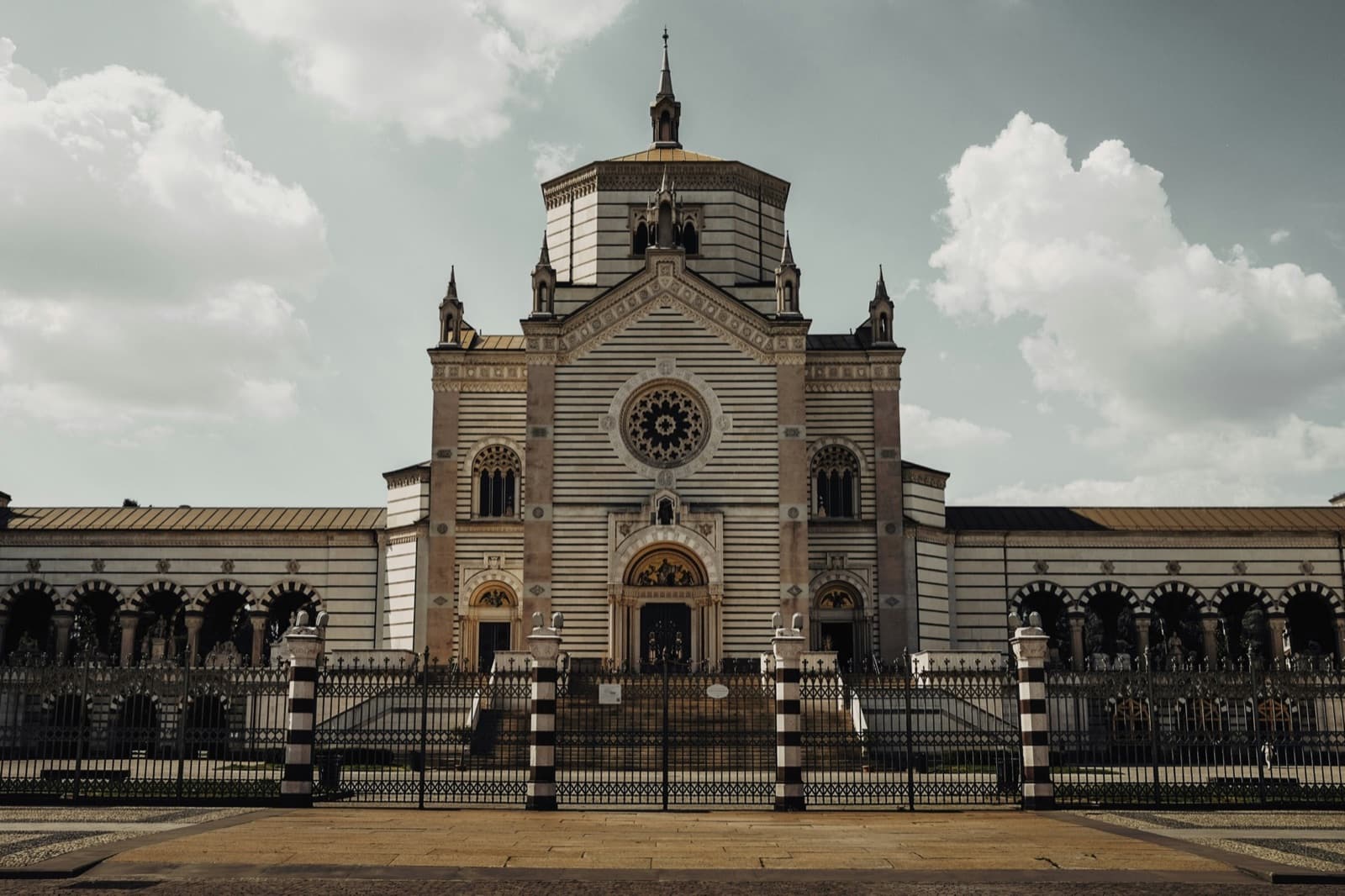
    Cimitero Monumentale

    Here death became art. A 19th-century cemetery conceived as monumental scenography, where Milan's industrial and bourgeois families sought to leave their mark in marble and bronze. Neo-Gothic, Art Nouveau, Symbolism: each tomb speaks its own language. The portrait of economic power turned into memory.

  • Piazza San Sepolcro in central Milan

    Piazza San Sepolcro

    A discreet square, far from the Duomo's monumentality —and yet here an idea became a regime. On 23 March 1919, in a building on this square, Mussolini founded the Fasci di Combattimento. Fascism was born here, in a meeting. Great changes don't always begin in the most visible places.

  • Piazzale Loreto in Milan

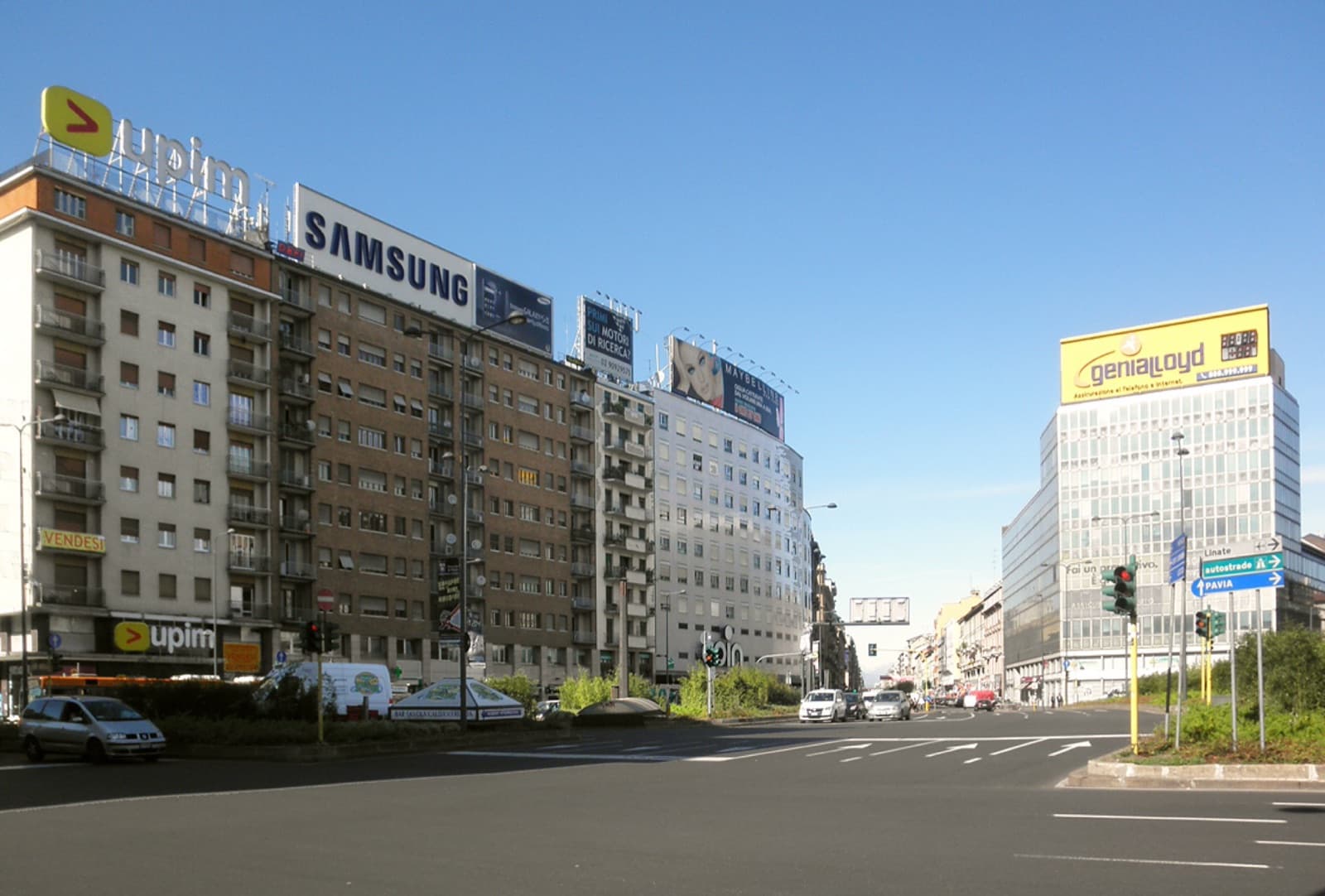
    Piazzale Loreto

    Today it's an intersection of cars and traffic lights. But this name stayed bound to two harsh episodes: the execution of fifteen anti-fascists in 1944 and, months later, the public display of the bodies of Mussolini and other leaders of the fallen regime. The square was redesigned and erased almost everything —but the memory never left.

FAQ

About Milan on Ruthy

They're written and narrated by Lucas Botta, of Historia en Podcast. Not auto-generated text or a synthetic voice: curated content, with judgment and narrative craft. That's the difference from any generic guide.

Yes. Ruthy streams its stories, so you'll need a connection while you explore the city — Wi-Fi, mobile data or a local eSIM. The upside: the app takes up no space on your phone, and you always hear the most up-to-date version of each story.

Milan has 20 places and 31 chapters on Ruthy. 2 or 3 relaxed days cover it: one morning for Duomo–Galleria–Scala, another for Castello Sforzesco–Parco Sempione–Arco della Pace, an afternoon for Santa Maria delle Grazie and the Last Supper, and another for Sant'Ambrogio, San Lorenzo and the Navigli.

Yes. Before heading out, listen to the 9 chapters of "History of Milan" — they're the frame for everything else. Then start at Piazza del Duomo, go up to the rooftops, walk through the Galleria (the 4 chapters), and down to La Scala. Another day: Castello + Parco Sempione + Arco della Pace.

The Last Supper is viewable only with a booking: timed entry, very limited slots, often sold out weeks (sometimes months) ahead. You buy tickets at the official site Vivaticket / il-cenacolo. Ruthy tells you the full story of the mural — Leonardo, the dry oil-on-wall technique, the damage and restorations — so your time inside is spent looking.

For the Duomo (interior, crypts and rooftops) booking online is strongly recommended — queues can be long. La Scala has separate tickets for its museum and theatre visits. The Pinacoteca di Brera and the Monumental Cemetery are simpler entries. Ruthy does not sell tickets, it is only the audio guide.

Yes — it's one of the best viewpoints in Milan and you walk among the Flamboyant Gothic spires. There's a lift and stairs; the lift ticket costs more. Ruthy tells you what you're looking at from above: the statues, the Madonnina, the horizon stretching to the Alps on clear days.

Yes. Each person downloads the app on their phone and listens through their own headphones. You walk together and choose which story to play at each stop. No group tour, no fixed schedule, no guide to wait for.

Milan is the other Italy: industrial, financial, the capital of design and fashion. But beneath all that live Roman Mediolanum — an imperial capital — the Renaissance Sforza, Leonardo da Vinci, the Risorgimento and Italy's most complicated 20th century. Ruthy shows you the Milan that shopping guides never tell.

Yes. Ruthy is free to download and use on iOS and Android. All 20 places and 31 Milan chapters are available at no cost during this initial phase.

Real reviews

What Ruthy users say.

  • An original and very interesting proposal to discover cities in a different way. It's very easy to use, has a clear interface, and the stories are well narrated. I liked that it lets you explore at your own pace and choose what places to visit by proximity or interest. Without a doubt, it's an entertaining and educational option — ideal for tourists or to rediscover your own city.

    Jaz GonzálezApp Store
  • I used it on my trip and the descriptions, details, and information it provides are excellent. Highly recommended!

    Ale CarbaApp Store
  • This app is wonderful — it shows you everything you need to know about any place you visit.

    Lisandro HedinGoogle Play

Start with Milan

You don't just see Milan. You understand it.

Download Ruthy free and walk Milan with all 20 stories activating in real time, right where it all happened.

Free · no ads · iOS and Android

Download Ruthy free