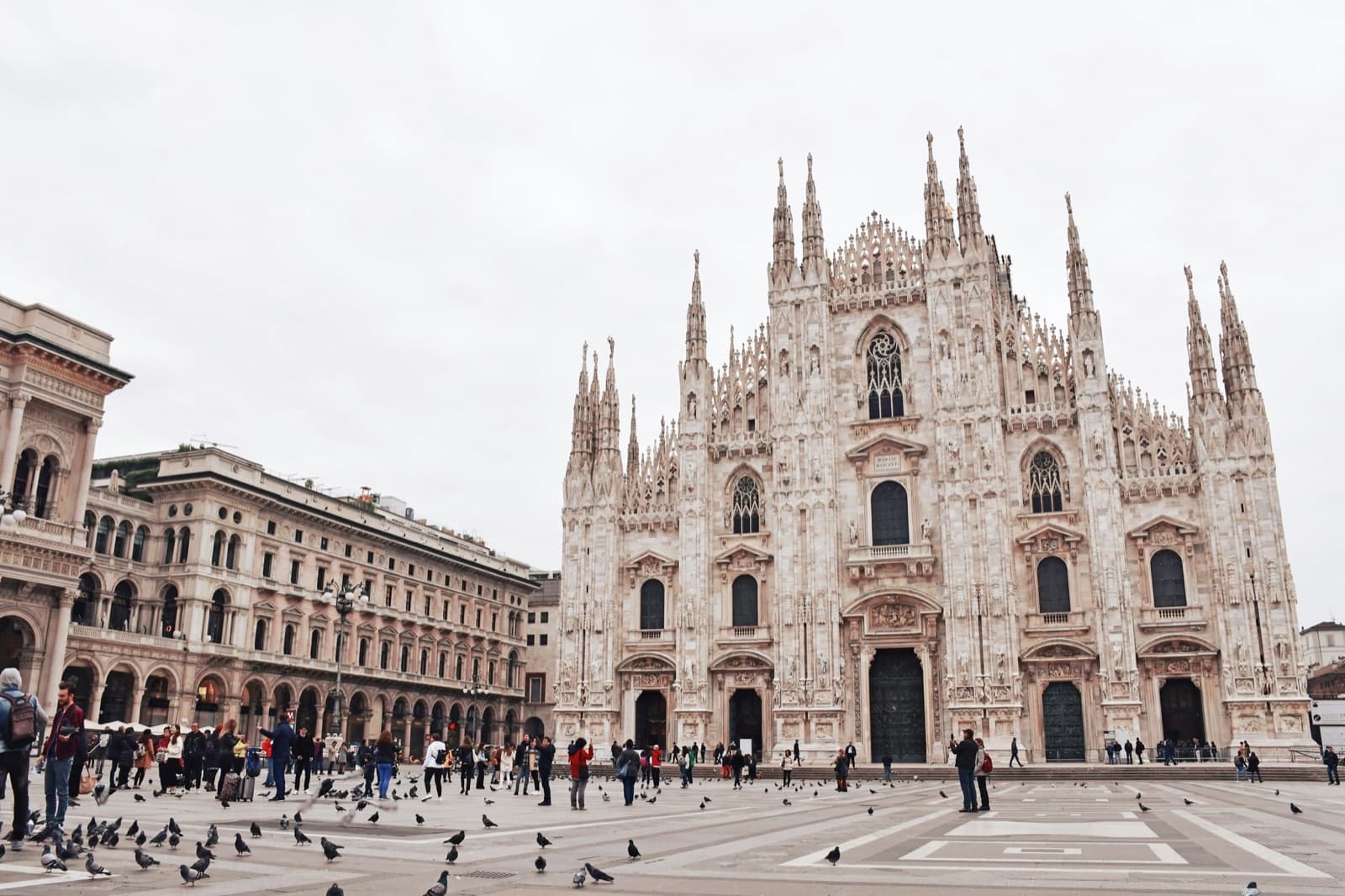
Milan · 9 chapters
History of MilanHistory & audio guide · Milan
Milan presents itself with shop windows and design, but beneath that skin it was capital of the Roman Empire —for a moment, more than Rome. Here the Edict that freed Christianity was agreed, the Visconti and Sforza ruled, Leonardo painted. Nine chapters to understand the city that builds from action, not from postcards.


Free · no ads · iOS and Android
Updated: July 2026
The story, in short
Milan tends to present itself to the world with designer suits and financial rhythm, but beneath that skin it holds a far older, more powerful history. It began as a Celtic settlement and Rome turned it into Mediolanum —the "place in the middle"—, until, late in the 3rd century, it became an imperial seat: for a moment, more practical for governing the West than Rome itself. Here, in 313, the tolerance toward Christians that changed the course of late Antiquity was agreed.
From there, the city never stops remaking itself. Saint Ambrose makes it a Christian hub; the Visconti and the Sforza turn it into a duchy and a Renaissance court, with Leonardo working within it; France, Spain and Austria fight over it because it's the hinge of northern Italy. In the 19th century, Milan resists Austria in the Five Days and pushes unification forward. In the 20th it becomes an industrial engine… and also the place where fascism is born.
A nine-chapter special on a city built not from postcards but from action: empire, faith, art and industry, layered together and still alive beneath your feet.
All 9 chapters
History of Milan, told chapter by chapter
Ruthy narrates History of Milan in 9 chapters, at the exact spot where each story happened. Download the app free, arrive and press play — no group tour, at your own pace.
- Celtic origins and Roman Mediolanum (4th century BC – 5th century AD)
- Christianisation, invasions and transformation (4th–8th centuries)
- Empire, trade and the medieval city (8th–13th centuries)
- Lordships and ducal power (13th–15th centuries)
- Renaissance and cultural splendour (15th–16th centuries)
- Foreign rule and strategic city (16th–18th centuries)
- Revolutions, nationalism and unification (19th century)
- Modernity, industry and the 20th century (1900–1945)
- Contemporary Milan: economic and cultural capital
Keep exploring Milan
More in-depth walks in Milan
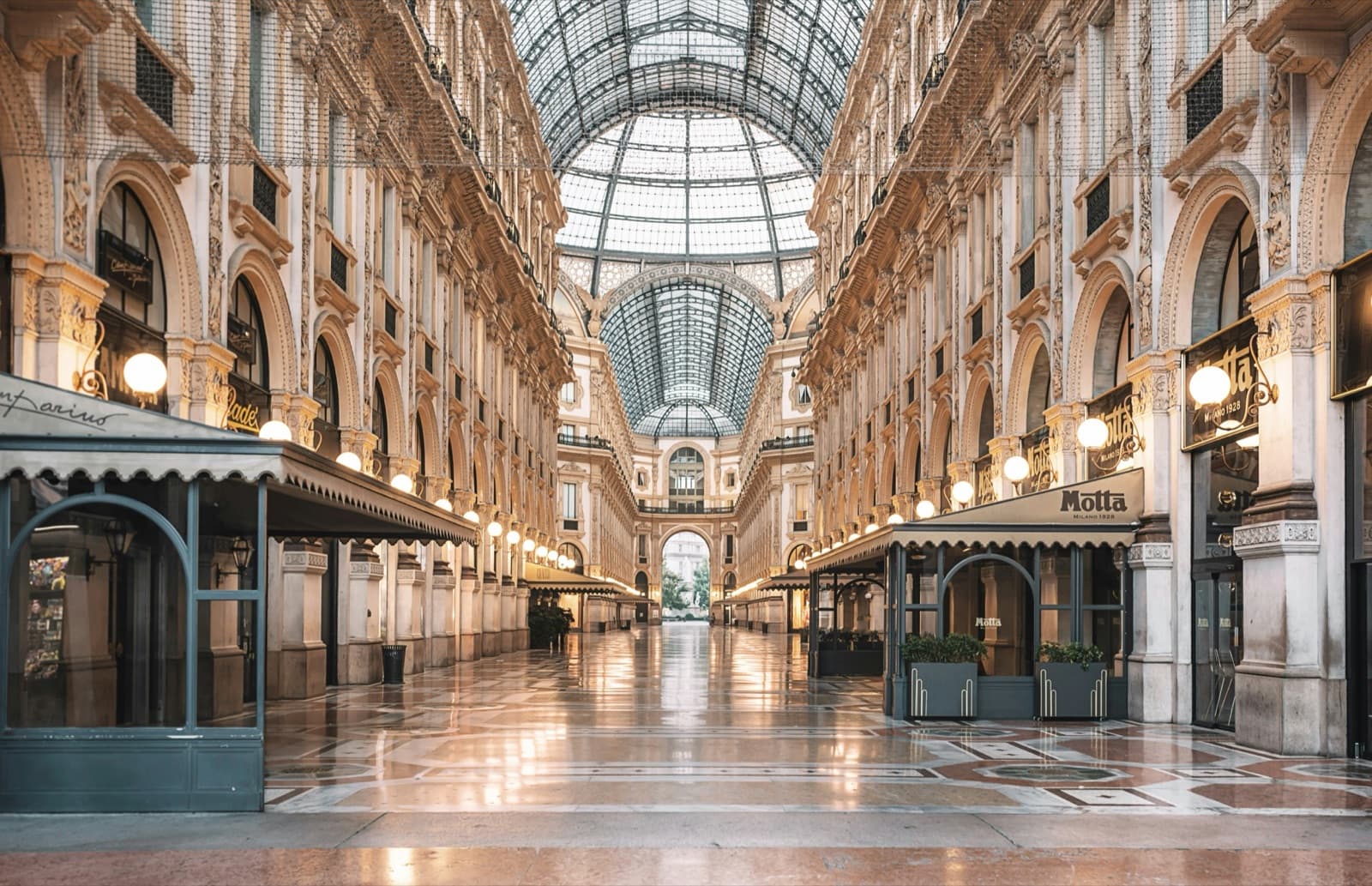
History of Milan, with Ruthy
Don't read about History of Milan. Hear it where it happened.
Free · no ads · iOS and Android