Pisa · 5 chapters
History of PisaHistory & audio guide · Pisa
It all starts in the water — even if you see no sea today. Pisa was born an Etruscan and Roman port, became a Mediterranean sea power, lost a decisive battle and watched a river steal its coastline. Then it was reborn as Galileo's city. Five chapters to understand why the Tower leans on so many centuries.


Free · no ads · iOS and Android
Updated: July 2026
The story, in short
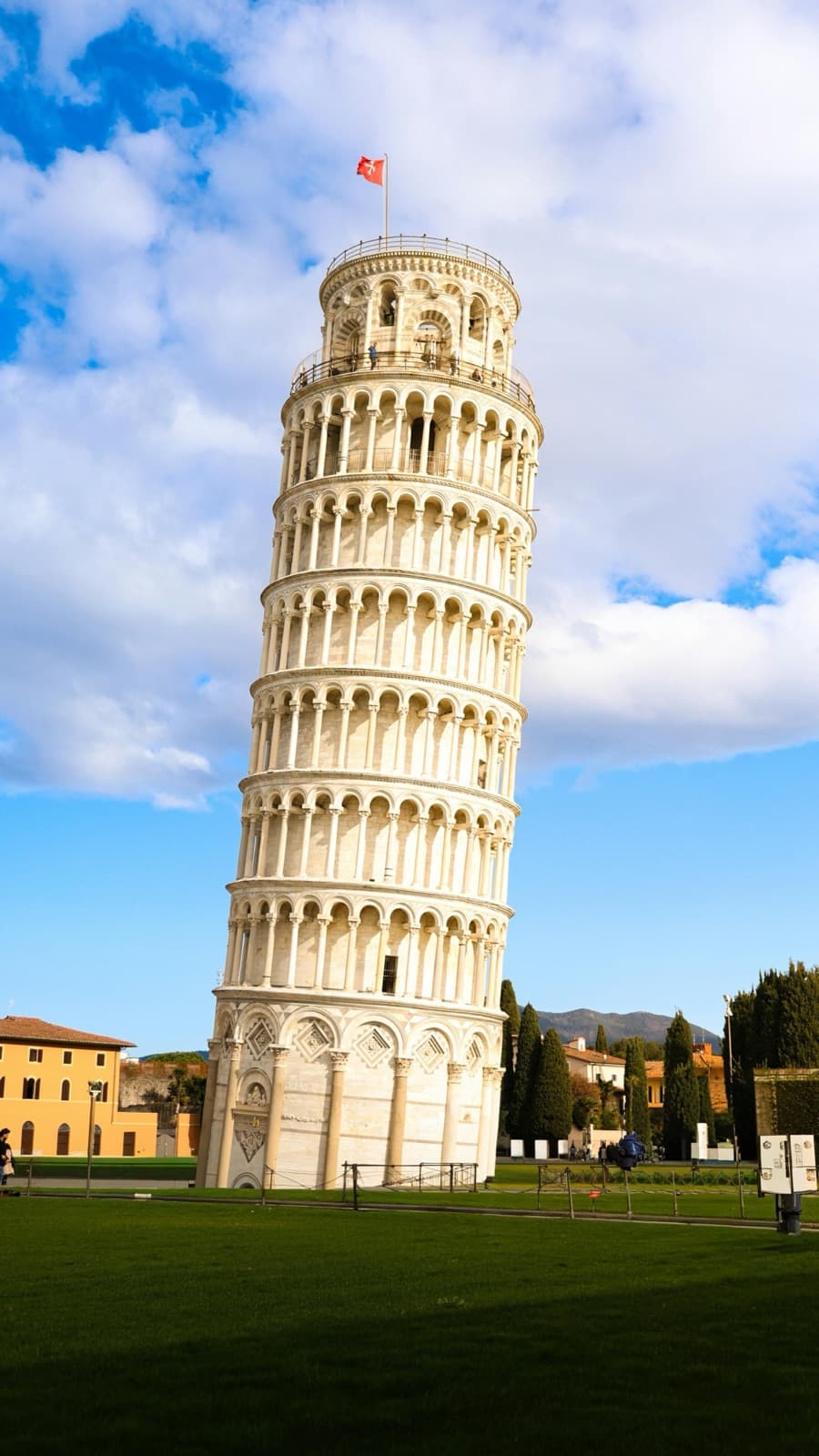
You know Pisa for its tower, but its real story is one of loss. And this special travels the whole arc, from the water to the myth. The first thing that should surprise you is what you don't see: no sea, no port. And yet it all begins there. Pisa was born an Etruscan port, grew as a Roman base on the Arno and always looked to the Mediterranean.
Then it survived invasions and raids, and from the 11th century it took to the sea with resolve: one of the great maritime republics, alongside Genoa, Venice and Amalfi. With the spoils of those victories it raised the Campo dei Miracoli. But the sea also brought the fall. In 1284, defeat against Genoa at Meloria. And slowly the Arno laid down sediment that pushed the coastline away: a sea power that ended up without a port.
In 1406, Florence conquered it. The remarkable part is what came next: the city reinvented itself as the home of Galileo and of knowledge, and turned a structural flaw into its greatest emblem. Five chapters to understand why Pisa is often explained by what it lost. Walk it while Ruthy tells you the story, standing right there, in no hurry.
All 5 chapters
History of Pisa, told chapter by chapter
Ruthy narrates History of Pisa in 5 chapters, at the exact spot where each story happened. Download the app free, arrive and press play — no group tour, at your own pace.
- Etruscan origins and Roman Pisa (4th century BC – 5th century AD)
- Early Middle Ages: crisis, invasions and reconstruction (5th–10th centuries)
- Republic of Pisa: maritime power (11th–13th centuries)
- Decline: defeat and loss of the sea (13th–15th centuries)
- Modern Pisa: from a fallen city to a cultural symbol (16th century – present)
History of Pisa, with Ruthy
Don't read about History of Pisa. Hear it where it happened.
Free · no ads · iOS and Android