Itinerary at a glance
How to think about Rome in 3 days
In Rome, history isn’t kept behind glass: it’s alive, exposed, walked over every day. Some 2,500 years compressed into a few square kilometres — and in three days you won’t see all of it, and that’s fine. This route doesn’t aim for complete: it aims for coherent. It orders the places by historical layer so each day makes sense on its own instead of feeling like a disconnected mosaic.
The premise is simple: day 1, Ancient Rome. Day 2, baroque centre. Day 3, Vatican and Trastevere. All on foot, except for crossing to the Vatican. Distances are short, but there’s no need to rush.
This is one possible route, not the only one. Some people prefer starting with the Vatican, others spend two full days at the Roman Forum. The compass points in a direction — you decide how long to stay at each stop.
Day 1 — Ancient Rome
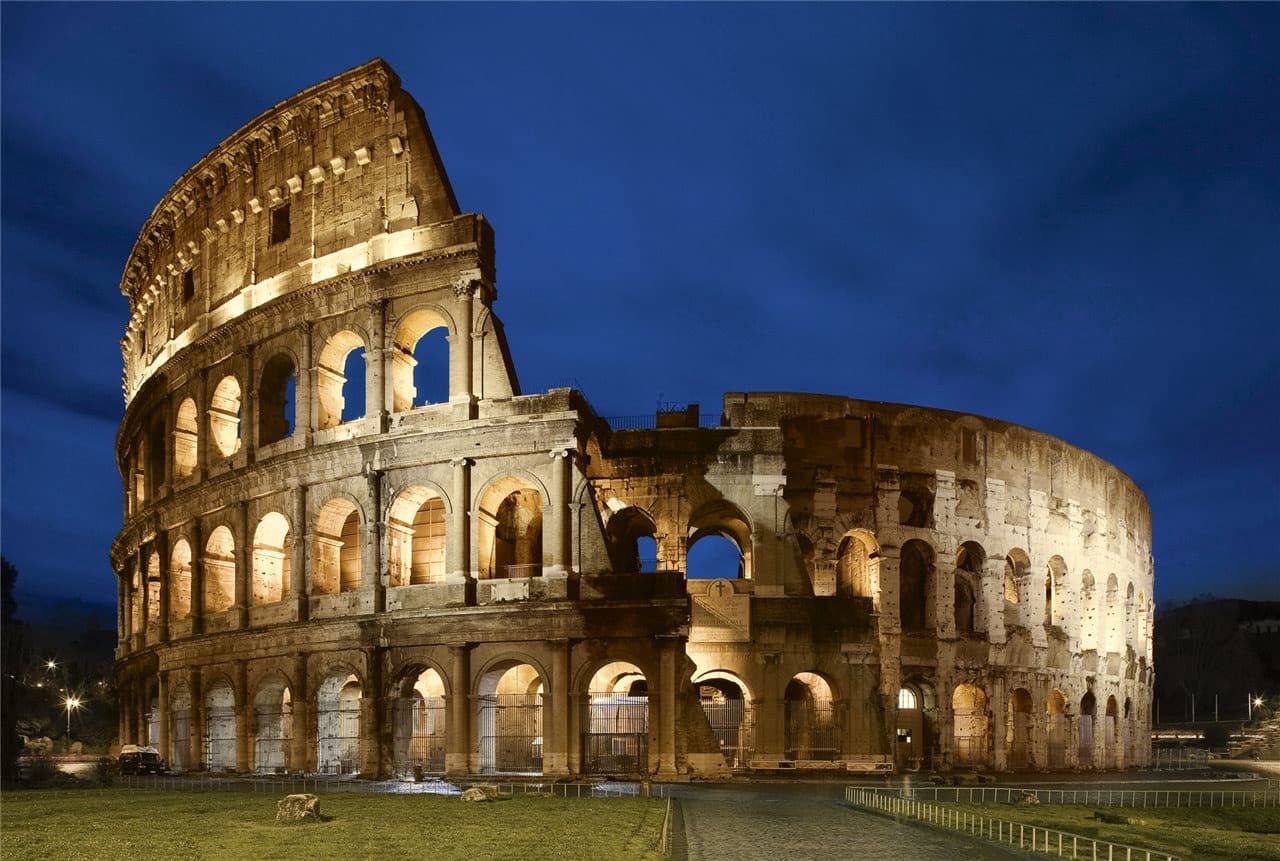
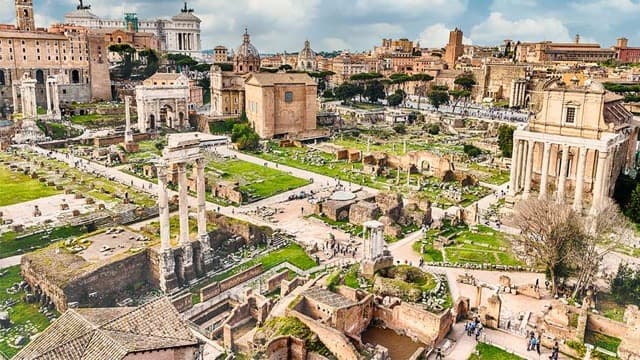
Day one is the Rome of the emperors: Roman Forum, Palatine, Colosseum and Imperial Fora. Everything adjacent, between Termini station and the Circus Maximus. You start at the beginning — for over a thousand years the Forum was the political, religious and judicial heart of the ancient world, and the Palatine is, by tradition, the hill where Romulus traced the city’s first furrow. It’s no accident: everything you see on the following days was built on top of these stones.
Suggested order:
- Book your ticket to skip the queue and, once inside, start the route at the Curia Julia (the seat of the Roman Senate), the political heart of the republic — before the more photographed ruins.
- Walk the Via Sacra to the Arch of Titus.
- Climb the Palatine — views of the Circus Maximus and the mythical origin of the city.
- Down to the Colosseum. If you still have energy, add Trajan’s Markets and the Imperial Fora.
Time: 5–7 hours with breaks. Walking: ~6 km.
Day 2 — Baroque centre
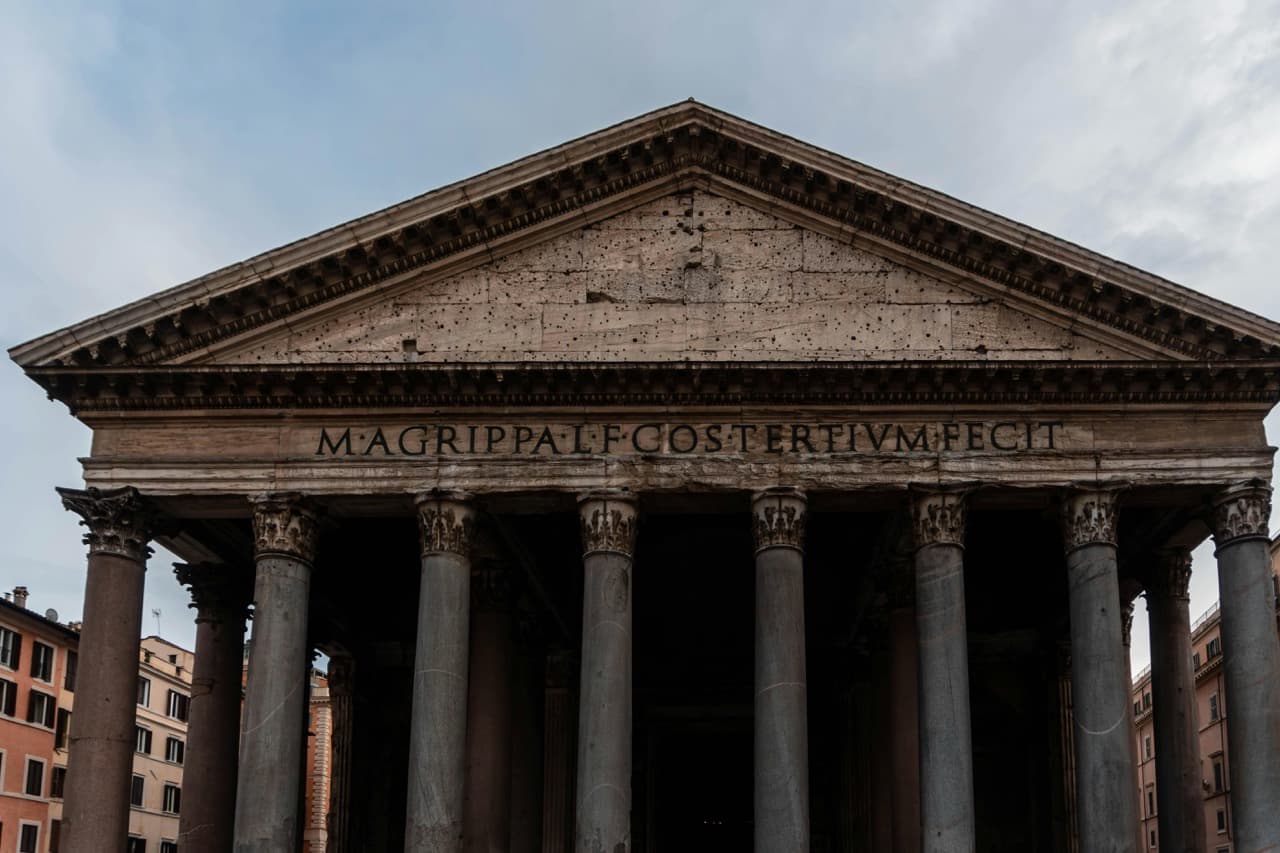
Day two skips ahead 1,500 years and drops you into Renaissance and Baroque Rome. The area is small but dense: Pantheon, Piazza Navona, Fontana di Trevi, Spanish Steps. You walk the real historic centre, where Romans live and eat.
Suggested order:
- Pantheon — paid entry, arrive early to avoid tour groups.
- Piazza Navona — Bernini’s Fountain of the Four Rivers and the Roman stadium underneath.
- Largo di Torre Argentina — where Caesar was killed. Yes, exactly there.
- Fontana di Trevi — if you can, come back at night, without the crowd.
- Spanish Steps and Piazza del Popolo — to close the day with a coffee.
Time: 4–6 hours. Walking: ~5 km.
Day 3 — Vatican and Trastevere
Day three you cross the Tiber. Morning at the Vatican (St. Peter’s Basilica, Vatican Museums, Sistine Chapel) and afternoon in Trastevere, the neighbourhood that preserves the most authentic everyday Rome.
Suggested order:
- Vatican Museums — book online in advance, saves 1–2 hours of queueing.
- Sistine Chapel (included with the Museums) — you enter at the end of the route.
- St. Peter’s Basilica — free entry. Climb the dome if you’re up for it (551 steps, the view earns it).
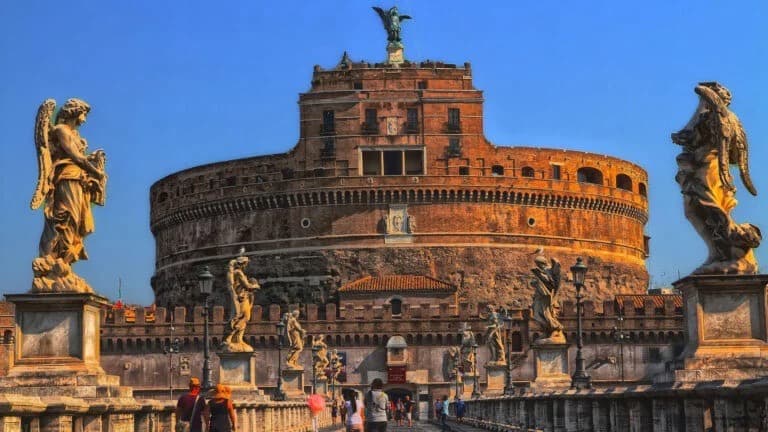
- Castel Sant'Angelo on the way back across the Tiber.
- Afternoon in Trastevere: walk without a goal. Have dinner there.
Time: 6–8 hours. Walking: ~7 km.
What to avoid
- Eating right next to the tourist sites. Many spots steps from the Colosseum or Trevi prioritise location over the kitchen and tend to charge more. Walk a few blocks inland or check reviews before sitting down.
- “Free tour” or skip-the-line offers from people approaching you in the street. They often end in overpriced tickets or unwanted shopping stops. Buy tickets on the official sites.
- Doing the Vatican without a booking in high season. Queues run up to 3 hours. The online booking costs little extra and saves your morning.
- Trying to “see it all” at the Colosseum and the Forum. Each one takes at least three hours done properly. Rush them and you don’t understand anything.
How to get around
Rome’s historic centre is small and walkable. The three routes in this guide are on foot from start to finish — except crossing to the Vatican, where a bus or the metro (line A, Ottaviano station) is faster.
Rome’s metro has three lines (A, B/B1 and C); for this route the most useful are A and B — line C exists but adds little for the classic historic centre. None drops you in the heart of the centre, so for almost everything feet are the only real transport. Make sure you have comfortable shoes — you’ll cover 18–22 km over three days.
If you ever need precise directions, one tap in Ruthy opens Google Maps, Apple Maps or Waze. The app is built for walking, not for turn-by-turn navigation.
Practical info
- Best time: April–June and September–October. July and August are unbearably hot; January and February, cold and rainy.
- Colosseum + Forum + Palatine tickets: official combined ticket at colosseo.it. Valid for 24 h.
- Vatican Museums: book online at museivaticani.va.
- Where to stay: Trastevere or near Termini give you walking access to the centre. Prati (next to the Vatican) is quiet and clean.
- Gear: real walking shoes, not fashion sneakers. Reusable water bottle — Rome’s public fountains (nasoni) are drinkable and on every corner.