Itinerary at a glance
How to think about Paris in 3 days
Paris looks like a postcard, but it’s a battlefield of ideas. It was born from a river — first came the Seine, then the city —, it was Roman Lutetia, a seat of kings and a heart of the Church, and above all the great political laboratory of modernity: here absolute monarchy lived alongside the guillotine, and from here came the revolutions that changed the world. In three days you won’t see all of it, and that’s fine. This route doesn’t aim for complete: it aims for coherent.
The premise is simple: day 1, the island and the Louvre. Day 2, monumental Paris. Day 3, Montmartre and the Latin Quarter. Almost all on foot. The centre is fairly flat and distances are short — except the climb up Montmartre, there’s no need to rush.
This is one possible route, not the only one. Some people start with the Eiffel Tower, others spend a whole morning looking at a single painting in the Louvre. The compass points in a direction — you decide how long to stay at each stop. At each one, Ruthy tells you what you’re looking at standing right there, in no hurry.
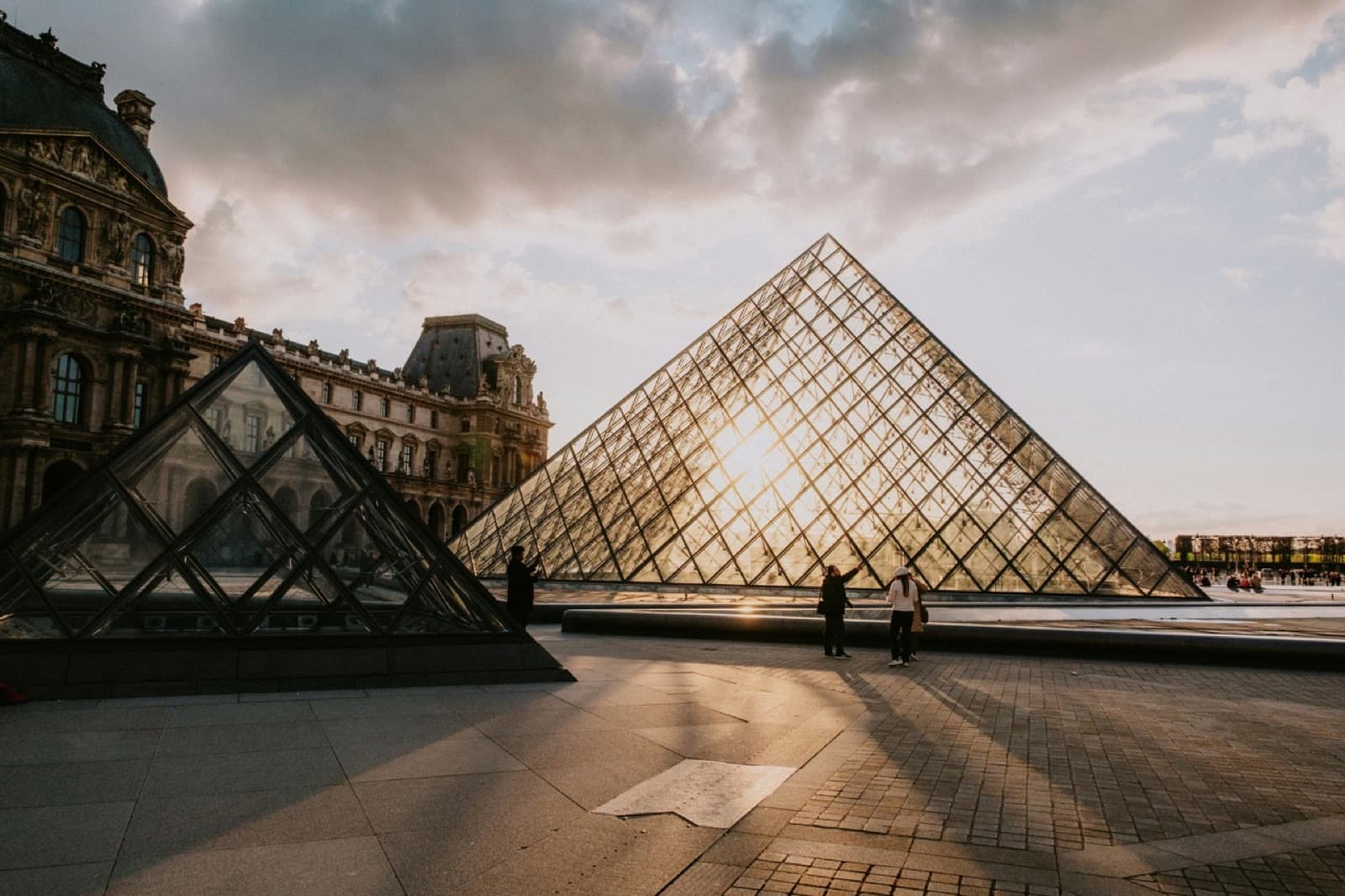
Day 1 — the island and the Louvre
Day one is the origin: Île de la Cité, Notre-Dame, Sainte-Chapelle, Conciergerie and the Louvre. Everything adjacent, on both banks of the Seine. You start at the beginning — the island in the middle of the river was the heart of Roman Lutetia and the medieval seat of kings and bishops. The poet Gui de Bazoches, back around 1190, called it “the head, the heart and the marrow of Paris.” It’s no accident: much of what you see on the following days was built out of these stones.
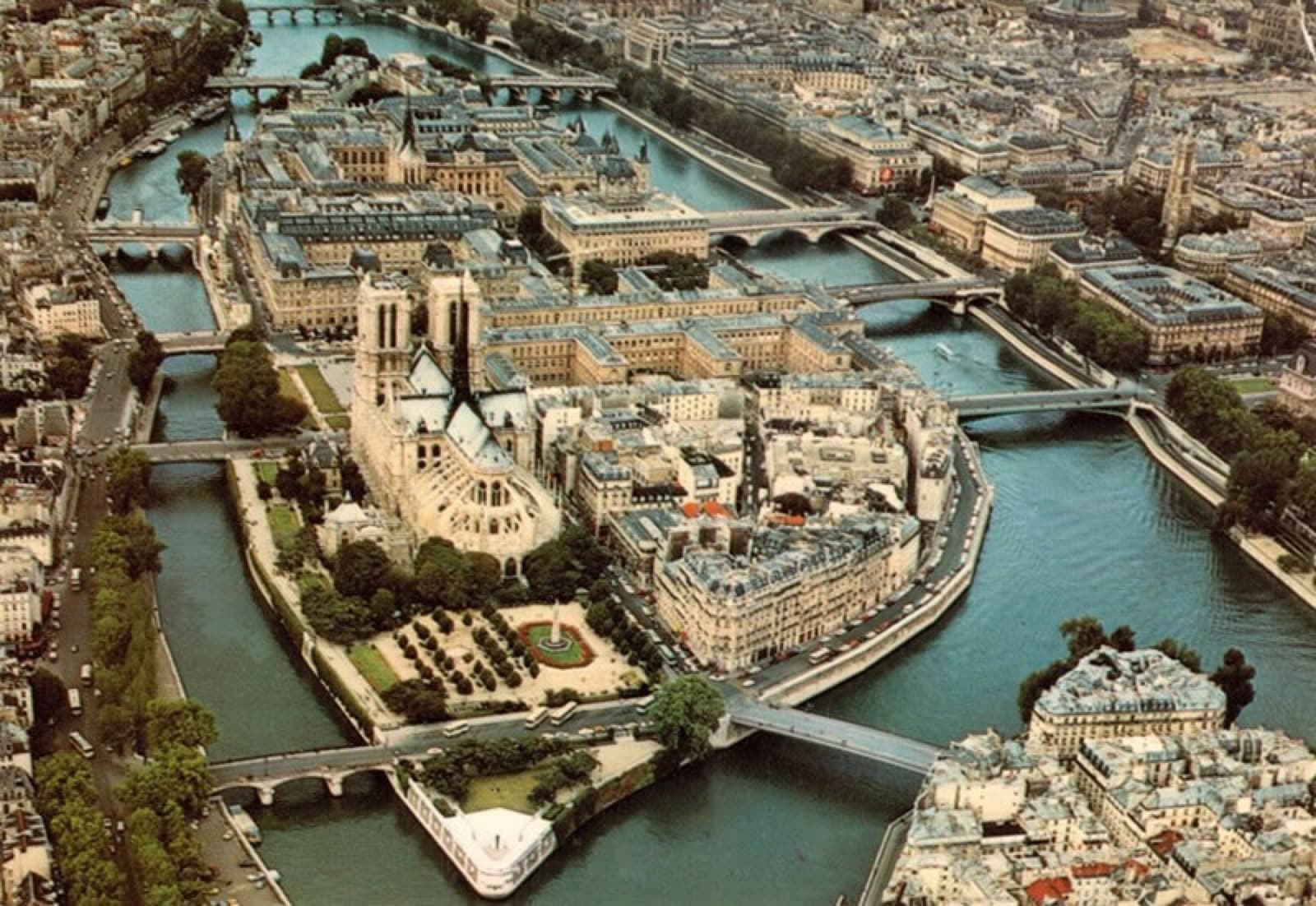
Suggested order:
- Île de la Cité — the historic core of Paris. Walk it slowly: 22 hectares hold centuries of power, faith and tragedy.
- Notre-Dame — eight centuries in stone, since bishop Maurice de Sully in 1163. The 2019 fire took the spire, but the stone held; it reopened in December 2024.
- Sainte-Chapelle — a Gothic jewel box raised by Saint Louis to hold the Crown of Thorns. You climb a staircase and the walls vanish: fifteen metres of stained glass.
- La Conciergerie — a royal palace turned prison; here Marie-Antoinette spent her last hours before the guillotine.
- Louvre Museum — book your ticket to skip the queue. You cross the Seine and enter the world’s most visited museum, which began as a fortress.
Time: 6–8 hours with breaks. Walking: ~6 km.
Day 2 — monumental Paris
Day two is the Paris that opened to the world: power staged. You walk the great axis that runs from the Concorde to the Arc de Triomphe, with the Eiffel Tower and the Trocadéro across the Seine. Here beauty is political: a perfect straight line that leads the eye to the horizon, always crowned by a monument. The empire, the republic and the national parade, set in a row.
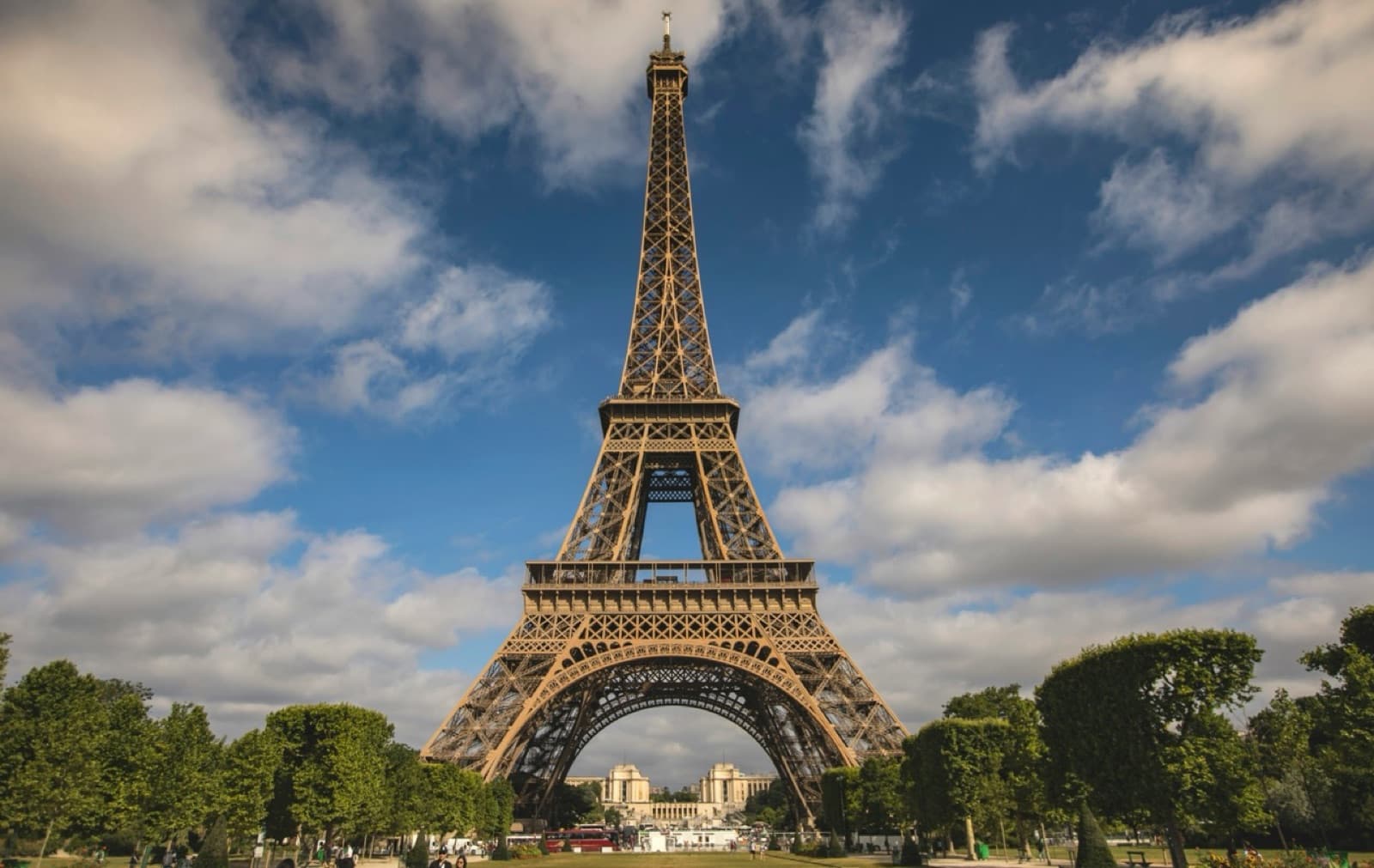
Suggested order:
- Place de la Concorde — serene today with its Egyptian obelisk, but the guillotine stood here: on this ground Louis XVI was executed, and hundreds more during the Terror.
- Champs-Élysées — the avenue linking the Concorde to the Arch; laid out in the 17th century as a royal perspective, today the stage where France parades and celebrates.
- Arc de Triomphe — Napoleon commissioned it after Austerlitz and died without seeing it finished. Beneath the arch, the Tomb of the Unknown Soldier and the eternal flame.
- Eiffel Tower and Champ de Mars — the lawn at its feet, once a military drill ground that hosted the 1790 Fête de la Fédération. If you climb the Tower, book ahead.
- Trocadéro — close the day on the terraces of the Palais de Chaillot, with the classic view of the Eiffel, the one in every photo.
Time: 6–8 hours. Walking: ~8 km.
Day 3 — Montmartre and the Latin Quarter
Day three you cross to the less obvious. In the morning, Montmartre: until 1860 it wasn’t even part of Paris, but a hill apart, of windmills and cheap rents, where the bohemians ended up. And in the afternoon, the Latin Quarter, on the hill of Sainte-Geneviève — the Paris of knowledge, with the Panthéon, the Sorbonne and, beneath it all, the Catacombs. Two faces of the city the postcards rarely put together.
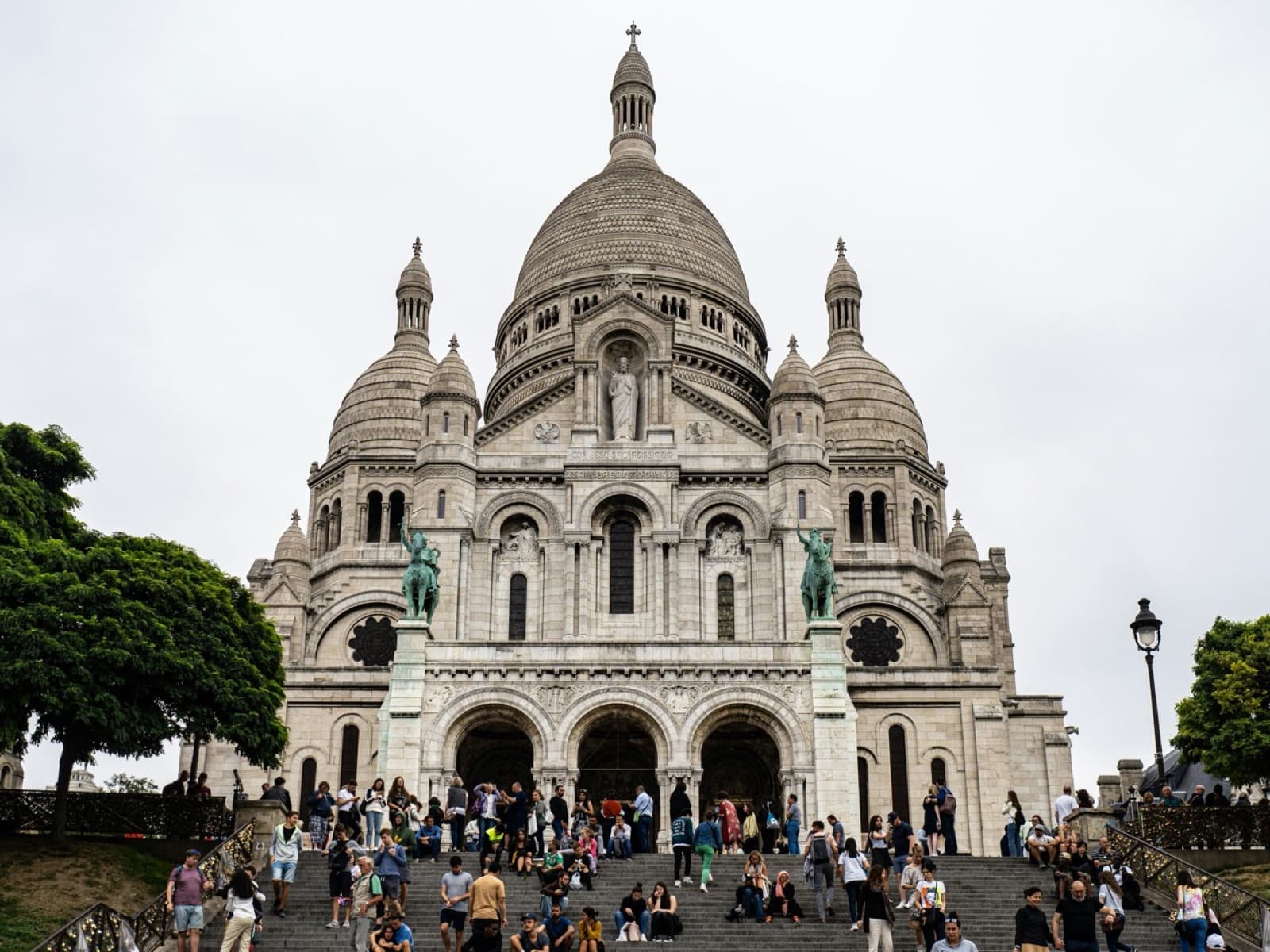
Suggested order:
- Sacré-Cœur and Montmartre — climb to the white basilica in the morning, when it’s quieter, and let yourself get lost in the steep streets where Picasso and Toulouse-Lautrec lived.
- Panthéon — it began as a church to St Geneviève and ended up a secular temple to “the great men.” In its crypt rest Voltaire, Rousseau, Victor Hugo and Marie Curie.
- The Sorbonne — the college founded in 1257 that gave its name to the university; in May 1968, from its lecture halls, students shook France to its core.
- Cluny Museum — a 15th-century abbey over Roman baths, with “The Lady and the Unicorn” inside. Two eras in a single building.
- Catacombs of Paris — if you’re up for it, go down to the ossuary of more than six million people. It’s not a macabre curiosity: it’s an urban solution. The city works in layers.
Time: 6–8 hours. Walking: ~7 km.
What to avoid
- Eating right by the Eiffel Tower or on the Champs-Élysées. Many spots in the most photographed areas prioritise location over the kitchen and tend to charge more. Walk a few blocks into the Marais or the Latin Quarter and you eat better.
- “Free tour” or skip-the-line offers from people approaching you in the street. They often end in overpriced tickets or unwanted shopping stops. Buy tickets on the official sites.
- Rushing the Louvre. It’s the world’s most visited museum: a long half-day minimum if you want to understand what you see. Pick a couple of rooms and enjoy them, instead of chasing the Mona Lisa and nothing else.
- Climbing Montmartre at midday in high season. The stairs and the Place du Tertre fill up. Go early: the hill breathes differently before the groups arrive.
How to get around
Paris’s historic centre is large but walkable, and fairly flat. The three routes in this guide are on foot almost from start to finish — the only real climb is Montmartre, and you’ll feel it. The Concorde–Champs-Élysées–Arc de Triomphe axis is crossed entirely on foot.
Paris’s metro is dense and solves the longer stretches — getting to Montmartre (Anvers or Abbesses stations), crossing to the Trocadéro, or if you’re staying far from the centre. For Versailles, the RER C. But day to day on this route, feet are the only real transport. Make sure you have comfortable shoes — you’ll cover 18–22 km over three days.
If you ever need precise directions, one tap in Ruthy opens Google Maps, Apple Maps or Waze. The app is built for walking, not for turn-by-turn navigation.
Practical info
- Best time: April–June and September–October. July and August are warm and very busy; winter is cold and grey, but with fewer crowds.
- Louvre Museum tickets: book online at louvre.fr, saves the queue and locks in a time slot.
- Sainte-Chapelle and Conciergerie: book online at sainte-chapelle.fr; there’s a combined ticket for both.
- Where to stay: the Marais (3e–4e) and the Latin Quarter or Saint-Germain (5e–6e) leave you walking distance from almost everything. The Opéra area (2e–9e) is well connected and near the Louvre.
- Gear: real walking shoes, not fashion sneakers. Reusable water bottle — there are Wallace fountains around the centre and Paris tap water is drinkable.