Itinerary at a glance
How to think about Mexico City in 3 days
Here there isn’t one city: there are three, stacked one on another. The Mexica raised Tenochtitlan on a lake around 1325 —an almost impossible feat that ended up being a capital of hundreds of thousands. Spain razed it in 1521 and built its viceregal capital on the same ruins, often with the very stones of the temples. And on top of all that grew one of the largest and most alive megacities in the world. In three days you won’t see all of it, and that’s fine. This route doesn’t aim for complete: it aims for coherent.
The premise is simple: day 1, the Historic Centre. Day 2, Reforma and Chapultepec. Day 3, Coyoacán and the south. The first day is almost all on foot; the other two add a stretch of metro or taxi, because the city is vast. But distances within each zone are short — there’s no need to rush.
This is one possible route, not the only one. Some people start with Chapultepec, others spend a whole morning in front of Rivera’s murals. The compass points in a direction — you decide how long to stay at each stop. At each one, Ruthy tells you what you’re looking at standing right there, in no hurry.
Day 1 — the Historic Centre
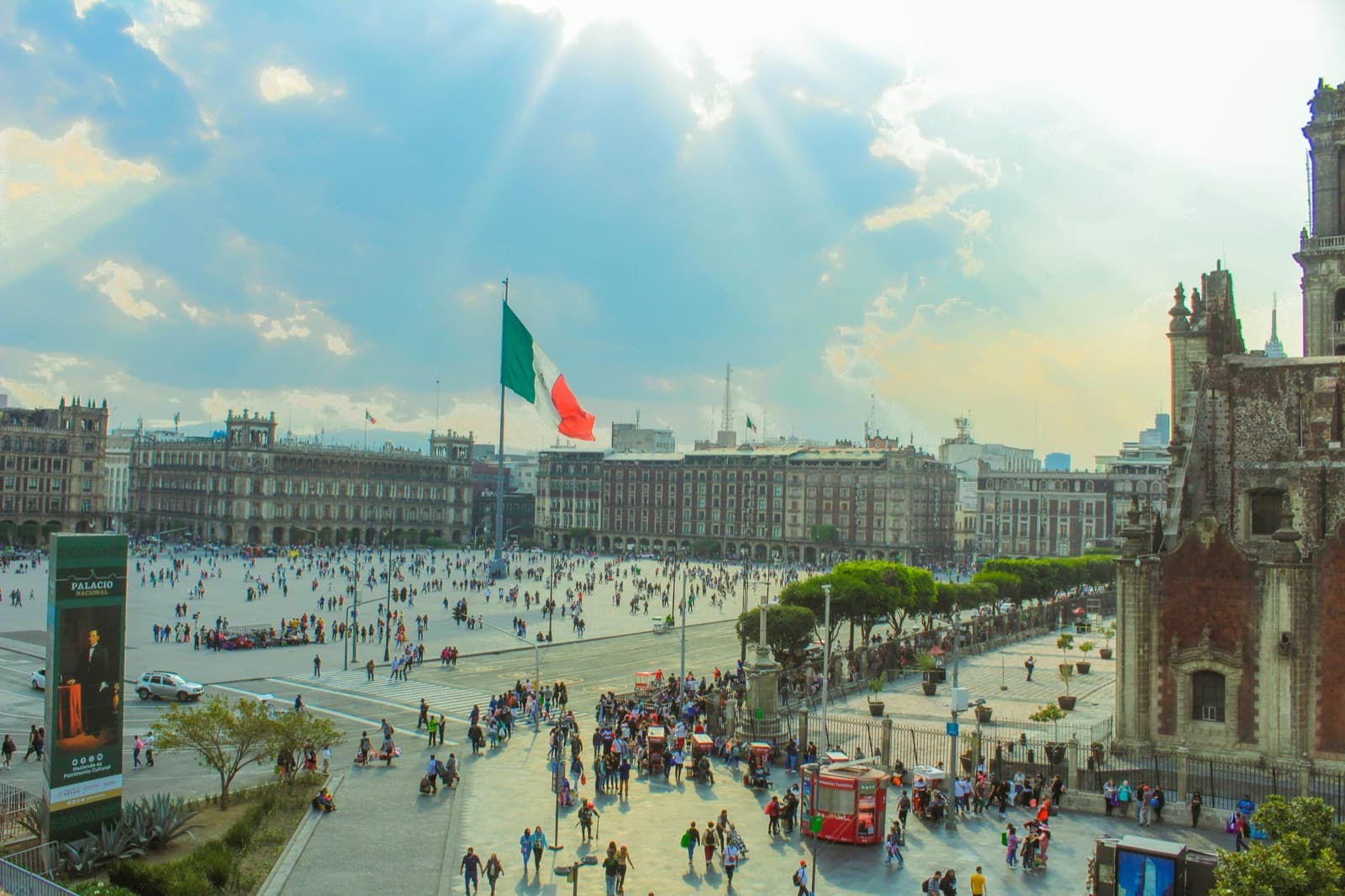
Day one is the stacked heart of the city: Zócalo, Templo Mayor, Metropolitan Cathedral, National Palace. Everything converges on a single square, one of the largest in the world. You start at the beginning — when Cortés ordered the new city laid out in 1524, he did it over the ruins of the Templo Mayor, following the logic of the conquest: raze the old to impose the new. Power changed hands, but it always concentrated in the same place.
Suggested order:
- Zócalo (Plaza de la Constitución) — standing on the ceremonial centre of Tenochtitlan. The great flag flies in the middle; around it, seven centuries of power on one plane.
- Templo Mayor — the Mexica religious heart, dedicated to Huitzilopochtli and Tlaloc. Found by chance in 1978: the pyramids beneath the asphalt.
- Metropolitan Cathedral — built over the Mexica sacred precinct, it took more than two centuries to finish. Baroque, neoclassical and Churrigueresque coexist on its façade.
- National Palace — over Moctezuma II’s palace: power changed hands, not place. Inside, Diego Rivera’s murals tell all of Mexico on one wall (free entry with ID).
- If you still have energy, walk down calle Madero to Bellas Artes and the Old College of San Ildefonso, the cradle of Mexican muralism.
Time: 5–7 hours with breaks. Walking: ~5 km.
Day 2 — Reforma and Chapultepec
Day two you walk the Mexico that wanted to show the world it was modern. The axis starts at the Angel of Independence —the gilded Winged Victory that Porfirio Díaz inaugurated in 1910 for the centenary, with the heroes of 1810 resting beneath your feet— and ends at the forest already sacred to the Mexica, today Chapultepec: the only castle in the Americas to have housed European royalty. From the Porfiriato to the imperial palace, in a single day.
Suggested order:
- Angel of Independence — the whole city’s meeting point. When Mexico celebrates, marches or mourns, it does so here. At the base, the founding fathers of 1810.
- Monument to the Revolution — it was meant to be the dome of Díaz’s legislative palace; the Revolution overthrew him and left the skeleton as a mausoleum. Inside, the Museum of the Revolution.
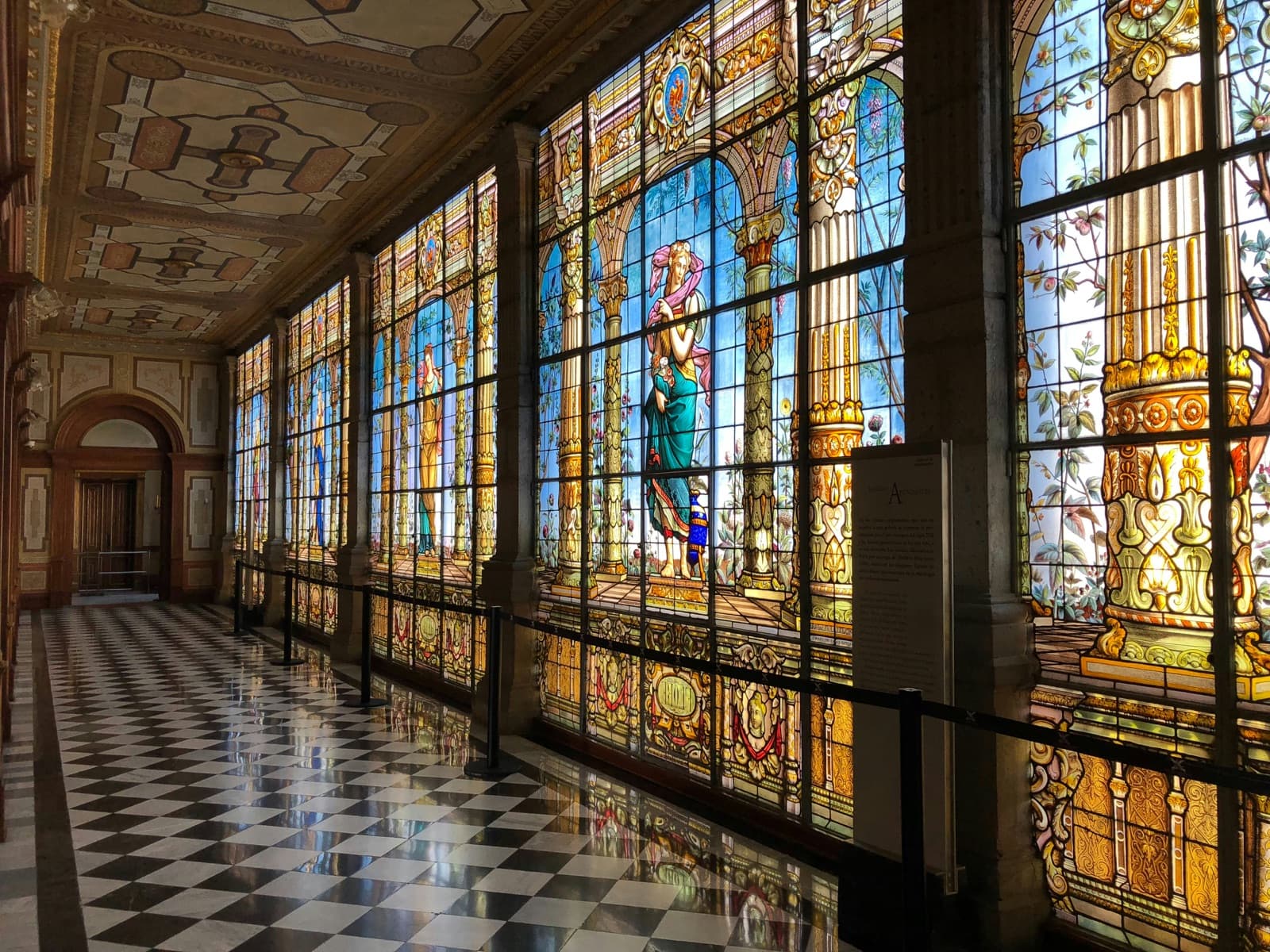
- Chapultepec Castle — views of the city, imperial halls and murals by Orozco and Siqueiros. Walk up or take the hill’s little train.
- Chapultepec park — a green breather to cross between the castle and the museum. Sections of the old aqueduct surface amid the traffic.
- National Museum of Anthropology — the Mexica Sun Stone, Pakal’s tomb, the colossal Olmec heads. Plan for half a day done properly.
Time: 6–8 hours. Walking: ~6 km.
Day 3 — Coyoacán and the south
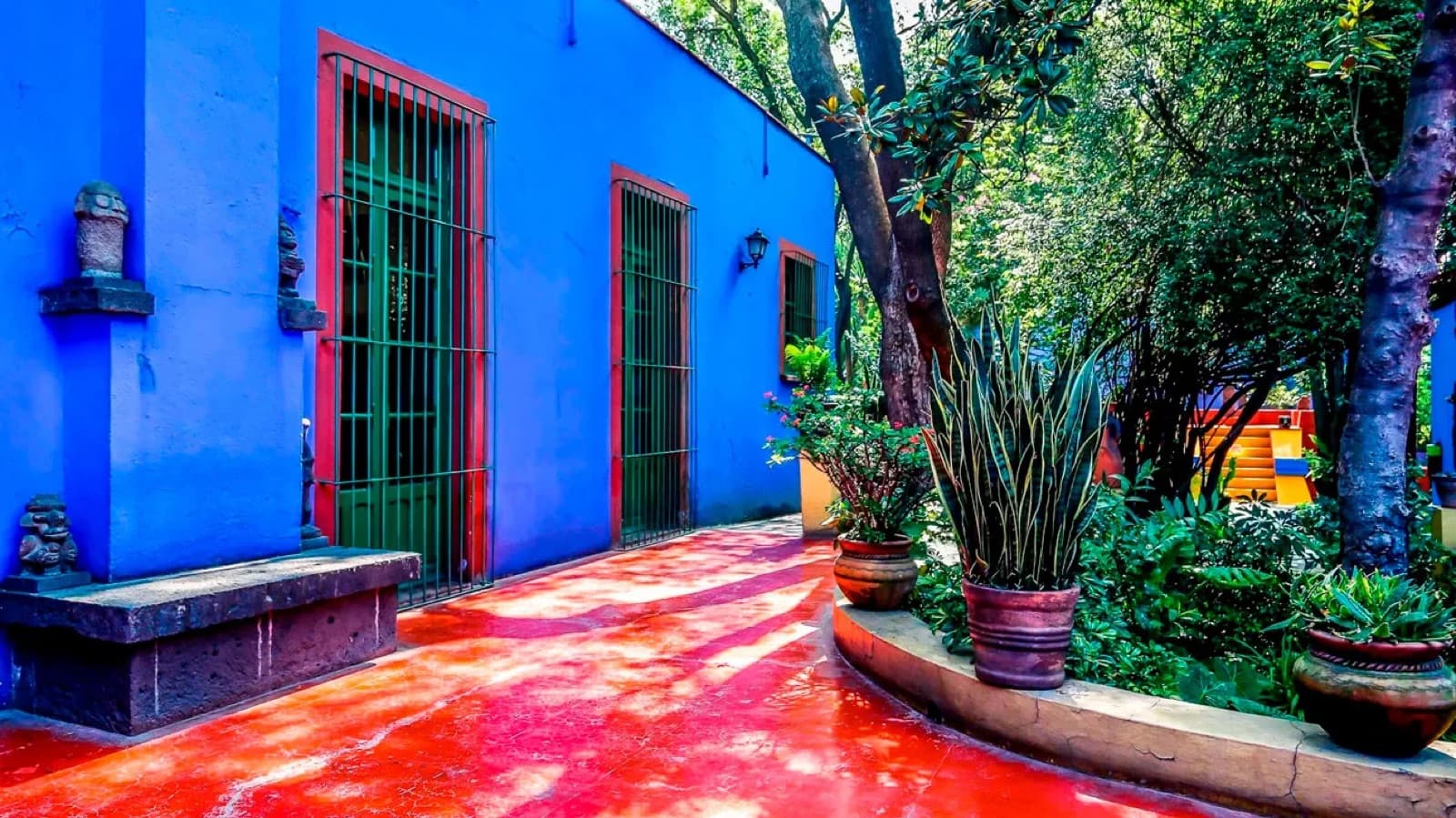
Day three you head south, to the less obvious. Coyoacán, the cobblestone neighbourhood where Frida Kahlo was born, lived and died in the Casa Azul; a few blocks away, the fortress-house where Trotsky was murdered in 1940. And, farther south, the canals of Xochimilco: all that’s left of the chinampas, the artificial islands that fed Tenochtitlan. The same lake system that made a capital in the middle of the water possible, still navigable.
Suggested order:
- Casa Azul (Frida Kahlo Museum) — you step into her world, not a museum about her. Book online in advance: it’s one of the most in-demand tickets in the city.
- Leon Trotsky House Museum — a few blocks away. The study where he was killed remains as it was, and the walls still bear the holes from an earlier attack.
- A walk without a goal through the centre of Coyoacán — square, gardens, market. The neighbourhood is best enjoyed slowly.
- Canals of Xochimilco — farther south. A trajinera among the chinampas; if you’re up for it, the eerie Isla de las Muñecas.
- If you have a spare morning, close with the Basilica of Guadalupe, on Tepeyac — the most-visited Catholic shrine in the world after St. Peter’s.
Time: 6–8 hours. Walking: ~5 km.
What to avoid
- Doing the whole first day without acclimatising. At 2,240 metres, the body tires sooner. Start slow, drink water, and leave the longer walks for the second day.
- “Free tour” or skip-the-line offers from people approaching you in the street. They often end in overpriced tickets or unwanted shopping stops. Buy tickets on the official sites.
- Going to the Casa Azul without a booking. It’s one of the most in-demand museums in the city and the queue can eat your morning. Get a timed ticket online.
- Crossing to the south at rush hour. Coyoacán and Xochimilco are far from the centre; in traffic, the trip can double. Leave early and come back before sunset.
How to get around
The Historic Centre is small, flat and walkable: day 1 you do entirely on foot, from the Zócalo to Bellas Artes. Reforma and Chapultepec also walk well, though the axis is long and you may add a stretch of metro or a short taxi.
The city is vast, so for the longer trips —especially heading down to Coyoacán and Xochimilco— you’ll need transport. The metro is cheap and extensive, the Metrobús runs along Reforma and Insurgentes, and a ride-hailing taxi covers what public transport doesn’t. Within each zone, feet are still the real transport: make sure you have comfortable shoes — you’ll cover 16–20 km over three days.
If you ever need precise directions, one tap in Ruthy opens Google Maps, Apple Maps or Waze. The app is built for walking, not for turn-by-turn navigation.
Practical info
- Best time: March–May and October–November. The rainy season runs June to September, with heavy afternoon downpours; mornings tend to stay clear.
- Casa Azul (Frida Kahlo Museum): book a timed ticket online at museofridakahlo.org.mx. It’s the most in-demand ticket on the route.
- National Palace: Rivera’s murals are free to enter, but require a government-issued ID. Check the opening days before you go.
- Where to stay: the Historic Centre puts all of day 1 on foot; Roma, Condesa or Polanco leave you close to Reforma and Chapultepec, with a good neighbourhood feel.
- Gear and altitude: real walking shoes and a reusable water bottle. Keep in mind the city sits at around 2,240 metres above sea level — in the first days, hydrate more than usual and ease off the pace.