Itinerary at a glance
How to think about Madrid in 3 days
Madrid is one of the few great European capitals that didn’t become one through history, but by decision. It was born as Mayrit, an Andalusi fortress guarding the frontier, and remained a secondary town until, in 1561, Philip II turned it into the capital — almost from nothing — thanks to its position at the exact centre of the peninsula. In three days you won’t see all of it, and that’s fine. This route doesn’t aim for complete: it aims for coherent.
The premise is simple: day 1, Habsburg Madrid. Day 2, the Prado axis and the Bourbons. Day 3, neighbourhoods and less obvious spots. All on foot. The centre is flat and compact, and distances are short — there’s no need to rush.
This is one possible route, not the only one. Some people start with the Prado, others spend a whole morning in a single square. The compass points in a direction — you decide how long to stay at each stop. At each one, Ruthy tells you what you’re looking at standing right there, in no hurry.
Day 1 — Habsburg Madrid
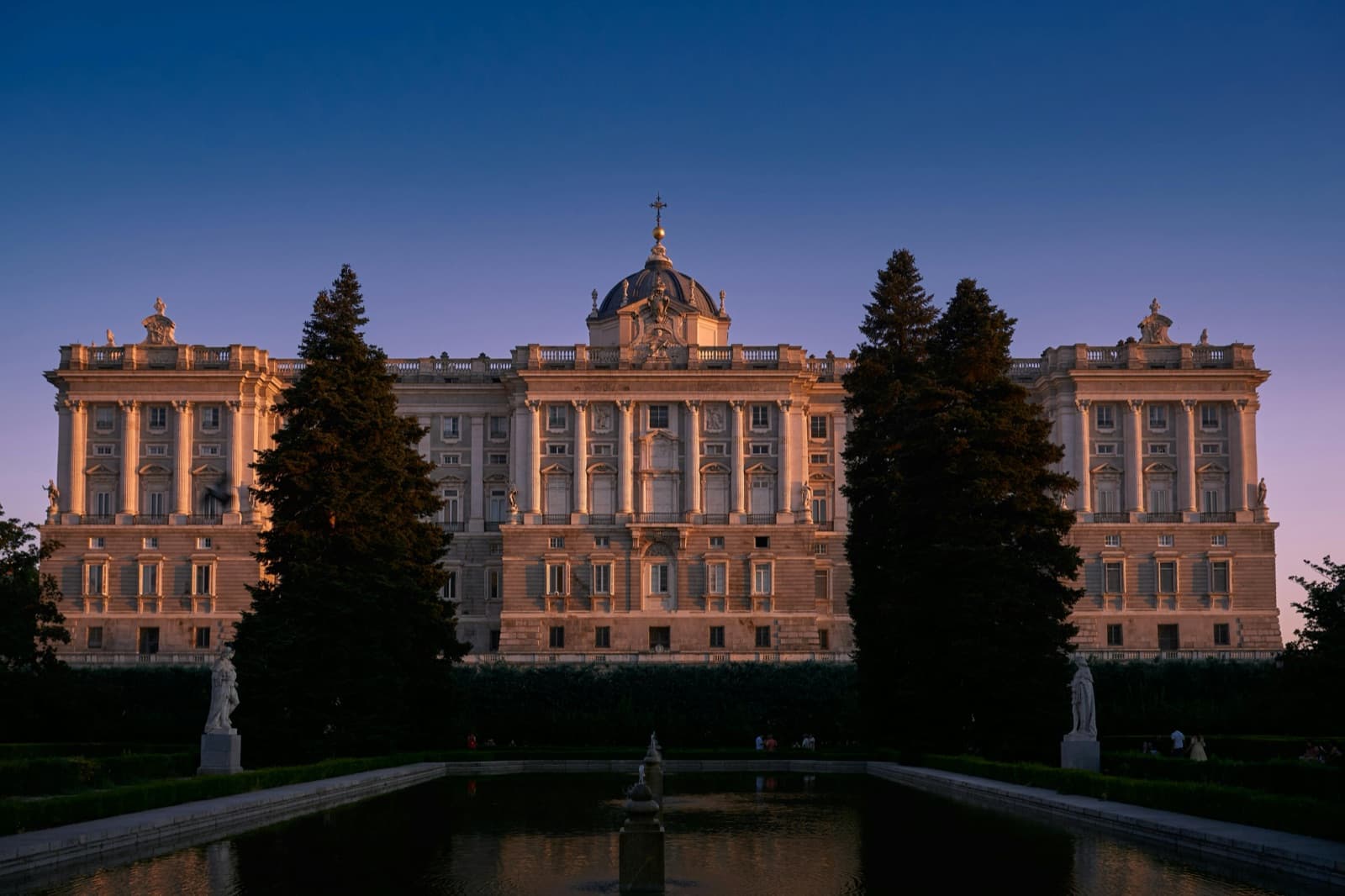
Day one is the old heart of the city: Plaza Mayor, Royal Palace, Almudena Cathedral, Plaza de la Villa. Everything adjacent, between Puerta del Sol and the Palace. You start at the beginning — where the old Habsburg Alcázar stood, a medieval fortress turned royal residence from which Philip II ruled an empire where the sun never set, until a fire razed it on Christmas of 1734. On its ashes, the Bourbons raised the palace you see today.
Suggested order:
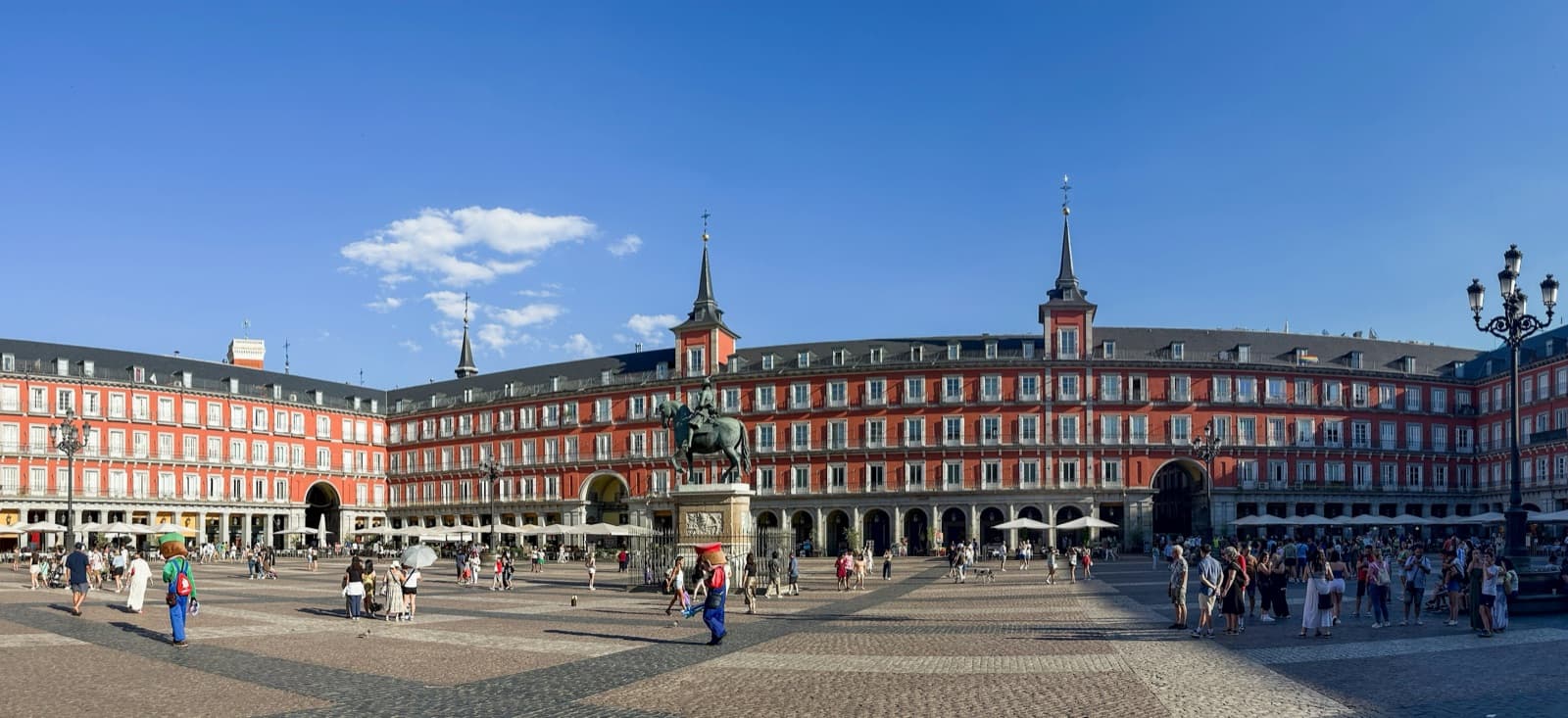
- Plaza Mayor — the stage of Habsburg Madrid, inaugurated by Philip III. Market, celebration and punishment in the same place.
- Plaza de la Villa and the Lujanes Tower — three centuries of architecture in one square; the Tower is among the oldest stones still standing.
- Royal Palace — book your ticket to skip the queue. Over 3,000 rooms, raised on the ashes of the Alcázar.
- Almudena Cathedral, right across the way — it took over a century to build and was only consecrated in 1993.
- If you still have energy, go down to Plaza de la Paja, in La Latina — medieval Madrid, before it was the capital of anything.
Time: 5–7 hours with breaks. Walking: ~5 km.
Day 2 — the Prado axis and the Bourbons
Day two is the Madrid that opened to the world: the Madrid of the Bourbons and the Enlightenment. You walk the great green, monumental axis that runs from Cibeles to the Prado and the Retiro. Almost everything here bears the signature of Charles III, the king who modernised half of Madrid: the Alcalá Gate, the fountains, the Botanical Garden, the building that today is the Prado. The art and the might of an empire, set in a row.
Suggested order:
- Puerta del Sol — Spain’s kilometre zero and the square where the city gathers whenever something happens. In theory, every road in the country starts here.
- Cibeles Fountain and Cibeles Palace — the goddess in her chariot of lions, symbol of Madrid, and the city hall that looks like a cathedral.
- Alcalá Gate — an arch that celebrates no battle; Charles III raised it in 1778 as a monumental entrance to the city.
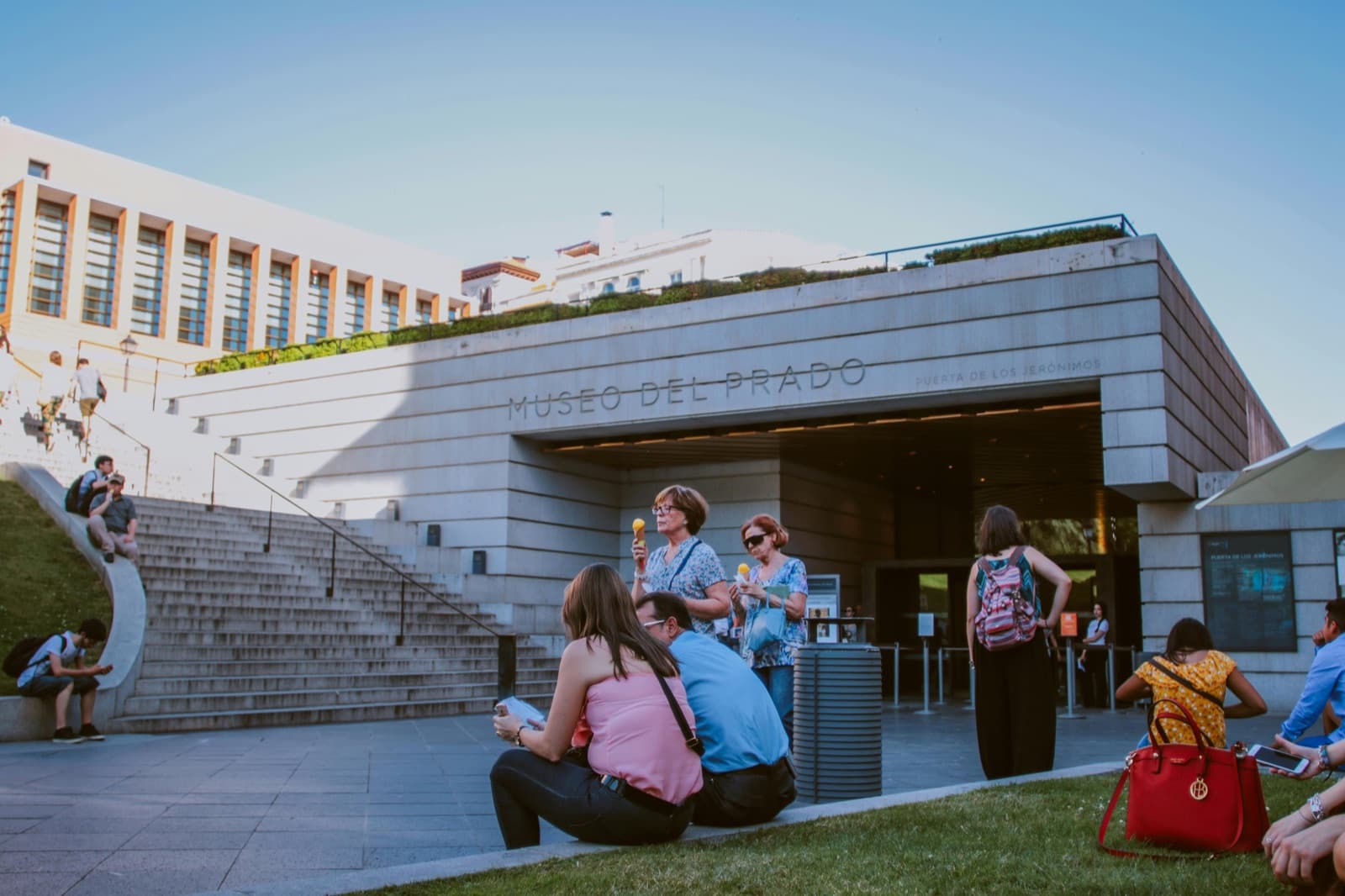
- Prado Museum — book online or use the free slot at the end of the day. Plan for half a day done properly.
- Retiro Park — the kings’ private garden, opened to the public only in 1868. Close the day at the pond or the Crystal Palace.
Time: 6–8 hours. Walking: ~6 km.
Day 3 — neighbourhoods and less obvious spots
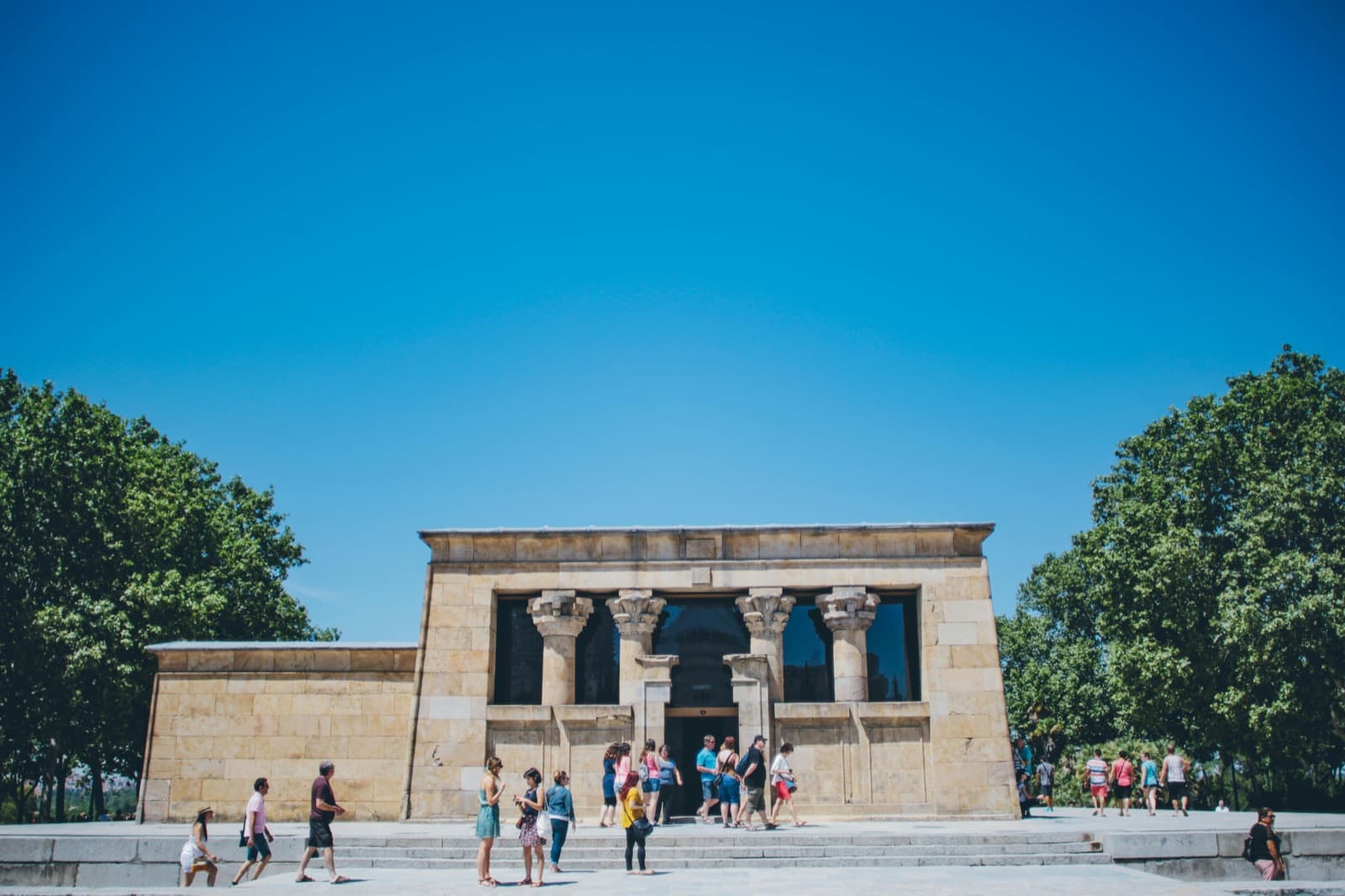
Day three you cross from the 18th century to the 20th and to the unexpected. Gran Vía, the street where Madrid met the 20th century — cut through between 1910 and 1930 by demolishing over 300 buildings, and nicknamed “Madrid’s Broadway”. And, a few steps from the Plaza de España, the Temple of Debod: a real Egyptian temple, over 2,000 years old, that Egypt gave to Spain in 1968 and that was rebuilt stone by stone.
Suggested order:
- Gran Vía — an open-air architecture museum. Walk the whole thing, from the Metrópolis to Plaza de España.
- Metrópolis Building — the black slate dome with the gilded Winged Victory that everyone photographs without knowing its name.
- Monument to Cervantes, in Plaza de España — Cervantes forever watching Don Quixote and Sancho in bronze.
- Temple of Debod — get there for sunset, that’s the moment. If you like, go in and walk its halls.
- Close with the other face of Madrid: the Reina Sofía Museum and Picasso’s “Guernica”, or a walk without a goal through La Latina and its taverns.
Time: 5–7 hours. Walking: ~6 km.
What to avoid
- Eating right on Plaza Mayor or Sol. Many spots on the most photographed squares prioritise location over the kitchen and tend to charge more. Walk a few blocks into La Latina or Las Letras and you eat better.
- “Free tour” or skip-the-line offers from people approaching you in the street. They often end in overpriced tickets or unwanted shopping stops. Buy tickets on the official sites.
- Rushing the Prado. It’s one of the great art museums in the world: half a day minimum if you want to understand what you see. Rush it and you don’t understand anything.
- Reaching the Temple of Debod at midday. The moment is sunset, with the light behind the arches. Plan the day to be there at that hour.
How to get around
Madrid’s historic centre is small, flat and walkable. The three routes in this guide are on foot from start to finish. The Sol–Plaza Mayor–Palace–Prado–Retiro ring is crossed entirely on foot, with no need for transport.
Madrid’s metro is among the most extensive in Europe and solves the longer stretches — getting to the Reina Sofía (Atocha station), to Moncloa, or if you’re staying far from the centre. But for this route, day to day, feet are the only real transport. Make sure you have comfortable shoes — you’ll cover 16–20 km over three days.
If you ever need precise directions, one tap in Ruthy opens Google Maps, Apple Maps or Waze. The app is built for walking, not for turn-by-turn navigation.
Practical info
- Best time: April–June and September–October. July and August are very hot in the centre; January and February, cold but dry and bright.
- Prado Museum tickets: book online at museodelprado.es. There’s a free time slot at the end of the day.
- Royal Palace: book online at patrimonionacional.es, saves the ticket-desk queue.
- Where to stay: the Habsburg centre or near Sol give you walking access to almost everything. The Prado axis and the Barrio de las Letras leave you next to the museums and the Retiro.
- Gear: real walking shoes, not fashion sneakers. Reusable water bottle — there are public fountains around the centre and Madrid’s tap water is drinkable.