Itinerary at a glance
How to think about Dallas in one day
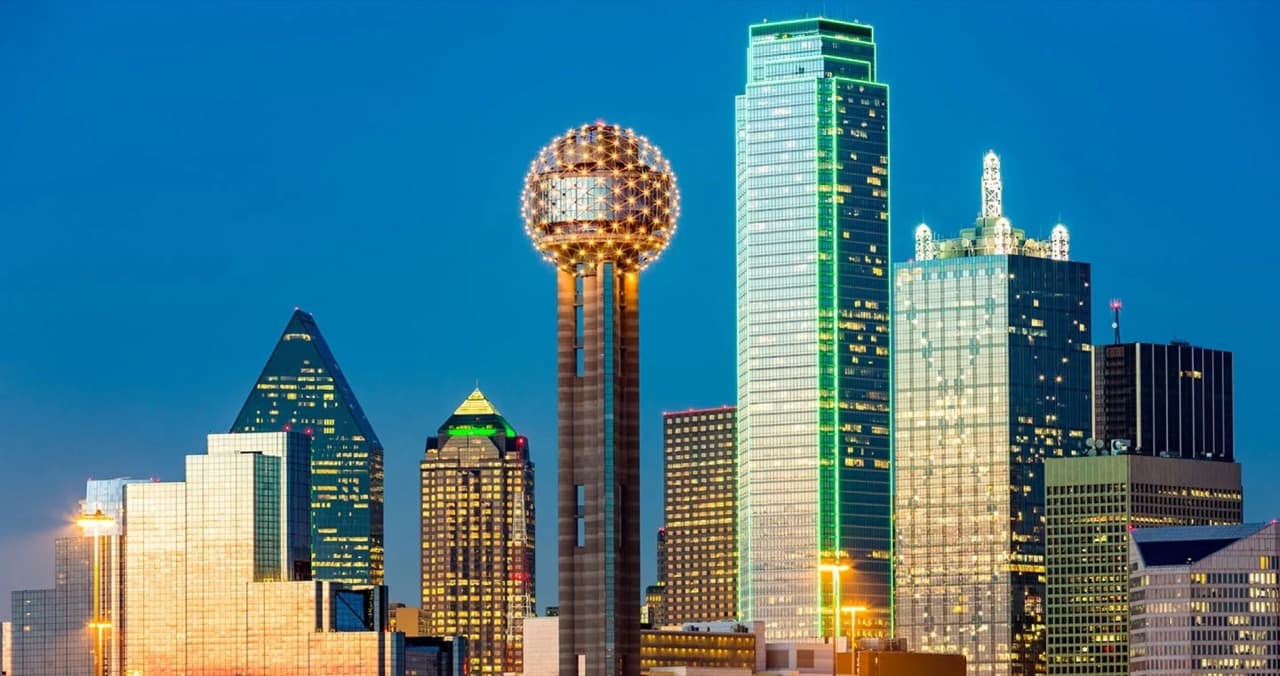
Dallas is associated with oil, business and skyscrapers, but its story is one of a crossing. It was born in 1841, when John Neely Bryan set up a small settlement beside the Trinity River, at the exact point where the shallow river could be forded. From there — prairies, cotton, railroads, oil — came a metropolis. In one day you won’t see all of it, and that’s fine. This city is huge and very spread out.
The premise is simple: the morning in the historic downtown, the afternoon beyond the center. The heart of Dallas — Dealey Plaza and everything around it — is a compact cluster you walk end to end. The afternoon is more scattered, and between neighborhoods there are real distances: Dallas is a city built for the car, not for feet.
This is one possible route, not the only one. Some people spend the whole morning in the Sixth Floor Museum, others swap Deep Ellum for Oak Cliff. The compass points in a direction — you decide how long to stay at each stop. At each one, Ruthy tells you what you’re looking at standing right there, in no hurry.
Morning — downtown and the JFK memory
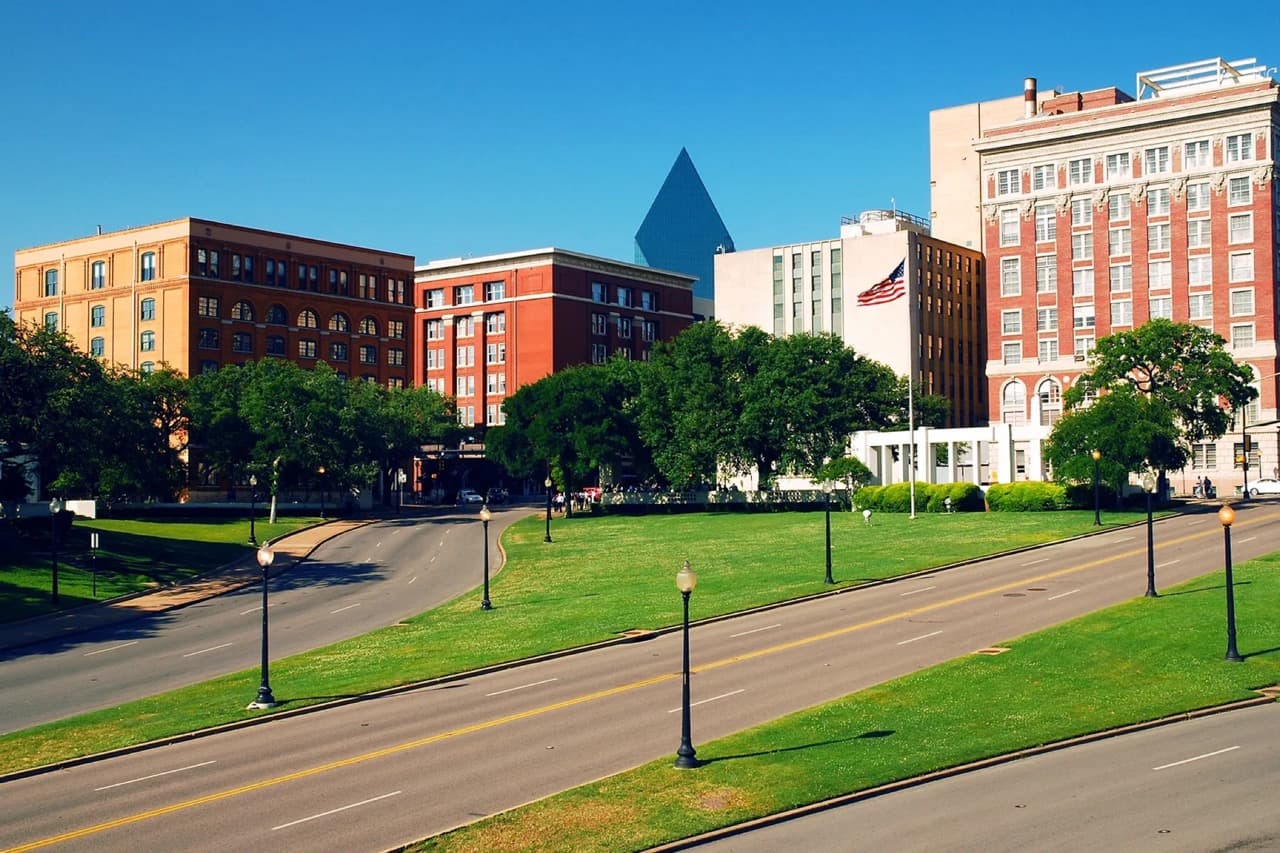
The morning is the old heart of the city. You start where Dallas became world memory: Dealey Plaza, designed in the 1940s as a monumental gateway to downtown, until November 22, 1963, when everything changed in a few seconds. Here John F. Kennedy was assassinated as the motorcade moved down Elm Street, and since then the place carries a weight no blueprint foresaw. You can still see marks on the road pointing to the spot.
Suggested order:
- Dealey Plaza — the stage of November 22, 1963. An apparently ordinary urban space turned into a place of world memory.
- The Sixth Floor Museum — from the sixth floor of the old book depository, per the official investigation, the shots were fired. The building looks almost exactly as it did that day. Book ahead to skip the queue.
- John F. Kennedy Memorial Plaza, steps away — Philip Johnson’s “open cenotaph”: an empty symbolic tomb, made of silence.
- Old Red Museum — the old county courthouse, from 1892, red-brick towers and an almost medieval air. Inside, the history of the Dallas that came before the skyscrapers.
- Pioneer Plaza — a stampede of bronze longhorns moving down downtown, honoring the 19th-century cattle drives. Glass-tower Dallas, reminding itself it was once cowboy country. Next to it lies the Pioneer Cemetery, one of the oldest places in the city.
Time: 4–5 hours with breaks. Walking: ~3 km, all within the downtown cluster.
Afternoon — beyond downtown
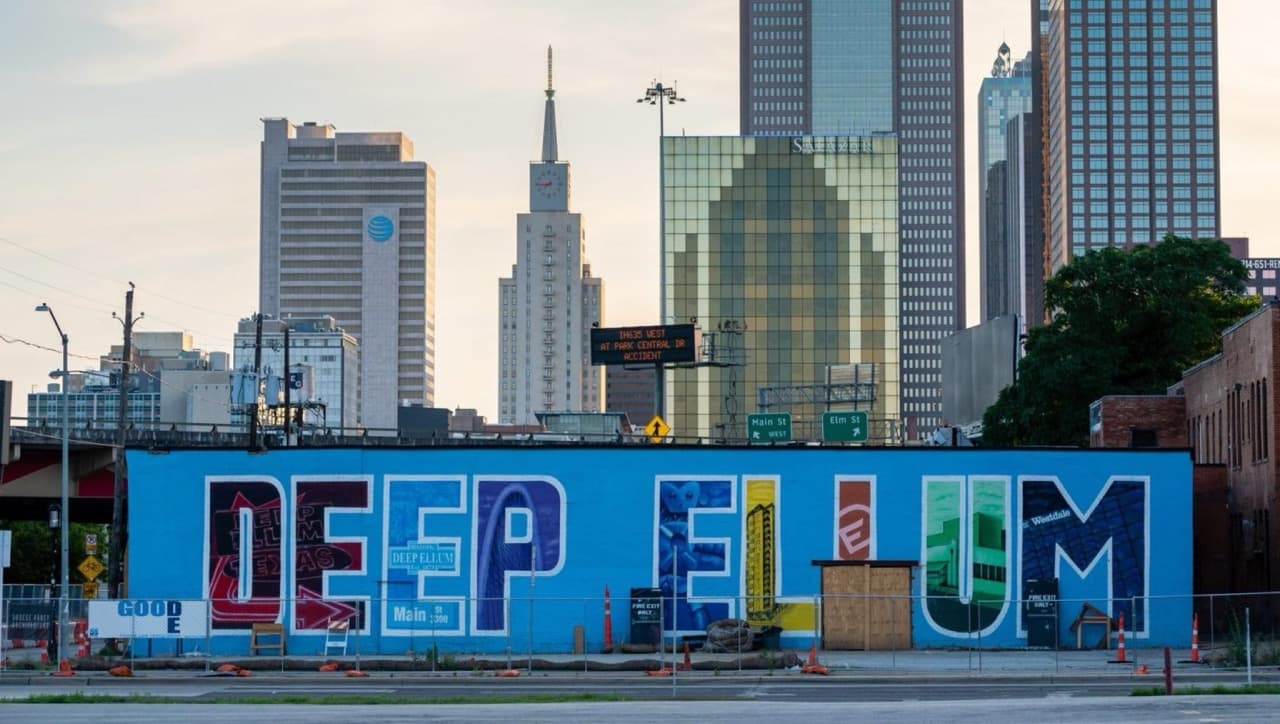
The afternoon is the other Dallas: the one you don’t see from the skyline. Here things are more spread out, so you’ll choose by the day. Deep Ellum is the neighborhood of giant murals and music spilling out of bars — key to understanding the city’s musical, working-class and African American history, where blues and jazz exploded in the 1920s and 30s. The name itself is a slurring of “Deep Elm.” What played here still echoes.
Suggested order (pick one or two; they lie in different directions):
- Deep Ellum — walk its streets among murals, industrial warehouses and bars. The neighborhood where Blind Lemon Jefferson, Bessie Smith and Lead Belly played, reborn after decades of neglect.
- Fair Park — one of the largest concentrations of art déco architecture in the United States, built in 1936 for the centennial of Texan independence. Inside, the Hall of State concentrates all of Texas’s pride in stone. It’s to the east, farther from the center.
- Bishop Arts, in Oak Cliff — small streets, independent cafés, galleries and theaters, the opposite of the corporate downtown. It grew around an old streetcar stop and spent years forgotten. It lies to the south, across the Trinity.
Time: 3–4 hours. Walking: within each neighborhood, plenty; between them, car or rideshare.
What to avoid
- Trying to cover Deep Ellum, Fair Park and Oak Cliff in the same afternoon. They lie in different directions and there are real distances in between. Pick one, two at most, and leave the rest for a future trip.
- Rushing the Sixth Floor Museum. The visit reconstructs that day minute by minute, and the context of the 1960s. Rush it and you miss exactly what the museum leaves open.
- Walking between neighborhoods as if they were blocks. The downtown cluster you walk; the distances between zones, you don’t. Plan the jump by car or rideshare, not on foot.
- Underestimating the summer heat. In July and August, much of this outdoor route turns brutal at midday. Start early and carry water.
How to get around
Dallas’s historic downtown is small and walkable. Dealey Plaza, the Sixth Floor, the Kennedy memorial, the Old Red, Thanks-Giving Square and Pioneer Plaza are all adjacent: the whole morning is done on foot, with no transport.
But Dallas is a spread-out city, built for the car. Between the center and neighborhoods like Deep Ellum, Fair Park or Oak Cliff there are distances you don’t cross walking. For those jumps you’ll want a car, rideshare or public transit. Once inside each neighborhood, feet are again the only real transport.
If you ever need precise directions, one tap in Ruthy opens Google Maps, Apple Maps or Waze. The app is built for walking, not for turn-by-turn navigation.
Practical info
- Best time: spring and autumn. Summer (July and August) brings strong, humid heat, and much of the route is outdoors. Autumn adds the State Fair of Texas at Fair Park.
- State Fair of Texas: held at Fair Park from late September into October. If you come in those weeks, the park is at its best — and far busier.
- Sixth Floor Museum: book online at jfk.org to skip the queue, especially in high season.
- Distances: downtown you walk; the rest, you don’t. If you plan to add Deep Ellum, Fair Park or Oak Cliff, build the car or rideshare hop into the plan.
- Gear: real walking shoes and water. The center is flat, but between the Texan sun and the pavement it adds more kilometres than it looks.