Itinerary at a glance
How to think about Buenos Aires in 3 days
Buenos Aires has almost 500 years and 48 neighbourhoods, but the historical weight is concentrated in a narrow strip that runs from Plaza de Mayo to the Recoleta Cemetery. Up close, it’s three different cities glued together, written in three moments: the colonial and political one, the working-class one of the port and immigration, and the elegant one that wanted to look like Paris. This route walks that strip in layers, without pretending to see everything.
The premise: day 1, historic centre (foundation, power, plazas). Day 2, San Telmo and La Boca (immigration, working-class neighbourhood, the river). Day 3, Recoleta and Retiro (cosmopolitan, aristocratic BA).
This is one possible route. Some prefer to start with Palermo, others spend three full days in San Telmo alone. The compass points in a direction — you pick the pace, the café that stops you, the neighbourhood where you linger.
Day 1 — Historic centre
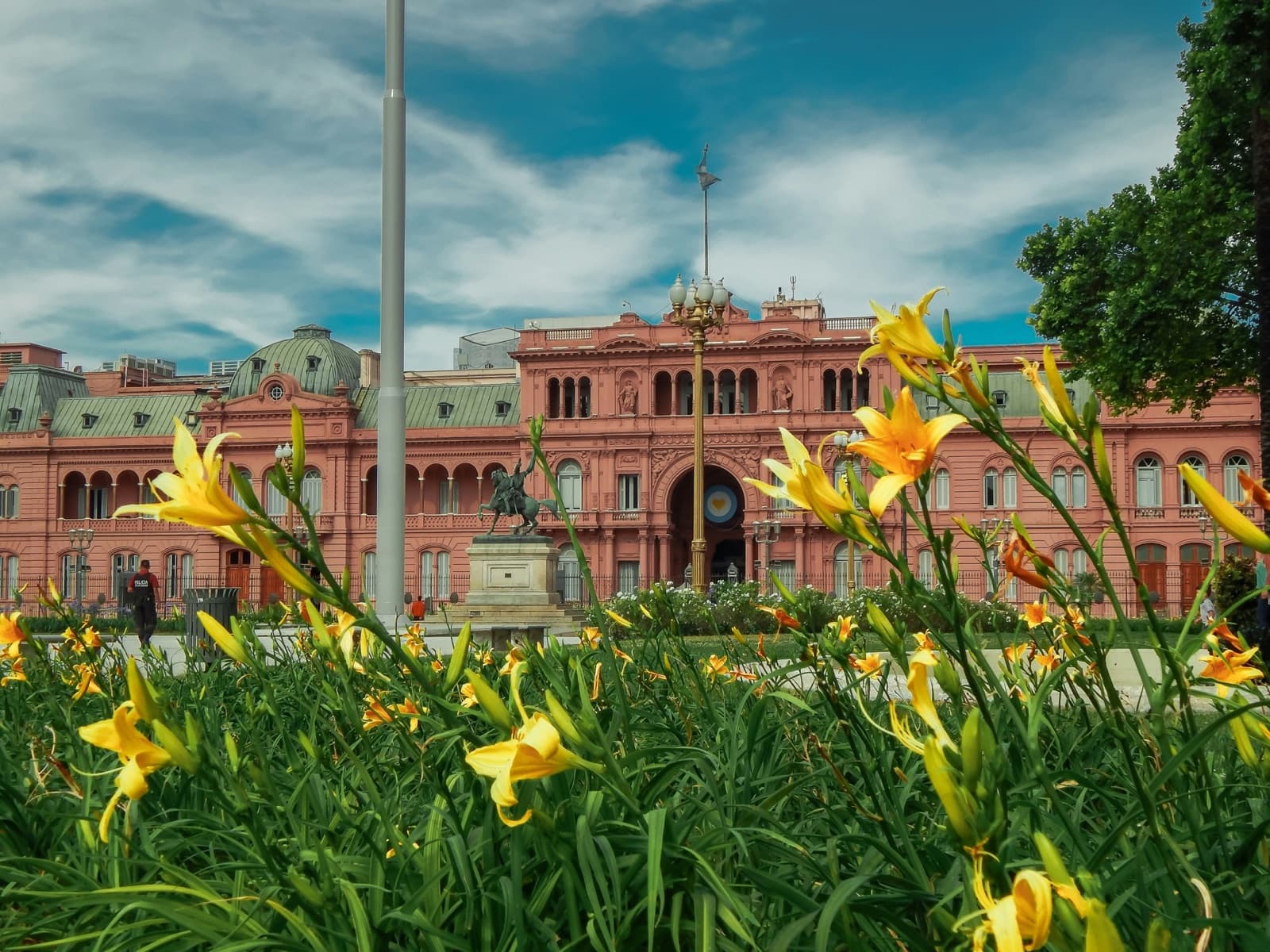
Day one is foundational and political Buenos Aires. Everything orbits Plaza de Mayo, the heart that has beaten since 1580 and never stopped being a stage for power, faith and protest: Casa Rosada, Cabildo, the Cathedral with San Martín’s tomb, and from there Avenida de Mayo to Congress. It’s the axis that connects the two extremes of Argentine power.
Suggested order:
- Plaza de Mayo — start early, no crowds. The central monument, the May Pyramid, is the oldest in the city (1811).
- Casa Rosada — outside always; inside requires an online reservation (free guided visit on weekends).
- Metropolitan Cathedral — San Martín’s tomb is at the back, guarded by grenadiers.
- Cabildo — small but the physical origin of the 1810 May Revolution and the first patriotic government (independence itself was only declared in 1816).
- Avenida de Mayo — walk the whole length to Congress. Café Tortoni halfway, Palacio Barolo on the corner, Confitería del Molino at the end.
- National Congress + Plaza de los Dos Congresos — closing of the political axis.
Time: 5–7 hours with breaks. Walking: ~6 km round trip.
Day 2 — San Telmo and La Boca
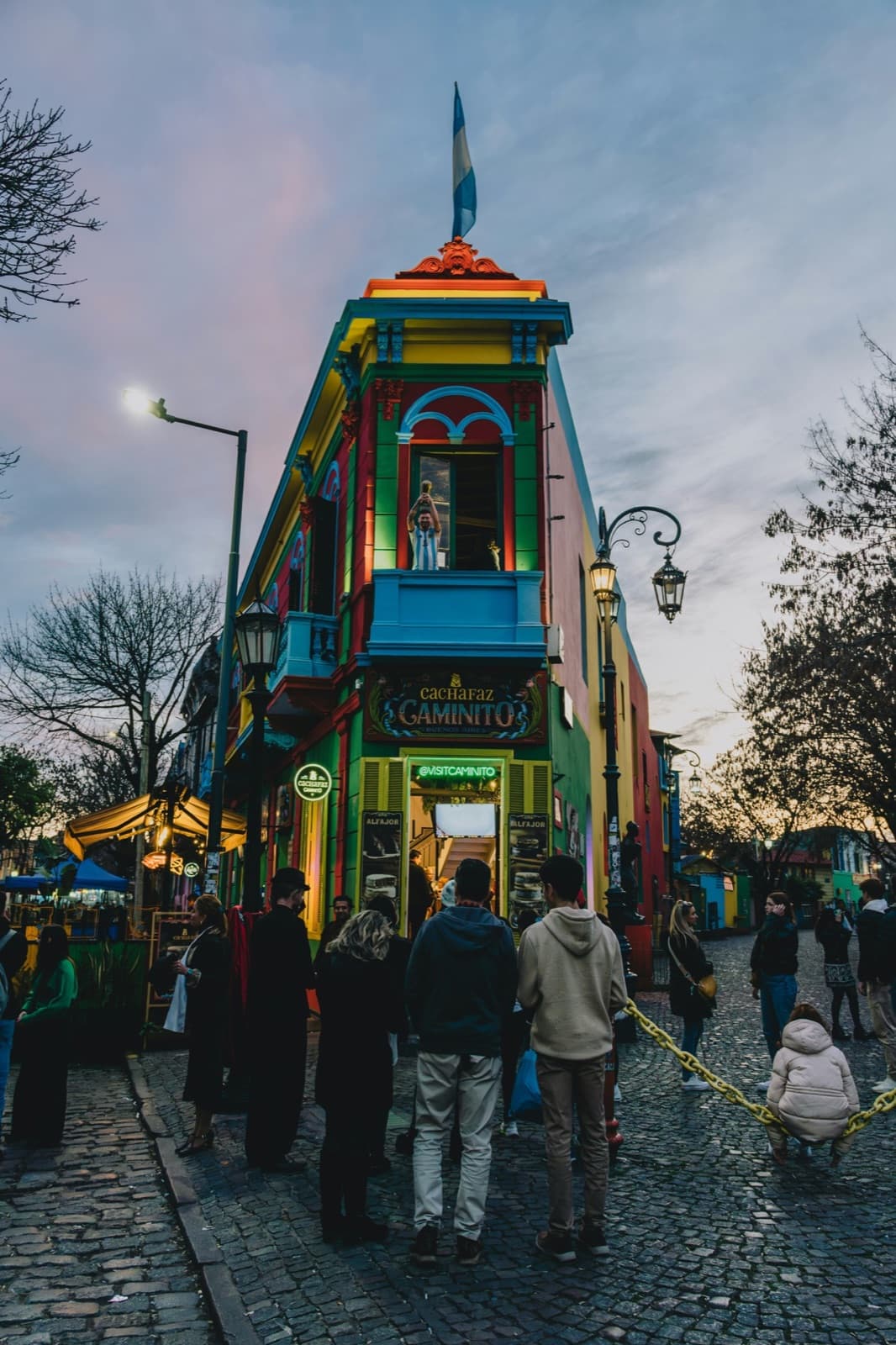
Day two changes register: from power to popular. San Telmo is one of the oldest neighbourhoods — cobblestones, low houses, antique shops, and the Sunday market on Plaza Dorrego. La Boca is where many Genoese immigrants landed and one of the riverside neighbourhoods associated with tango's early development.
Suggested order:
- Plaza Dorrego — heart of San Telmo. On Sundays the antique market fills Defensa street.
- San Pedro Telmo Church and Santo Domingo Convent — the colonial neighbourhood.
- Parque Lezama — traditionally pointed to as the site of the first founding of Buenos Aires (1536).
- Cross to La Boca by taxi or bus (don’t walk alone at night).
- Caminito + Quinquela Martín Museum — 30–45 minutes.
- La Bombonera — stadium tour if you’re into football; if not, photo from outside.
- Close in Puerto Madero at dusk — Puente de la Mujer, ecological reserve in the back.
Time: 6–7 hours. Walking: ~5 km + transport.
Day 3 — Recoleta and Retiro
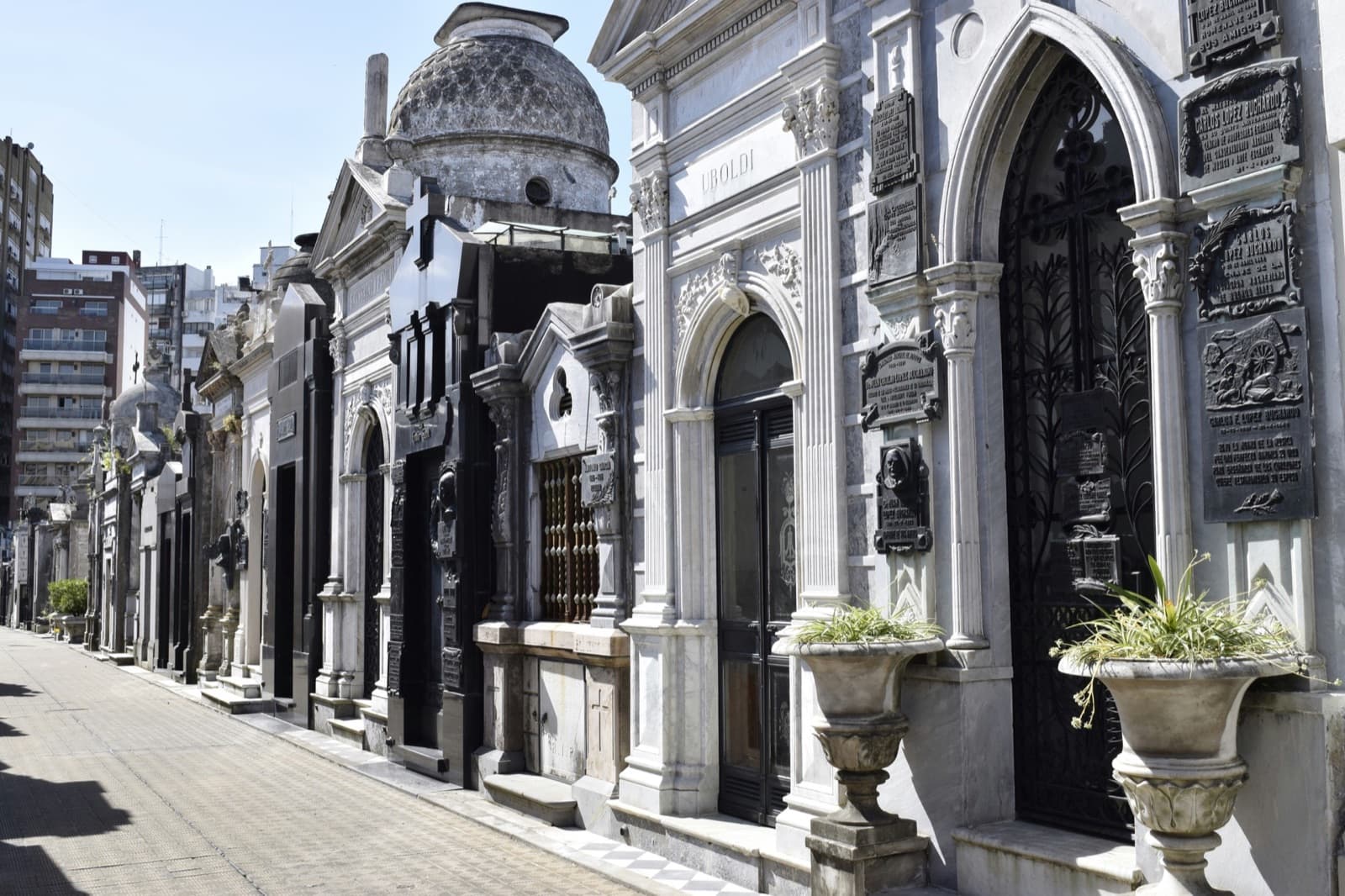
Day three climbs the social ladder. Recoleta and Retiro are the elegant neighbourhoods — palaces of the late-19th-century agro-exporting oligarchy, museums, the cemetery. The Buenos Aires that wanted to look like Paris.
Suggested order:
- Recoleta Cemetery — best early. There may be a paid ticket for non-residents; check current fees before going. Evita’s vault is in the right side corridor from the main entrance.
- La Biela and Pilar Basilica — next to the cemetery.
- National Museum of Fine Arts — free, decent Argentine and European collection.
- Floralis Genérica at Plaza Naciones Unidas — the giant metal flower that opens and closes.
- Down to Retiro: Plaza San Martín, Palacio Paz (guided tour), the English Tower, Palacio San Martín.
- If you have time and energy: Teatro Colón guided tour (book ahead), or dinner in Palermo.
Time: 6–8 hours. Walking: ~6 km.
What to avoid
- The most tourist-oriented grills on Caminito or Florida. They tend to charge more for the location. Walk a few blocks inland or ask a local for a recommendation.
- Changing money with people on the street. Use official channels: licensed exchange offices, ATMs or transfer apps. Paying with a foreign card usually gives you a good exchange rate.
- Walking from La Boca to San Telmo at night. Take a taxi or Uber.
- Treating the Obelisk as a destination. It’s a visual landmark, not a place. You’ll pass it on the way to Corrientes — that’s enough.
- Expecting the metro to always work. Fine for short rush-hour stretches, but the older lines (A, B, C) have delays. For long distances, taxi or Uber is more reliable.
How to get around
Buenos Aires is walked by neighbourhood — within each, everything on foot. Between neighbourhoods, the subte (subway) covers the main lines: A (Plaza de Mayo–Caballito), B (Florida–Federico Lacroze), C (Constitución–Retiro), D (Catedral–Belgrano). To reach La Boca there’s no subway — bus or taxi.
SUBE card is required for subway and buses. Buy and top up at any kiosk.
To cross to La Boca or move at night, taxis and Uber work well and are cheap in dollars. If you ever need precise directions, one tap in Ruthy opens Google Maps.
Practical info
- Best time: March–May and September–November. Mild temperatures, long days, less rain.
- Currency exchange: pay with a foreign card (usually a good rate) or change at licensed exchange offices and ATMs. Avoid informal street exchange.
- Eating: bodegones (traditional fare), neighbourhood grills, “notable cafés” (Tortoni, La Biela, La Ideal). Booking is wise on weekends.
- Where to stay: Recoleta (expensive, safe), Palermo Soho/Hollywood (nightlife), San Telmo (authentic, cheaper).
- Gear: real walking shoes (uneven pavements), water bottle, extra layer even in summer for indoor air-con.