

Skip to content
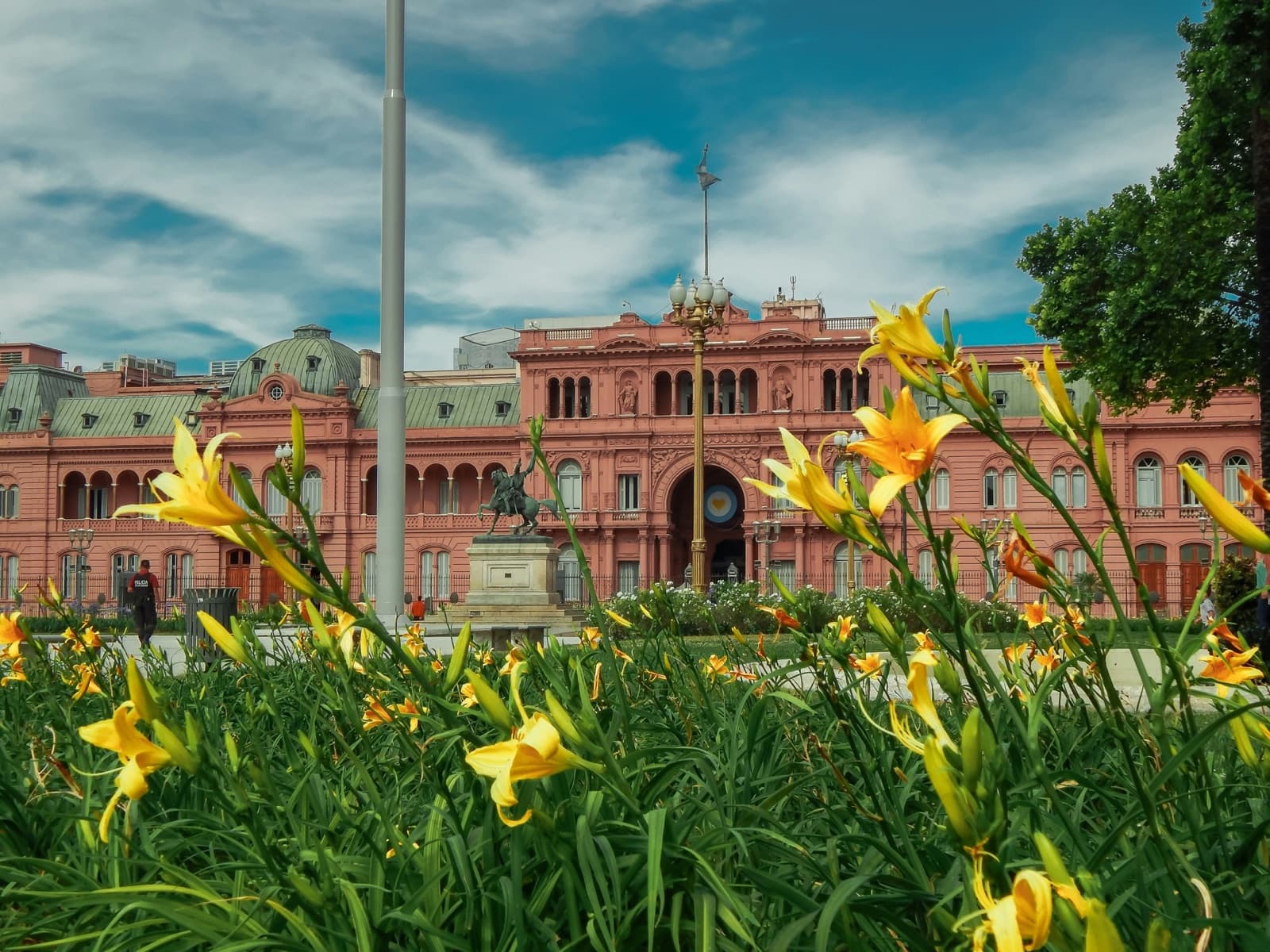
Casa Rosada, seat of the Argentine government

Argentina · 59 places · 65 stories

Don’t visit Buenos Aires.
Understand it.

59 places. 65 stories. A first attempt that failed, a refounding, waves of immigrants: the city that remakes itself again and again.

59 historical places in Buenos Aires with free audio guide

Free · no ads · iOS and Android

Buenos Aires in depth

Buenos Aires had to be founded twice.

Ruthy shows you Buenos Aires through 59 real places, narrated by Lucas Botta (Historia en Podcast) at the exact spot where each story happened. No group tour, no schedule, no shared headphones. Just you, the city, and a story that starts when you arrive and press play.

Buenos Aires doesn't enter history as a city that advances in a straight line: it enters as a failed attempt. The first founding, in 1536, ended in hunger and abandonment; only the second, in 1580, took hold. That mark stayed: it's a city that remakes itself again and again —a port with its back to the country, a capital of immigrants, a stage for crises and reinventions. That's why the French-style palace and the tenement, tango and politics, the European and the criollo all coexist. You don't walk it ticking off monuments: you walk it hearing how a failed bet became the Queen of the Plate. Ruthy tells you standing right there, in no hurry.

Deep-dive walks

Places told chapter by chapter.

We don't just tell you what it is. We tell you why it matters, how it was built, what happened inside, and how it became what it is today.

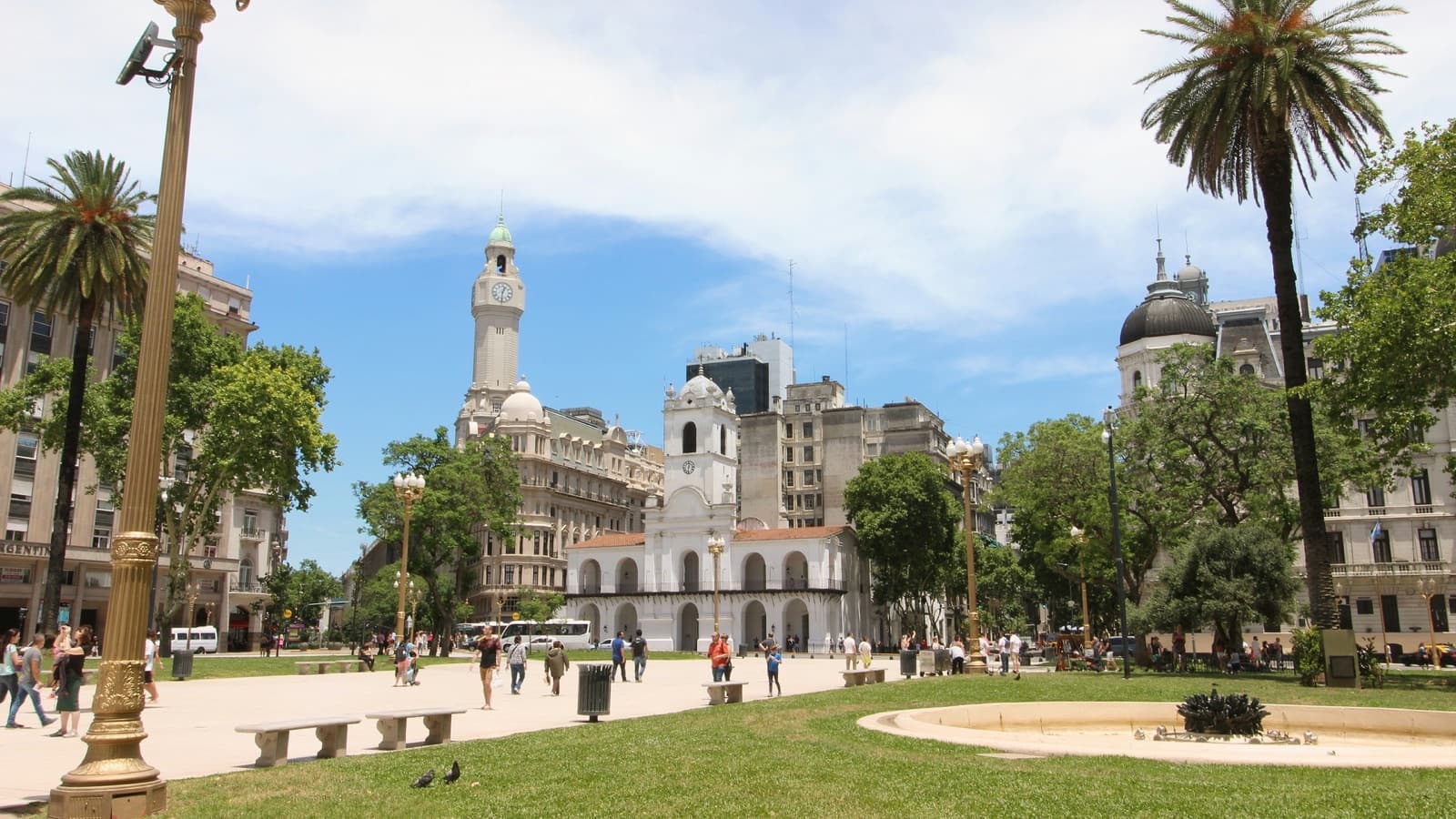
Plaza de Mayo, historic heart of Buenos Aires
7chapters

History of Buenos Aires

The whole history of Buenos Aires in seven chapters —from the founding that failed in 1536 to today's metropolis. A city born twice, that lived off a port with its back to the country and remade itself with each wave of immigrants. Listen before you set out: everything else makes more sense.

All 7 chapters

  1. Foundation and Failure (1536–1580)
  2. Second Foundation and Colonial City (1580–1776)
  3. Opening, Trade and Tensions (1776–1810)
  4. Revolution and Instability (1810–1852)
  5. Modernization and the European City (1852–1910)
  6. City of Masses and the Early 20th Century (1910–1950)
  7. Contemporary Metropolis, Crises and Reinvention (1950–Present)
All 59 places

Everything you'll find in Buenos Aires.

Each place with its own story, narrated right where it happened.

  • Casa Rosada, seat of the Argentine government

    Casa Rosada

    From these balconies, coups and the returns of democracy were announced, leaders were mourned, and crowds roared with rage and euphoria. It's the seat of the executive —but above all, the stage the whole country looked up to in its most intense moments. Why is it pink? The app tells you.

  • Plaza de Mayo

    Plaza de Mayo

    Argentina's great public courtyard: it all began here in 1810, and people still come here to celebrate, to protest and to mourn. The Madres still circle the pyramid every Thursday. Few squares in the world hold so much history and so much street at once.

  • Buenos Aires Cabildo

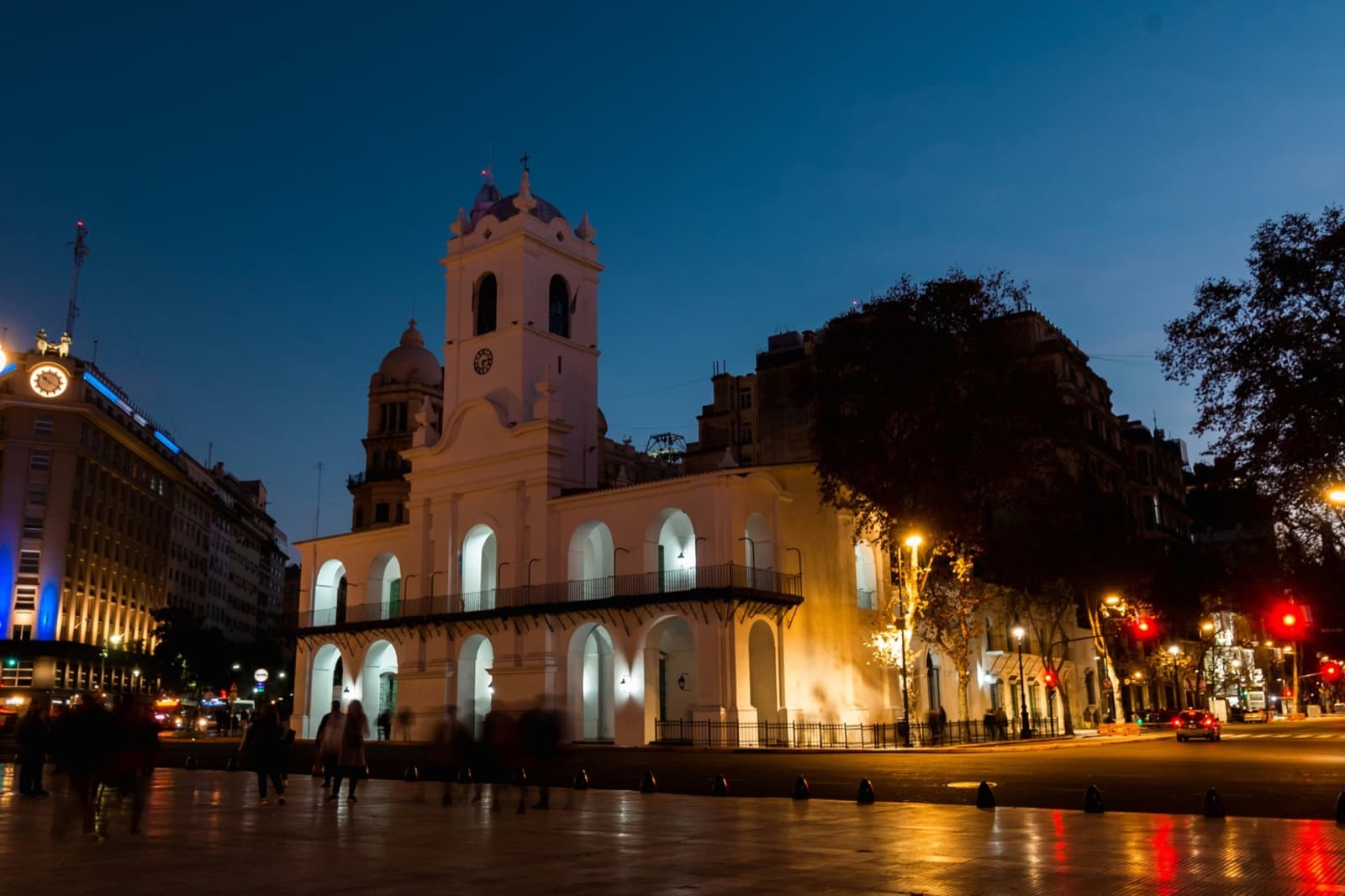
    Cabildo

    The oldest white building on Plaza de Mayo. Under its arcades, in May 1810, they argued over what to do with the old Spanish colonial order —and from that argument, in part, Argentina emerged. What you see today is only a fragment: the avenues ate the rest.

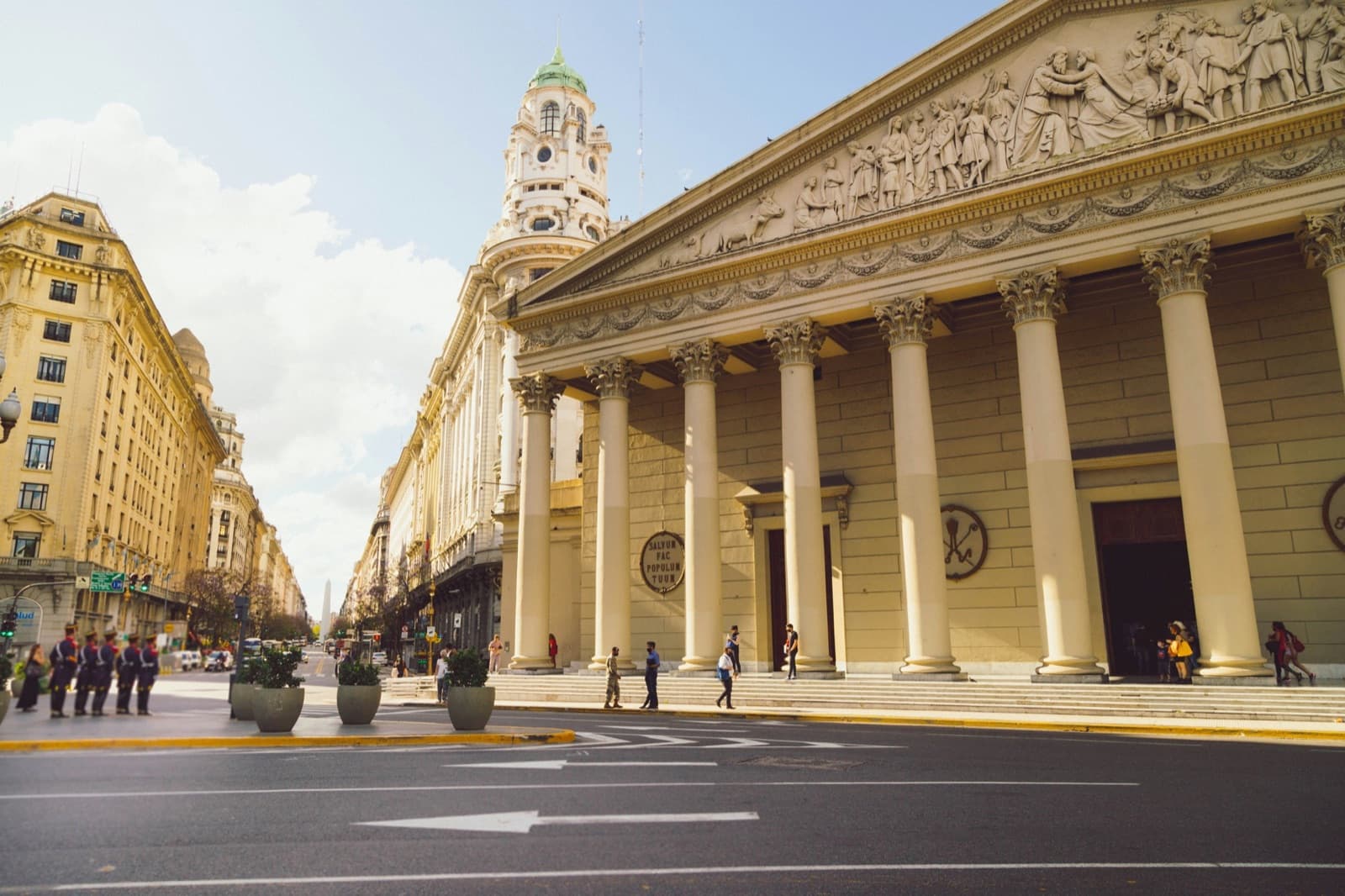
  • Metropolitan Cathedral of Buenos Aires

    Metropolitan Cathedral

    From outside it looks like a Greek temple, not a church: twelve columns like a bank's or a parliament's. Inside is the mother church of Buenos Aires —and San Martín's tomb, guarded day and night. Porteño religious power, dressed up as Enlightenment reason.

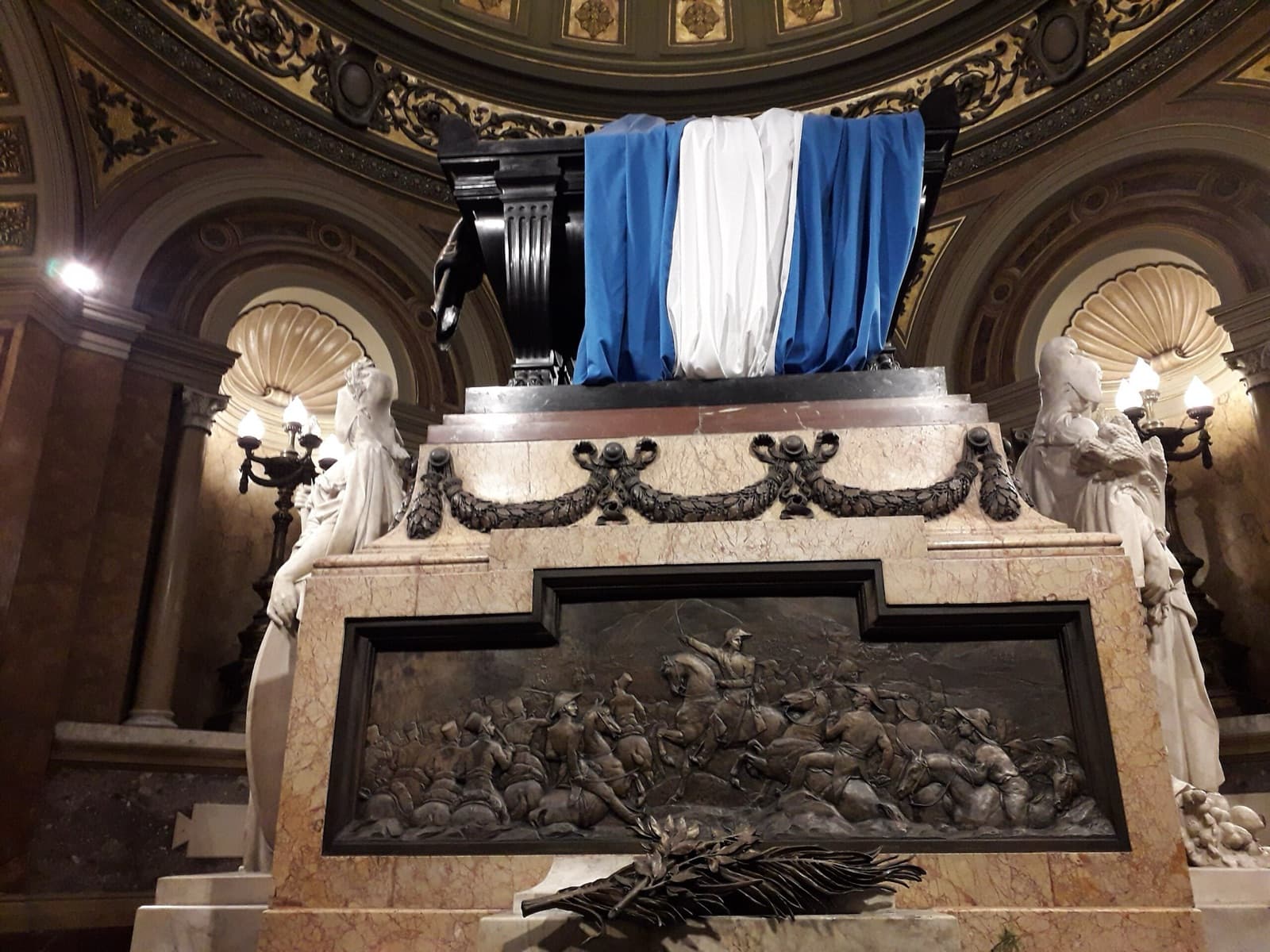
  • Tomb of General San Martín

    Tomb of General San Martín

    The Liberator's mausoleum, inside the Cathedral, guarded by grenadiers. San Martín died in exile in France, and his body took decades to come home. Sculptures, shields and flags surround the coffin: a secular sanctuary within a religious temple.

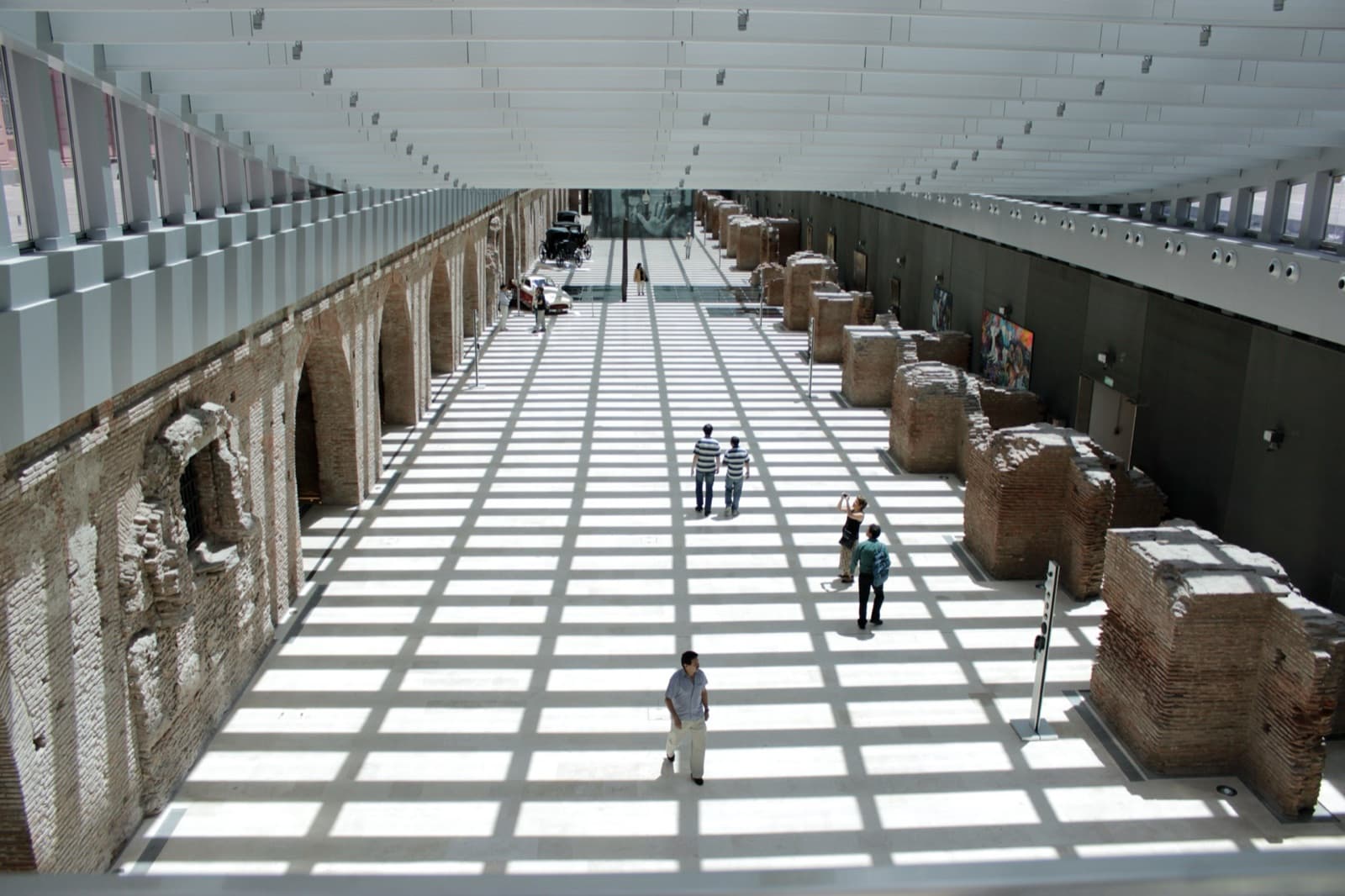
  • Casa Rosada Museum

    Casa Rosada Museum

    Behind and beneath the pink building, a museum lets you walk the country's deeper layers: presidential sashes, office furniture and the remains of the old colonial fort and customs house everything was built on. Argentine history, in strata.

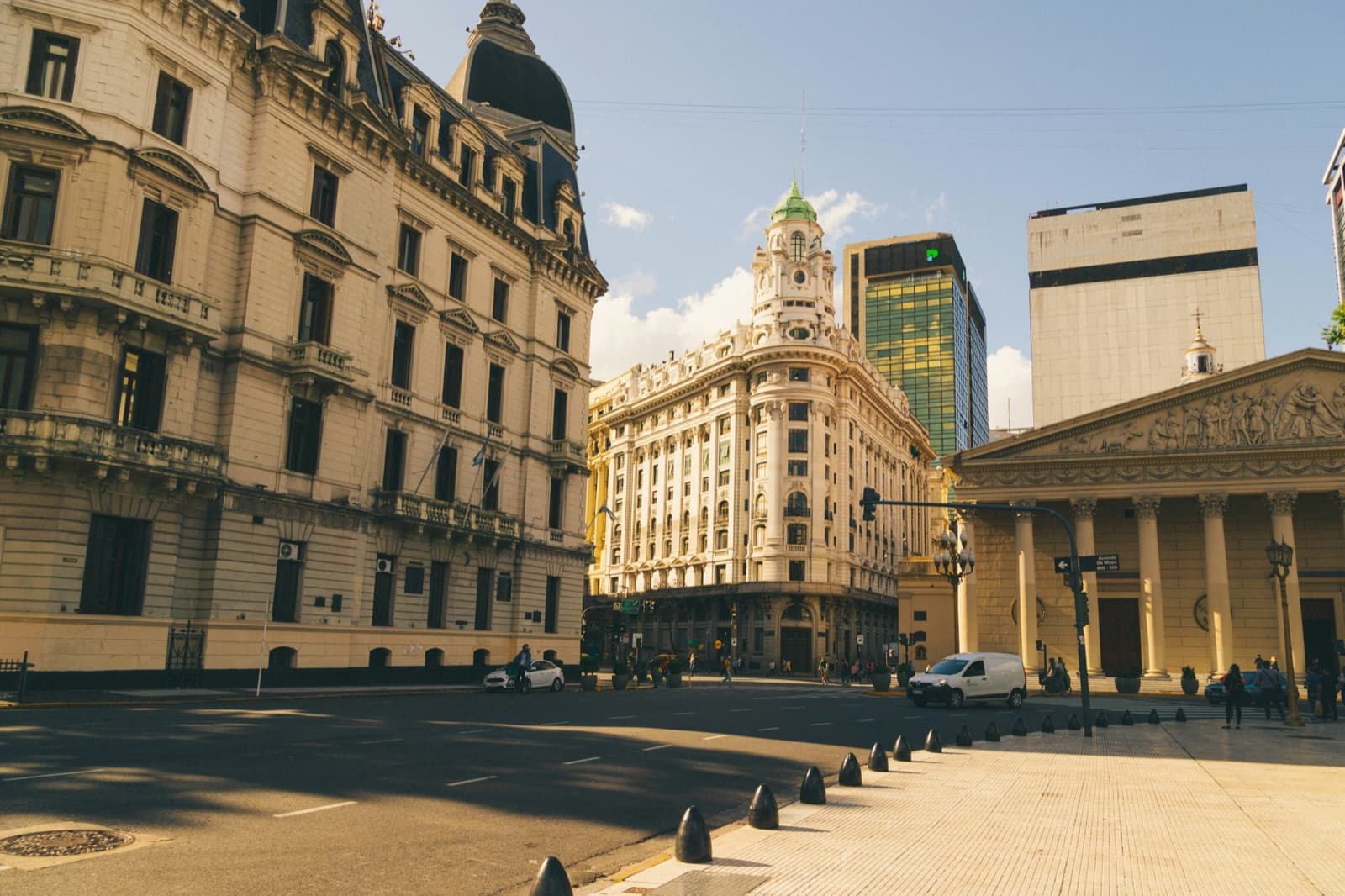
  • Former Municipal Palace of Buenos Aires

    Former Municipal Palace

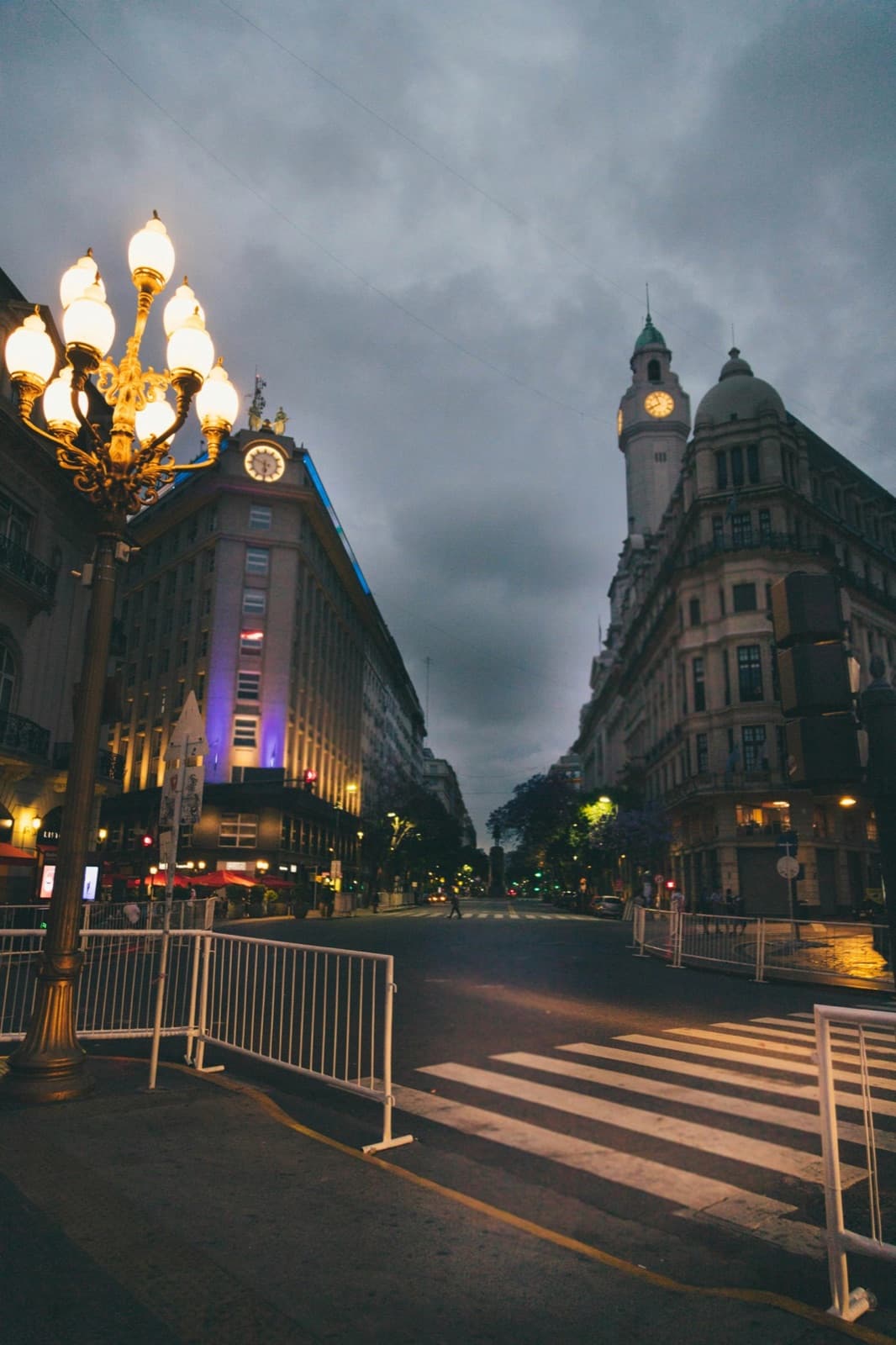
    French in style, with a clock at the top, it was where modern Buenos Aires was ordered: avenues, lighting, sanitation, transport. The city stopped growing on its own and began to plan itself —much of what you walk today was drawn from here.

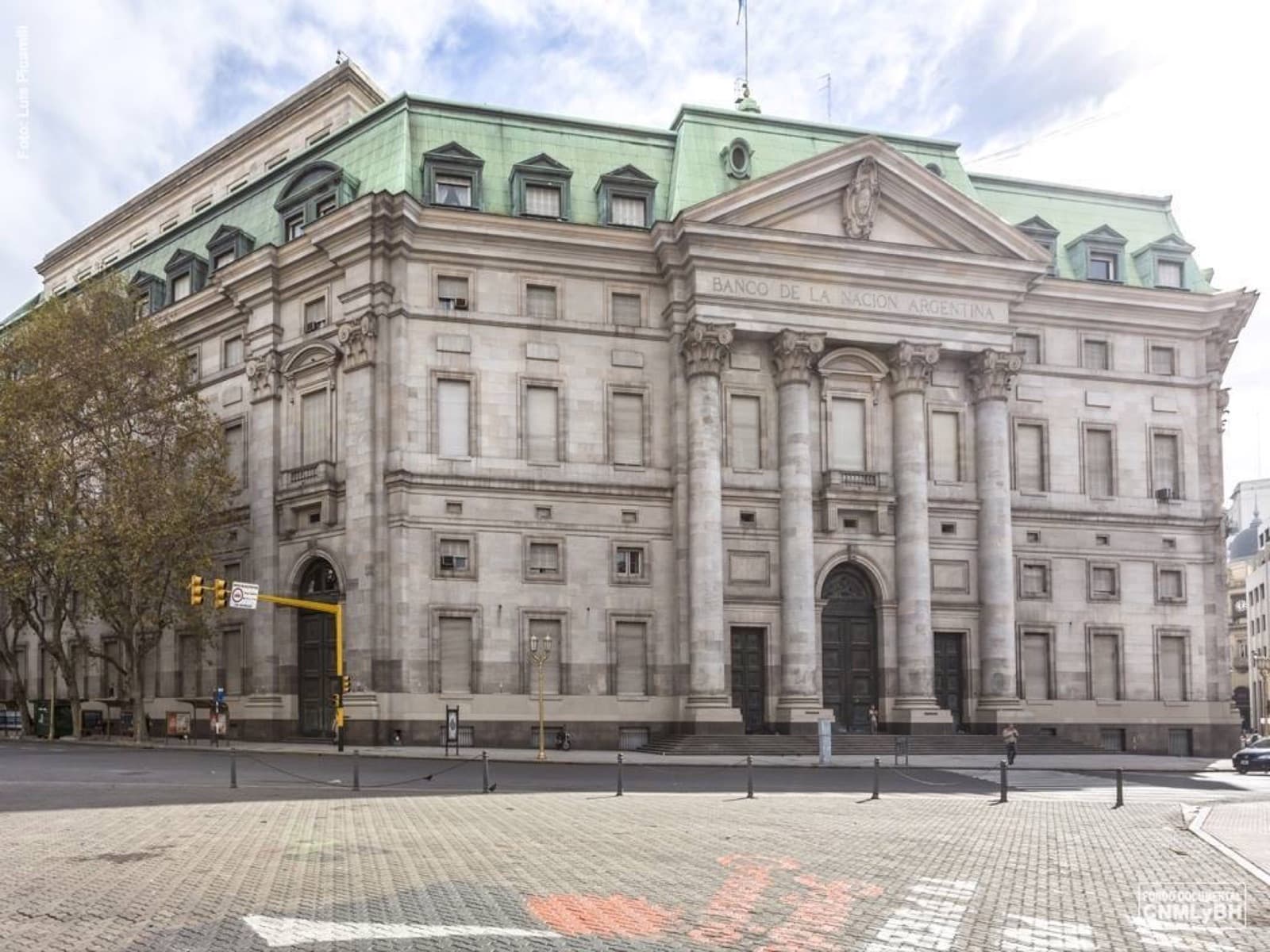
  • Banco Nación

    Banco Nación

    A stone fortress dedicated to public money: a huge dome, columns, monumental scale. Behind that marble solidity beats Argentina's most turbulent story —crises, bailouts and dreams of development that came back again and again.

  • Ministry of Economy

    Ministry of Economy

    A sober facade hiding the place where the numbers that become prices, wages and taxes are written. In Argentina, few buildings carry so much emotional weight without looking it: much of the country's mood is decided here.

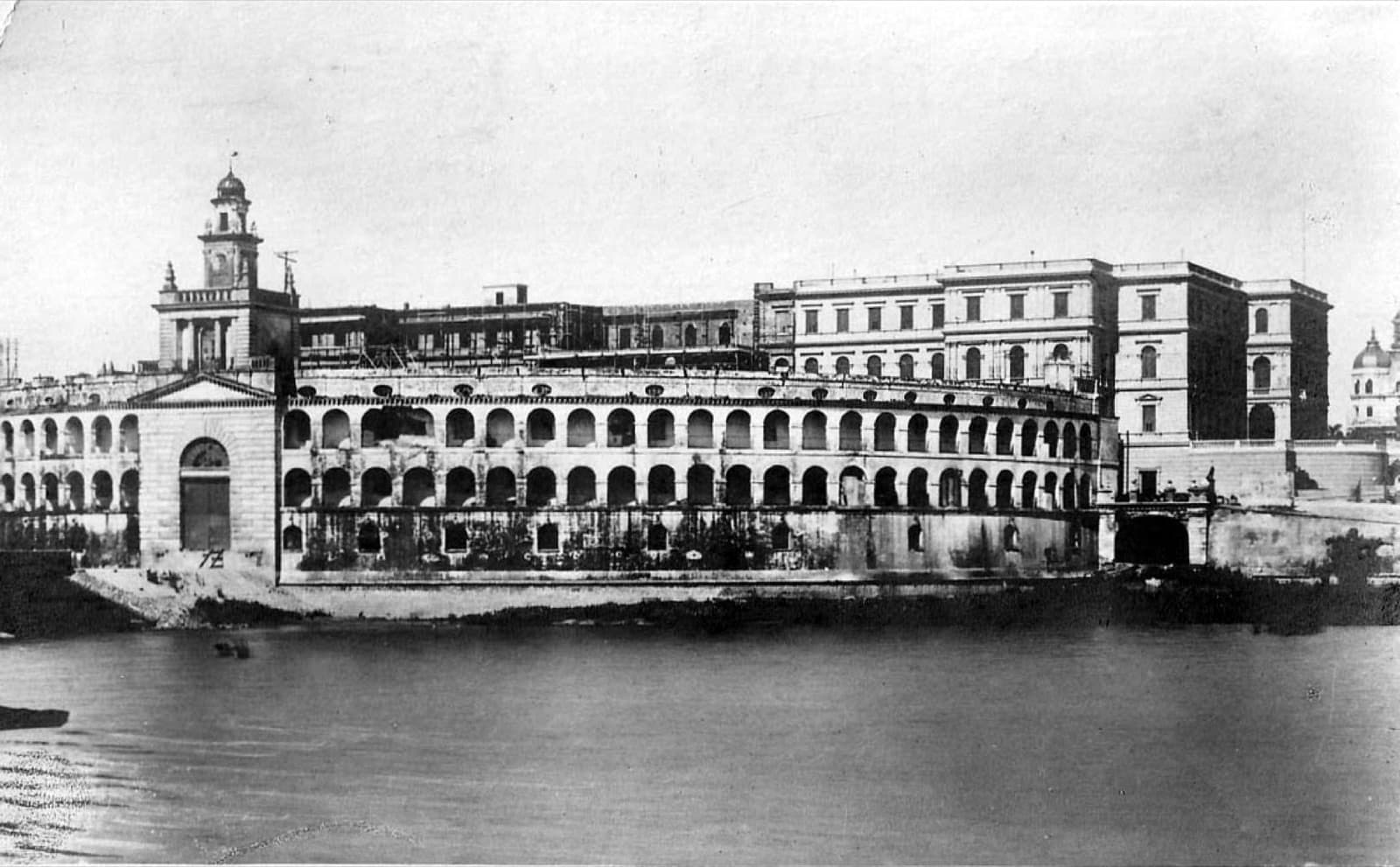
  • Archaeological remains of the Taylor Customs House

    Taylor Customs House

    You can barely see it, but beneath Paseo Colón lie the remains of the old customs house of the 19th-century port of Buenos Aires. Everything that linked the city to Europe came and went through here. The buried proof that this was, above all, a port city.

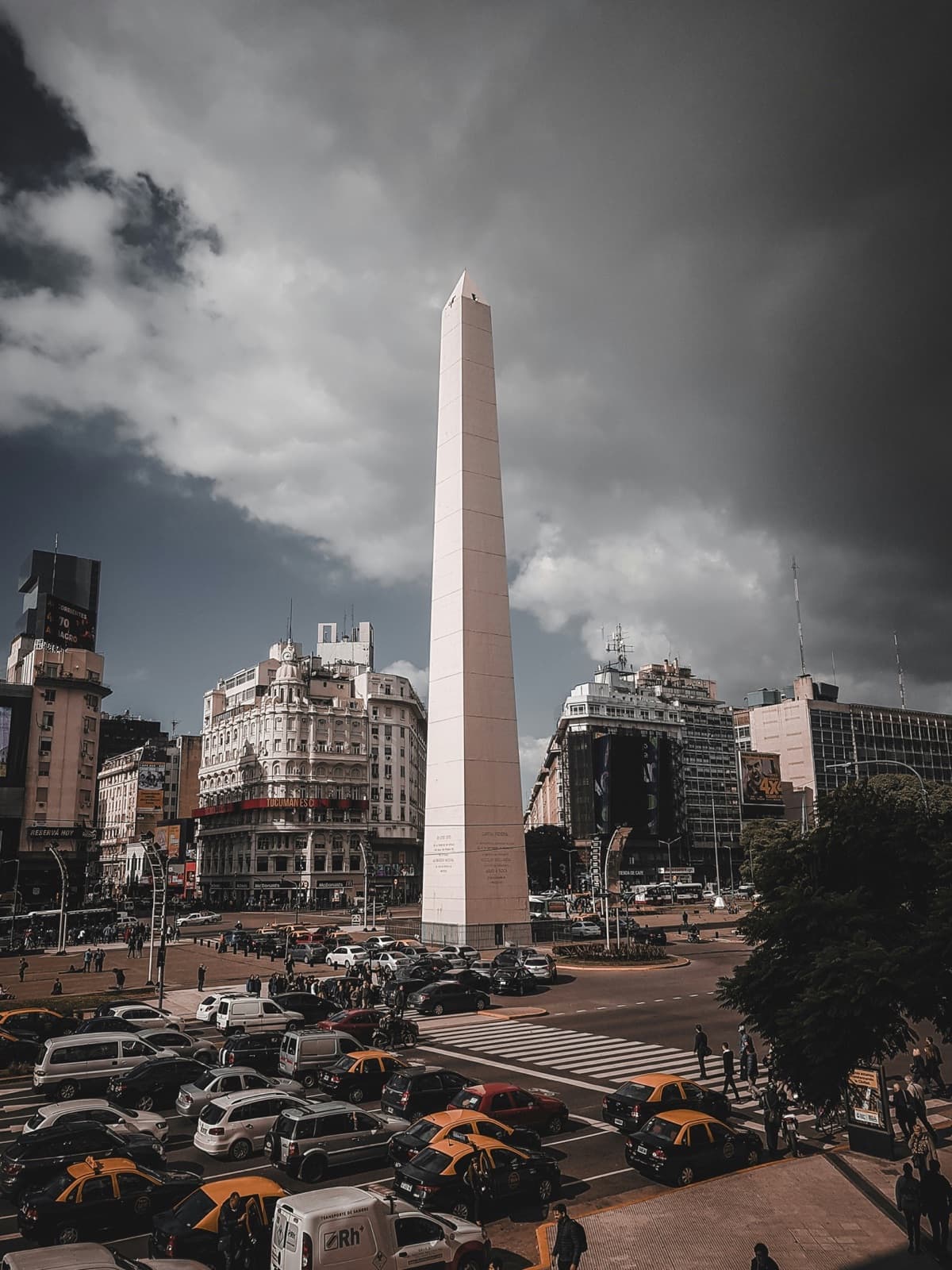
  • Obelisco of Buenos Aires

    Obelisco

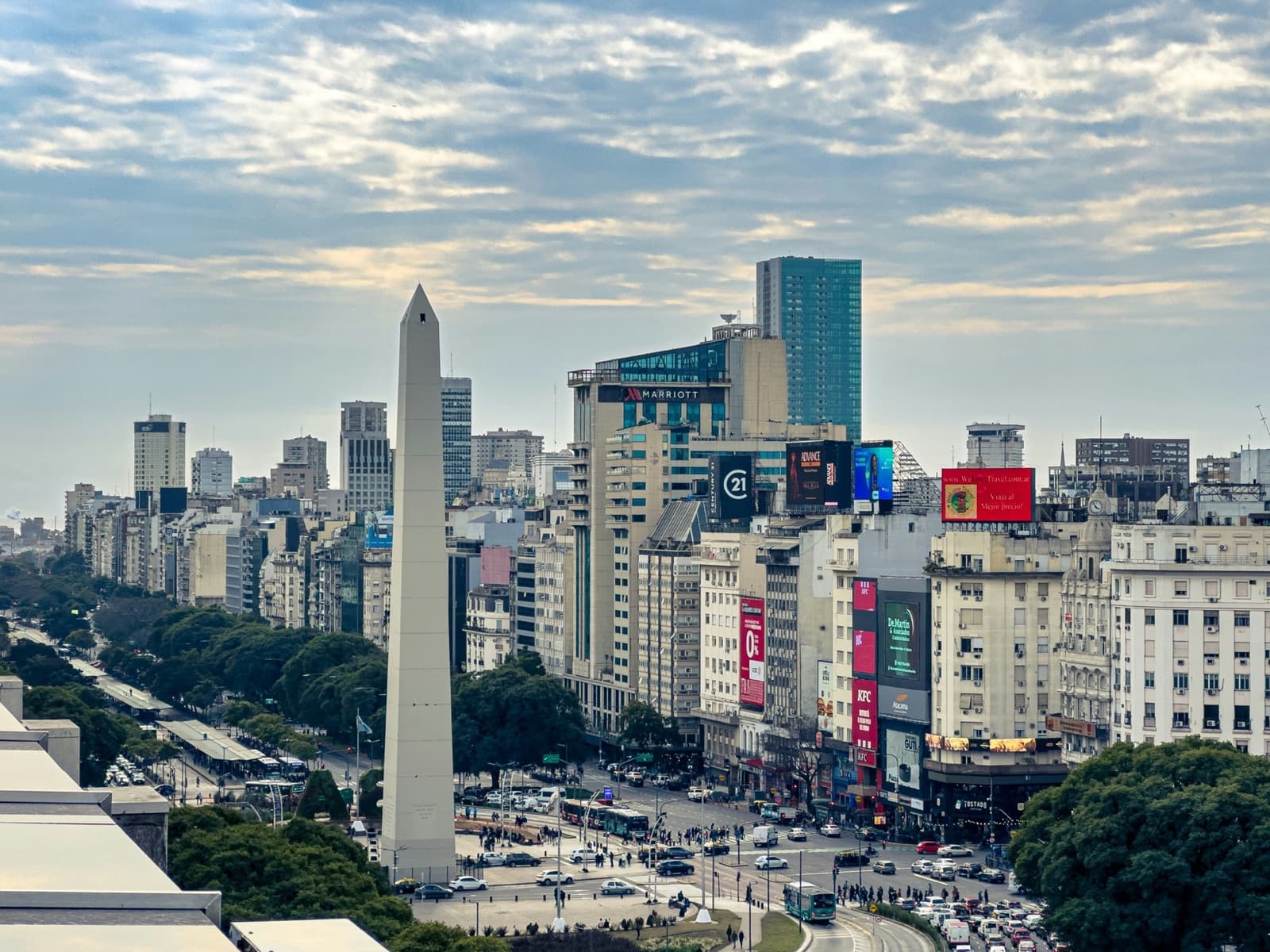
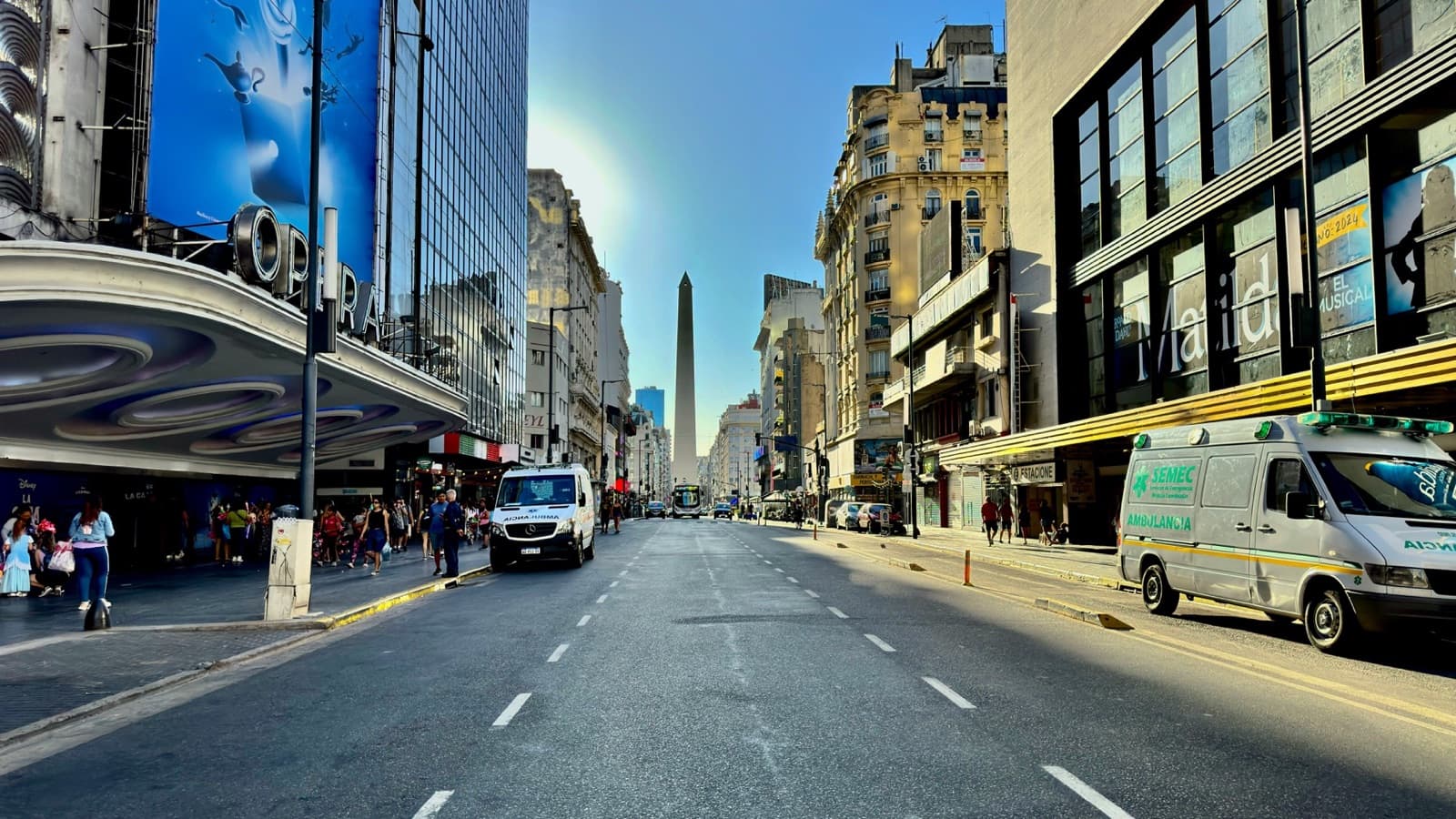
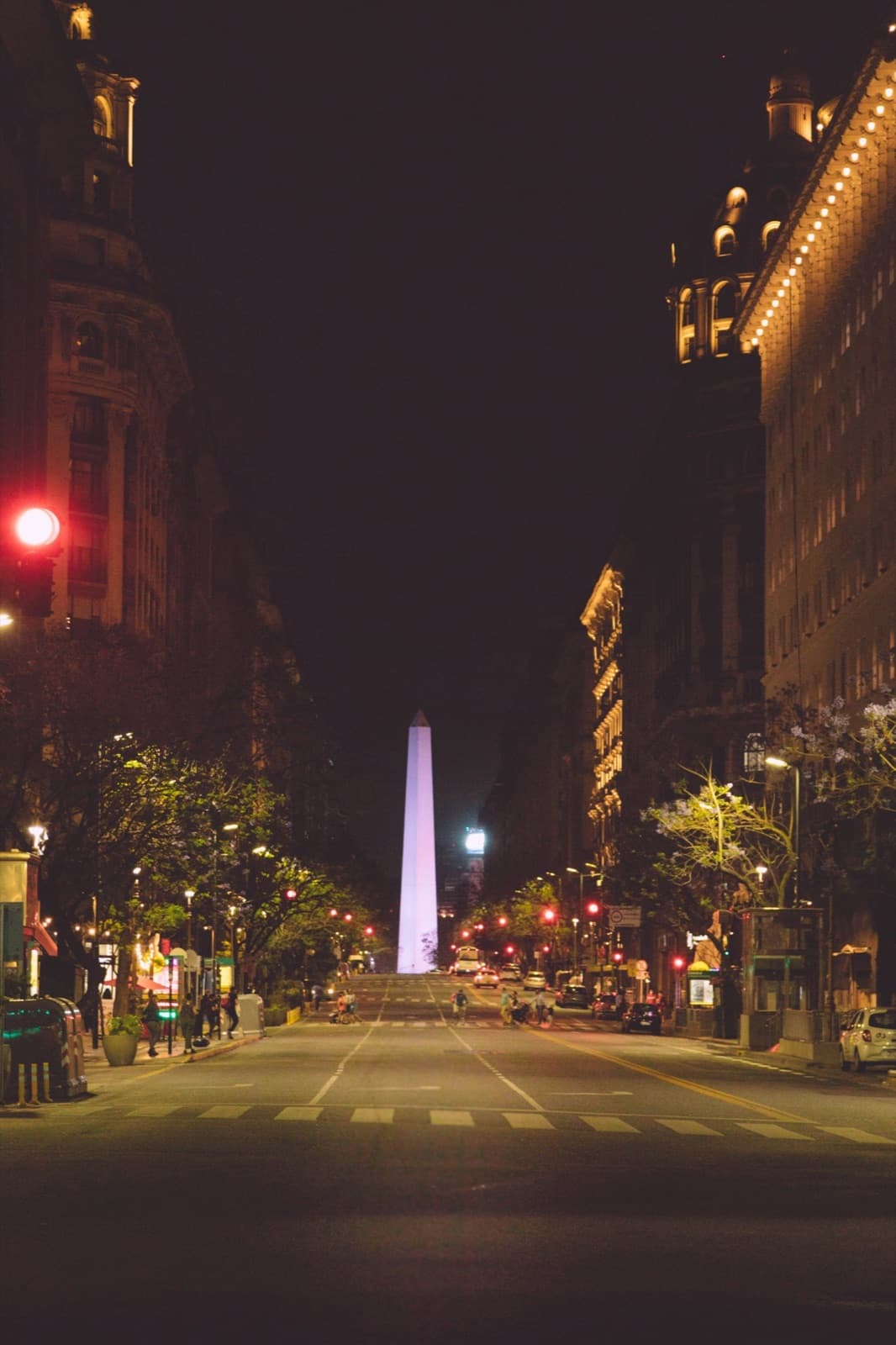
    It was built in four weeks for the city's 400th anniversary, and at first many wanted it demolished. Today it's impossible to picture Buenos Aires without it: meeting point, scene of celebrations and protests, an emotional beacon in the middle of 9 de Julio.

  • 9 de Julio Avenue

    9 de Julio Avenue

    Opening it meant demolishing entire blocks: a monumental scar across the center of the city. They say it's one of the widest avenues in the world —crossing it on foot is almost like fording an urban river. And in the middle, the Obelisco, stealing every glance.

  • Corrientes Avenue

    Corrientes Avenue

    The avenue that never sleeps: theaters, bookstores open past midnight, pizzerias, neon and tango. Since the 1930s it's been the cultural, bohemian heart of Buenos Aires. Here the city thinks itself out at night, between a coffee and a show.

  • Diagonal Norte

    Diagonal Norte

    It slices through the old colonial grid to point straight at the Obelisco. Along its sides, banks and offices raised a stage of marble and steel for economic power. An avenue conceived as a shop window for prosperous Argentina.

  • Diagonal Sur

    Diagonal Sur

    Less famous than its northern sister, it concentrates the other power: legislature, agencies, administration. A catalog of the Argentine state read in facades. If Diagonal Norte breathes money, this one breathes paperwork —and decisions that touch everyone.

  • Bencich Building

    Bencich Building

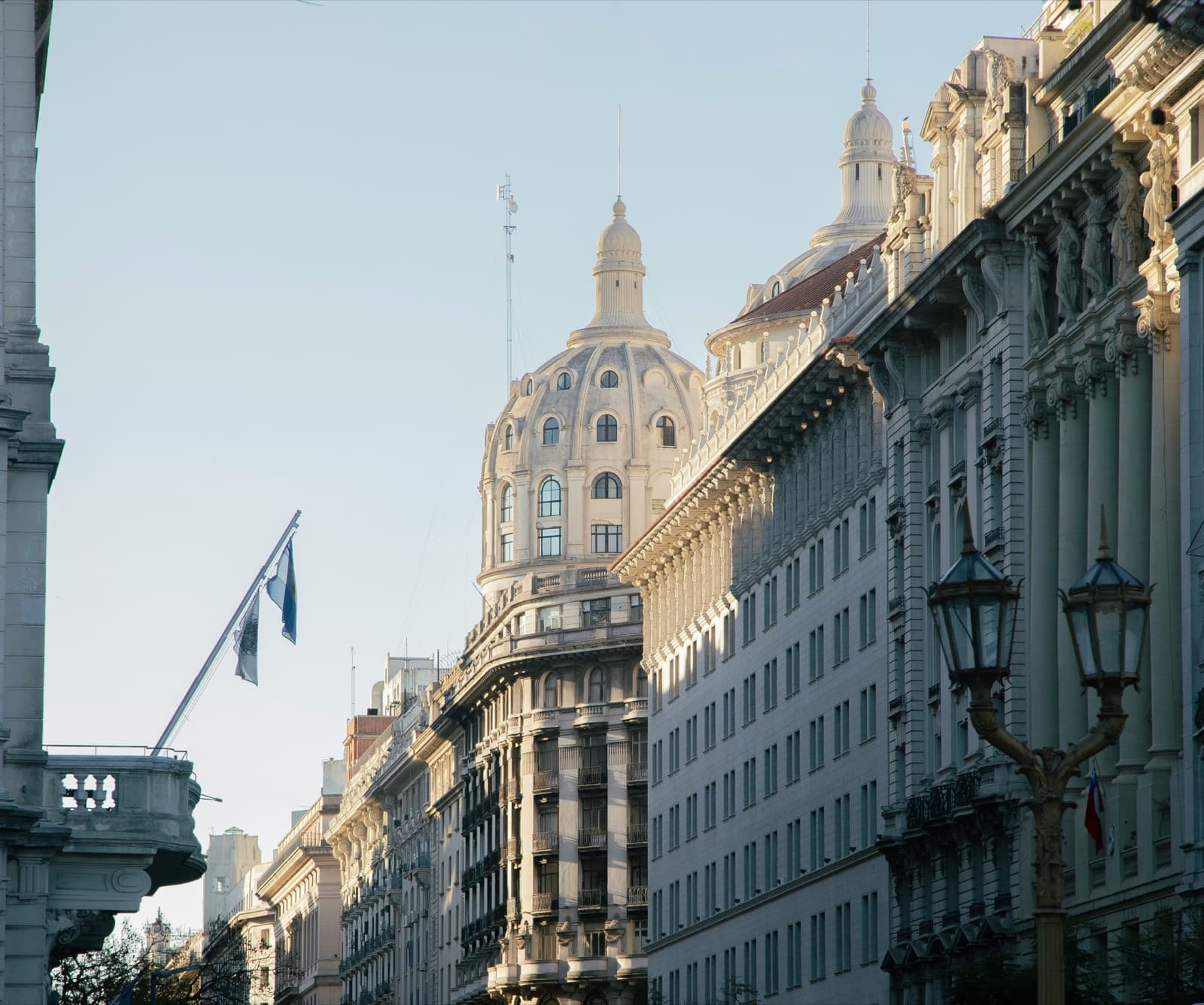
    It rises on the corner like the prow of a ship. A manifesto of early 20th-century Buenos Aires: a city that wanted to speak French and prove its prosperity in stone, iron and domes. The "Paris of South America," condensed into a single corner.

  • Bank of Boston

    Bank of Boston

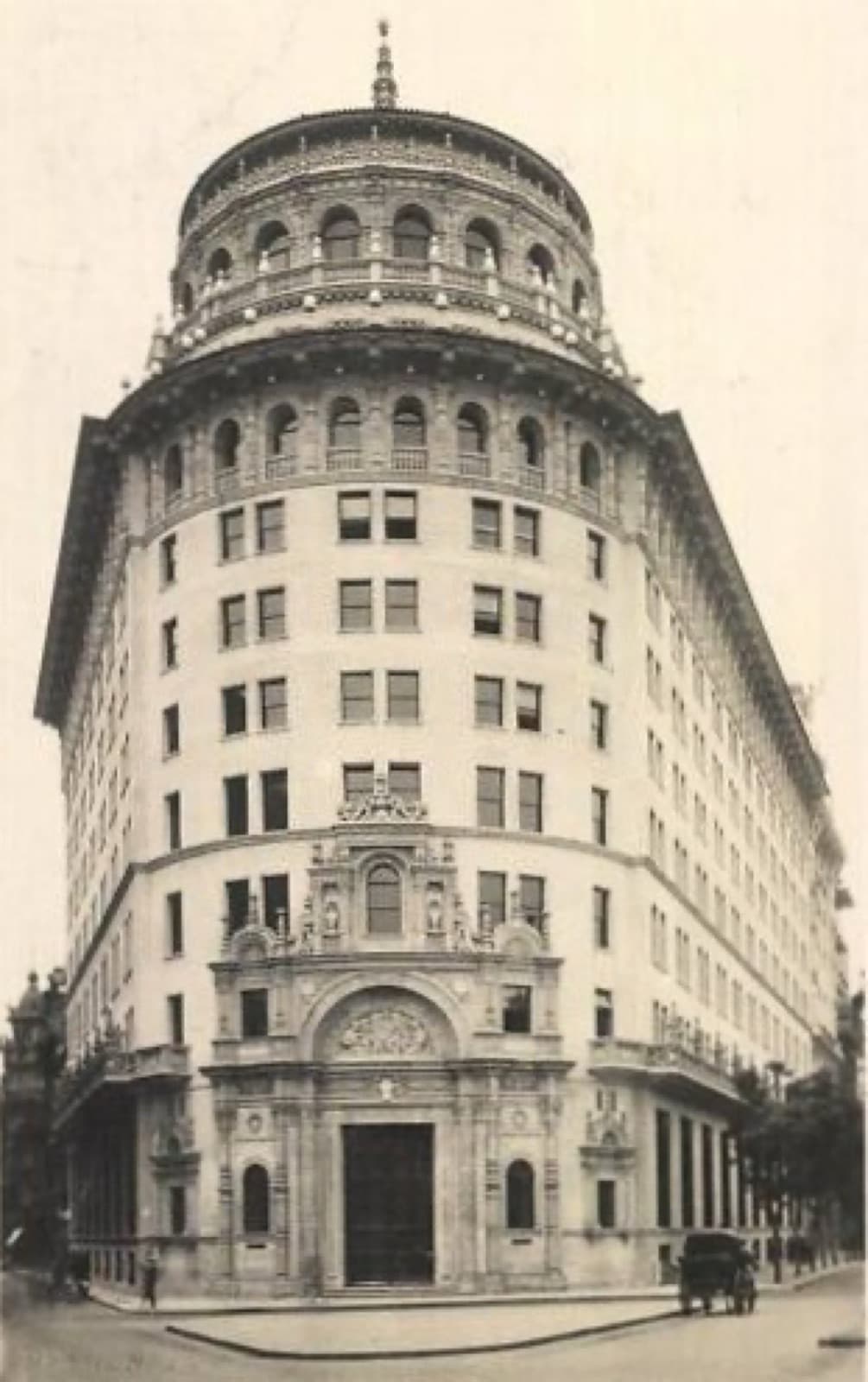
    A facade loaded with Renaissance and Plateresque detail to remind you that money, too, dressed up as art. It tells how foreign banking found its place in the Río de la Plata, when Buenos Aires dreamed of being a world financial capital.

  • Shell Mex Building

    Shell Mex Building

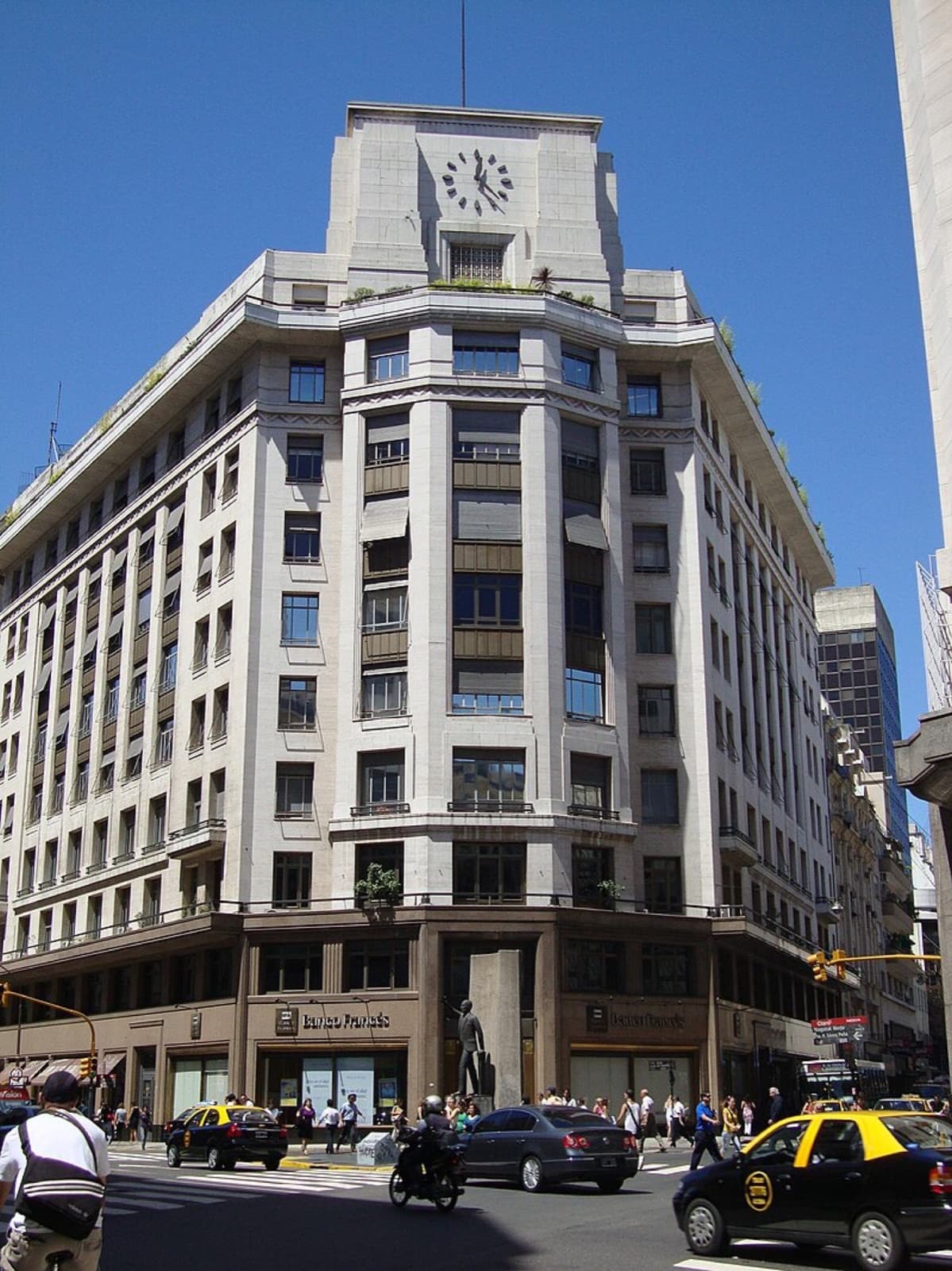
    It cuts through Diagonal Norte like the prow of a ship among cars and pedestrians. 20th-century corporate architecture designed to convey one thing: modernity and solidity. Oil, turned into a building, in the heart of Buenos Aires.

  • La Equitativa del Plata

    La Equitativa del Plata

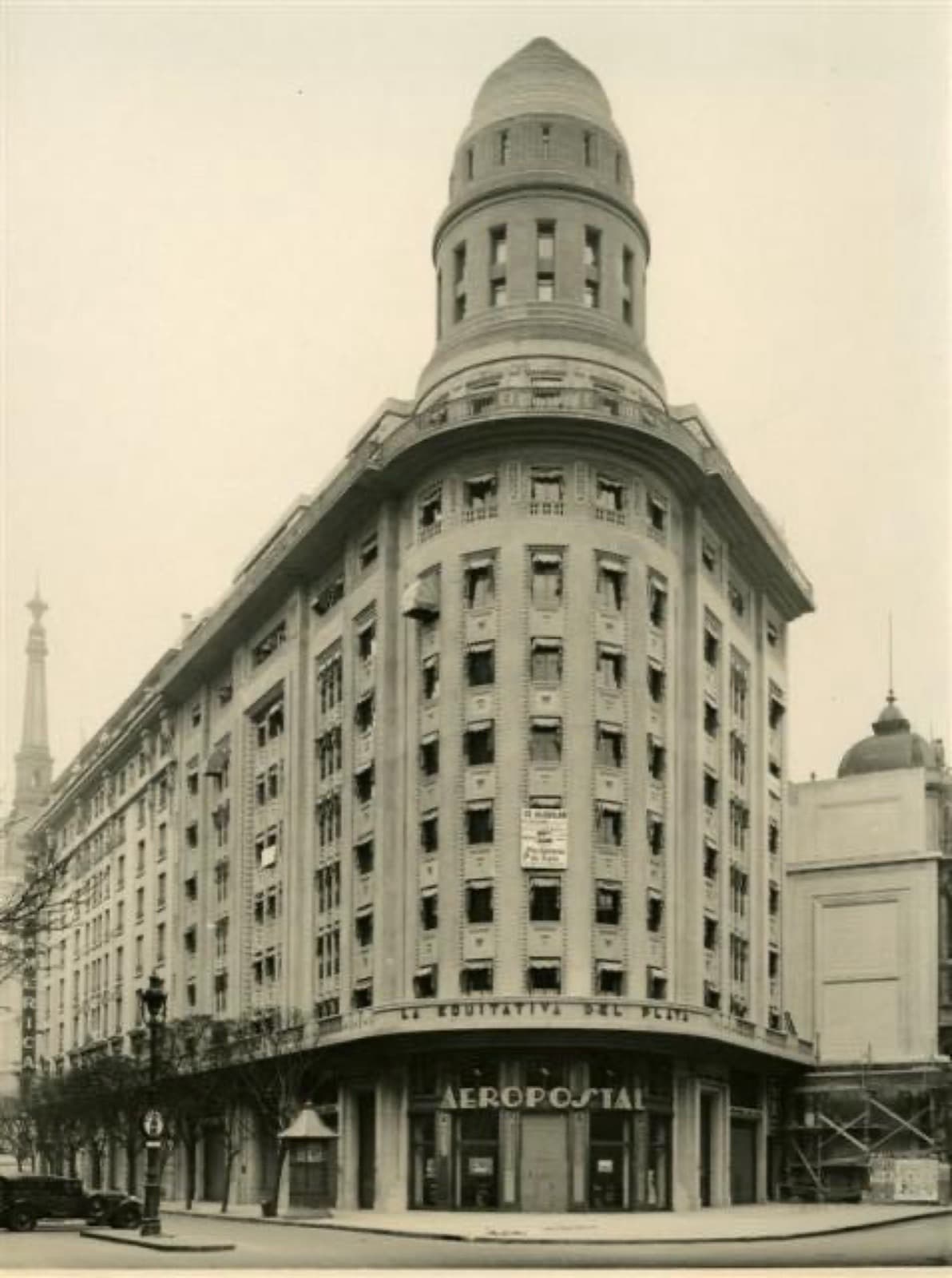
    An Art Deco building that housed an insurance company —which sold, beyond policies, an idea: stability and progress, in a country that rarely had either. A key piece for reading interwar Buenos Aires' modernity.

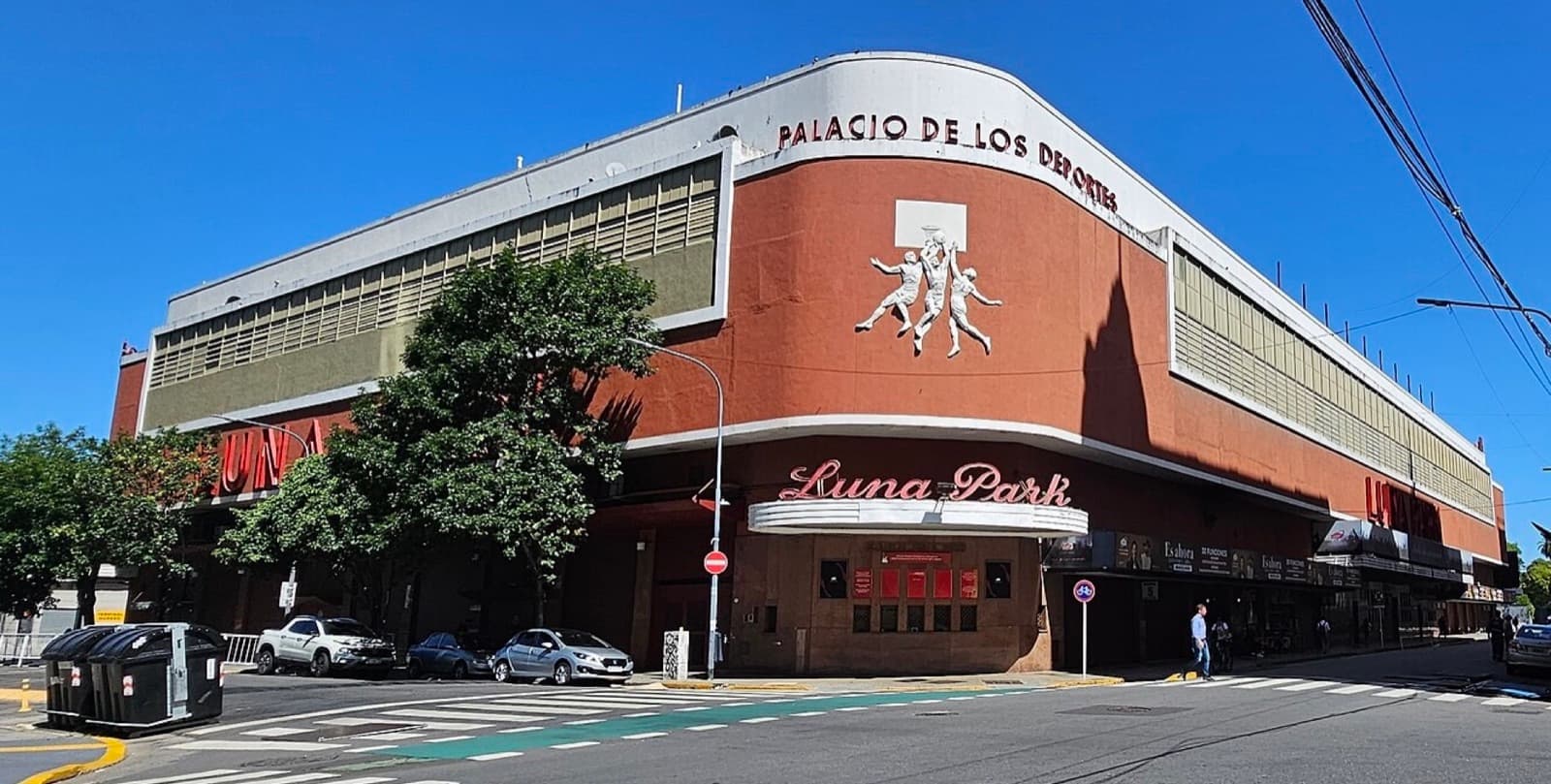
  • Luna Park Stadium

    Luna Park

    Buenos Aires' legendary stadium: boxing, historic concerts, political rallies. Everything passed through here, from the ring to music to militancy. Every seat hides a story of 20th-century Argentina. The "Sports Palace" that became popular legend.

  • Avenida de Mayo

    Avenida de Mayo

    The great European-style boulevard between Casa Rosada and the Congress —the axis where politics becomes a walk. Domes, historic cafés, immigrant hotels. The marches that want to be seen by both powers at once still pass through here.

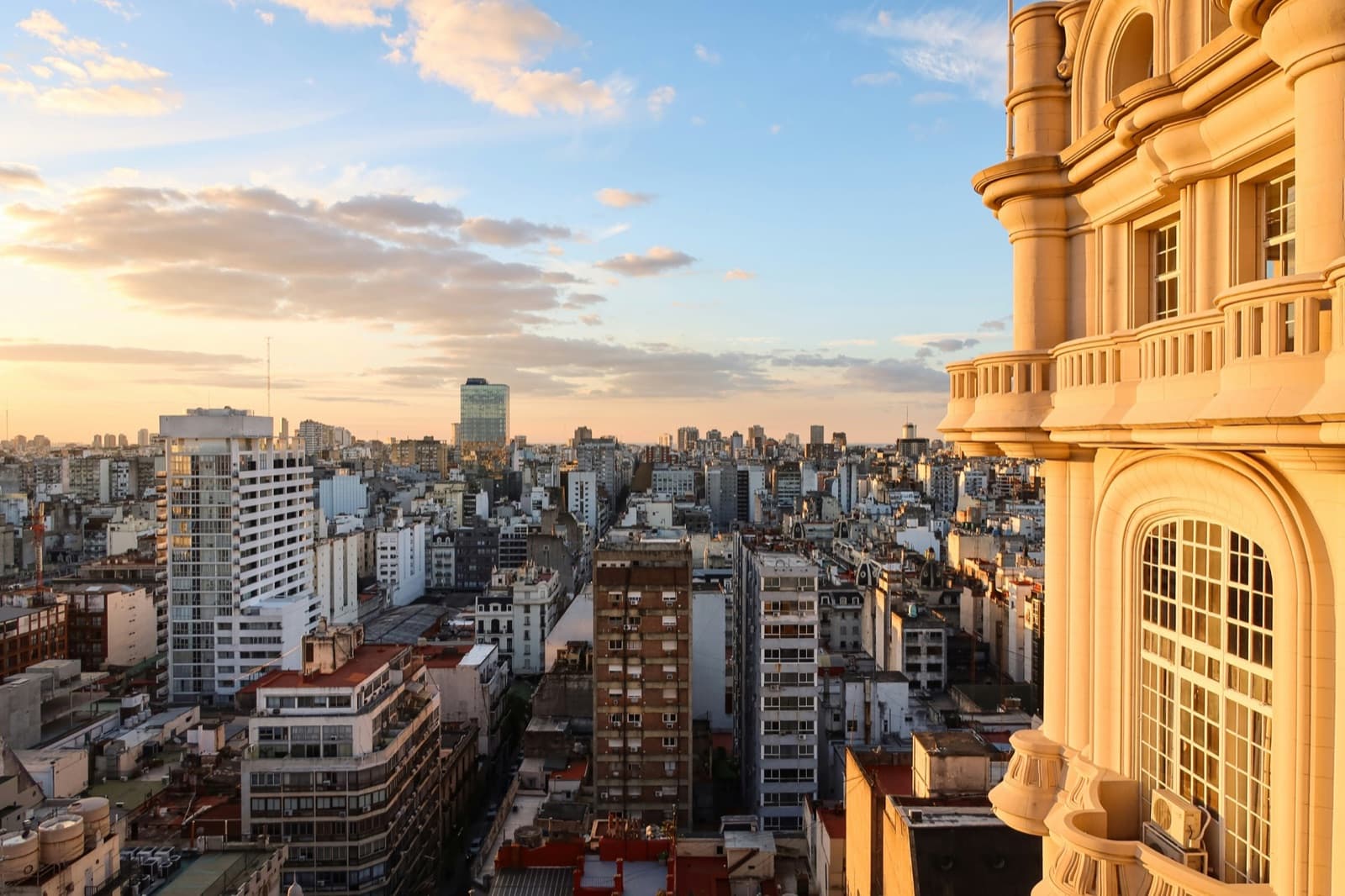
  • Palacio Barolo

    Palacio Barolo

    One of the most astonishing —and most secret— buildings in Buenos Aires. It's built following Dante's Divine Comedy: hell, purgatory and paradise, floor by floor, with a lighthouse at the very top. Not just architecture: the Comedy turned into a building.

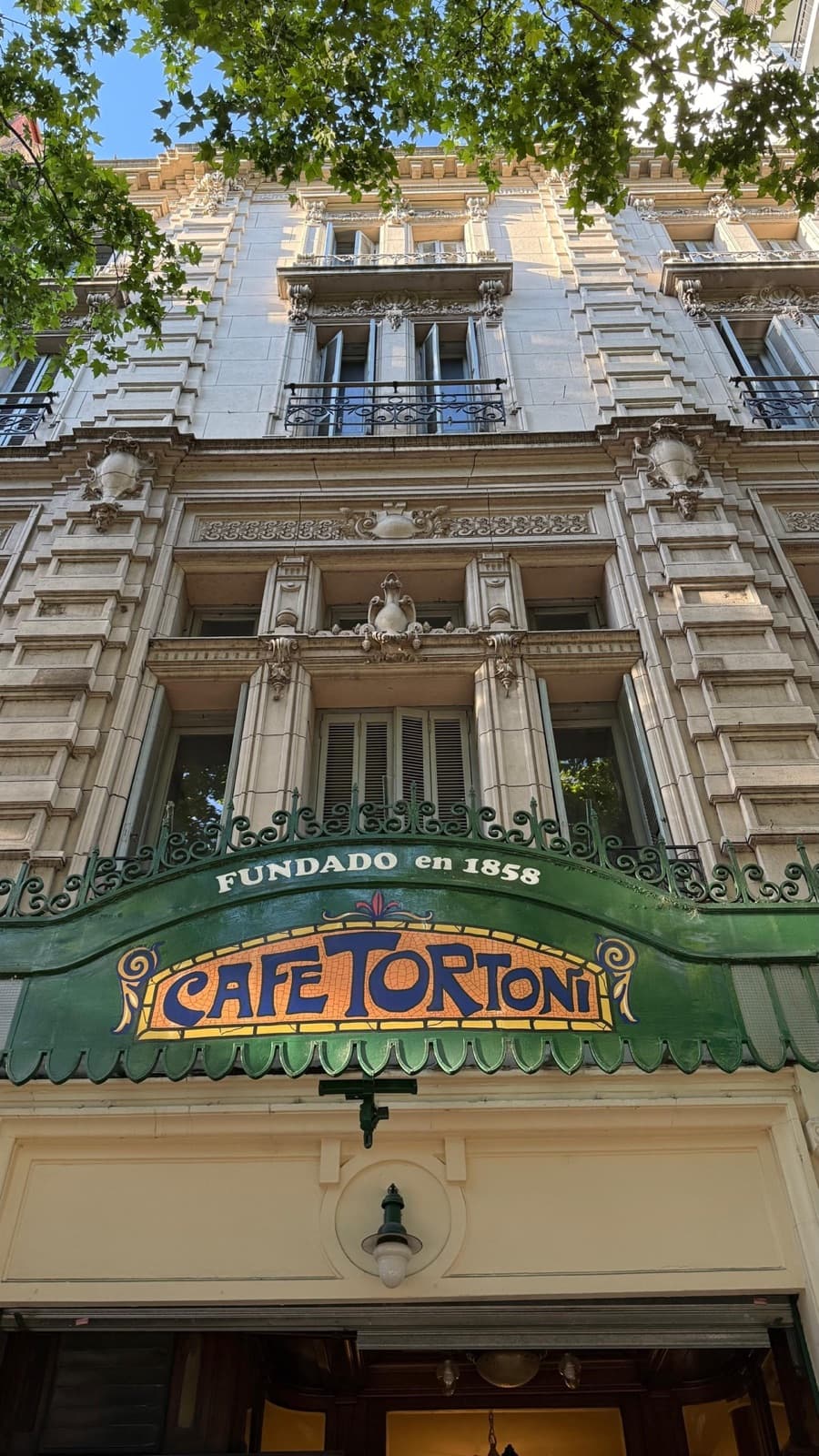
  • Café Tortoni

    Café Tortoni

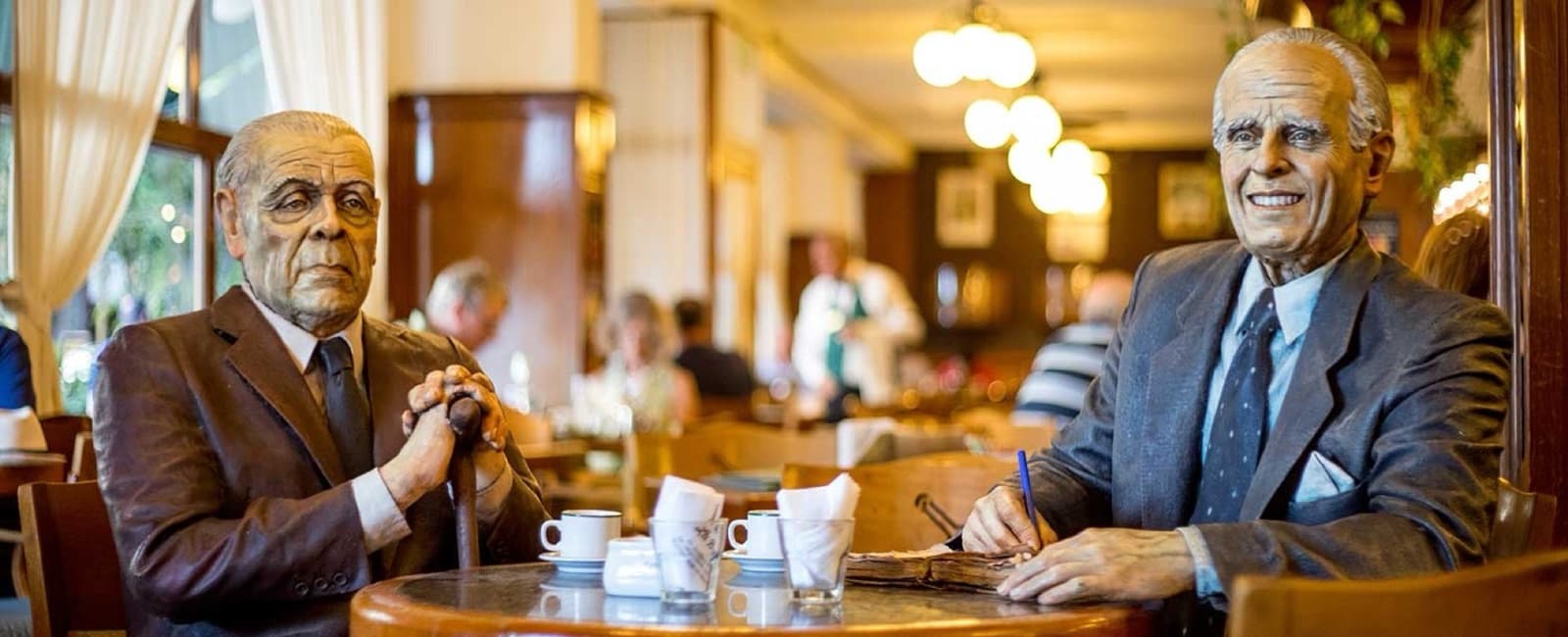
    Buenos Aires' most famous café, open since 1858. Borges, Gardel and Alfonsina Storni passed through its tables. Marble, columns and stained glass unchanged in over a century. A sanctuary of porteño culture where time decided to stand still.

  • Confitería La Ideal

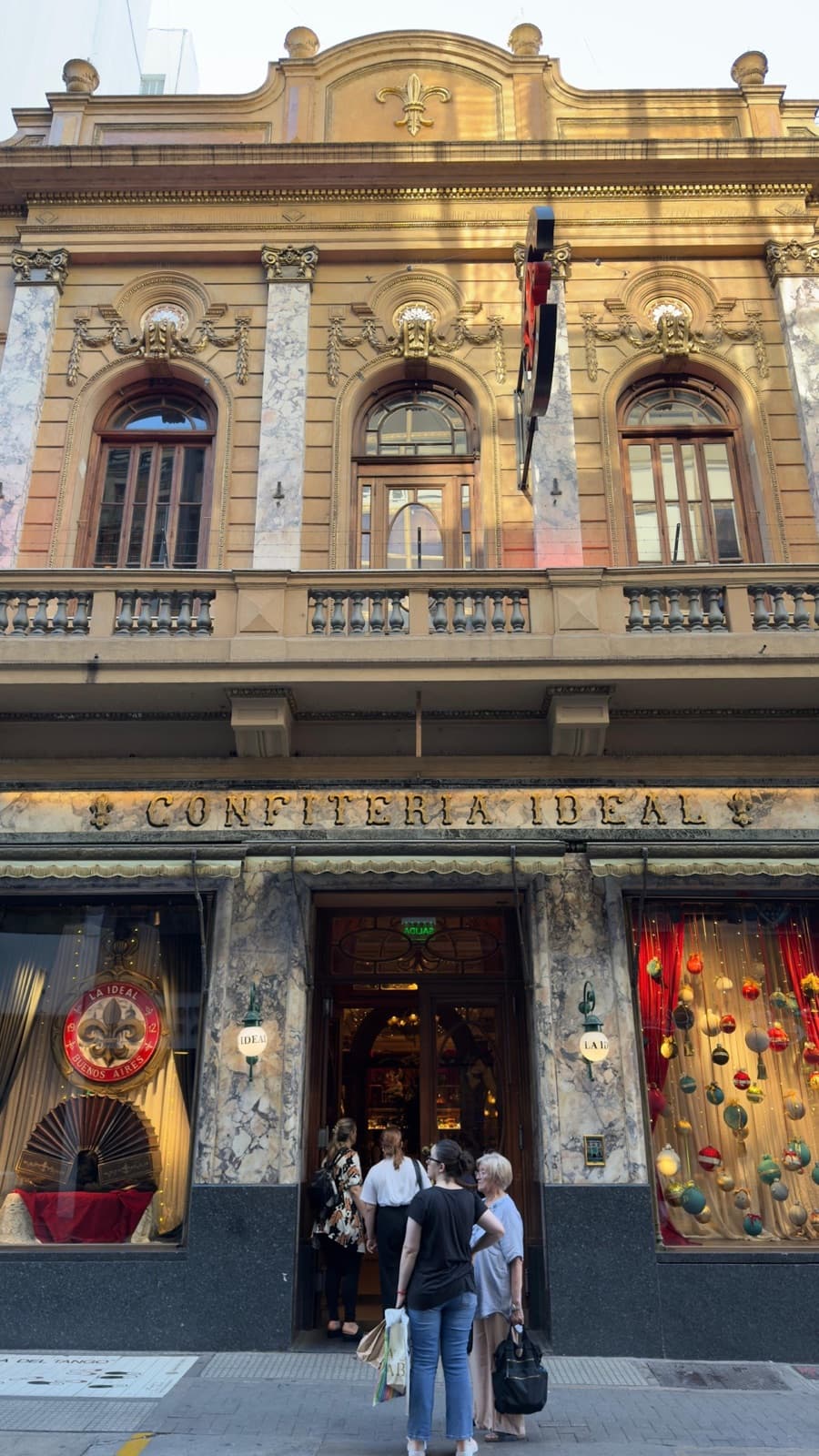
    Confitería La Ideal

    Stepping in is going back a hundred years: marble, chandeliers, staircases from another age. It was a ballroom, an elegant tearoom and a refuge for tango dancers. A time capsule of the Buenos Aires that wanted to look like Europe —and danced until dawn.

  • Confitería del Molino

    Confitería del Molino

    Stained glass, a windmill-topped dome and Art Nouveau halls that overheard politicians, artists and conspirators —it sits right beside the Congress. It was shut and nearly lost for decades; porteños never stopped loving it. A sentimental icon back from the dead.

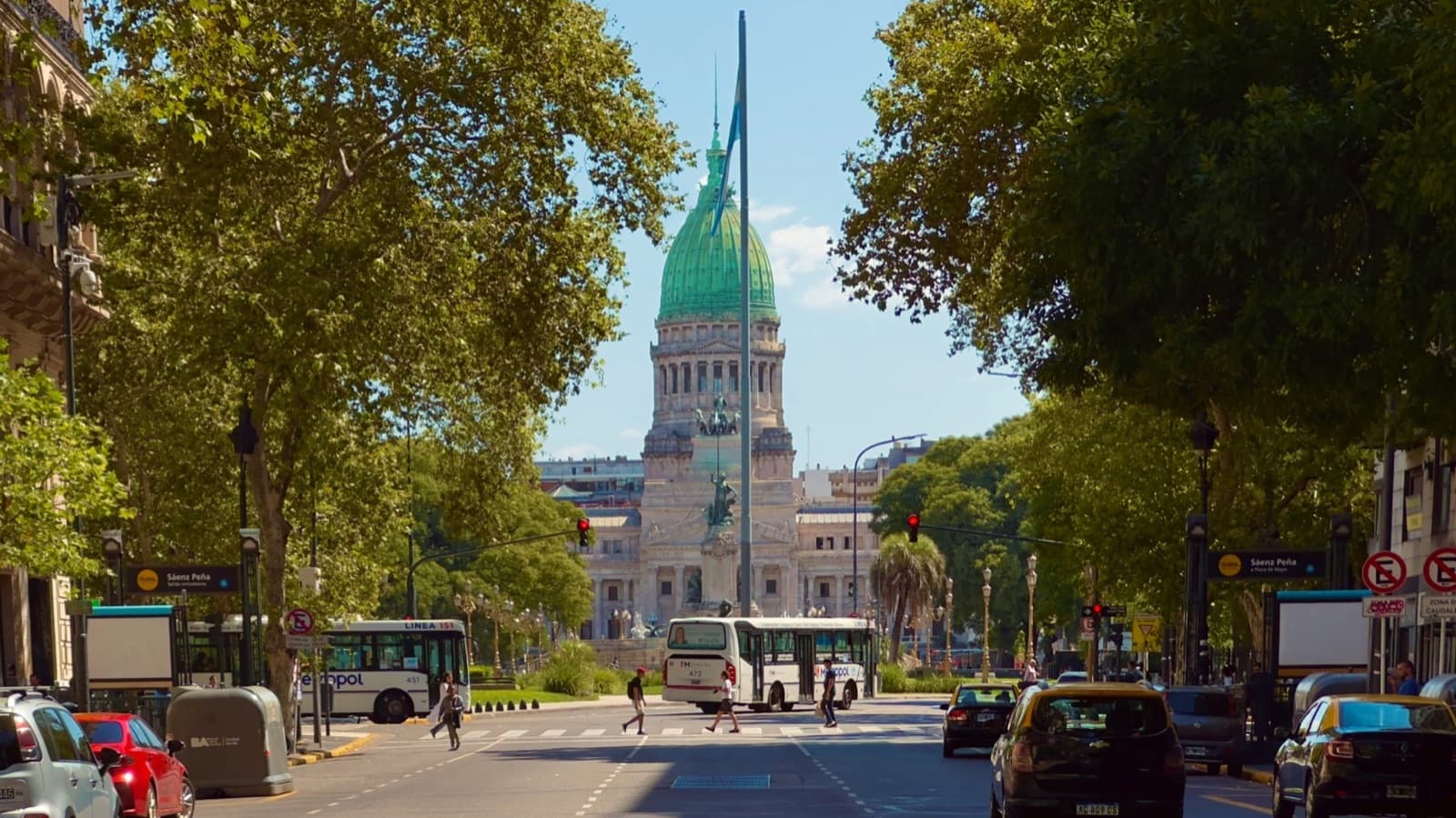
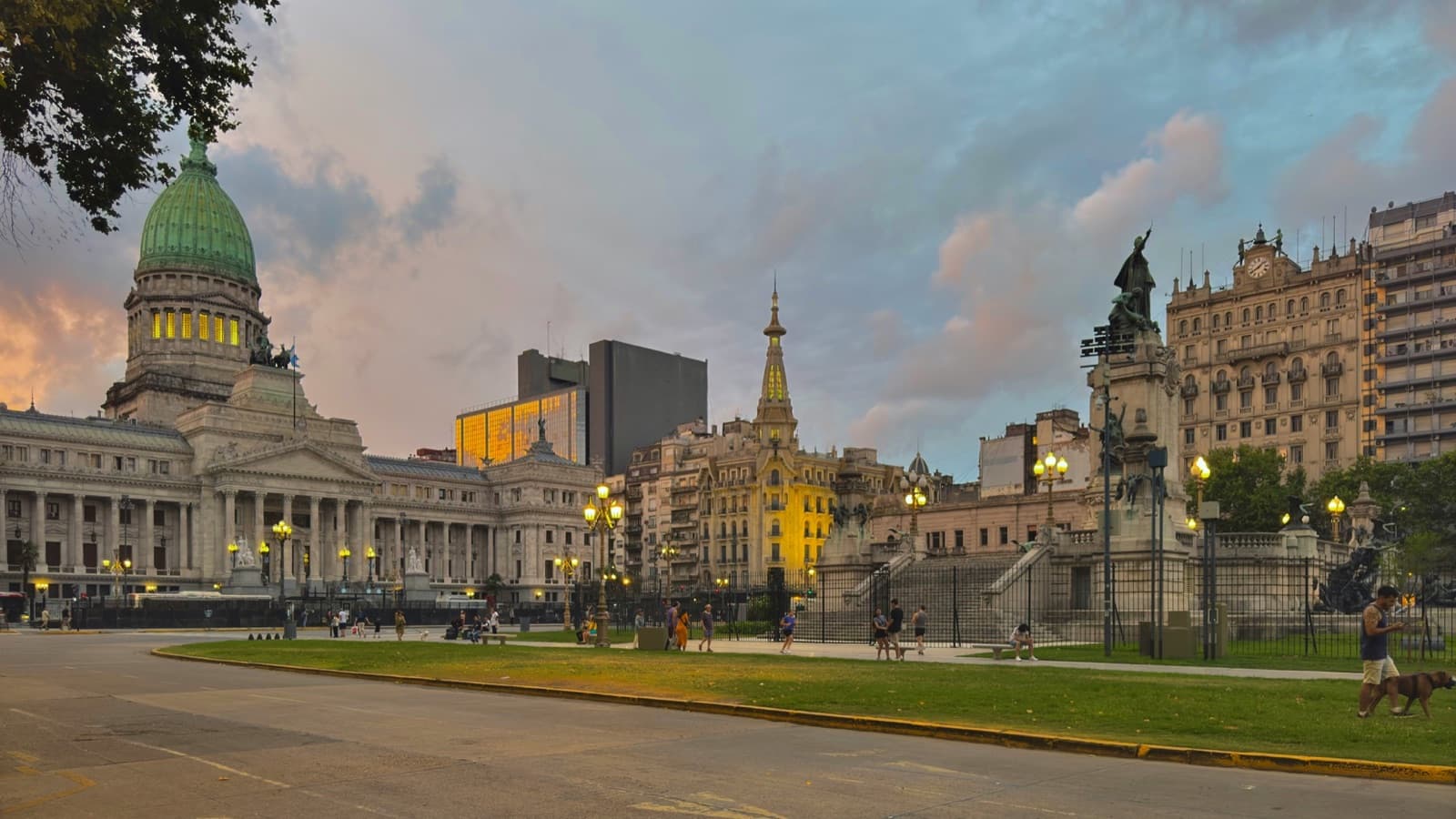
  • National Congress Palace

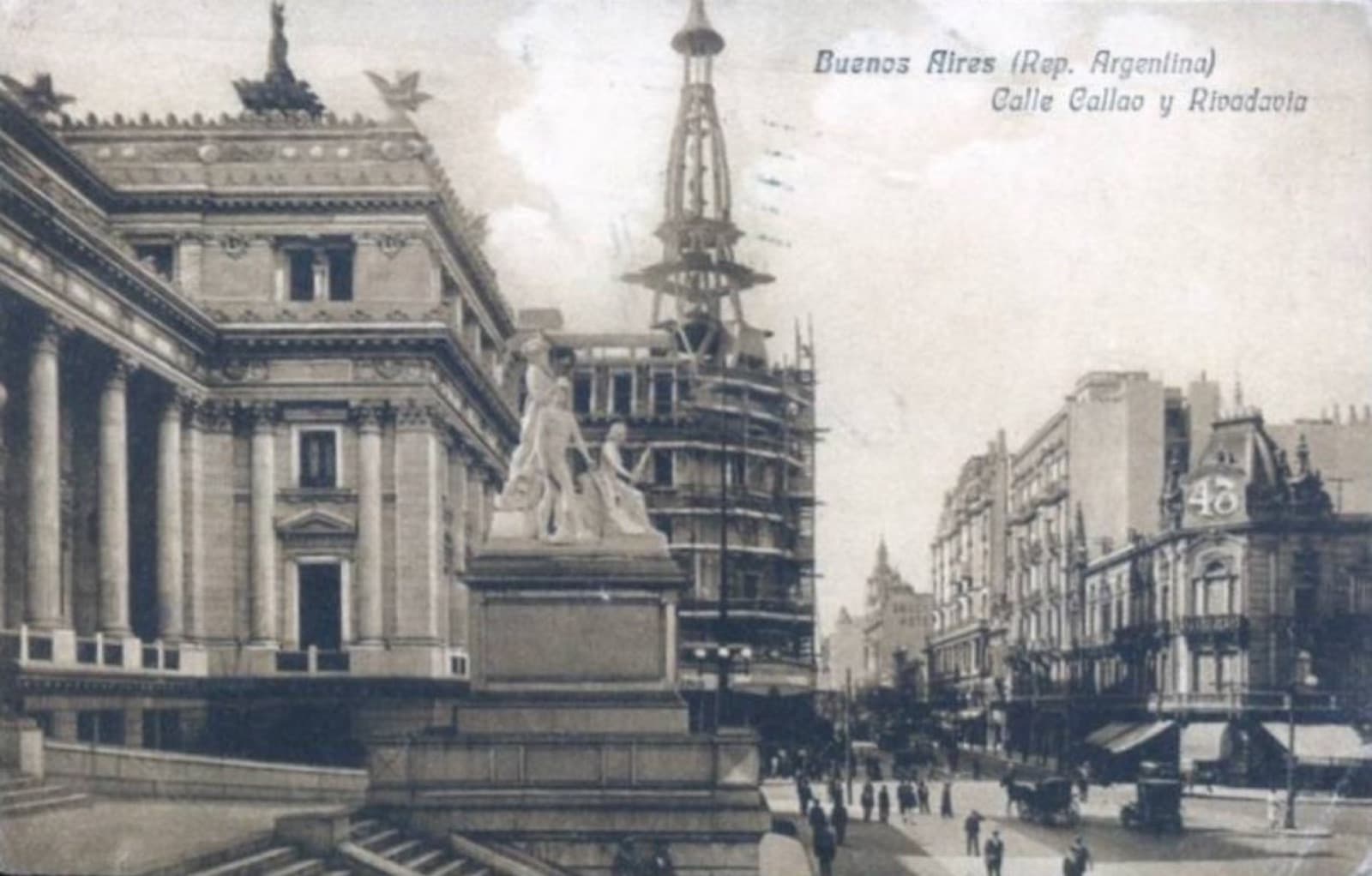
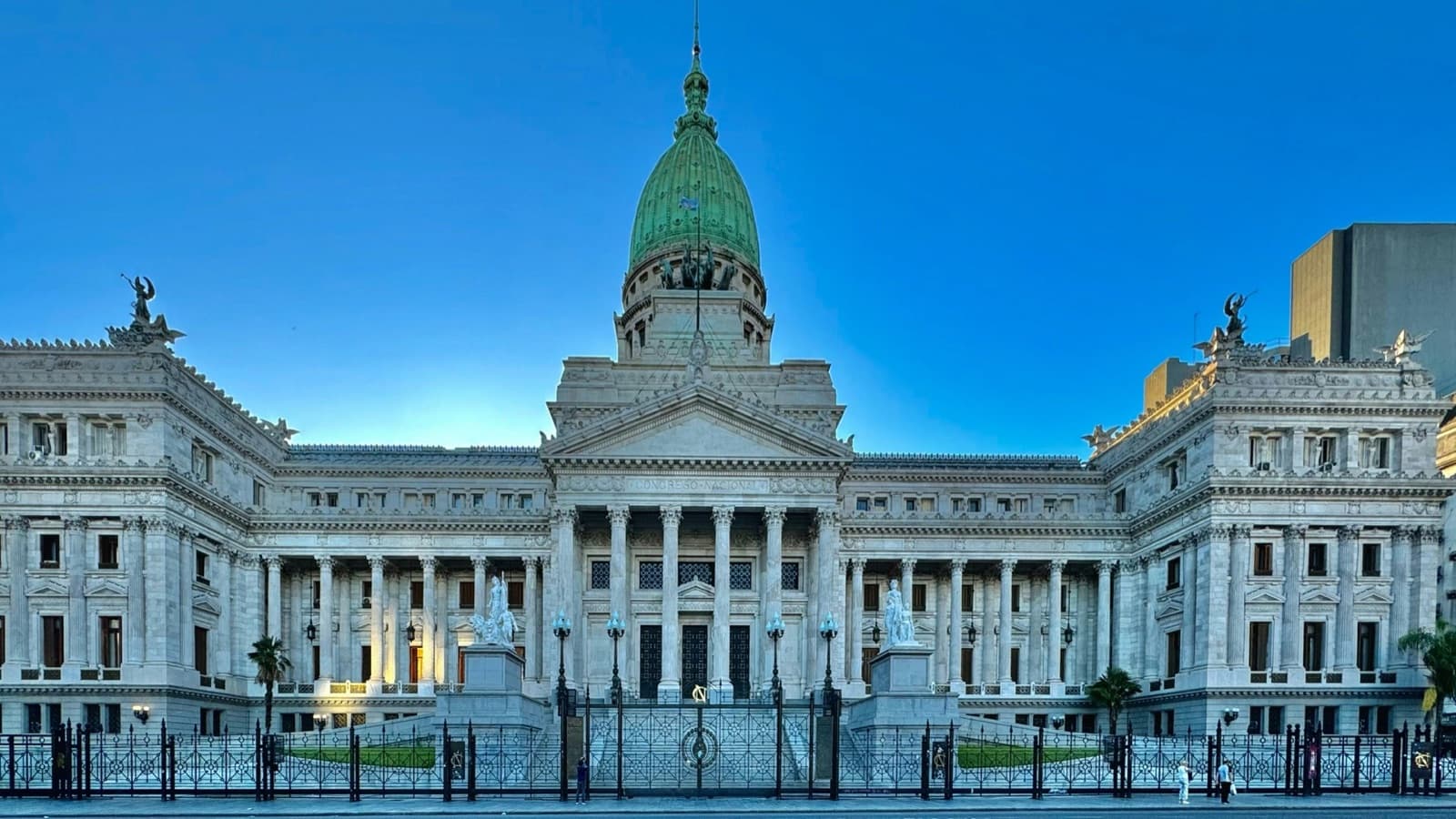
    National Congress

    Green dome, solemn staircase —and inside, marathon sessions while crowds protest outside. Here a word changed at the last minute can bend a law for millions of people. The country's political thermometer, in marble and bronze.

  • Kilometer Zero

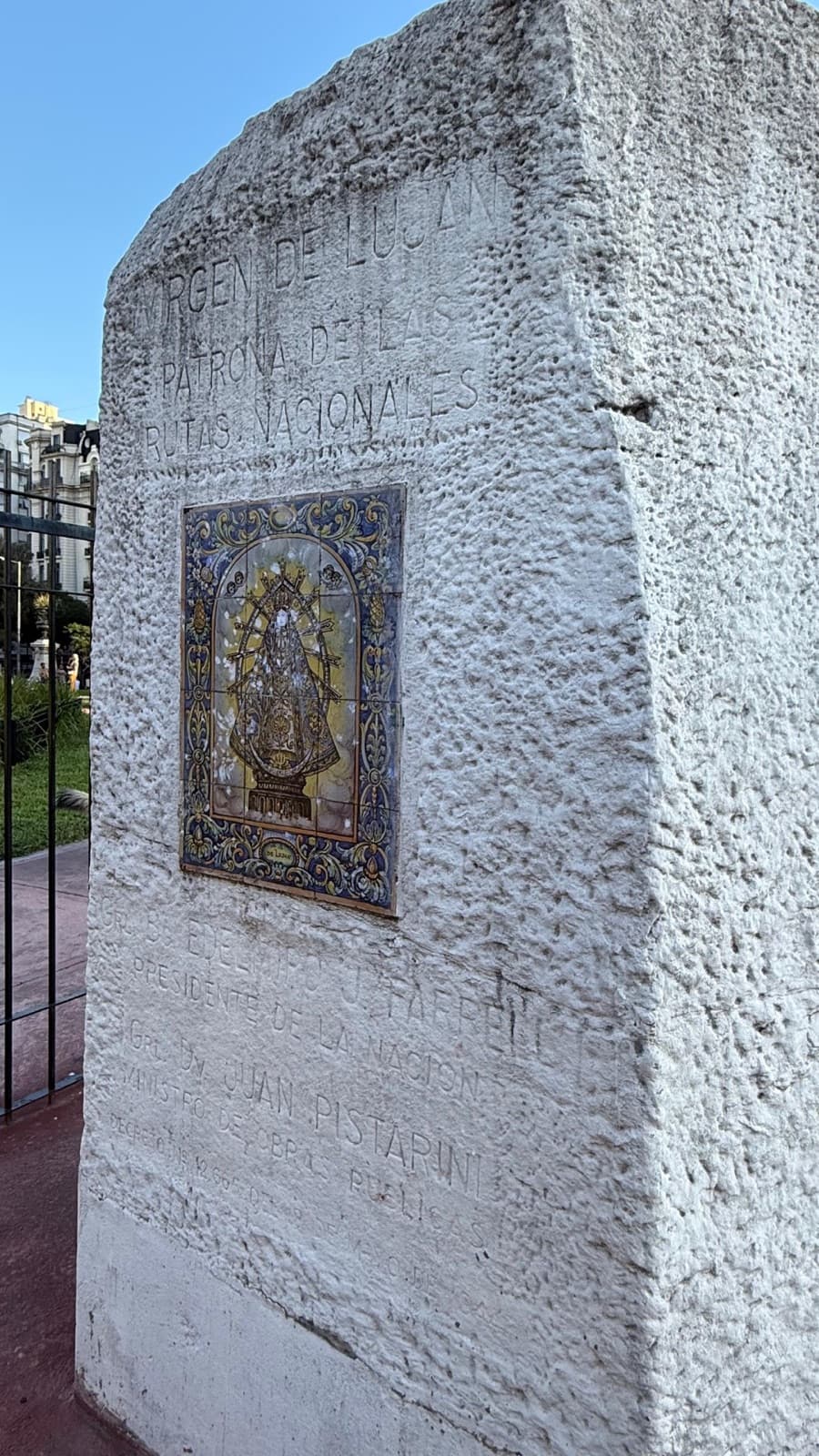
    Kilometer Zero

    A small monolith almost no one notices, facing the Congress. But from here, in theory, every road in Argentina is measured: each journey into the country's interior begins, symbolically, at this exact point of Buenos Aires asphalt.

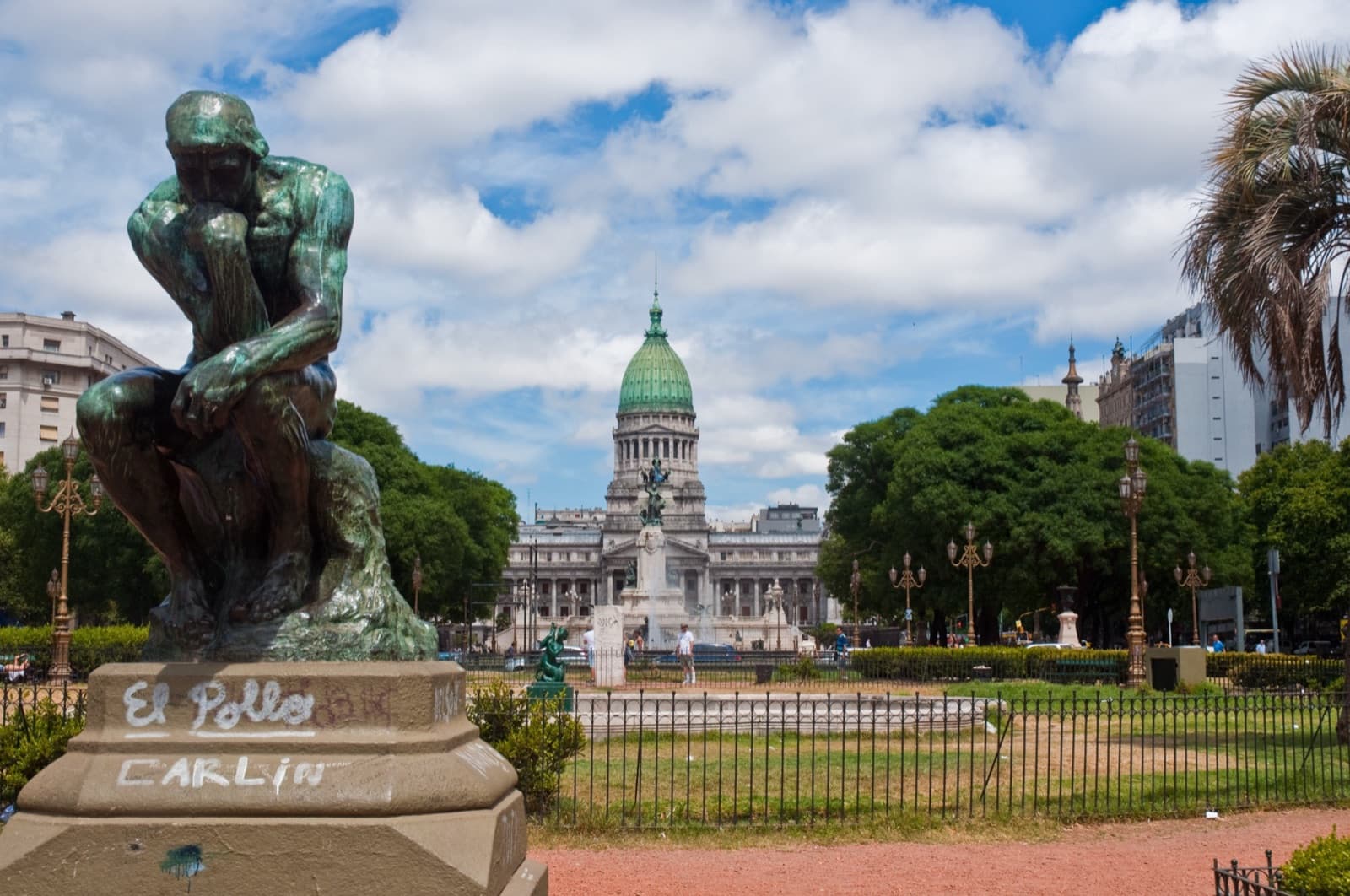
  • Rodin's Thinker facing the Congress

    Rodin's Thinker

    A replica of Rodin's famous Thinker, facing the Congress —and the pose couldn't be more ironic. A figure sunk in thought, turned into an involuntary symbol of a country that never stops thinking itself over. Coincidence that it faces Parliament?

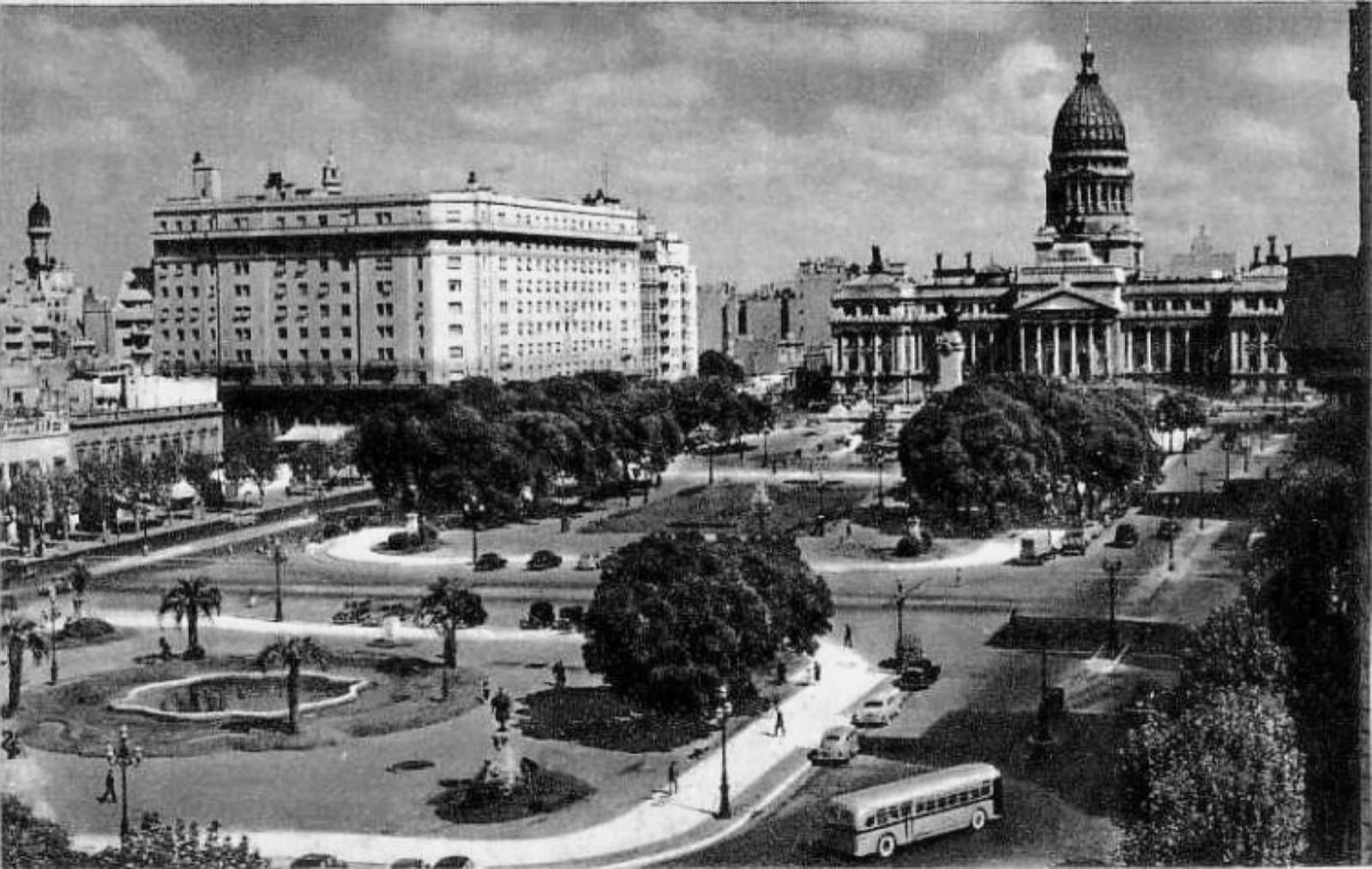
  • Plaza of the Two Congresses

    Plaza of the Two Congresses

    The open-air forum of Argentine democracy: marches, celebrations and debates for over a century. Each statue, fountain and bench holds a fragment of that story. The place where the street speaks, face to face, to legislative power.

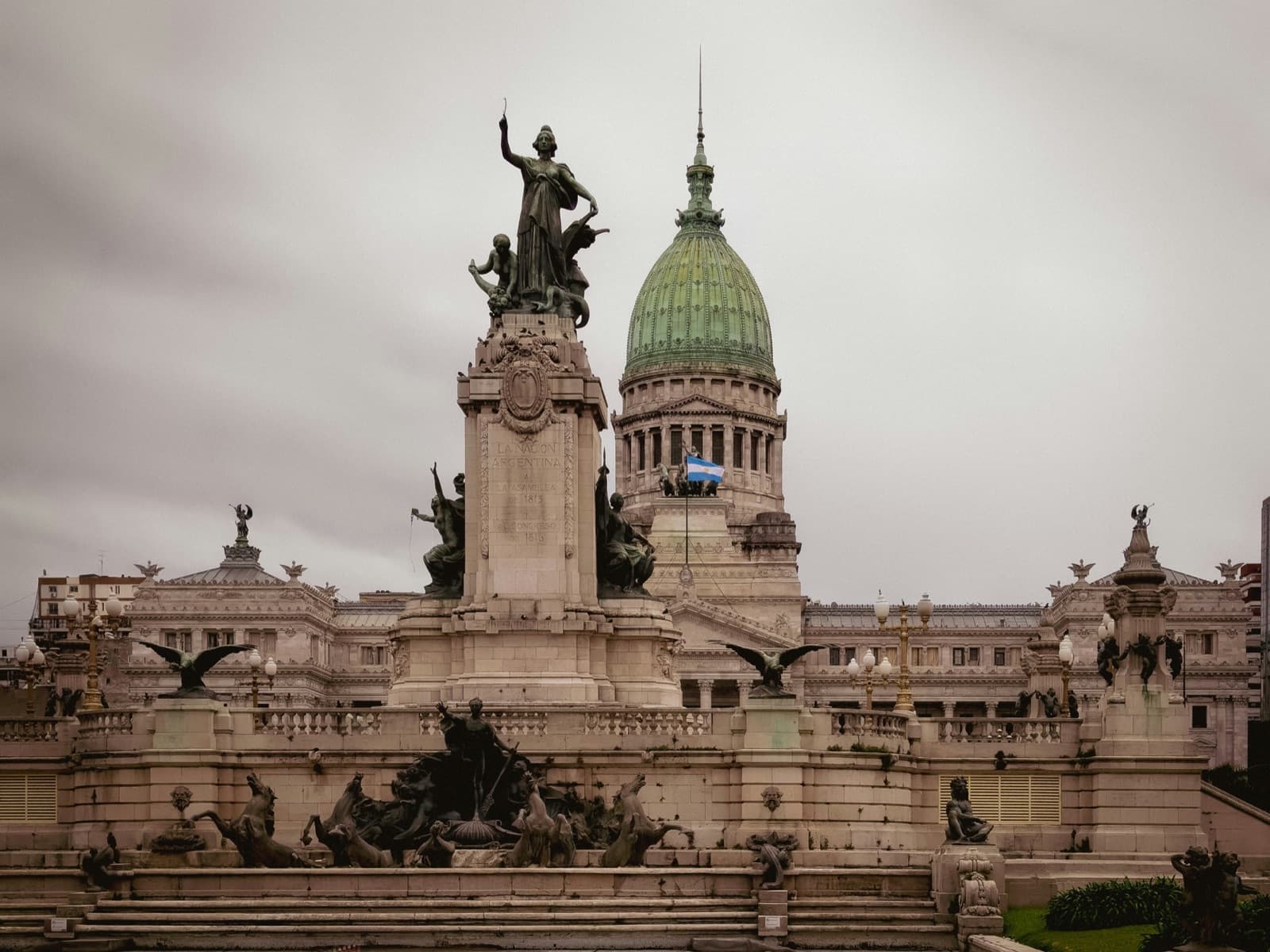
  • Monument to the Two Congresses

    Monument to the Two Congresses

    A monument that sums up two founding moments: the Year XIII Assembly and the Congress of Tucumán, where independence was declared. Female figures and reliefs narrate, in stone and water, the words "liberty," "republic" and "sovereignty."

  • Alfredo Palacios Senate Building

    Alfredo Palacios Senate Building

    It bears the name of the first socialist deputy in all of Latin America. Pioneering labor laws —limited working hours, rest, rights— that changed the lives of millions were passed inside. Argentine social policy was born, in part, within these walls.

  • Recoleta Cemetery

    Recoleta Cemetery

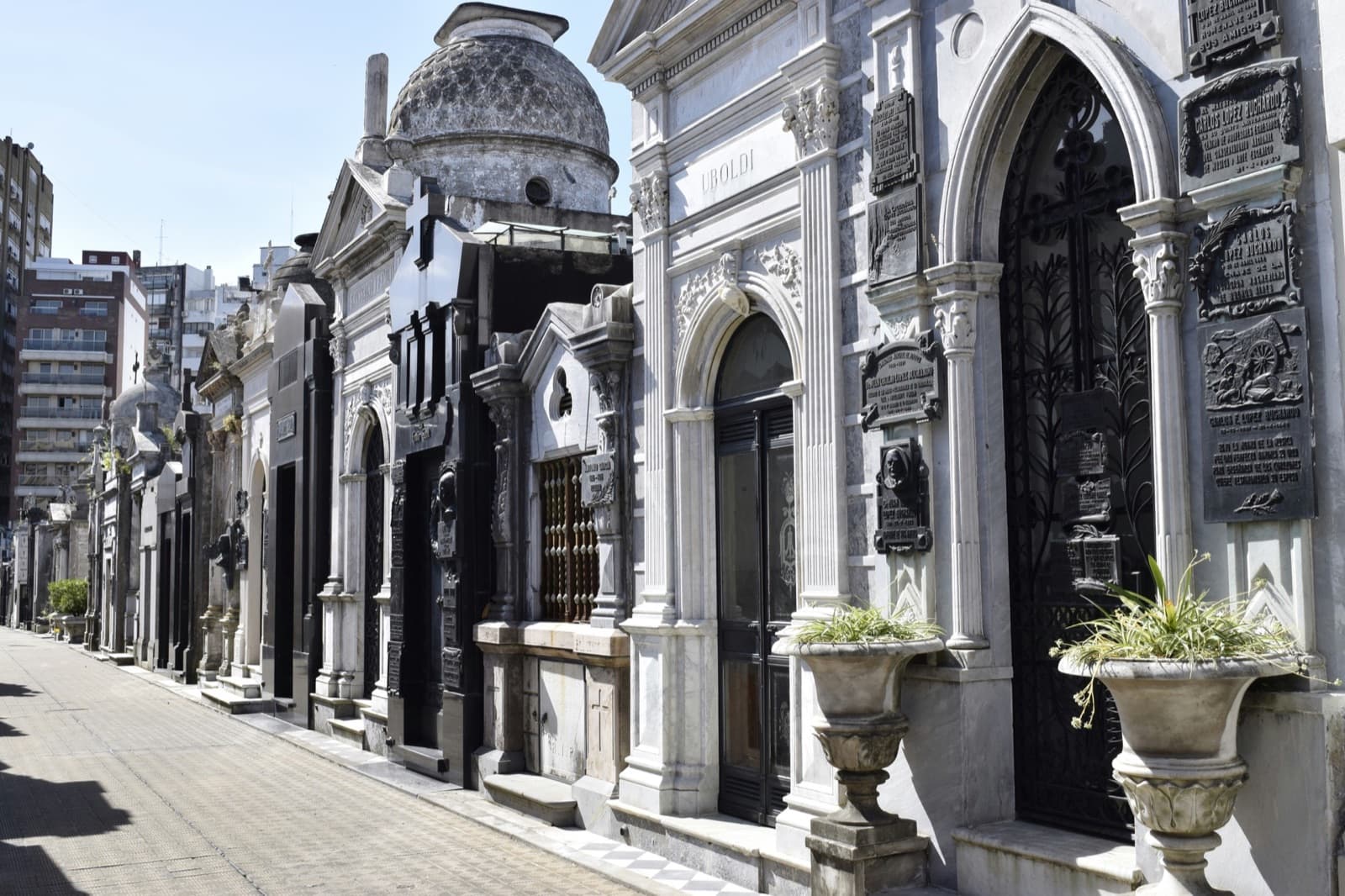
    A city within the city: streets of vaults like miniature palaces, where Argentina's great families rest —and Eva Perón, whose body had an incredible journey before reaching here. The map of porteño power and death, in marble.

  • La Biela café in Recoleta

    La Biela

    One of Recoleta's most iconic cafés, under two century-old rubber trees. A meeting point for racing drivers —hence the name— writers and neighbors. Fangio left his mark here. Elegant Buenos Aires having coffee in the shade.

  • Basilica of the Most Holy Sacrament

    Basilica of the Most Holy Sacrament

    One of the most refined churches in the city: European stained glass, marble, a huge organ. The Anchorena family —among the richest in Argentina— funded it to have a sacred space worthy of the great capitals. Faith and fortune, together.

  • Floralis Genérica

    Floralis Genérica

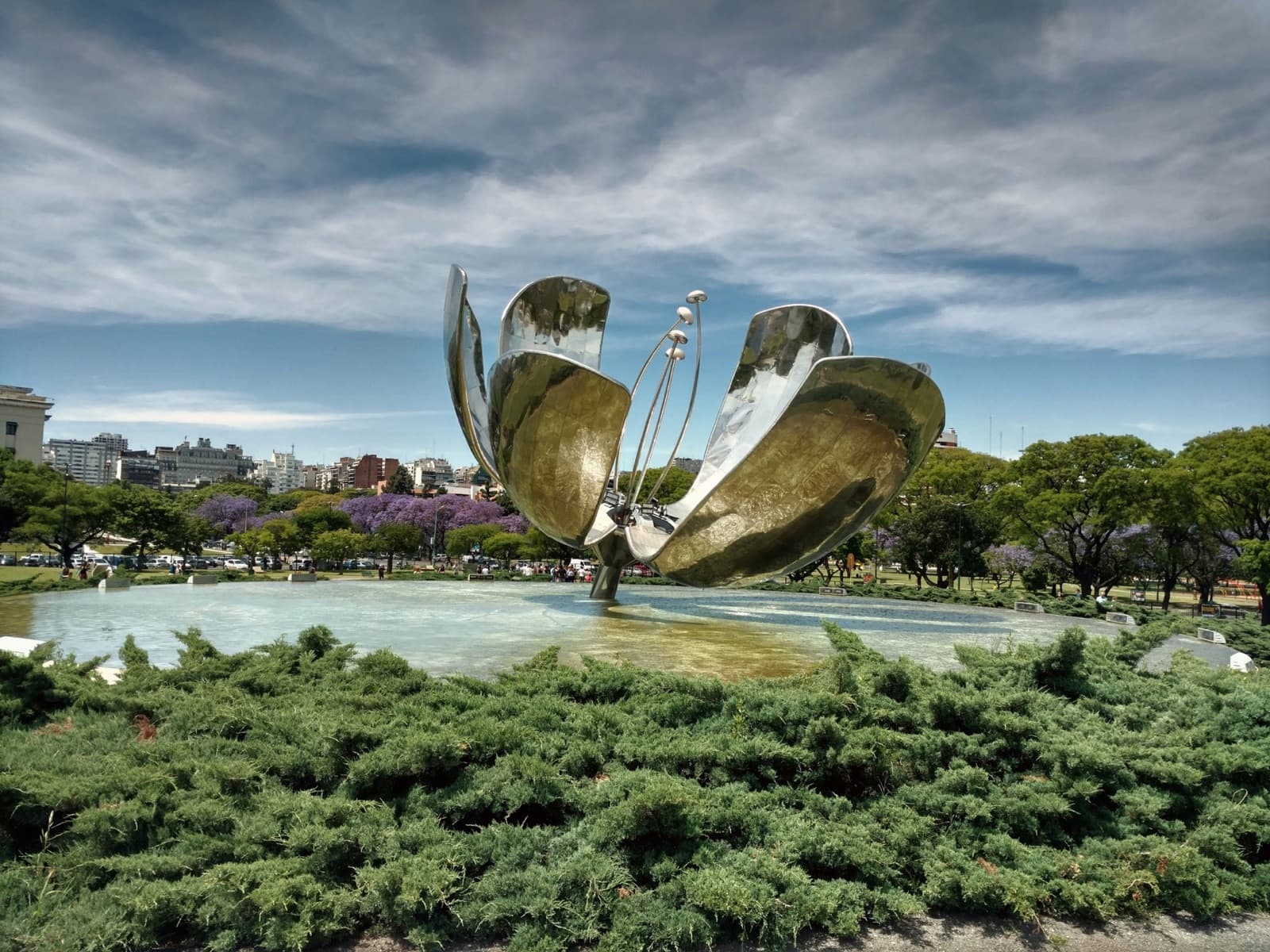
    A giant metal flower that opens its petals with the light each morning and closes them at dusk. Technology, public art and poetry: instead of withering, it celebrates the city's energy every day. Few sculptures in the world breathe like this.

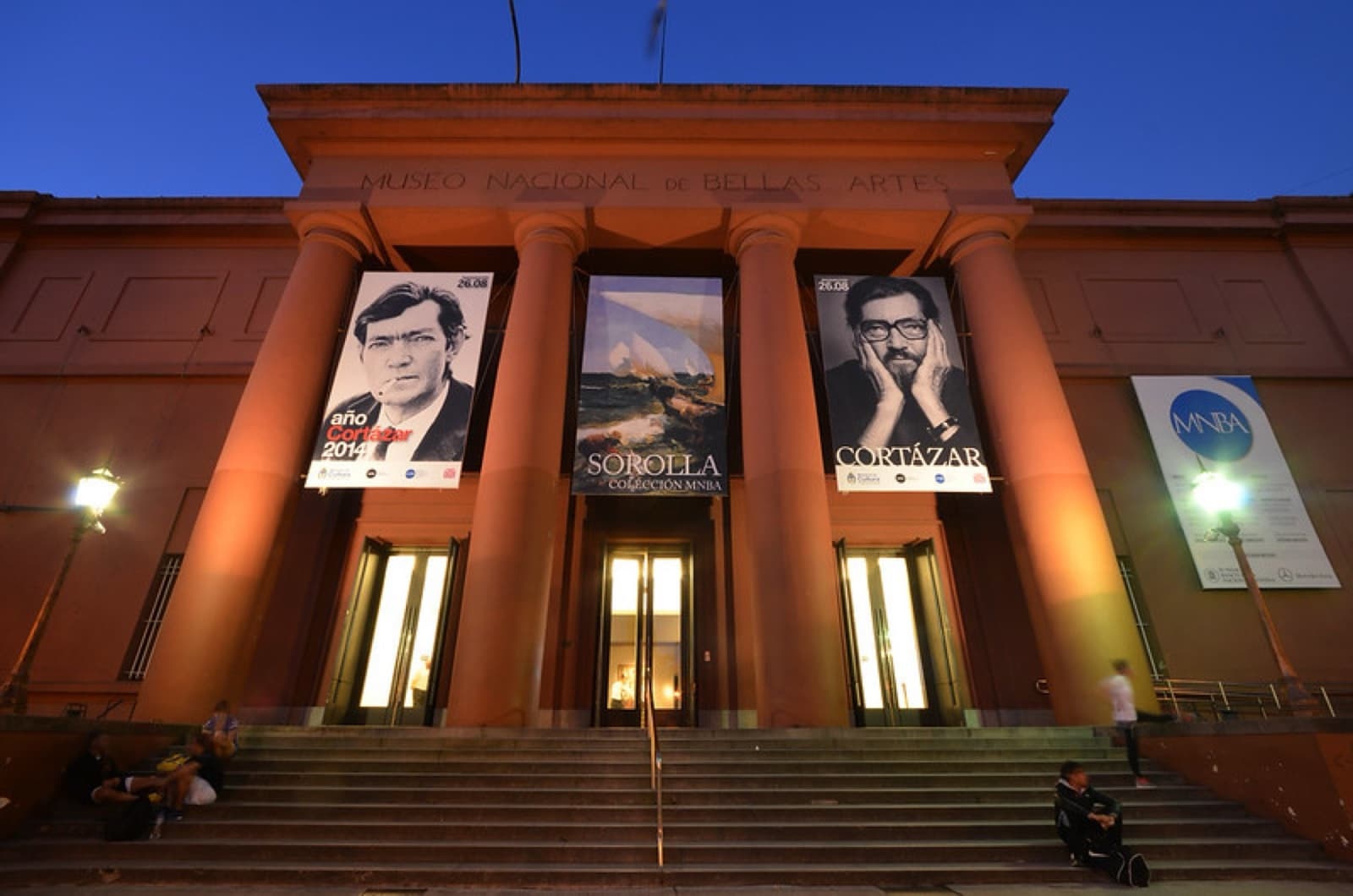
  • National Museum of Fine Arts

    National Museum of Fine Arts

    Argentina's great house of art, and free to enter: European masters, avant-gardes and the great Argentine names in a single route. A public museum where anyone, without paying a peso, can come face to face with centuries of art history.

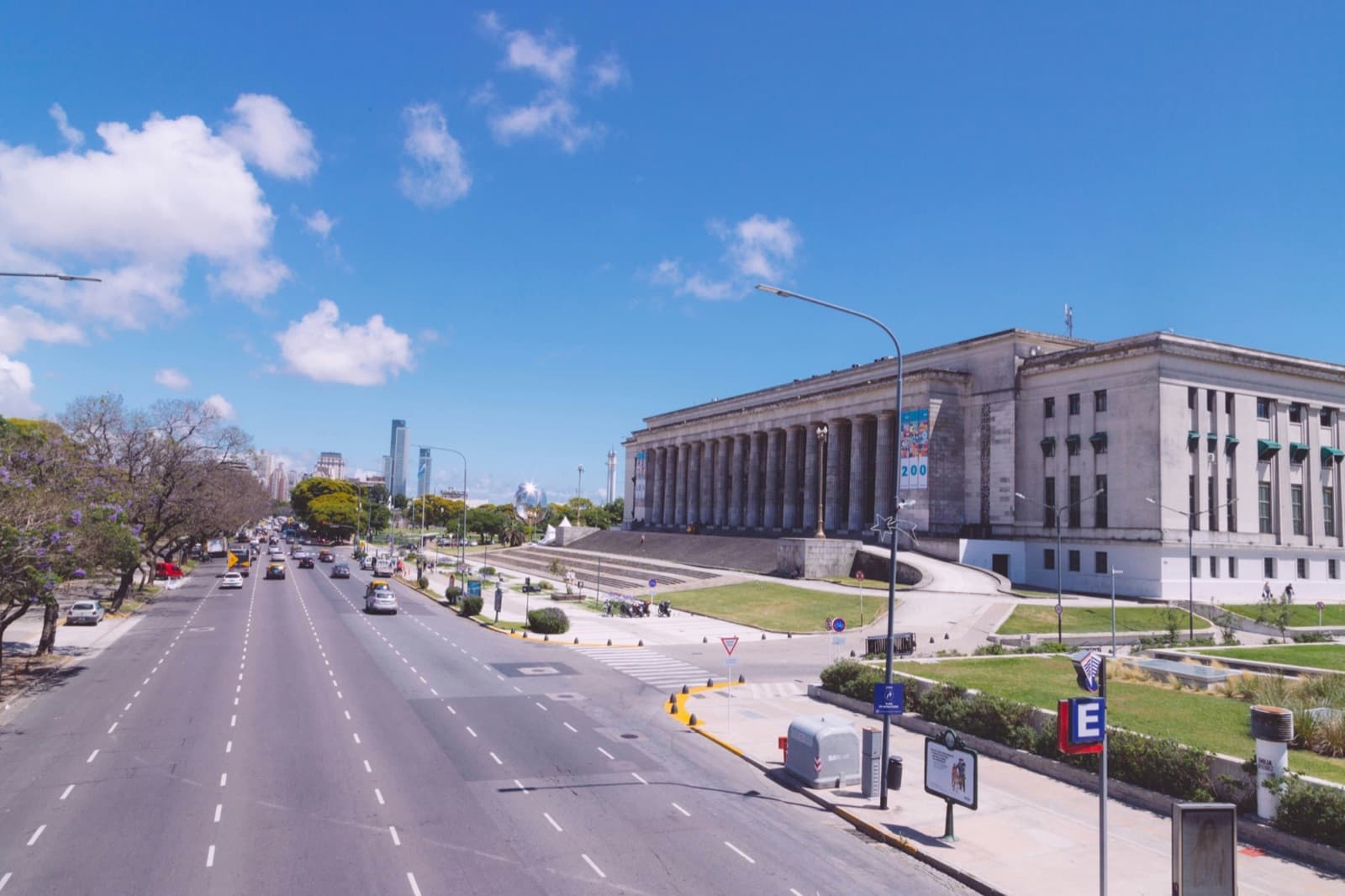
  • UBA Law School

    Law School (UBA)
    A mass of columns that looks like a temple of knowledge —and almost is. Entire generations of Argentine lawyers, judges and politicians trained here. Its great staircase is a stage for ceremonies, protests and the famous graduation under a rain of paper confetti.

  • General San Martín Square

    San Martín Square

    Old trees, monuments and a slope dropping toward Retiro and the river. It was San Martín's drill ground and a setting for duels; today it's a green balcony amid stations and offices. Below, the city races on.

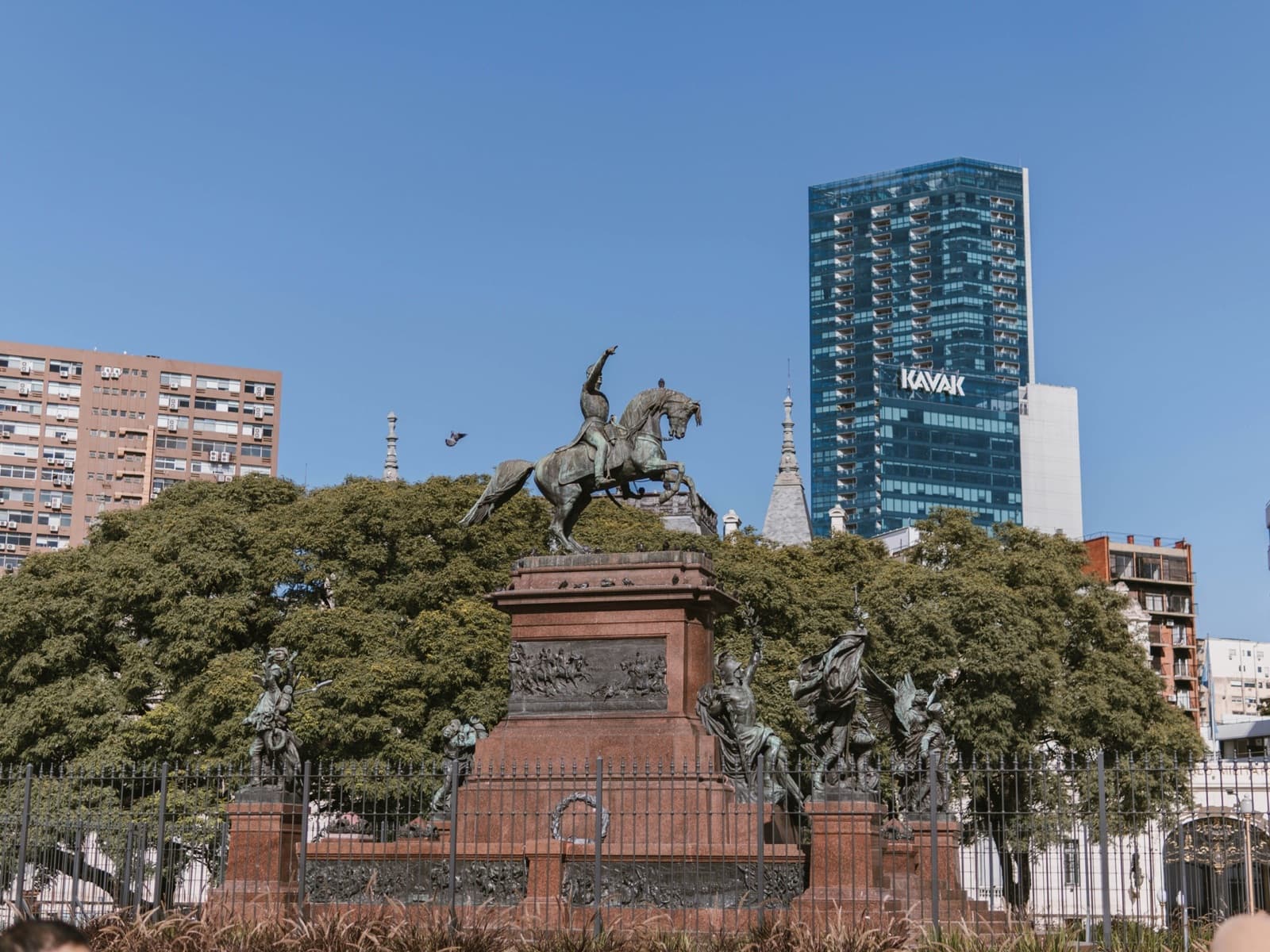
  • Monument to the Liberator José de San Martín

    Monument to the Liberator

    San Martín on horseback, in a pose that captures the whole epic of liberating half a continent. Reliefs and allegorical figures recount the crossing of the Andes and the decisive battles. Argentina's greatest founding father, forever facing south.

  • Palacio San Martín

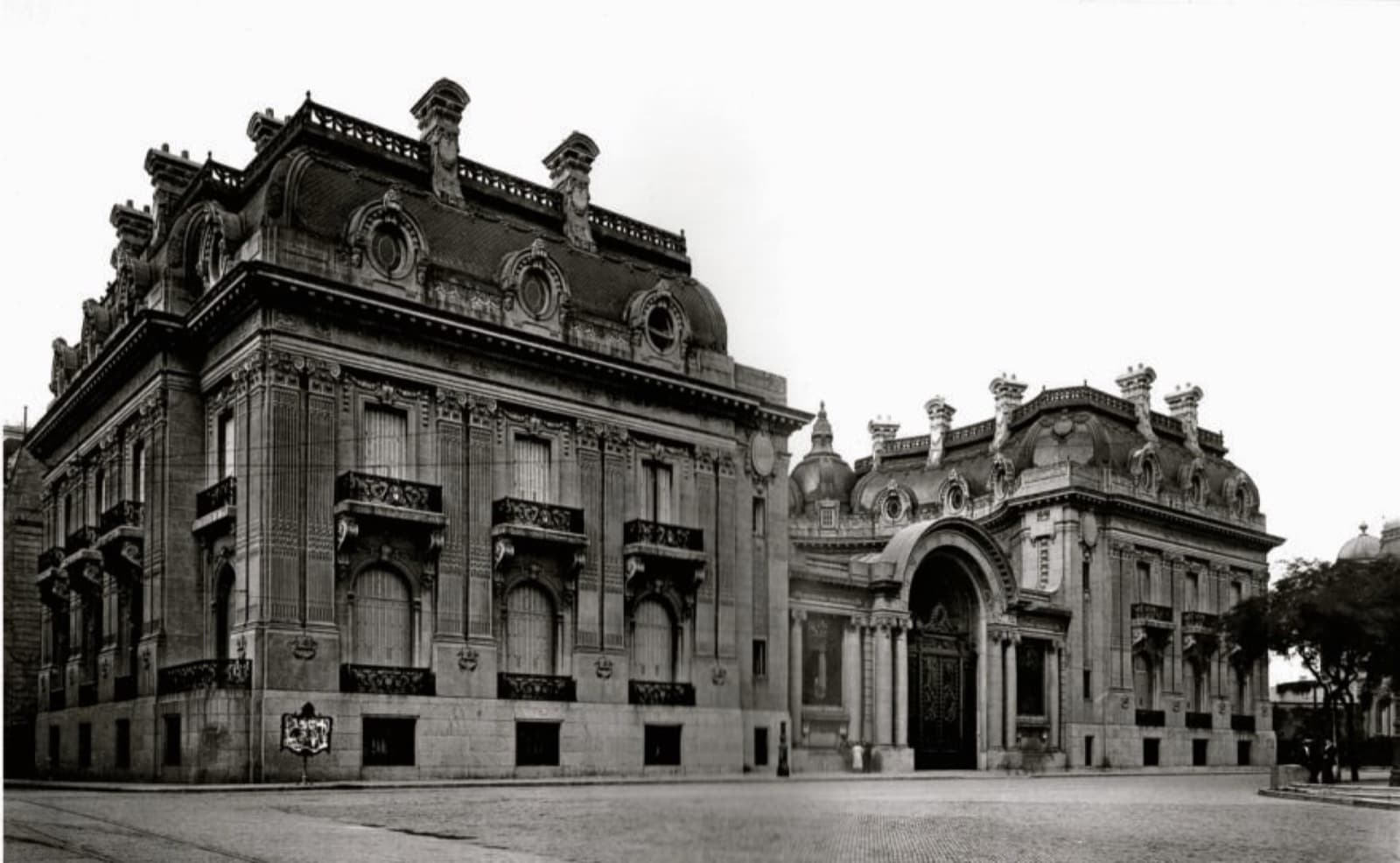
    Palacio San Martín

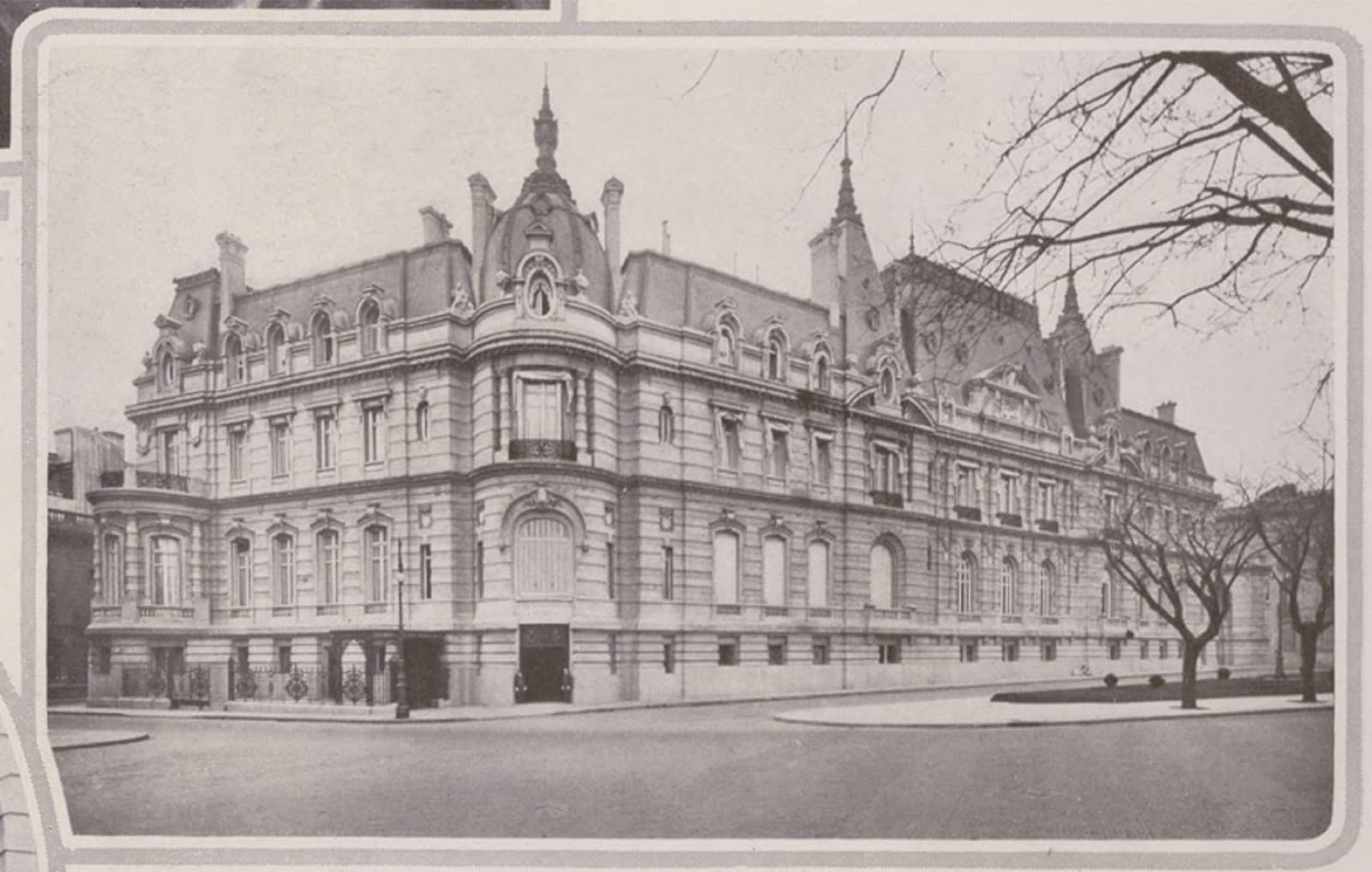
    First, the residence of an immensely powerful family; later, Argentina's Foreign Ministry. Within these French-style walls, international agreements were signed and heads of state received. The luxury of the porteño oligarchy, recycled into diplomacy.

  • Palacio Paz

    Palacio Paz

    The most spectacular palace in Buenos Aires —and that's saying a lot. José C. Paz, owner of La Prensa newspaper, commissioned it after the great European palaces to show his power: hundreds of rooms, imported marble. Porteño ambition at its peak.

  • Monumental Tower, Retiro

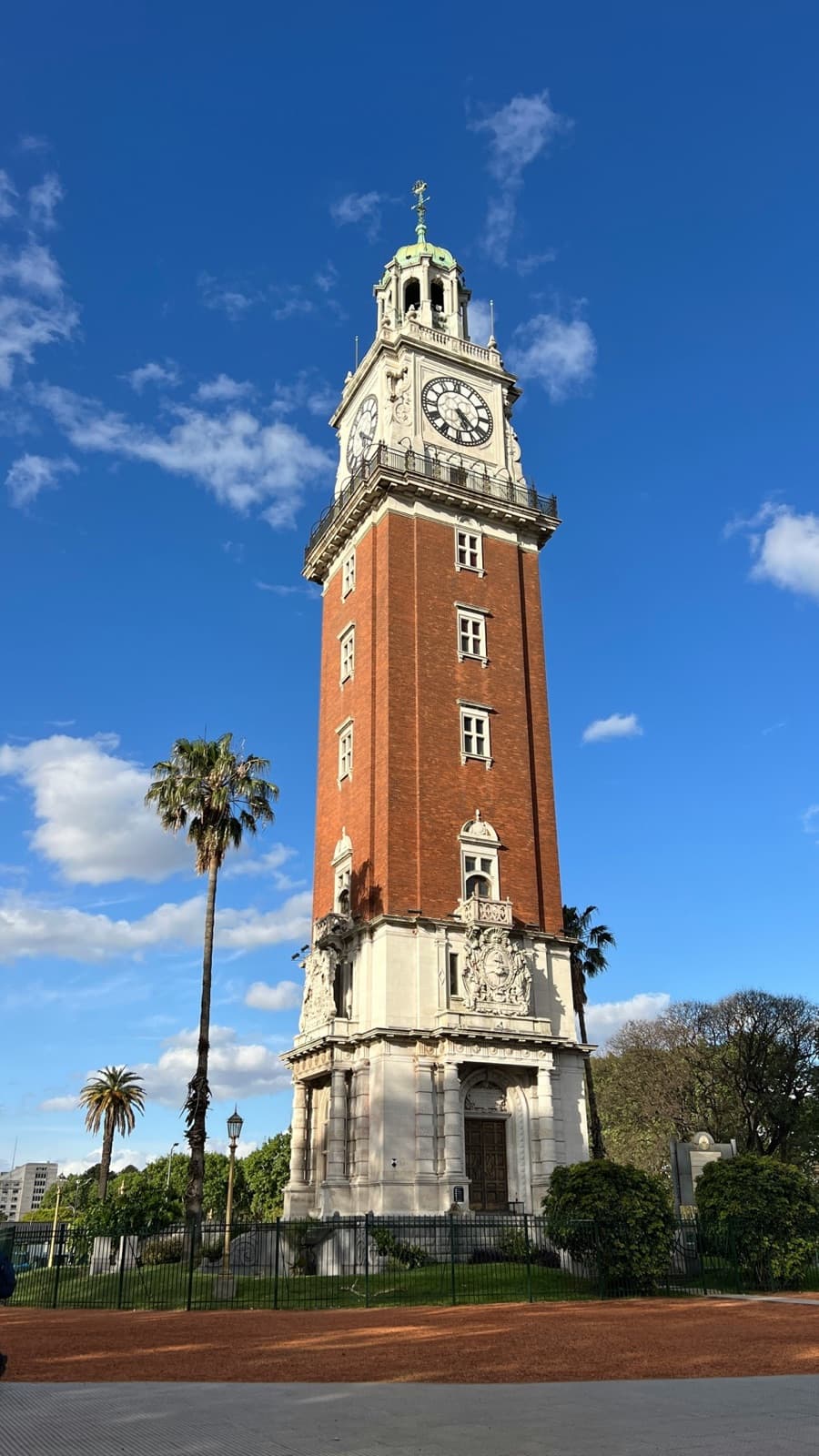
    Monumental Tower (of the English)

    The British community gave it for the centennial of the May Revolution —it was called the "Tower of the English." But after the Falklands War, its name and meaning shifted without the tower moving an inch. A monument that history redefined.

  • Plaza Dorrego, San Telmo

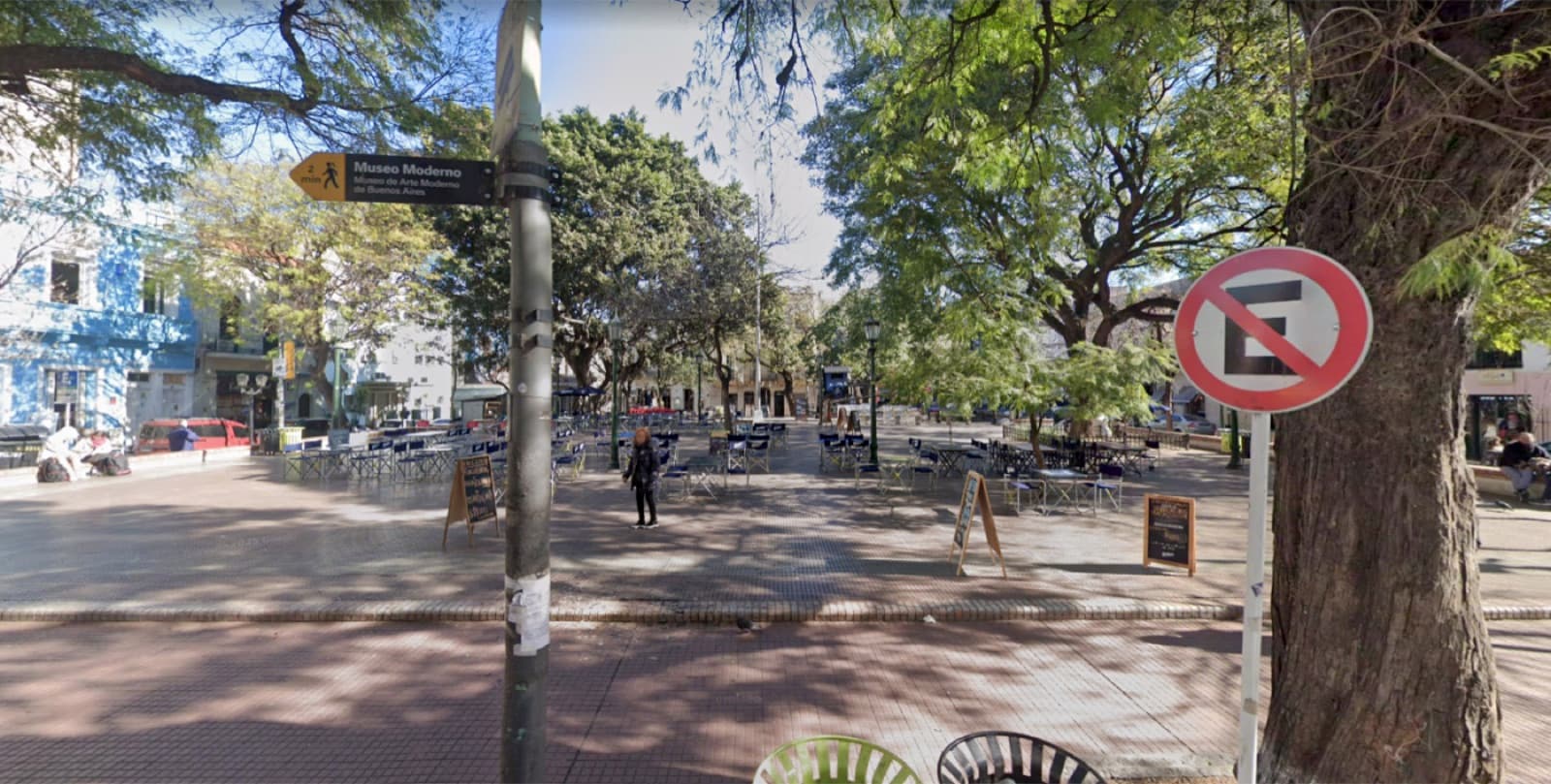
    Plaza Dorrego

    One of the city's oldest squares, in the heart of San Telmo. On weekdays, tables and bars; on Sundays, the antiques fair transforms it and the tango dancers appear. The porteño past, put up for sale and danced at the same time.

  • Santo Domingo Convent and Belgrano's tomb

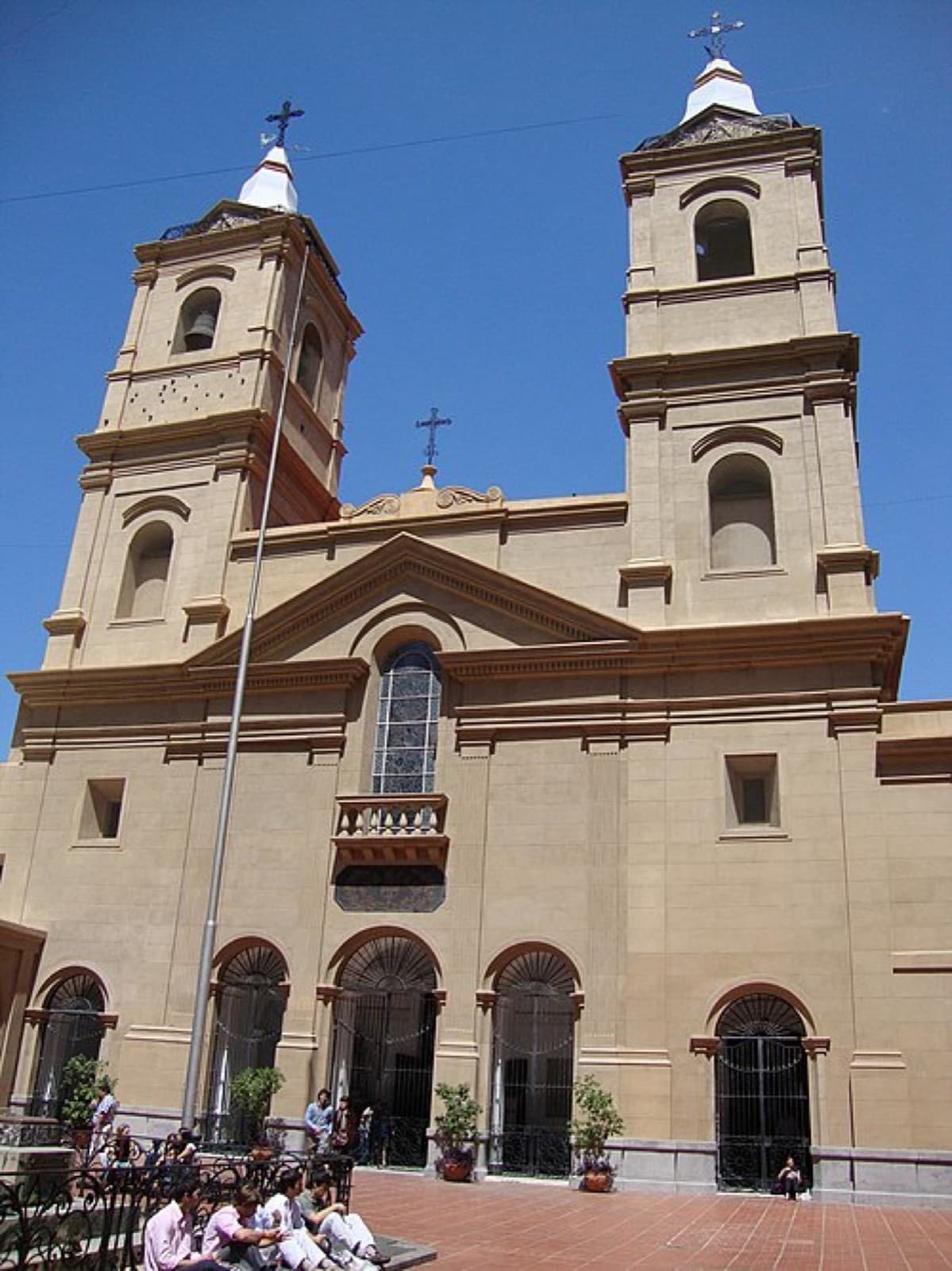
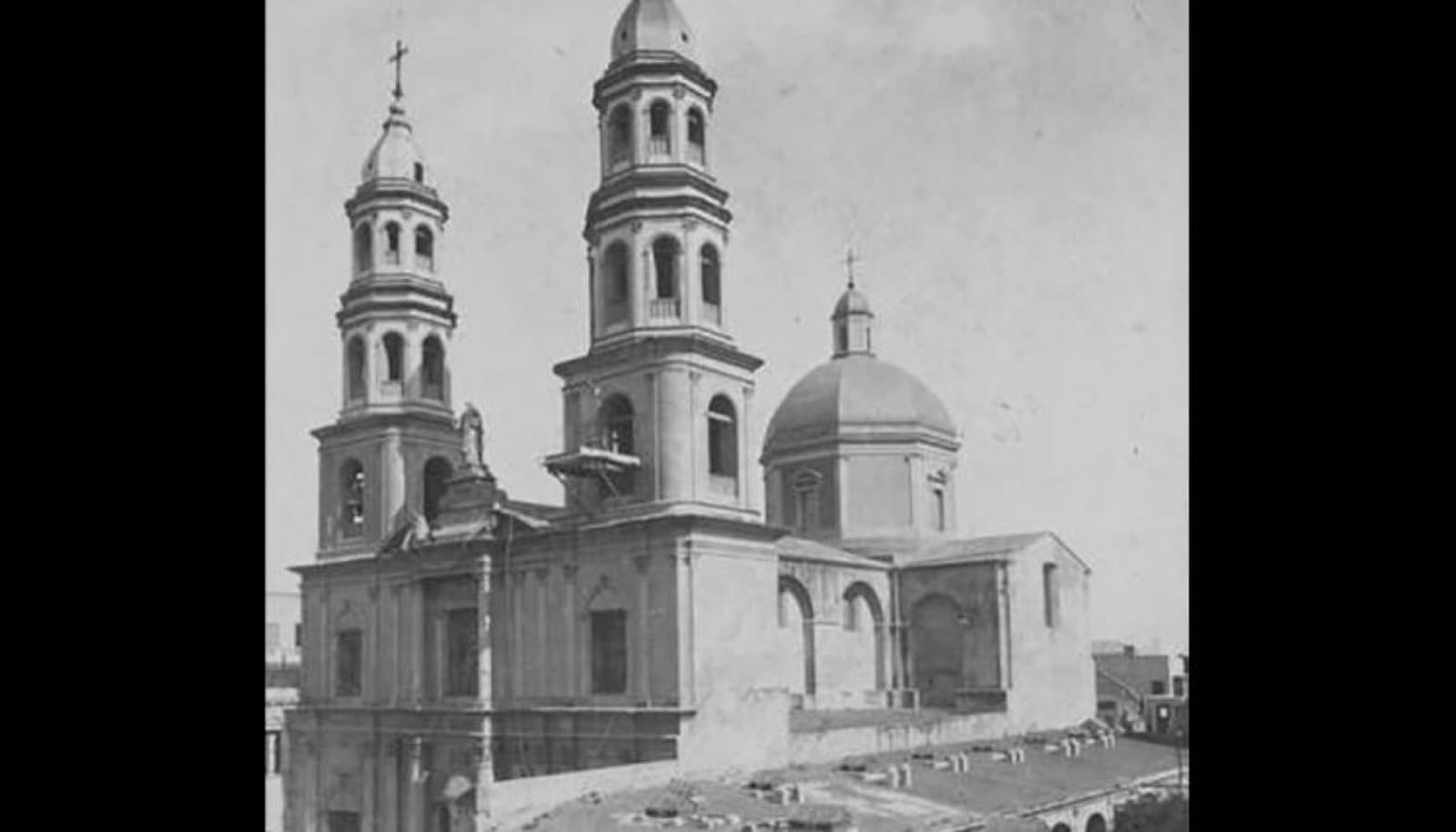
    Santo Domingo Convent

    A colonial convent housing the tomb of Manuel Belgrano, creator of the Argentine flag. In the silence of its cloisters beats one of the oldest, most national corners of the city. The nation, resting in colonial stone.

  • Basilica of Our Lady of the Rosary

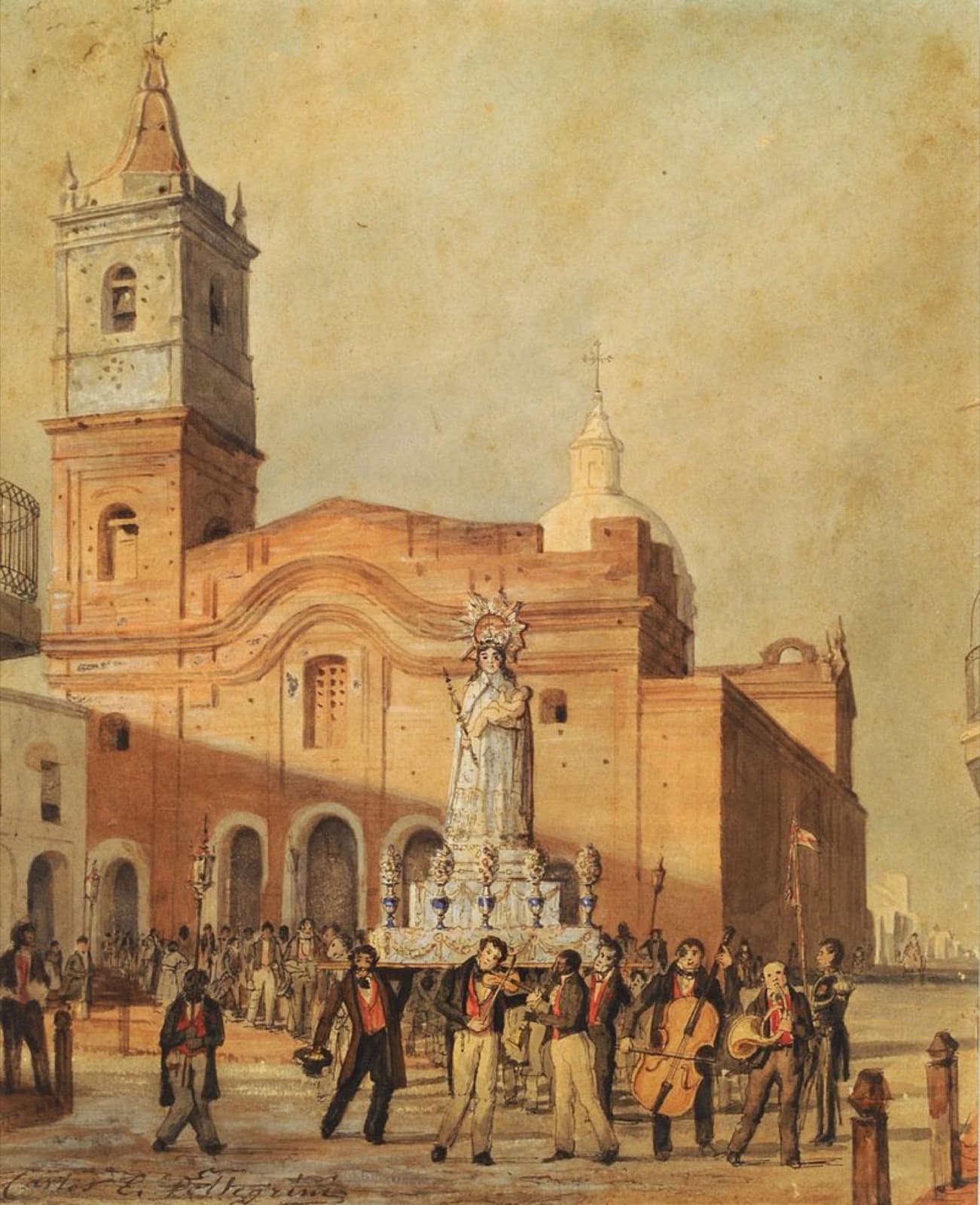
    Basilica of Our Lady of the Rosary

    Part of the Santo Domingo complex, one of the oldest churches in Buenos Aires —centuries of devotion accumulated within its walls, in the heart of the historic center. A colonial corner that survived every transformation of the city.

  • San Pedro Telmo Church

    San Pedro Telmo Church

    One of the oldest churches in Buenos Aires, dedicated to the patron saint of sailors. It gave its name to the whole surrounding neighborhood since colonial times. Here, among cobbled lanes, beats the oldest Buenos Aires that still survives.

  • Manzana de las Luces

    Manzana de las Luces

    A trip into the underground of history: colonial tunnels, Jesuit cloisters, silent courtyards. Much of the educational, scientific and political life of the Río de la Plata began here. What you see is little; what it hides underground, a great deal.

  • National Historical Museum

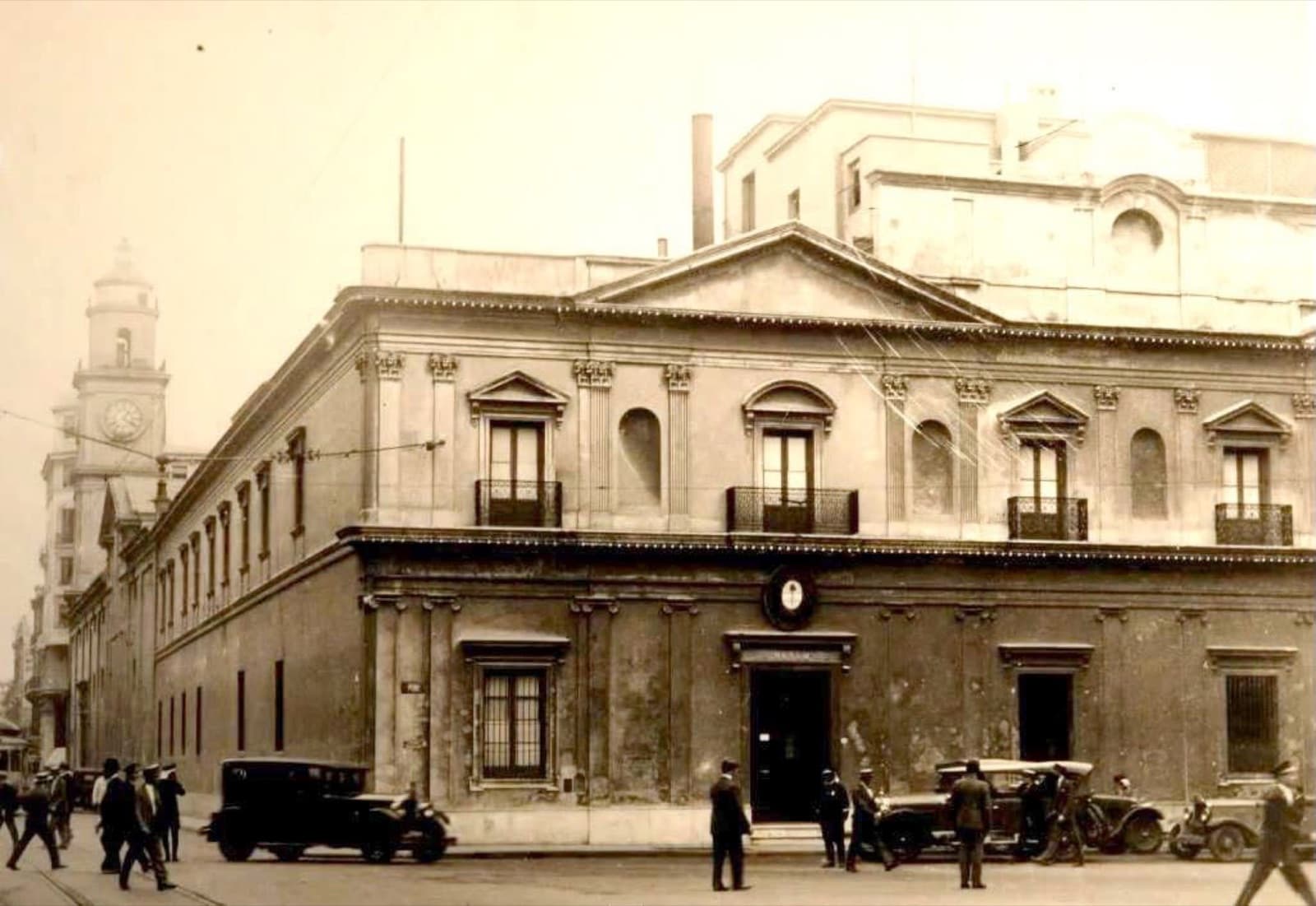
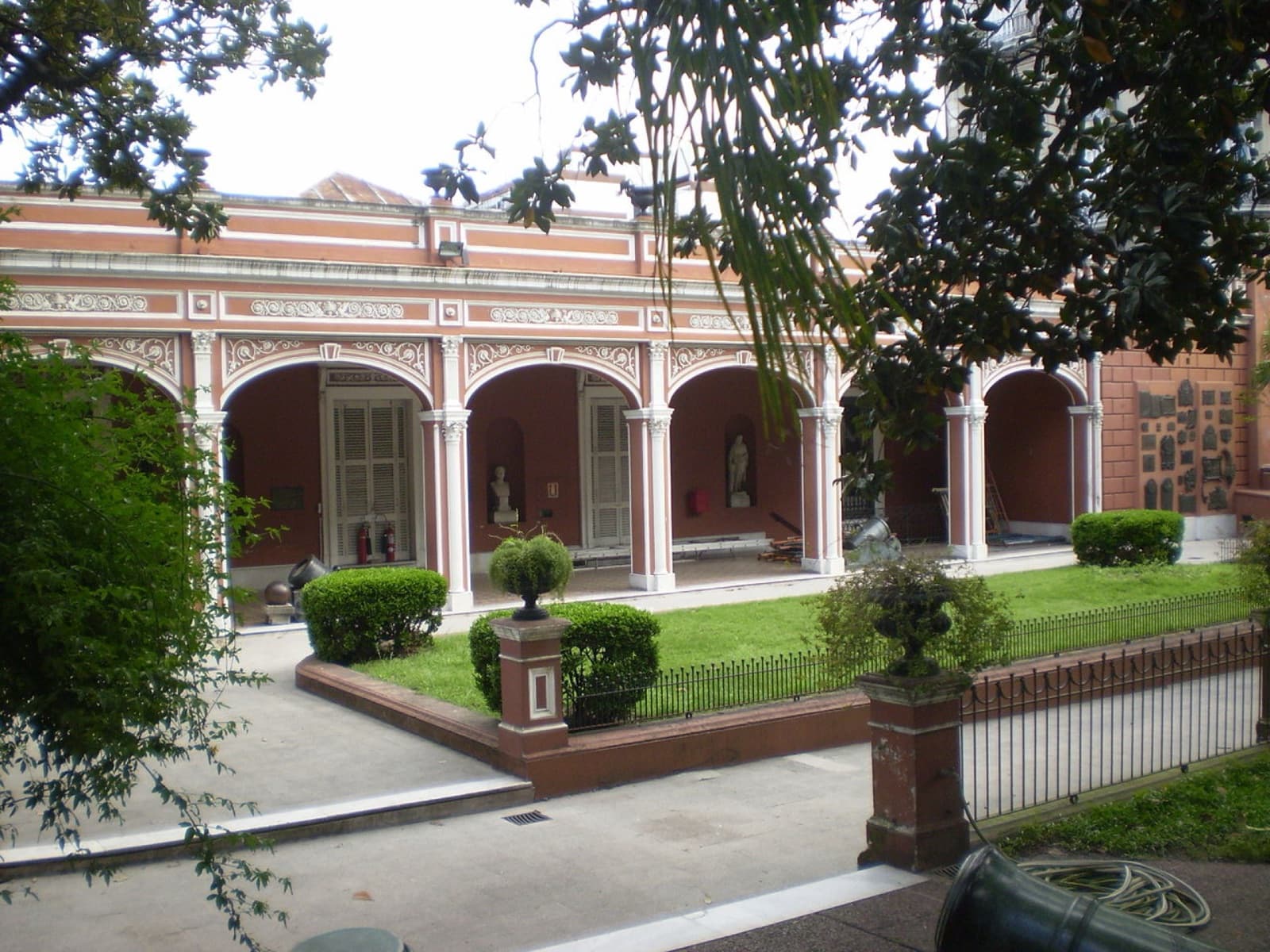
    National Historical Museum

    Where Argentina keeps its founding objects: San Martín's curved saber, flags, uniforms, documents. It sits in Parque Lezama, right where tradition places the city's first founding. Argentine history, under one roof.

  • Lezama Park

    Lezama Park

    A tree-covered slope over the south of the city —and, by the most rooted tradition, the place where Pedro de Mendoza first tried to found Buenos Aires, in 1536. It doesn't look like it, but you're standing on the myth of the city's origin.

  • Caminito in La Boca

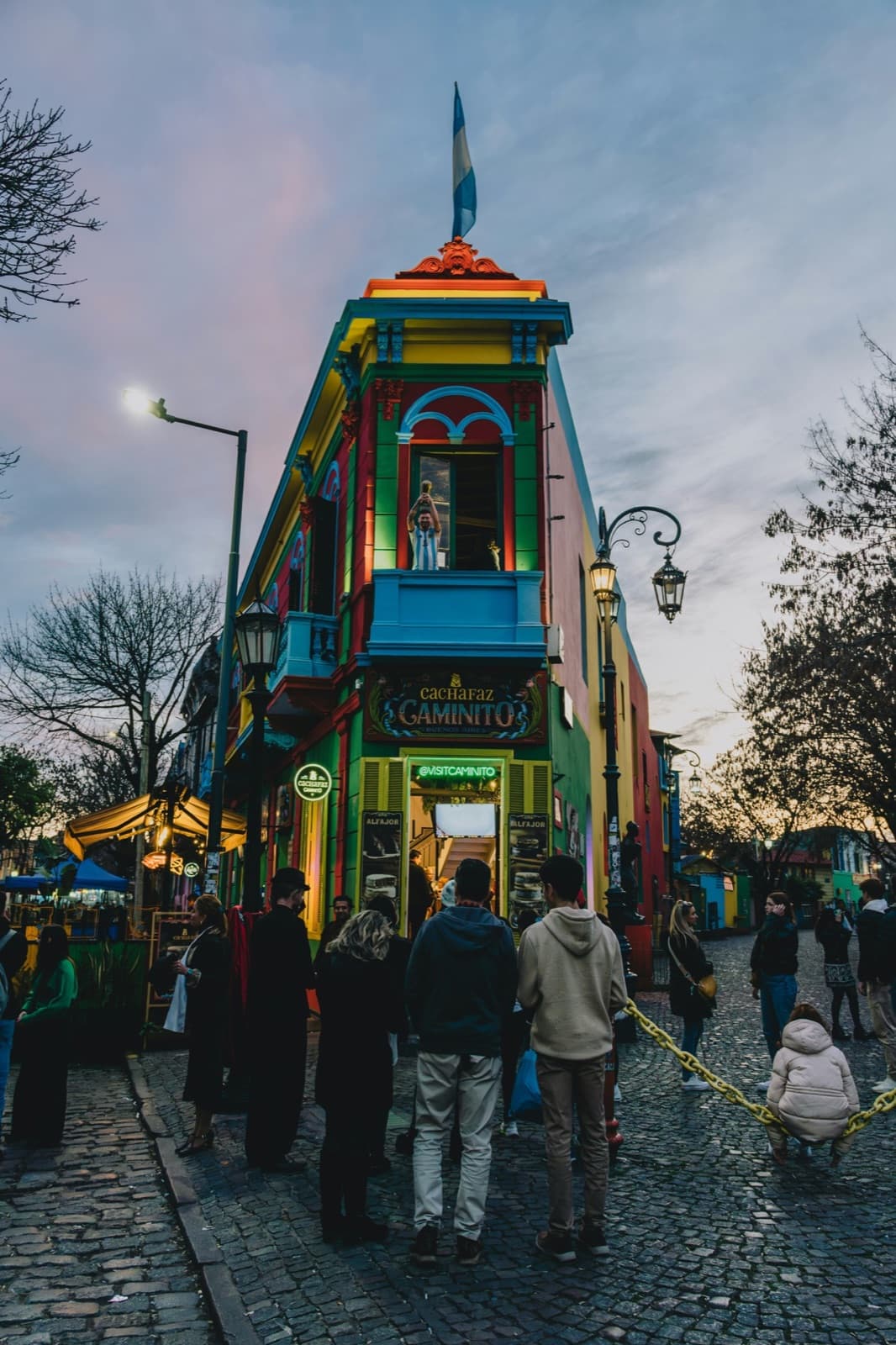
    Caminito

    It turned a 150-meter lane into a universal symbol: tin houses painted in colors, tango, murals, tourists. But behind the stage there's a real story —a port story, deeply working-class— of the immigrant neighborhood that painted its poverty in colors.

  • La Bombonera stadium, Boca Juniors

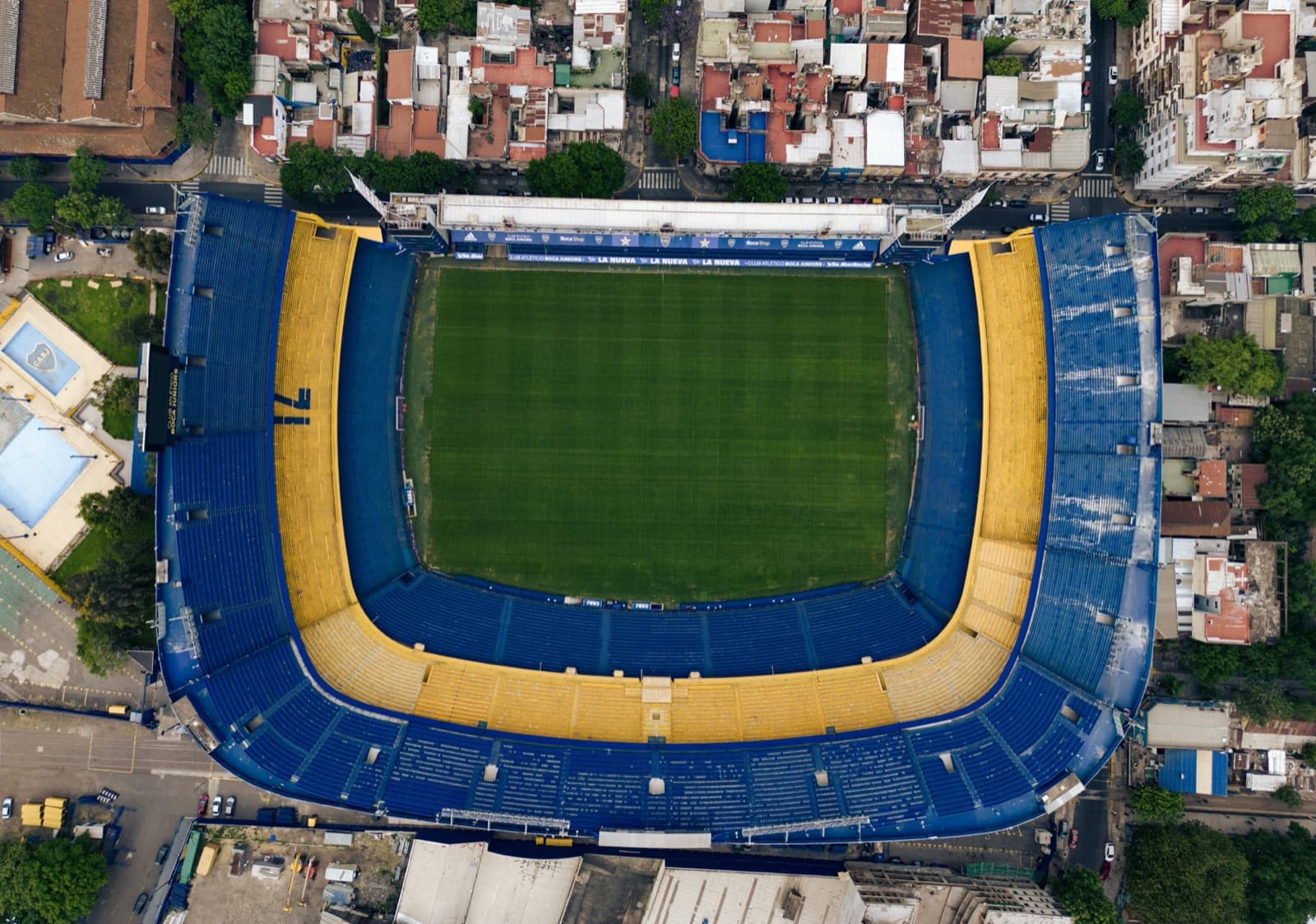
    La Bombonera

    Boca Juniors' stadium, one of the most famous in the world. Its unique shape —flat on one side, steep on the other— gives it an acoustic that "beats": they say the stadium trembles. The cathedral of one of the most intense passions on the planet.

  • Quinquela Martín Museum in La Boca

    Quinquela Martín Museum

    Docks, ships, cranes and chimneys appear in the paintings as characters in an epic of labor. Quinquela Martín painted La Boca like no one else —and donated this house-workshop-viewpoint to the neighborhood that saw him born poor. The art that gave the port back its dignity.

  • Teatro Colón

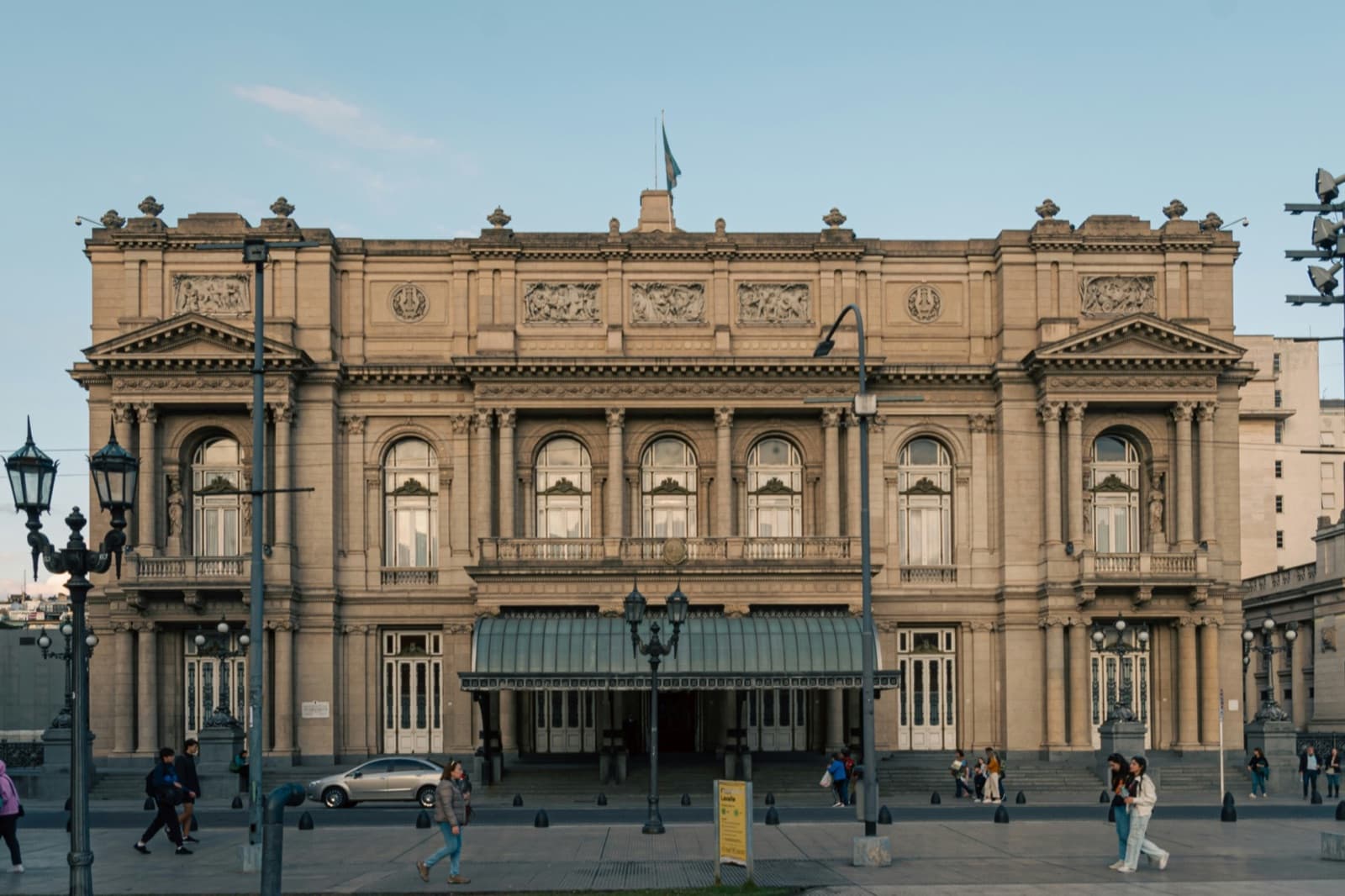
    Teatro Colón

    One of the finest opera houses in the world —its acoustics are regarded among the best anywhere. Gilded halls, a painted dome, over a century of history. To sing well here, the artists say, is to have reached the summit.

  • Palace of Running Waters

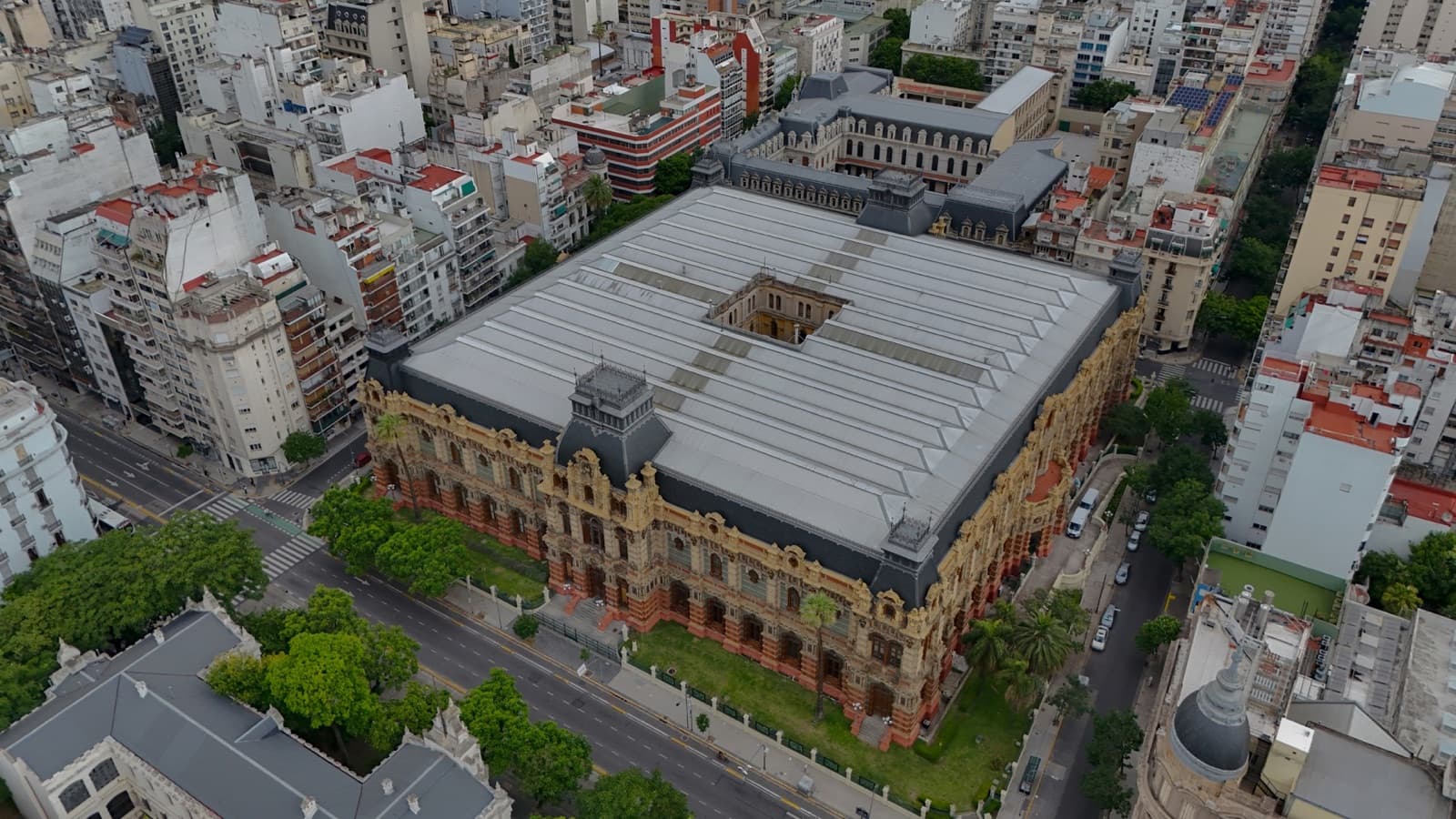
    Palace of Running Waters

    Few cities in the world built such a delirious building for something as everyday as running water: a façade of hundreds of thousands of ceramic pieces brought from Europe, hiding water tanks behind it. Public hygiene, turned into a palace.

  • Palacio Libertad / Sarmiento Cultural Center

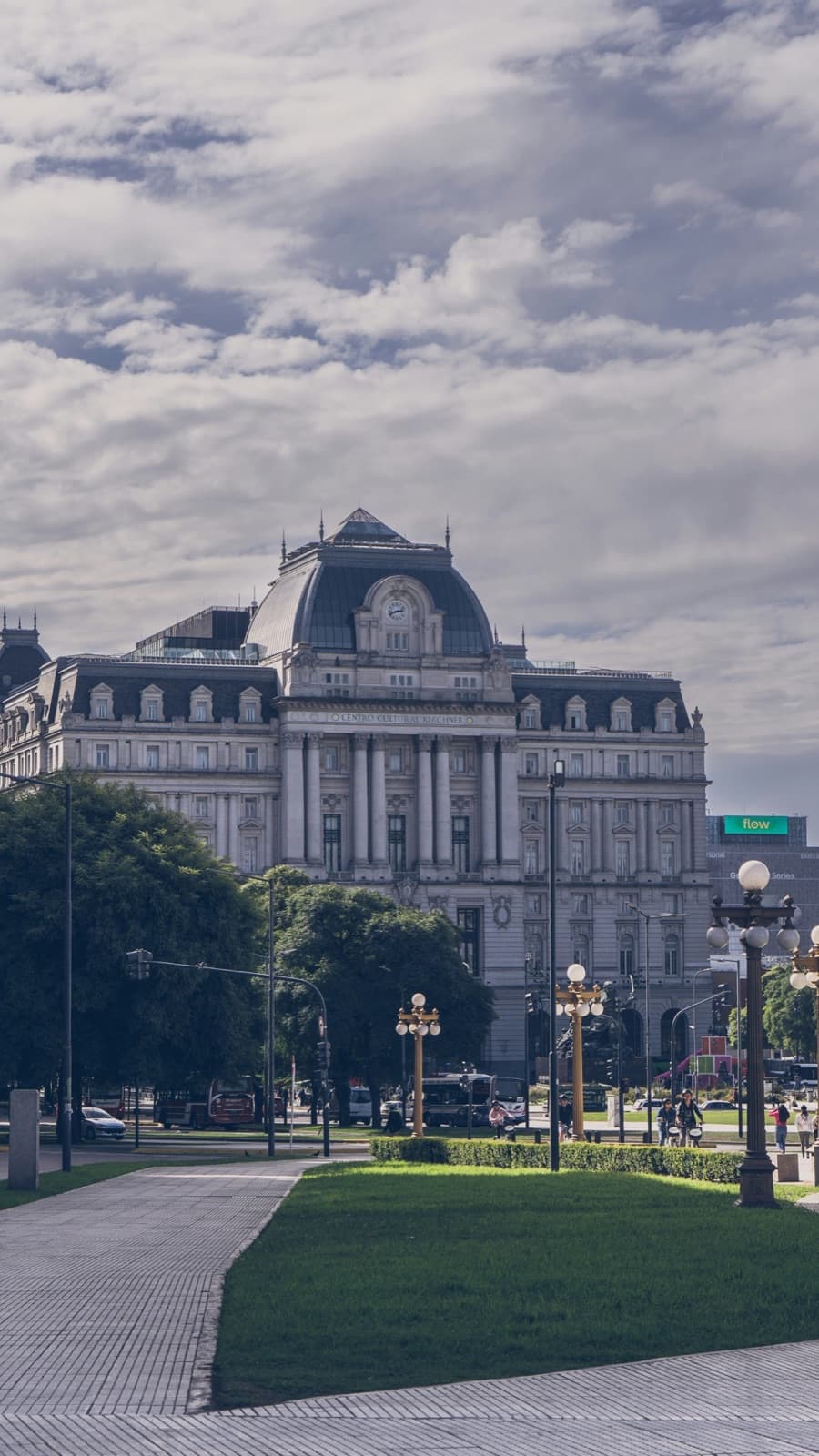
    Palacio Libertad (Sarmiento Cultural Center)

    It was born as the Postal Palace and today is a giant cultural center —among the largest in Latin America. Concert halls, exhibitions, fairs, all open and free. The building where the state decided culture, too, could be monumental.

  • Chacarita Cemetery

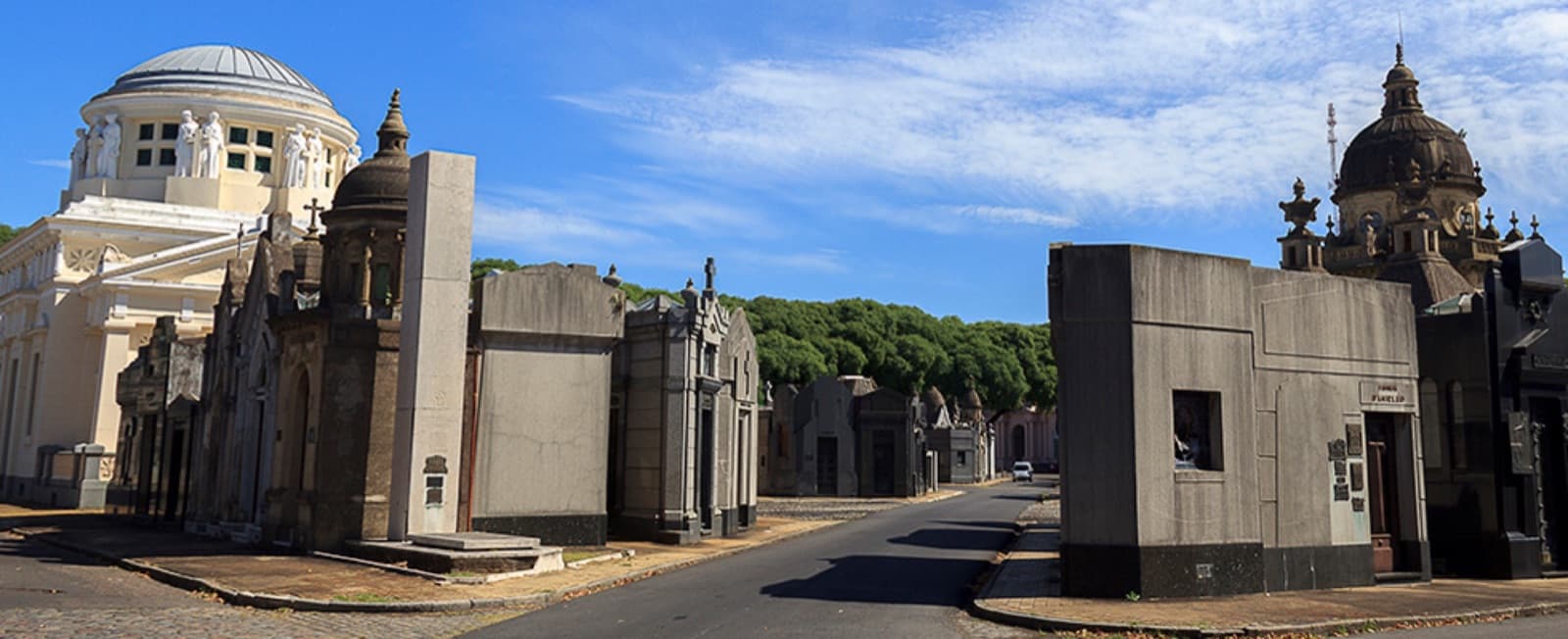
    Chacarita Cemetery

    The country's largest cemetery: a labyrinth of passages, underground galleries and mausoleums where national heroes, artists and ordinary people rest. Here is Carlos Gardel's tomb, turned into a place of popular pilgrimage. Death, turned into devotion.

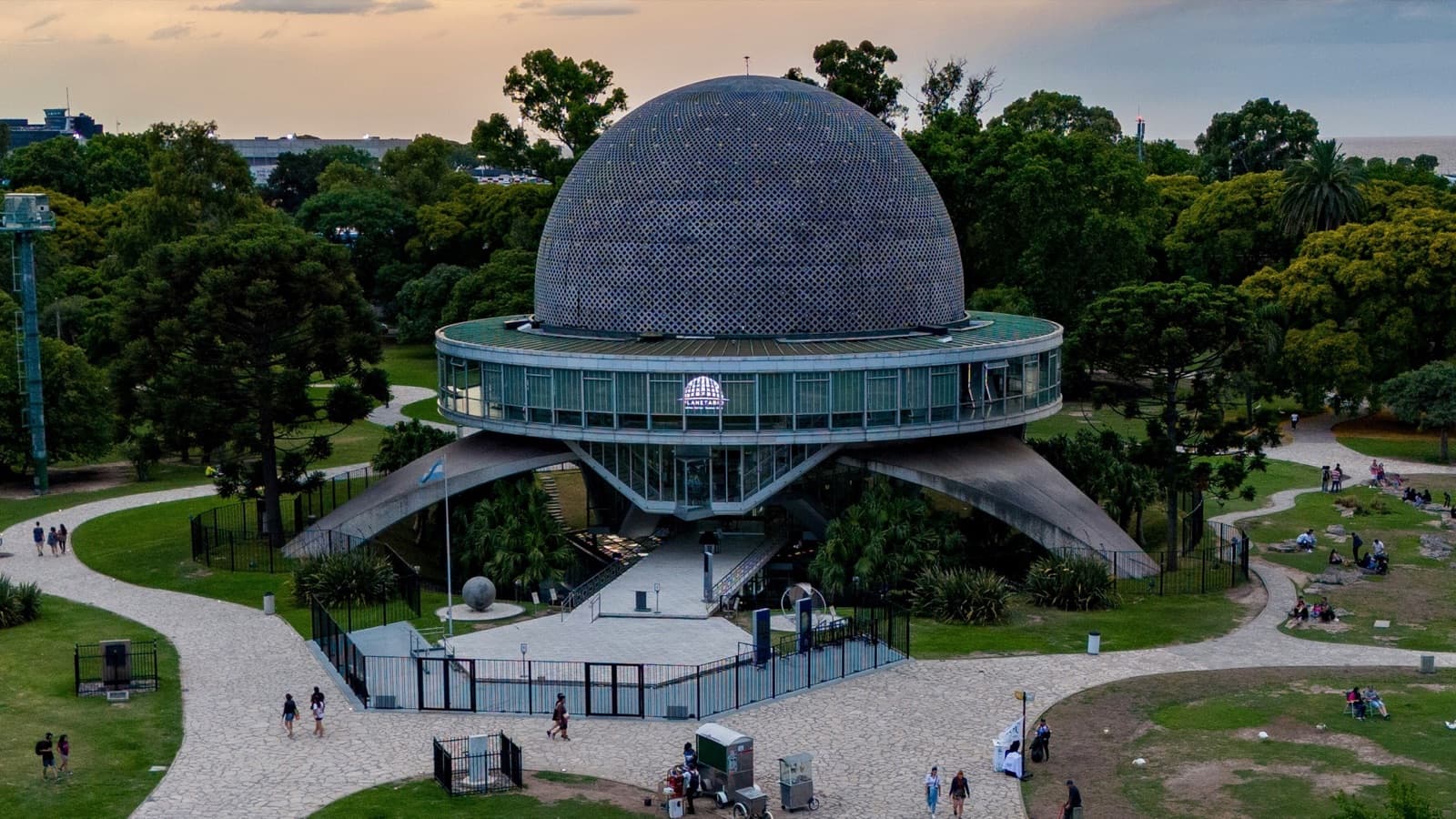
  • Galileo Galilei Planetarium

    Galileo Galilei Planetarium

    A futuristic spaceship from the 1960s where thousands of porteños first traveled to the cosmos without leaving their seats. Immersive projections under a dome that still amazes. The Buenos Aires that, at the height of modernity, wanted to touch the stars.

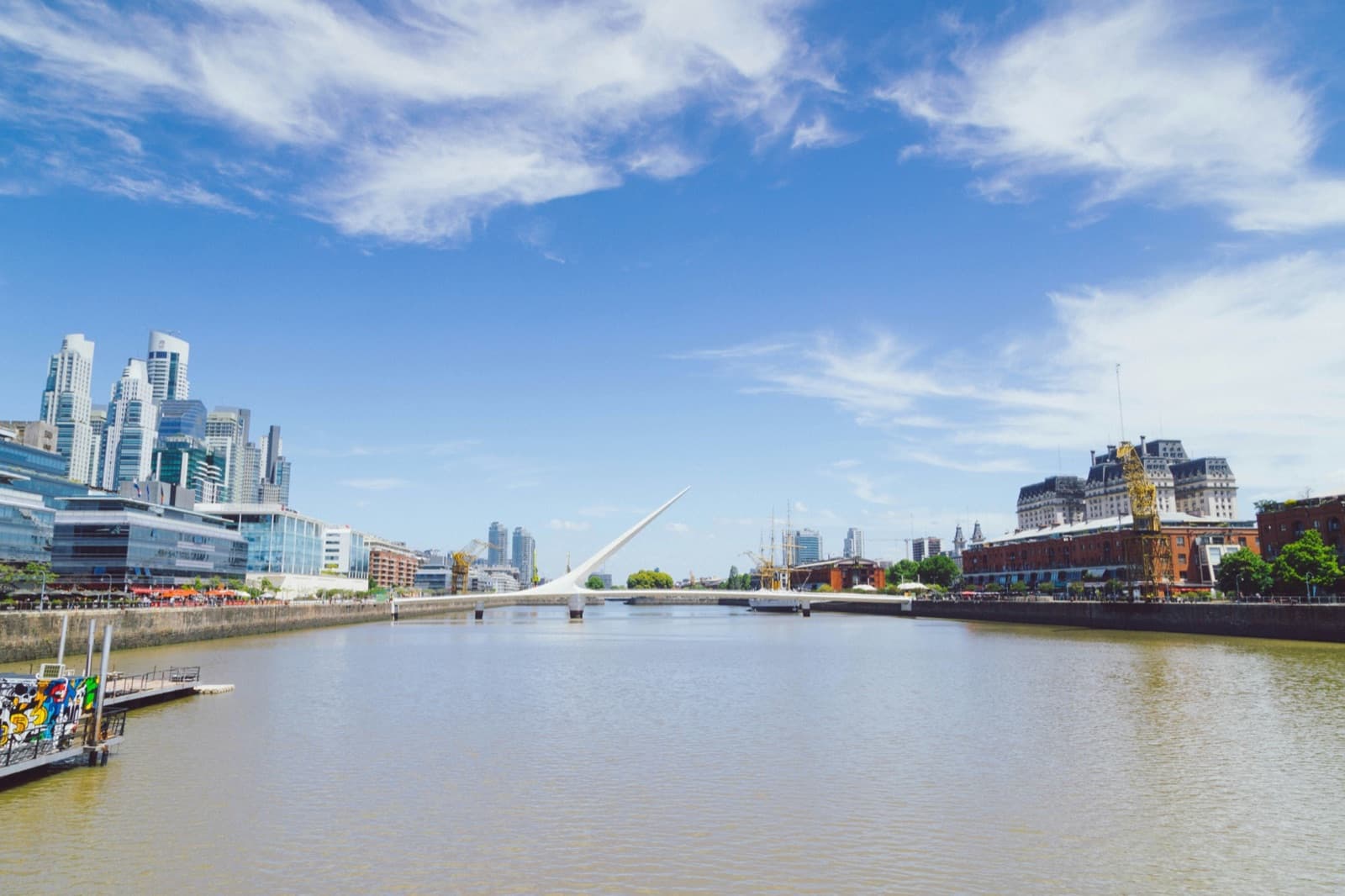
  • Puente de la Mujer in Puerto Madero

    Puente de la Mujer

    A rotating bridge by Calatrava that, according to its designer, represents a couple dancing tango. Engineering, aesthetics and symbol in a postcard of 21st-century Buenos Aires, raised over the old port docks that are now Puerto Madero.

FAQ

About Buenos Aires on Ruthy

They're written and narrated by Lucas Botta, of Historia en Podcast. Not auto-generated text or a synthetic voice: curated content, with judgment and narrative craft. That's the difference from any generic guide.

Yes. Ruthy streams its stories, so you'll need a connection while you explore the city — Wi-Fi, mobile data or a local eSIM. The upside: the app takes up no space on your phone, and you always hear the most up-to-date version of each story.

Buenos Aires has 59 places and 65 chapters on Ruthy, spread across different neighborhoods. At a comfortable pace listening to everything, plan for 3 to 5 days. The History of Buenos Aires thematic tour (7 chapters) takes about 50 minutes; the historic center (Plaza de Mayo, Casa Rosada, Cabildo, Cathedral) is another morning; and neighborhoods like Recoleta, San Telmo or La Boca are done separately.

We recommend starting with the History of Buenos Aires chapter (7 short episodes about the city's eras, listenable from your hotel). Then walk the historic center from Plaza de Mayo — Casa Rosada, Cabildo, Cathedral, San Martín's tomb. That orients you for the rest.

It covers the historic center (microcentro, Plaza de Mayo, Avenida de Mayo, the Diagonales, Congreso) and extends to the major tourist neighborhoods: Recoleta, Retiro, San Telmo, La Boca and Puerto Madero. We add content regularly.

Yes. Each person downloads the app on their phone and listens through their own headphones. You walk together and choose which story to hear at each stop. No group tour, no fixed schedule, no guide to wait for.

Ruthy doesn't depend on the physical site — it depends on your headphones. You can listen while walking among the crowd, sitting on a bench, or looking from across the street. You press play when you're near — you don't need to go inside.

Ruthy is an audio guide, not a ticketing service. To enter Teatro Colón, the National Museum of Fine Arts, Recoleta Cemetery (non-residents may have to pay an entrance fee), or the Casa Rosada Museum (free with reservation) you need to manage entry separately. Ruthy's audio plays from outside and inside.

The History of Buenos Aires thematic tour has 7 chapters covering the city's different eras (1536 to the present). Ideal to start and understand the overall context. The other 58 places have a single main chapter each.

Yes. Ruthy is free to download and use on iOS and Android. All 65 Buenos Aires stories are available at no cost during this initial phase.

Real reviews

What people who walked Buenos Aires with Ruthy say.

  • The best of Historia en Podcast — now with GPS. It was very useful on my last visit to Buenos Aires.

    U. PedroApp Store
  • Excellent app! It allowed me to learn more about the history and places of Buenos Aires, Argentina. Highly recommended.

    Gonzalo RodríguezGoogle Play

Start with Buenos Aires

You don't just see Buenos Aires. You understand it.

Download Ruthy free and walk Buenos Aires with all 59 stories activating in real time, right where it all happened.

Free · no ads · iOS and Android

Download Ruthy free