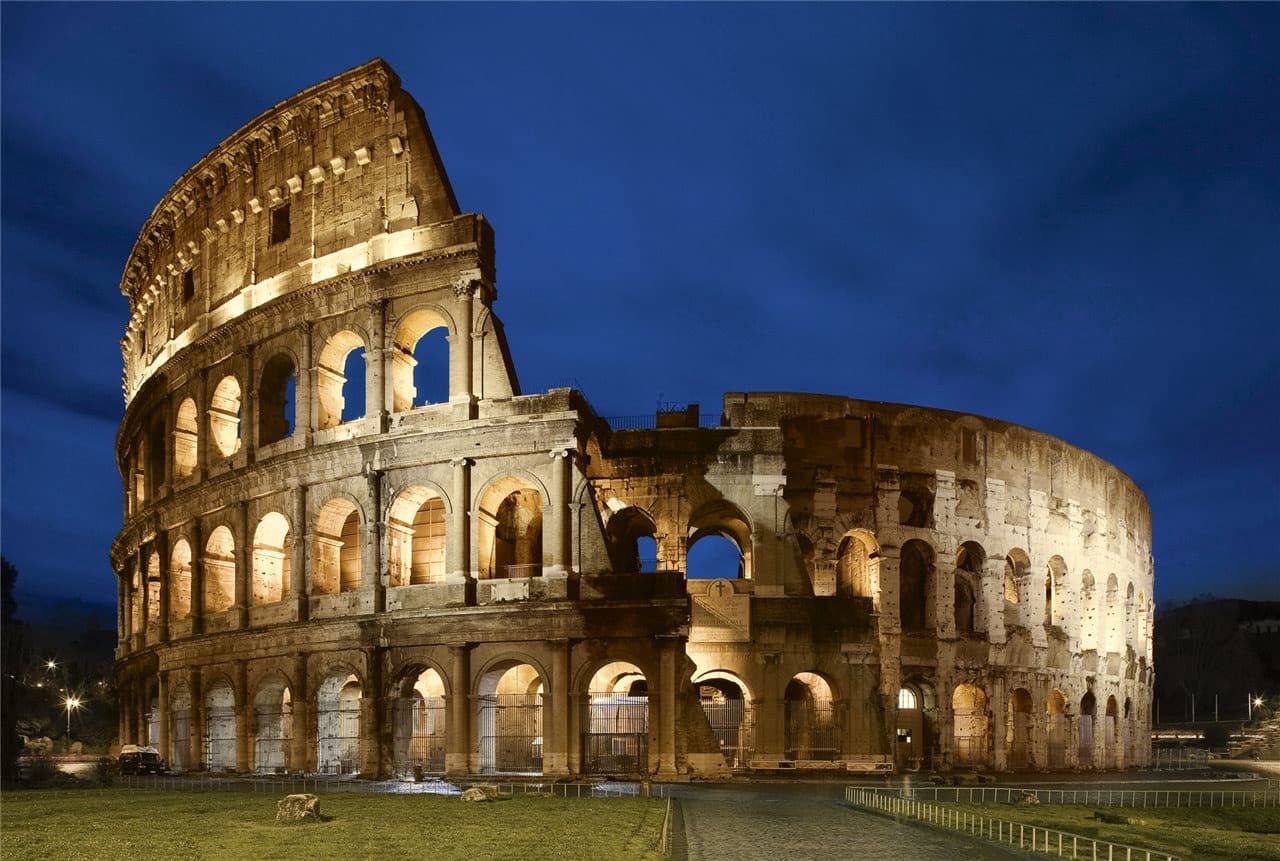
Rome · 12 chapters
ColosseumHistory & audio guide · Rome
It didn't begin as a temple of spectacle — it began as Nero's private lake. On that vanity the Flavians raised a machine for 60,000 people. Why it's called the Colosseum, what moved beneath the arena, and how it survived its own city's looting: twelve chapters walk it from the inside.


Free · no ads · iOS and Android
Updated: July 2026
The story, in short
Before it was the temple of Roman spectacle, this ground was Nero's private lake, at the heart of his Domus Aurea. When Nero fell, the Flavians filled in the lake and raised on that vanity a machine for 60,000 people: where one emperor once fit, now the people came in. Vespasian began it in the year 72; his son Titus opened it with a hundred straight days of games.
The name, in fact, comes not from its size but from a statue: the bronze Colossus that stood beside it. And beneath the arena —wooden, covered in fine sand— lay a hidden world of tunnels, trapdoors and lifts where the beasts were readied. It even had a roof: a retractable awning, the velarium, worked by sailors of the imperial fleet.
It survived earthquakes and fires, but also the looting of its own city: in the Middle Ages its bronze clamps were torn out piece by piece, and those holes are still visible. What you see today is a fraction of what it was, and still it stands. Ruthy walks you through its insides in twelve chapters, standing right there.
All 12 chapters
Colosseum, told chapter by chapter
Ruthy narrates Colosseum in 12 chapters, at the exact spot where each story happened. Download the app free, arrive and press play — no group tour, at your own pace.
- Roman Games
- Differences between circus, theatre and amphitheatre
- Domus Aurea
- Origin of the name
- Construction of the Colosseum
- Inauguration
- The Colosseum from the outside
- Inside the Colosseum
- The roof of the Colosseum
- Mock naval battles
- Gladiators
- The Colosseum in the Middle Ages
Keep exploring Rome
More in-depth walks in Rome

Colosseum, with Ruthy
Don't read about Colosseum. Hear it where it happened.
Free · no ads · iOS and Android